Choosing a React Native mobile app development company? Learn how to pressure-test technical depth, evaluate pricing models, and avoid budget bleed.


Fitness App Development: A Strategy Guide for Businesses
Mar 20, 2025
about 22 min read

Learn fitness app development from strategy to launch. Explore features, costs, MVP planning, monetization, tech stack, and compliance.
Navigating fitness app development successfully has very little to do with engineering. The challenge is a business problem, first and last.
The fitness app market is on fire, and that's the real trap. Everyone sees the opportunity, wellness is in, and our phones are the natural home for it. This temptation leads founders to build sprawling, unfocused products that try to be everything to everyone. It’s the single biggest reason most of them never become viable businesses.
What follows is a framework for making these hard choices. The first step in this path is to decide what business you're in before you write a single line of code.
Evaluating the Market for Fitness App Development
A massive consumer shift toward on-demand wellness has made the fitness app market explode. All that growth makes it look like an easy place to make a buck, but that's a trap. Building a generic app to grab a piece of the pie is a great idea if you're the only one doing it.
But you're not. With thousands of competitors, a generic approach is the fastest way to get lost in the noise. Your job is to find one corner of this market where you can be the undisputed best solution for a specific group of people.
Current Market Size and Growth Projections
The global fitness app market is growing at an exceptional pace. It reached $36.7 billion in 2023 and is forecast to climb to $134.5 billion by 2032, representing a 27.6% compound annual growth rate. The expansion is being fueled by stronger health awareness, mainstream wearable adoption, and AI becoming a standard part of personalized fitness experiences.
Those figures tell you the opportunity is real. They don't tell you where you can actually win. As more companies enter the market, differentiation matters far more than market size. Growth creates demand, but it also raises the standard for every new product competing for users.
The Competitive Landscape and Key Players
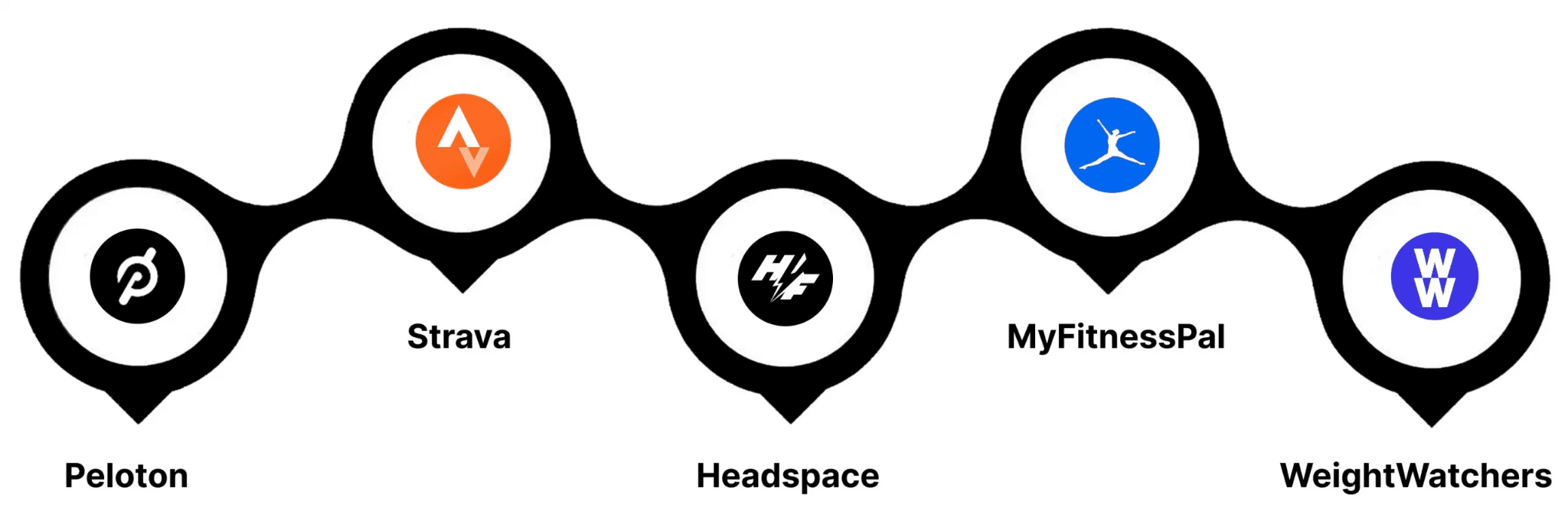
How do the giants in this space win? They win by being the absolute best at one specific thing. MyFitnessPal, for example, centers on dietary monitoring and a massive nutritional index. Strava merges physical movement logging with social media elements to create a community.
Headspace is all about audio-guided meditation for mental health, and Peloton delivers high-energy classes through its own hardware. The common thread here is a deep, defensible focus. Their users stick around because of that one specialized thing they do better than anyone else.
But if you only study these giants, you’ll miss the profitable niches they deliberately ignore. Just making a list of their features is a classic founder mistake that blinds you to smaller, more defensible opportunities. A focused, boutique app can serve a niche group of users far better than a diluted, all-in-one product ever could. You can't just wait for people that are looking for their next thing, you have to convince them to leave.
Understanding Today's Fitness App Users
Approximately 45% of fitness app consumers are female, and the single biggest age group is people from 25 to 34, which makes up roughly 38% of all active users. Within that, you'll find different tribes: some people just want a clean interface for routines, dedicated gym-goers need clear metrics to track progress, and holistic health users prioritize synchronized metrics from wearables to see overarching health trends. Your job is to find your tribe and serve them obsessively.
Instead of guessing what people want, you can use a simple three-part process to find real, unmet needs. Start by examining 1-star and 3-star reviews on dominant platforms for recurring complaints and feature requests. You should also explore localized discussions on networks like Reddit, in subreddits such as r/xxfitness and r/bodyweightfitness, or in focused Facebook Groups to see what specific measurement requirements or operational pain points they highlight that mass-market applications fail to address.
When you find a complaint that pops up over and over again, you must cross-reference these discovered consumer complaints with your own organization's specific capabilities. The most valuable feedback comes from phrases like "I wish it had..." or "Why can't it do..." (these are pure gold).
Defining the Business Case for Your App
After identifying a target audience, the next step is to define what the app is actually supposed to do for the business. Without that focus, the project becomes an expensive hobby instead of a strategic asset. Before considering features or design, a business must decide on the one primary job the app will have for its bottom line.
At a high level, this will usually be about creating new revenue, building loyalty with your existing customers, or gathering strategic data you can't get anywhere else.
Creating New Revenue Streams and Brand Value
Your app is a strategic asset, giving you a direct line to your customers that's always on, 24/7. It's a way to package up your expertise and sell it, breaking free from the limits of a physical gym or studio.
This direct connection is your foundation for building predictable, recurring revenue through things like subscriptions or exclusive content. It also broadens customer acquisition through marketing opportunities. This approach refines the corporate reputation and elevates its positioning, making you look like the serious player you are.
Building User Loyalty and Engagement
One of the most powerful ways to keep users coming back is to build a community right inside your app. Things like leaderboards, virtual medals, and personalized workout plans all help, but the real magic is in connection. In fact, data from Uscreen shows that apps with active user groups see half the member churn of those without. Algorithmic suggestions generated by machine learning also deepen retention.

But how do you know if you're actually building that loyalty? You measure it. The key metric here is your Retention Rate, which is just the percentage of people who come back over time.
You'll want to keep a close eye on this number at the 7, 30, and 90-day marks after a user first signs up. Evaluating brand value can be done by tracking direct traffic to the corporate website and social media shares from the app.
Gaining Data Insights for Business Strategy
Your app's analytics are a goldmine. They give you a blueprint of what people are actually doing, not just what they say they want. You can see exactly which features they love, where they get stuck, and when they drop off. This is how you stop guessing, obtain a diagnostic blueprint to polish the product interface, and start making smart decisions to improve the user experience.
This blueprint is built from a handful of key metrics. For loyalty, you're looking at Session Frequency and that same Retention Rate we just talked about (at the 7, 30, and 90-day marks). To gauge engagement, you'll track things like Core Action Completion and Feature Adoption Rate. And for brand value, you can look at signals like direct traffic and how often content is shared from your app.
Choosing Your App's Niche and Core Function
Picking a niche isn't a suggestion; it's a binding contract you make with a specific user. It means you're committing to solving one problem incredibly well, which forces you to get comfortable with ignoring everyone else. My first app tried to be everything to everyone, a tool for both hardcore marathon runners and absolute yoga beginners.
It was a spectacular failure because it ended up being useful to neither. So, maybe don't quite do like I did, but learn the lesson: the goal is to actively disappoint a huge chunk of the market so you can become indispensable to a small, passionate one. The best fitness apps are built around a single, clear purpose that shapes every feature and line of code.
Workout and Activity Tracking Apps
Every category in the fitness app world is defined by the specific problem it solves for a user. This is why your choice of niche is a promise to master one function, not just play in a general market. The main divisions you'll see are workout and exercise apps, activity tracking apps, nutrition and diet apps, yoga and meditation apps, social fitness apps, personal trainer apps, facility organization software, and recovery and chronic care applications. When you pick one, you're also choosing to let the others go.
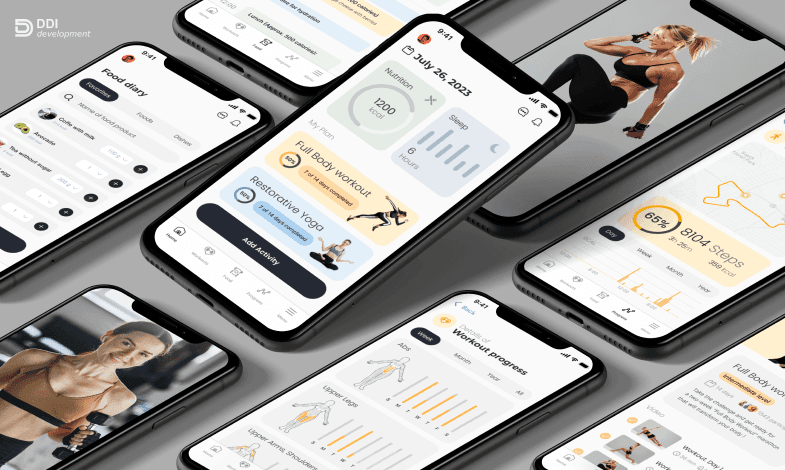
For example, workout apps and activity trackers seem similar, but they solve completely different user needs. A workout app is for the person who wants ambiguity gone, who needs a structured program with clear instructions telling them exactly what to do. An activity tracker, on the other hand, is for someone who just needs a gentle nudge toward more daily movement and consistency, often without the intensity of a rigid workout plan.
The most successful fitness apps are architected around a single, primary objective, which dictates the entire feature set and development path. You have to decide which of these two people you're building for, because you can't serve both of them well in a single product.
Nutrition and Diet Management Apps
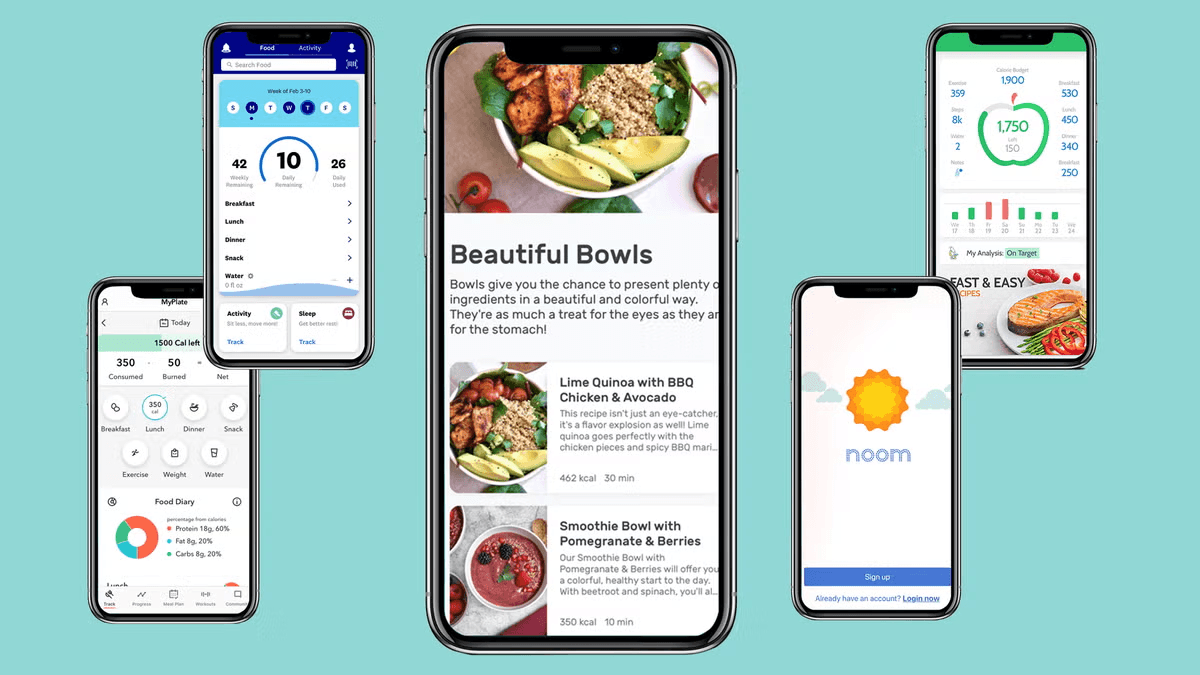
These apps are built for one job: to help people track their food and energy intake. The entire game here is to make the process of logging meals and calculating calories as painless and fast as possible. For the user who downloads a diet app, every other bell and whistle is just noise if that core function isn't seamless.
Wellness, Meditation, and Mental Health Apps
Wellness and meditation apps are in a totally different universe from physical performance apps. They offer a toolkit for mental recovery and managing stress. While an activity tracker might help someone regulate their daily physical habits, a meditation app’s core job is to provide a quiet space and calming routines. For this user, your product needs to feel like a sanctuary, not a scoreboard.
Social and Gamified Fitness Apps
The entire bet behind social fitness apps is that people are more motivated by other people. Because the main drivers are competition and a sense of community, your most important job is to build features that get people interacting. The individual tracking data is just the raw material that fuels the social engine.
Niche-Specific and Coaching Platforms
Then you have the more specialized plays. Coaching apps aim to recreate the experience of working with a real-life trainer, while facility organization software is built for gym owners to manage their bookings and payments. These, along with recovery and chronic care applications for people with ongoing health conditions, are much tighter niches. To figure out your own best path, you need to answer some key questions about your business.
First, what’s your main commercial resource? Do you have a library of proprietary content like workout videos? A roster of qualified professionals like coaches and dietitians? Or a built-in, active audience from a blog or social media channel?
A vault of content points you toward a workout or diet program app. A list of pros is perfect for a digital coaching service. An existing audience is tailor-made for a community-driven social platform.
Next, what issue are clients currently spending money for you to resolve? This could be reaching a physical metric, mitigating daily tension, or securing organized supervision. If clients want to reach a particular physical metric such as shedding pounds or adding muscle, you should concentrate on exercise guides and basic activity tracking. If they are trying to mitigate daily tension and improve general life balance, you should concentrate on restorative mental health and meditation modules.
Finally, you have to decide on your monetization model. If your goal is capturing steady, anticipated streams of income from dedicated subscribers, then membership plans built into coaching systems or workout programs are highly appropriate. If you prefer attracting the widest possible user registration first and then presenting paid options later, basic accounts with premium dietary options or basic tracker upgrades fit this goal.
Defining Core Features and the Tech Stack
The Minimum Viable Product must be clearly defined, because it’s probably the most butchered concept in the software world. Too many founders think it’s just a smaller, cheaper version of their grand vision. That’s how you end up building a little bit of everything and doing nothing well.
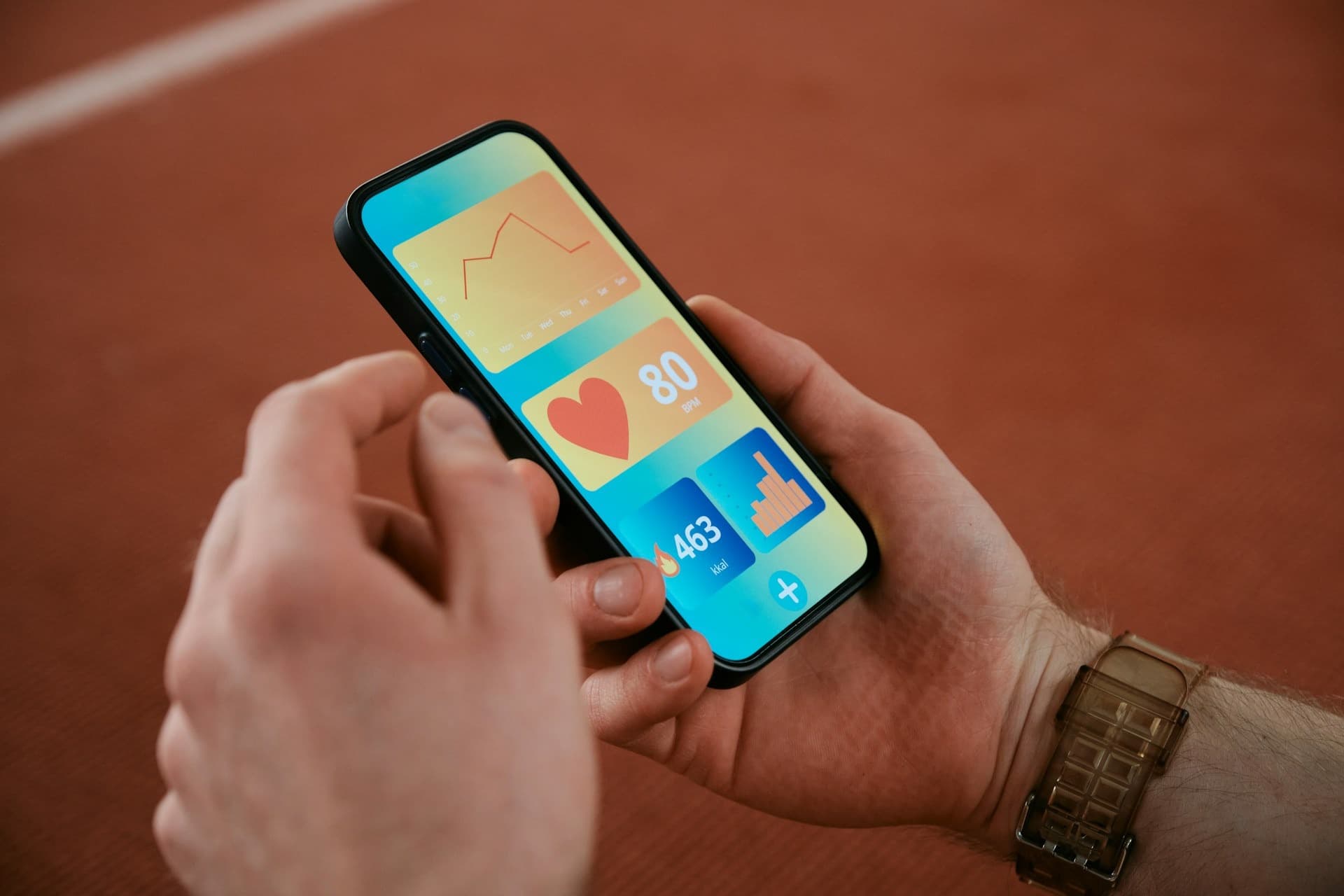
Your MVP isn't a watered-down version of your dream app. It’s a sharp, focused experiment built to prove one single thing: does your core idea actually work?
Prioritizing User-Facing Features for an MVP
The feature set for your MVP needs to be ruthlessly small. I mean tiny. It should do one thing, and one thing only: solve the user's biggest, most immediate problem. If you’re building a new jogging app, that means you perfect the flow to start and track a run, then save it.
For example, a jogging app's primary objective is to optimize the "commence, record, and preserve route" sequence, not build social forums or nutritional organizers at the start. That’s it. Don’t you dare write a single line of code for a social feed or a meal planner until you’ve proven people will actually use the main tool.
For the user, this includes a simple process for user registration and account configuration. An uncomplicated initial setup lets individuals define their physical capabilities, personal targets, and core choices, ensuring a highly customized interface from day one. From there, they need to be able to log their key metrics (think weight changes or daily step counts) and see their progress in a way that’s easy to understand, like a basic chart.
Inside the workout experience, high-resolution training clips combined with vocal or automated direction elevate the customer journey, guaranteeing that activities are executed securely and correctly. Push notifications to remind them to work out, drink water, or take a break are also fair game, as they directly support that core function.
Required Admin Features for Management and Analytics
Now, a lot of people treat the admin panel as an afterthought. This is a huge mistake. A functional back-end is necessary so your team can actually run the app.
This panel needs to let you do the basics: look up users, edit or delete profiles, and see what is happening. It also needs a simple way for asset curation, such as uploading, altering, and categorizing media like workout videos or meal plans. If you can’t control your own app from day one, you don’t have a business, you have a science project.
A dashboard for analytics is just as important. You need to see how people are using the app, how many are sticking around, and what revenue is coming in. This is how you make smart decisions instead of just guessing.
You’ll also need tools to manage your subscriptions and payments, and a system to collect user feedback and bug reports so you can fix what’s broken. This oversight should cover singular sales, free-tier setups, and recurring memberships, keeping transaction records and chargebacks organized. You must also be able to review troubleshooting logs to gather consumer comments, handle support inquiries, and spot recurring user frustrations.
Integrating AI and Wearable Device Data
Pulling in data from wearables is great, but only if you turn it into actual advice for the user. The flow is pretty standard: a device tracks metrics like steps or heart rate, then sends that data to the smartphone app, typically using Bluetooth or Wi-Fi. The app acts as the central hub, cleaning up the raw data before sending it to the cloud to be stored and analyzed.

It’s in the cloud where your software turns all that history into simple, useful guidance. These cloud environments also host history archives, diagnostic algorithms, and customization rules. If you skip that last step, you’re just showing people numbers they could already see on their watch.
This is where machine learning comes in. It’s what powers the personalization and real-time feedback that makes the data useful. You can build automated workout generators that create custom plans based on someone’s goals and fitness level, plus what equipment they have. You can even use the phone’s camera to do live posture checks, count reps, and also give simple audio cues to correct someone’s form on the fly.
Planning for Future Technologies like AR and VR
The same logic applies to fancy tech like augmented and virtual reality. Don't build an AR or VR feature just because it sounds cool, that's a massive waste of time and money. Instead, find a real user problem, like workout boredom or bad form, that this tech can actually fix.
For example, using VR to drop someone into a virtual spin class is a great way to fight monotony. Using AR to overlay alignment guides while someone is jogging is another solid use case. Nail the core product first.
Setting the Budget and Monetization Strategy
Your budget isn’t some number you pull out of thin air. It’s the direct financial result of all the strategic calls you’ve made so far. It’s the price tag on your decision to either launch a lean, fast app or build a deeper, more feature-rich platform. This is where your strategy gets real, because every dollar you budget is a vote for either speed-to-market or long-term user retention.
Understanding Fitness App Development Costs
So what does that look like in real dollars? The honest answer is, it depends entirely on the feature list you just mapped out. The gap between your "must-haves" for launch and your "nice-to-haves" for later is what decides if your total spend is between $30,000 and more than $300,000.
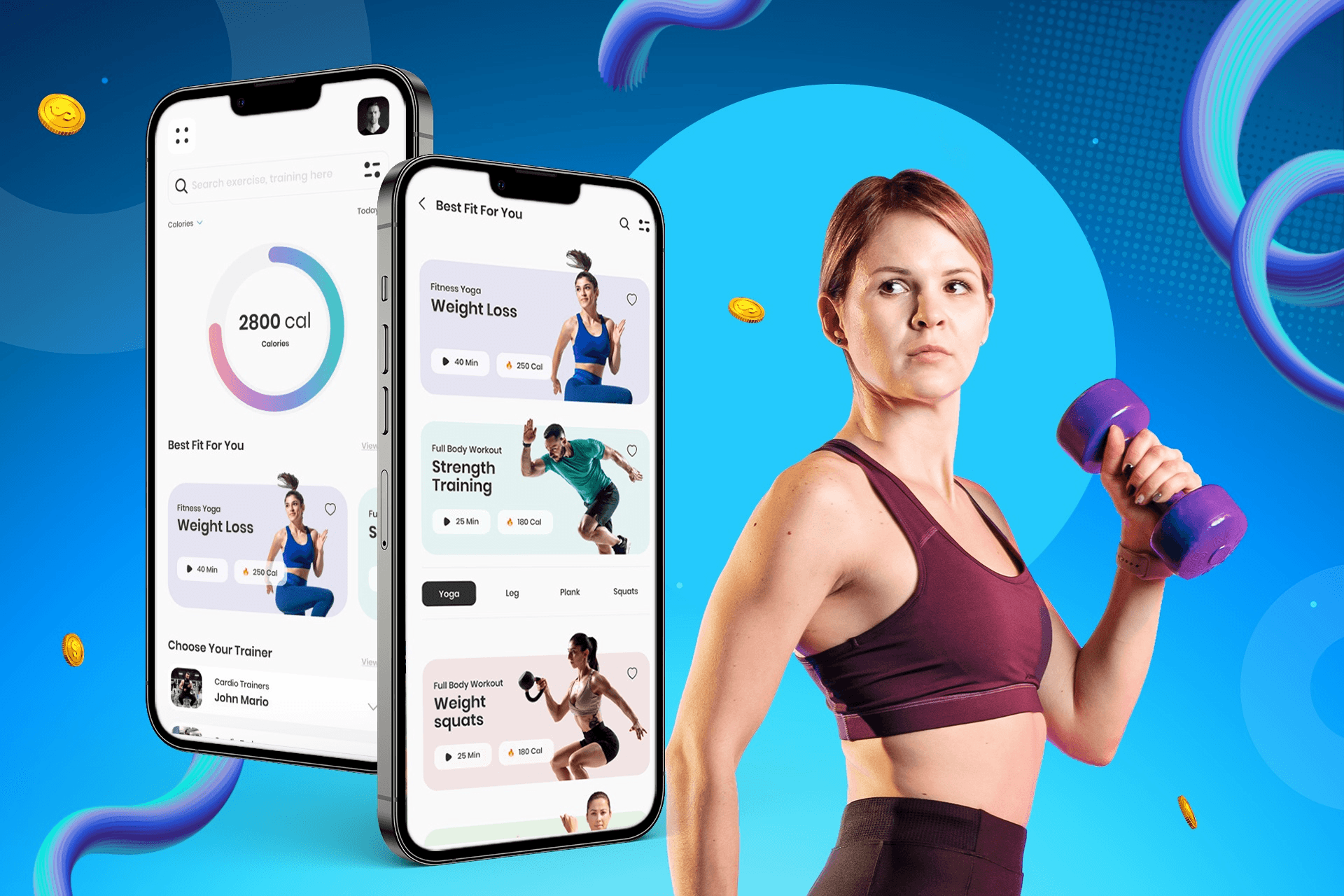
Specific features are what drive that huge range. An AI-powered virtual coach, for instance, can easily add $50,000 to $100,000 to the project on its own. Compare that to a simple clickable prototype or a basic payment gateway integration, which might only run you between $5,000 and $15,000 each.
How Team Location and Structure Affect Cost
Where you hire your developers is one of the biggest levers you can pull to manage costs. You can expect to pay between $100 and $150 per hour for engineers located in North America or Western Europe. If you work with a team from Eastern Europe, India, or Southeast Asia, those rates typically fall between $30 and $100 per hour. And in a market like Vietnam, you might see quotes in the $25-$50 range.
Hiring a developer directly is another route. Just be prepared for the upfront cost and time sink: finding the right person can cost you $10,000 to $20,000 and take three to six months before they even write a line of code. When you add in salary and ongoing maintenance, you can see how this approach can quickly push your total project cost up to $600,000.
Budgeting for an MVP vs. a Full-Feature App
This is the moment of truth where your budget forces you to commit to your strategy. Are you building a lean Minimum Viable Product to test an idea, or are you building a full-featured app designed to capture a market from day one? A simple native fitness MVP will likely land in the $50,000 to $100,000 range.
A more complex, mid-tier app built on a cross-platform framework is a bigger bet, usually costing $200,000, $300,000. And if you're shooting for the stars with a high-end native app packed with advanced features, that budget can climb even higher.
This is the classic trade-off. You have to weigh the risk of launching a fast, cheaper MVP that might not have enough features to keep users around against the risk of sinking a huge amount of capital into a polished app that nobody ends up wanting.
Comparing Subscription, Freemium, and Paid Models
There is no need to reinvent the wheel on monetization. The fitness market has pretty clear patterns, and you should pick a model that users already understand and expect.
For example, just look at the big players. MyFitnessPal uses a classic freemium model, getting a massive number of people on the platform for free and then upselling the most dedicated users to a premium plan. The Streaks app does the opposite, charging a one-time fee of $1-5 upfront for a simple, focused tool.
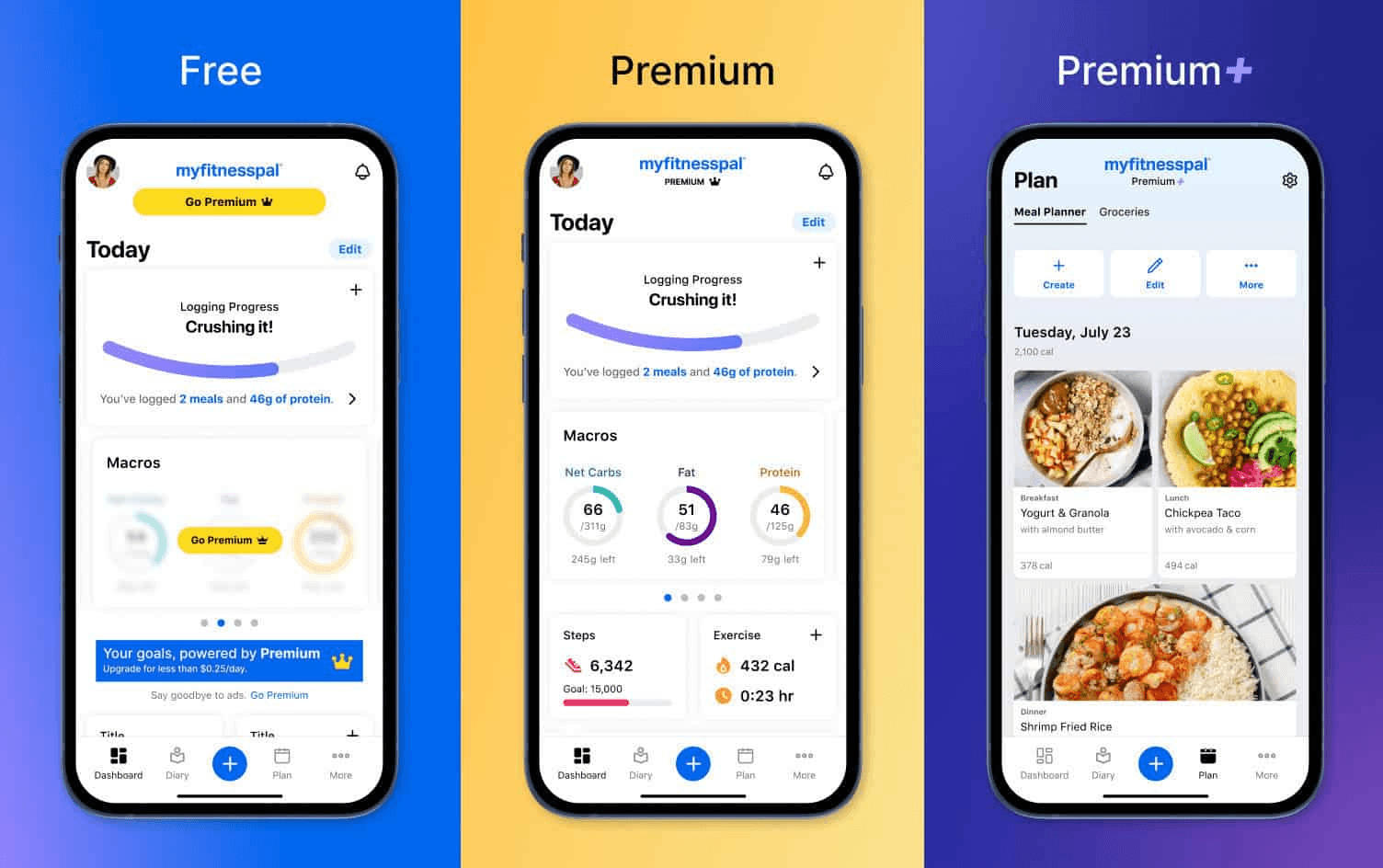
And then you have newer models like Sweatcoin, which is experimenting with a move-to-earn system. They're all just different ways of creating a value exchange with the user. Your job is to pick the one that fits your product.
Exploring Alternative Revenue Streams
In-app purchases are a great way to generate revenue without asking users for a big subscription commitment. For instance, offering special workout packages for a small fee or selling virtual badges for completing a tough challenge are both viable options.
These are just one piece of a much bigger puzzle. You can also make money through other channels that don't involve charging the user directly (think sponsored programs, affiliate sales from gear recommendations, rewarded ads, or even corporate wellness contracts). You can also explore white-labeling your tech to other businesses or, if handled carefully, monetizing anonymized user data.
Strategies for Managing Your Development Budget
If you want to keep your costs in check, you have to make smart technical choices from the very beginning. The single biggest move you can make is to use a cross-platform framework like Flutter or React Native. This lets you build for both iOS and Android from a single codebase, which is a massive lever for cutting down development time and cost.
Of course, that's not the only trick. You can also control your budget by defining the MVP first, outsourcing selectively, using open-source components where possible, and prioritizing only the most essential features for launch. Using cloud services, automating your testing, and tapping into third-party APIs can also save you a ton of time and money. The key is to plan for these things from the start and analyze user behavior to optimize the roadmap, making sure you're only building what people will actually use.
Structuring the Development Project and Team
Putting a structure around your development project is the best way to keep it from spiraling out of control. A phased approach creates natural checkpoints, which stops scope creep and budget blowouts before they can kill your project. This is how you make sure every dollar you spend on engineering is tied directly to the business case you’ve already validated.

Writing code without this discipline isn't just a bad idea, it's professional malpractice. It’s your primary defense against the kind of unstructured, "wouldn't it be cool if" creativity that burns through capital and ends in a failed launch. Before anyone on your team writes a single line of code, you need to map out the entire project and get explicit sign-off on one phase at a time.
Phased Development: Discovery, Design, and MVP
The first phase, usually called Discovery, is where you lay the foundation for everything that follows. Before any real development starts, your partner, whether they're in-house or an agency, owes you four key things. Insist on getting a Product Requirements Document (PRD) that details all the business logic and user stories.
You'll also need a full set of wireframes with a User Flow Diagram to map out how people will move through the app. On top of that, get a formal Technical Architecture Proposal that explains and defends the tech they plan to use. The last piece of the puzzle, and arguably the most important deliverable, is a high-fidelity Clickable Prototype.
This is basically a mockup of your app that you can actually tap and swipe through, but with zero code behind it. It’s your first real chance to feel the user experience and catch clunky navigation before it’s expensive to fix. Your designer can assemble the prototype using software like Figma or InVision, and you can pass it around to let people click through the whole thing on their phones. Want to add another feature?
Sure, go ahead, but remember that seeing it in the prototype is a lot cheaper than building it for real and then realizing it was a bad idea. We almost went under on a project because we kept letting the team tack on "just one more thing." We only saved it by freezing everything and shipping an MVP that felt broken to us, but it forced us to see what customers would actually open their wallets for.
Once you have these documents signed off, and only then, can you confidently decide what goes into your Minimum Viable Product (MVP). You have to be ruthless here. So what’s absolutely essential?
For a fitness app, you’re focused on solving the user's core problem, which means you’re only building the bare necessities (think user profiles, basic activity tracking, a small set of workout plans, and push notifications). The whole point of an MVP is to get something into the hands of real customers as fast as possible, see if your idea has legs, and start getting feedback you can use to make it better.
Full-Scale Development, Testing, and QA
With the planning and prototyping done, the project moves into the full build. This phase includes ongoing market research and product strategy. It usually means dedicated UX/UI design work followed by the actual MVP development, which splits into two tracks: front-end and back-end.
This is where you’ll make some huge technical decisions. For instance, you can use modern frameworks like Flutter or React Native for the front-end. This is a popular move because it lets you build for both iOS and Android from one codebase, which has a massive impact on how fast you can launch, how much it costs, and how many people you can reach.
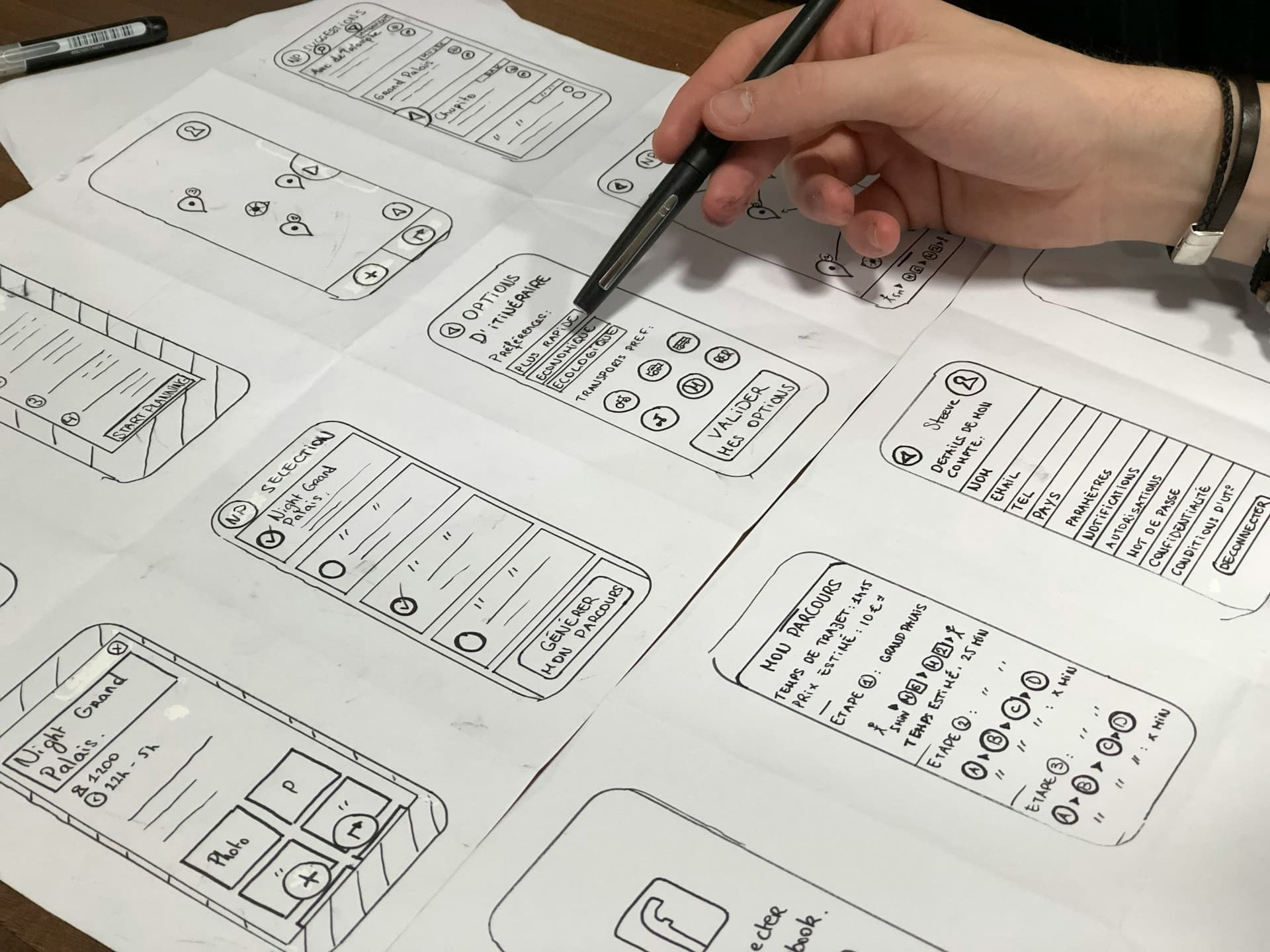
As the owner, you don't need to know how to code, but you do need to know what you're responsible for. Think of the front-end as everything your customer will see and touch; you have to give the final sign-off on that UI/UX design. The back-end is the engine under the hood that handles all the data, accounts, and server-side logic. You won't design it, but you do need to approve the core tech stack your lead engineer proposes.
During this phase, you also have to tackle integrations. Connecting to platforms like Apple HealthKit, Google Fit, Garmin, Fitbit, and Samsung Health isn't optional. These aren't just nice-to-have features; they are a primary driver of user retention and directly expand the value of your app's ecosystem.
Planning for Deployment and Ongoing Maintenance
A project plan that stops when the code is "done" is a bad plan. You have to budget time and money for the actual deployment, which means getting the app submitted and approved for the Apple App Store and Google Play. Your plan also needs to account for the long haul: ongoing support, bug fixes, and future updates. As your business grows, you can start planning to add more advanced features using tech like AR for workouts, IoT for connecting to gym equipment, or AI/ML for smarter coaching.
After you launch, the work doesn't stop, it just changes. You shift from building to supporting and maintaining. This last, ongoing phase of adding new features and improving the tech is where the business really grows.
But just remember, all of that post-launch success is built on the foundation you laid earlier with your UX/UI design, your MVP choices, and your front-end and back-end architecture. When you're running a live service, you're never really "done."
Managing Compliance, Security, and Launch Risks
That feeling of being "never really done" is especially true when it comes to the legal and security side of your app. This is an ongoing process. Compliance is a permanent line item in your budget, an operational cost you have to plan for from day one.
It’s how you earn trust and keep yourself out of massive legal trouble. Thinking about security is a core product decision that involves more than just your engineers.
Handling Health Data and Ensuring Compliance
So, how do you know if you’re wandering into a legal minefield? There’s a simple test to figure out if your app is handling what the law calls Protected Health Information (PHI). Just ask: is this the kind of data a doctor would log in a patient's chart? If you're just counting workout reps, you're probably fine.

If the software records clinical stats like blood pressure or integrates with an insulin tracker, it has crossed into handling PHI. But the second your app starts tracking something like blood pressure or hooks into an insulin monitor, you've crossed a line. That data is now considered PHI.
Once you're handling PHI in the United States, you fall under the rules of HIPAA, the Health Insurance Portability and Accountability Act. This is an ongoing responsibility with constant audits and assessments. And it's not the only one.
You'll also need to keep an eye on GDPR for your users in Europe, CCPA which grants California residents rights over their data, HITECH which adds more teeth to HIPAA, and PCI DSS if you're processing payments. It's a messy alphabet soup of regulations that you have to stay on top of forever.
Common Development Challenges to Anticipate
The technical work here goes way beyond the features your users see and touch. For instance, just trying to connect your app to wearables like the Apple Watch, Fitbit, and Garmin is a huge engineering headache. Each manufacturer has its own distinct API, which means your team has to build and maintain a totally separate, complex pipeline for every single device you want to support. This is a direct and recurring cost.
You also have to think about your backend. Your database needs to be built to handle a massive number of users without crashing, and your app's code has to be incredibly efficient. A fitness app that drains someone's battery or hogs their phone's storage is going to get deleted fast.
Best Practices for a Successful Fitness App Launch
A smart launch plan is your best tool for getting users and proving your idea has legs. Before you even think about running ads, you need a strategy to get the app into the hands of your first true believers. If you’re a subscription business, a free trial is a great way to kickstart that growth. For instance, the training platform 8fit used a 14-day free trial to help it get its first 10 million registrations.
Of course, a great product doesn't do much good if nobody can find it. You absolutely have to be on both the App Store and Google Play. That's just table stakes. You'll also need to get good at App Store Optimization (ASO) so that when people are searching for a solution like yours, you actually show up.
FAQ
How much does it cost to develop a fitness app?
Building a fitness app typically costs $50,000 to $600,000, depending on its complexity. A basic prototype can cost as little as $5,000, while a simple MVP usually starts around $50,000. More advanced apps with features like AI personalization, wearable integrations, or cross-platform support generally range from $150,000 to $600,000.
How do fitness apps make money?
The most popular monetization model is freemium, used by 61% of fitness apps, where basic features are free and premium features require payment. Subscriptions are the second most common model (29%), while one-time purchases account for just 10%. Many apps also generate revenue through in-app purchases, such as workout programs or nutrition plans.
How much does it cost to develop a fitness app?
Development timelines depend on the app's scope. A focused MVP can be built in 2 to 3 months, while a typical fitness app takes 4 to 8 months. More complex apps with advanced features may require 9 to 12 months or longer.
What are the most important features for a fitness app?
The most valuable features are those that help users track progress. Workout tracking is the top priority for 83% of users, followed by progress tracking (76%) and personalized workout plans (68%). These core features should come before extras like social feeds or recipe libraries.
When is HIPAA compliance required for a fitness app?
HIPAA is required if your app handles protected health information (PHI) for users in the United States. If you serve users in the European Union, you'll also need to comply with GDPR. Most general fitness apps that only track workouts and activity do not typically fall under HIPAA.
So now you have the playbook for treating your fitness app development project like a business, not just a bundle of features. A ruthless focus on one business case and one type of user is the starting point. That focus forces you to make the hard trade-offs that define your MVP, your budget, and how you'll build this thing out over time (think monetization, compliance, future features, etc).
The discipline that separates the apps that disappear in a year from the ones that build real, lasting value is this. Start now; treat every decision as an expression of that core strategy, and you'll reap the benefits for years to come.
Share this page


Table of Content

Subscribe to Golden Owl blog
Stay up to date! Get all the latest posts delivered straight to your inbox