Nike has accelerated its digital transformation by making a huge investment in digital technologies and information systems. This investment empowers its D2C e-commerce and supply chain.
Digital transformation is no longer a novel term in the technology world. More and more enterprises and MNCs thrive to apply digital in their operation as a method to stay competitive in the market.
Nike has never hesitated to adopt the latest trend, and become a digital-first, direct-to-consumer (D2C) company. According to Bain and Company, “only 8% of the companies have been able to achieve their targeted business outcomes from their investments in digital technology.” However, Nike is doing well with the digital transformation shown by positive increasing numbers in revenue.
According to the latest report (2022), Nike's e-commerce sales increased by 33%1 after a historically slow start in the industry. Today, the company generates 26% of its total revenue via its digital platforms. It seems that Nike’s digital transformation will win big in the future with the continuous strategy of forming the business more digitally.
The brand has adopted a direct-to-consumer strategy, meaning that even wholesalers who have worked with it for years can no longer purchase its products. This shift has led to a significant change in how people buy Nike shoes. Today, Nike primarily sells its shoes to consumers through digital channels such as its apps and website. The company also operates immersive stores that reflect its brand image.
An analysis of Nike’s DTC approach shows significant overlap with other brands. Like most companies, Nike offers both digital touchpoints, including its website and apps, as well as physical points of sale. However, Nike has taken the integration of technology and digital experiences in its stores to a new level. In particular, Nike enables in-store shoppers to use their smartphones in multiple ways to enhance the shopping experience, such as reserving fitting rooms or viewing product information. To further optimize the customer experience, Nike has installed in-store panels that display features accessible via smartphones.
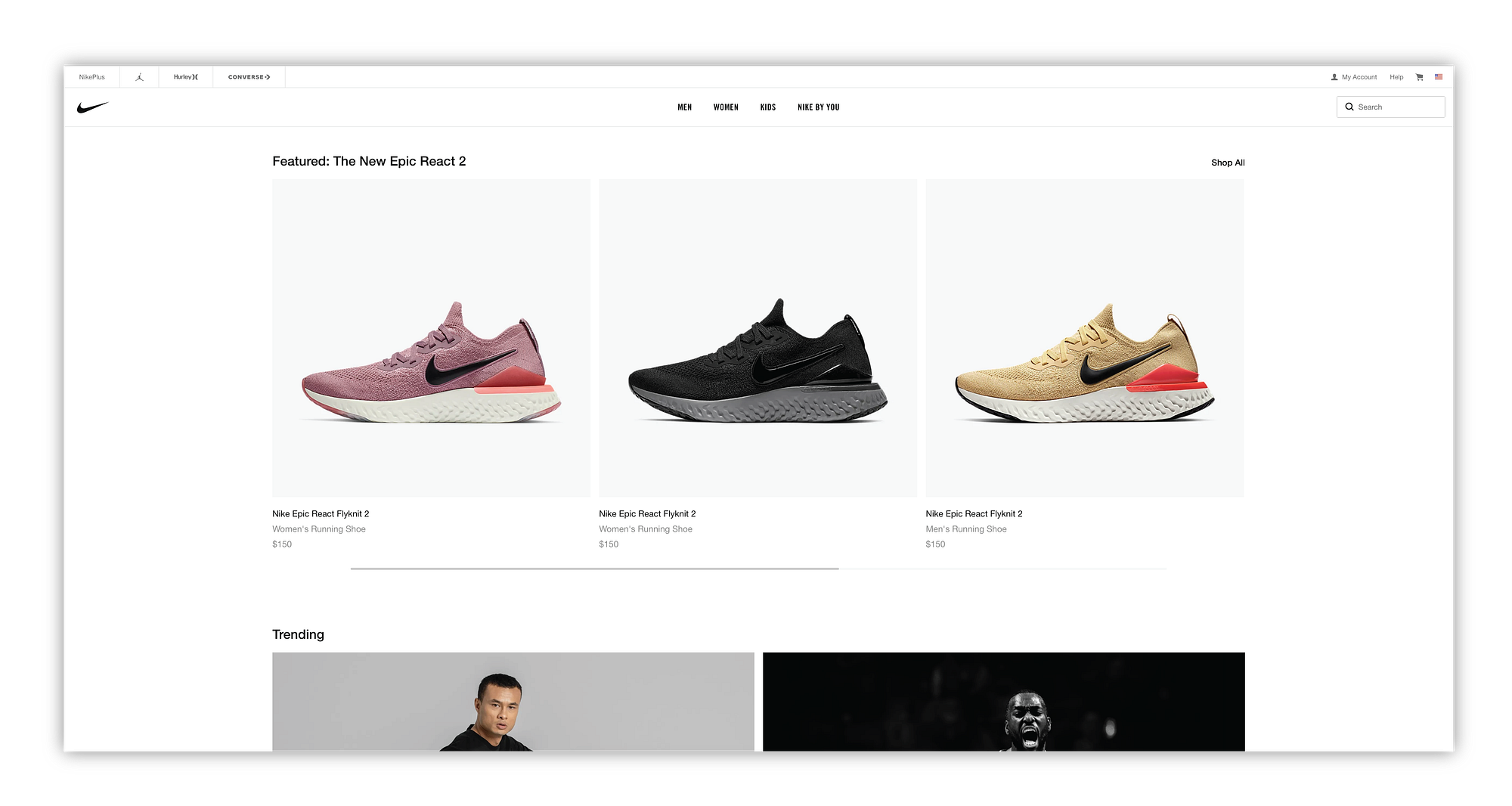
Nike.com - The main eCommerce website
As soon as a visitor or customer starts browsing the nike.com, machine learning algorithms begin to operate. The machine learning system analyses data such as past and current browsing patterns, previous purchases, wish lists, patterns of abandoning shopping carts, time spent on product pages, and so on. From this data, AI is able to deduce individual preferences and offer relevant product recommendations. For instance, if a visitor frequently switches between items, the AI system recommends related products, highlighting items that are on sale or new collections from the relevant section.
Furthermore, AI takes into account additional criteria such as colour preferences, style and price range, in order to refine recommendations and enhance their relevance.
Key advantages:
Offers a more personalized experience.
Creates a more relevant and curated shopping experience.
Avoids overwhelming customers with thousands of irrelevant products.
Increases engagement, conversion rates, and customer satisfaction.
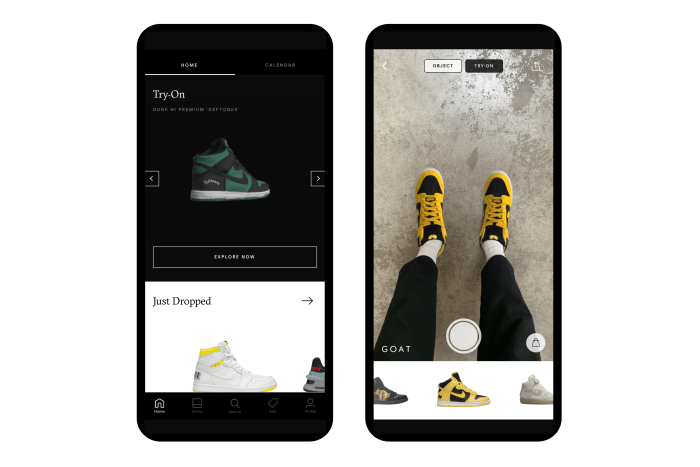
Nike is investing in augmented reality (AR) and virtual reality (VR) to create an even more immersive shopping experience. Future developments could include virtual store tours, AR-based product customization, and VR training experiences, allowing customers to interact with the brand in new and immersive ways.
Nike made several wise digital investments in the years before the COVID-19 outbreak, including the introduction of its mobile apps (the NIKE mobile app, the SNKRS mobile app, the NTC (Nike Training Club), and the NRC).
Nike launched these applications early enough not to be heavily affected by the COVID-19 outbreak a couple of years ago. During the pandemic, Nike's fitness app, the Training Club only, increased sales in China by 30%.
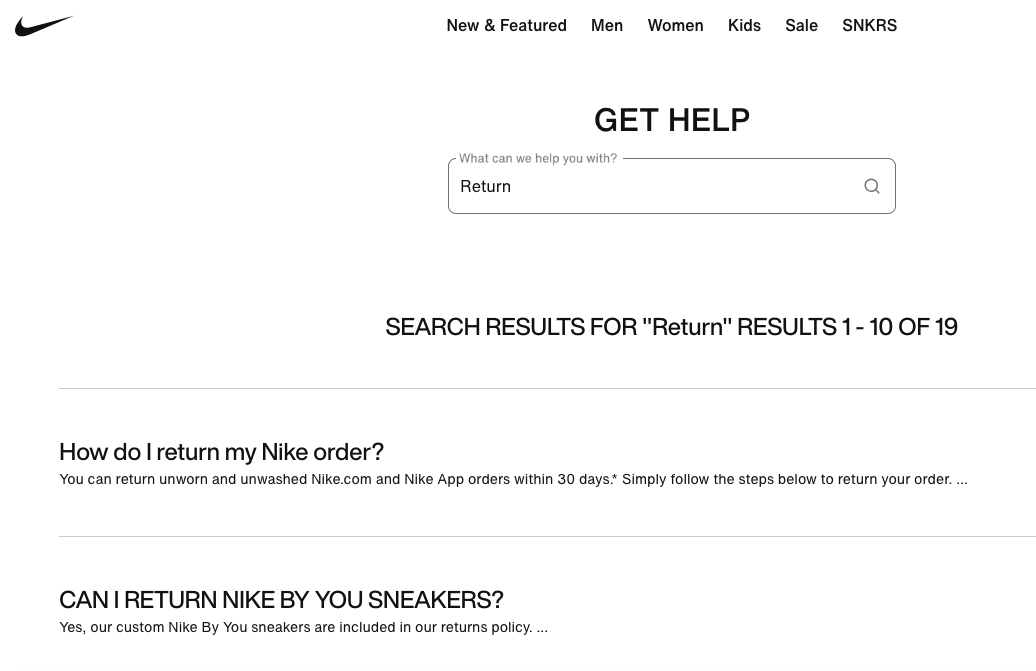
Nike also introduced a chatbot in collaboration with the provider of intelligent automation Laiye, which not only assisted online shoppers in finding what they were looking for but could also deliver customized product recommendations.
Nike’s the next move in the Near Future
Nike has hired Dantley Davis as vice president of digital design - an indication that the company intends to take bold actions across its digital platforms. Moreover, Nike announced that they plan to build a technology center in Atlanta and focus on digital strategy.
Additionally, Nike recently disclosed that in July it would redesign its Nike China digital ecosystem, which includes the Nike app and Nike COM, SNKRS app, Nike WeChat applet, NTC WeChat applet, and other independently owned digital platforms. Numerous people also believe Nike will start creating the newest fitness apps, ones that use biometric information to give users workouts that are specially catered to their particular exercise routines, preferences, and requirements.
Nike China digital app
Invest in Data Science, AI & Personalization
Nike has been successful in conducting a D2C model besides its digital applications and e-commerce, the company strongly invests in data science with the move of acquiring data integration startup platform, Datalogue, in 2021 as well as two predictive analytics tools Zodiac (2018) and Select (2019).
Zodiac is a marketing-focused tool that gives insights linked to the "value of an individual customer to enhance revenue and retention with the correct marketing, recommendations, and offers," even though both are AI-powered predictive analytics tools. To put it another way, it enables Nike to combine data points from numerous apps (both internal and external, like Fitbit) to better understand user behavior and anticipate buying decisions. Nike has integrated Zodiac into their app to enable personalized information and product recommendations.
Metaverse: “Nikeland” on Roblox
Nike released Nikeland in cooperation with Roblox virtual platform in late 2021, in the past 5 months, Nikeland received 6.7 million visits from 224 countries according to the company. In Nikeland, visitors can enjoy playing digital sports and gaming in Metaverse. However, Nikeland is not merely a gaming place, gaming is a means to a final objective: the metaverse’s potential of commerce. Nike currently sells Roblox avatar apparel, shoes, and digital accessories in Nikeland.
Later on, Nike also purchased the digital sneaker firm RTFKT during that same year. The cooperation has been successful thus far. For instance, Nike and RTFKT Studio introduced CryptoKicks Dunk Genesis in April 2022. This line of 20,000 non-fungible tokens (NFT) shoes may be bought and worn by your avatar in the metaverse. In just 6 minutes, 600 pairs of NFT sneakers were all sold out, bringing in a total of $3.1 million.
It seems that Metaverse attracts Nike’s attention because of tons of investment from the company in recent years. Nike’s move in the Metaverse illustrates the projected rise of the virtual world in the future that every business should take into account in its growth strategy.
Blockchain and NFC
Nike has also started to explore blockchain and NFC chips to provide authenticated details of its shoes, taking digital transformation to the next level. Here’s why these technologies are game changers:
Blockchain for Authenticity: Nike has been looking into blockchain technology as a way to combat counterfeiting and ensure customers are getting the real deal. By using blockchain, Nike can create a secure and transparent digital ledger that tracks each pair of shoes from production to purchase. This ensures buyers can verify the authenticity of their sneakers, adding value and trust to the brand.
NFC Chips for Tracking: Nike is integrating NFC (Near Field Communication) chips into some of its products, including shoes. Thus, customers can tap their shoes with their smartphones to access authenticated product details, such as where and when they were made, and even additional perks or exclusive content. It’s a cool way for Nike to create more engagement with their products while ensuring authenticity at the same time.
Supply Chain Optimization
The integration of AI, ML, and predictive analytics within supply chain management functions can help brands achieve reductions of 5% to 20% in logistics costs and 5% to 15% in procurement costs. Nike’s AI eCommerce strategy involves tools for supply chain management.
However, the exact functionality of this system remains unclear. Machine learning (ML) models utilize a variety of data sources, including sales data, seasonal sales trends, social media sentiment, and external factors such as weather conditions and broader economic trends, to predict product demand.
Based on these insights, Nike has optimized its inventory levels across the entire distribution network. As a result, popular items are consistently available, while overproduction of slow-moving products is minimized.
The following explains how this approach helps:
Optimizes logistics operations by identifying efficient shipping routes, warehouse allocation, and fulfillment strategies
Predicts order volumes and identifies potential bottlenecks
Supports the company’s commitment to fast delivery and reliable service
Nike Overhauls ERP2 software applications frequently use robotic process automation (RPA), machine learning, or artificial intelligence (AI) to improve supply chain management procedures. To reduce lead times, enhance customer satisfaction, and reduce risk, tools can help with demand forecasting, bottleneck identification, inventory management, product tracking, and risk mitigation.
Conclusion
In short, Nike makes bold moves in digital transformation and the world is waiting for more wonderful digital experiences in purchasing goods and consumer service innovations.
Digital transformation has not been a new trend, more and more businesses apply it in their operations and receive significant results, which partly proves the necessity of transforming parts of business operations into digital.
You can always contact our experts in technology in Golden Owl and receive advice on web and software development. Do not forget to subscribe to our blog to update the latest news about technology and startups.
FAQs
Q1. Why is Nike focusing on e-commerce and direct-to-consumer (D2C) sales?
By focusing on e-commerce and D2C, Nike can bypass traditional retail channels, gaining more control over customer interactions and increasing profit margins.
Q2. How does Nike use AI and machine learning in its operations?
Nike leverages AI and machine learning to optimize its supply chain, predict demand, and manage inventory more efficiently. These technologies help Nike improve operational efficiency, reduce costs, and enhance customer satisfaction by ensuring products are available when and where they’re needed.