Software is the easy part. Learn how to choose the right partner for digital transformation for small businesses that focuses on real outcomes.


Why You Should Build a Custom Digital Transformation Framework
Jul 17, 2026
about 16 min read

Stop forcing your team into rigid models. Learn how to harvest the best parts of digital transformation frameworks to build an outcome-driven strategy.
Buying software without any structural logic is the road to disaster. To stop the operations chaos, the typical advice is to pick a standard digital transformation framework and force your teams to align.
That always looks simple on paper. In reality, the minute a floor manager working a ten-hour shift decides the new app slows them down, they'll quietly retreat to their hidden spreadsheets. Raw human friction is the only thing that actually decides if a technical rollout survives.
Realizing that true success means tearing those rigid models apart comes first. Organizations cannibalize them for the exact pieces they need to hit one specific outcome. We need to see why the classic manuals fail before building a custom engine.
Deconstructing the Classic Digital Transformation Framework
Do you know that adopting a complete digital transformation model carries a very, very heavy hidden penalty? They force you to swallow a massive theoretical pill just to clear a single operational roadblock.
Begin by realizing that adopting the whole thing is optional. Treat these established management frameworks as a scrap yard. Tear them apart, strip them to the studs, and harvest the exact tactical mechanisms you need. The remaining pieces go straight into the trash.
People and Structure-Focused Models
Picture a critical software rollout grinding to a complete halt just because I rigidly implemented the Prosci ADKAR® Model and prioritized process over immediate revenue. You quickly learn that tweaking a single operational pillar triggers a massive reaction everywhere else.
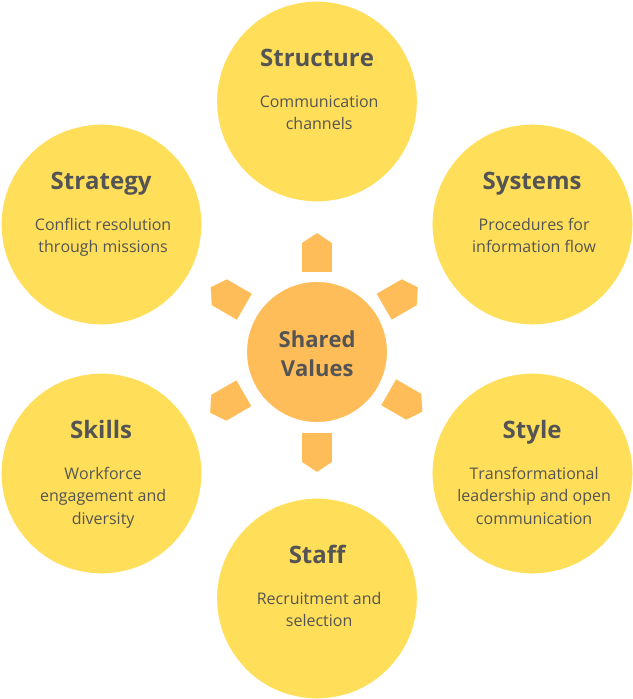
For instance, modifying a single element like Structure creates a chain reaction across the 7S Framework. This particular framework handles operational changes through the precise alignment of exactly seven core elements. The seven fundamental components making up this model consist of Structure, Strategy, Systems, Shared Values, Skills, Style, and Staff.
To get past individual resistance and actually pull off human modernization, you have to manage behavioral change sequentially. You can use the Prosci framework to break down employee friction across five distinct stages without forcing the issue.
You start by building Awareness so the workforce figures out why things are changing. Next, you nurture Desire to create personal motivation, followed by gathering Knowledge to give them the right capabilities.
Finally, developing Ability lets them apply these lessons daily, while using Reinforcement solidifies the habits so the structural shift actually sticks.
Capability and Process-Driven Models
I tried to overhaul every system at once during my early days. That is a bad idea. The real secret to building operational strength is to focus your modernization efforts on a few tight zones instead of trying to upgrade everything universally.
If you need a map for that, the framework created by MIT Sloan coordinates assets across three critical areas. Those core zones are Customer Experience, Operational Processes, and Business Models.
Moving that level of market disruption forward means you have to graduate from basic software infrastructure enablement all the way to creating entirely new commercial structures. The Boston Consulting Group's framework structures development by moving through three progressive actions.
You start by establishing the technical foundation to Enable. Then you bring in digital tools to secure a market advantage and Differentiate. Finally, you introduce entirely new commercial structures to Disrupt the market.
Customer and Value-Centric Models
I spent a long time building features just based on what I thought looked clever. But maximizing buyer appeal requires more than intuition. Since you need your product to actually sell, you have to systematically map out its appeal and intentionally design specific utility types.
Bain & Company’s Elements of Value framework defines exactly 30 separate forms of utility organized into four main buckets... (which is a lot if you've ever done it!).
They arrange all of those offerings logically. The official categories map directly to Functional elements, Emotional payoffs, Life-Changing benefits, and Social Impact contributions. Targeting these specific buckets ensures that every new feature you build actually handles a real emotional or functional job for the user.
Agile and Iterative Models
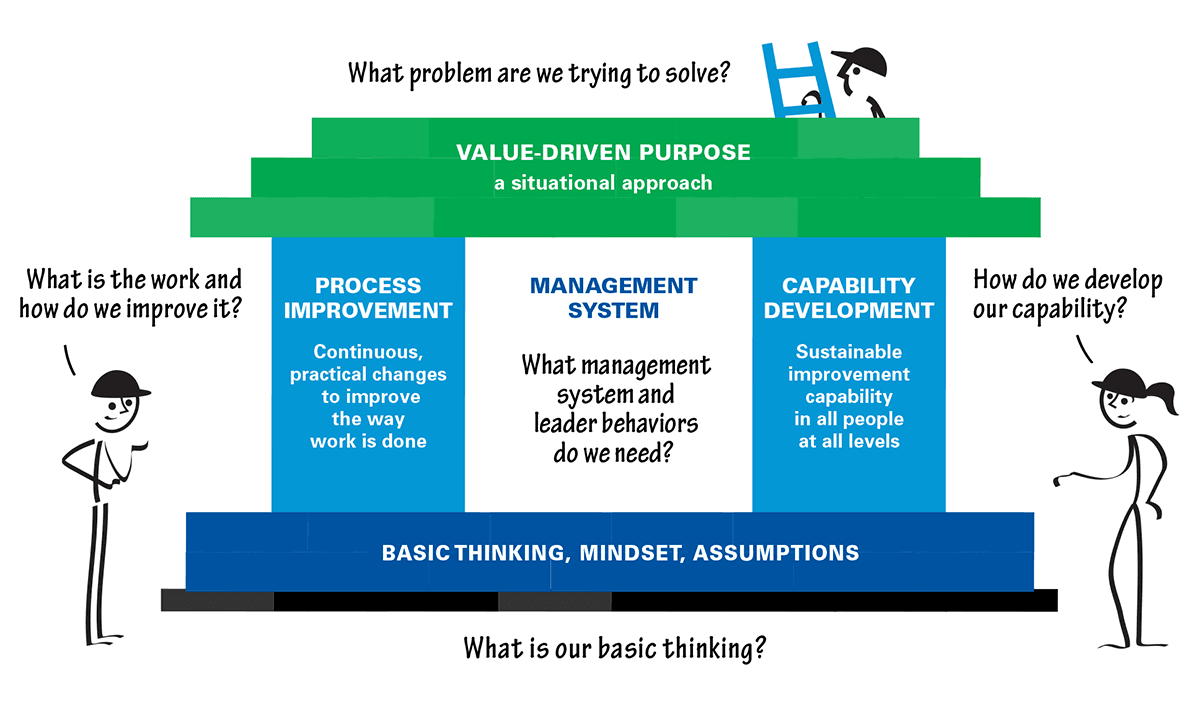
Technological upgrades remain completely meaningless in the real world if they fail to eliminate operational drag simultaneously. If you want to decrease expenses and increase throughput speed while bringing in new technology, you can't just buy shiny new software and hope for the best. To do it right, adopt the Lean Digital Transformation Framework first.
This model successfully pairs strict waste-reduction techniques with your ongoing technology upgrades. Remove the waste, kill the drag, and if you see bloat, cut it.
Other Notable Digital Transformation Models
Modernization efforts quickly turn chaotic and impossible to track without a structured digital transformation roadmap.
Gartner’s IT Roadmap for Digital Business Transformation Framework splits progression into five specific areas: Vision & Strategy, Customer Experience, Operating Model, Technology Core, and Metrics & Value Realization.
I used to focus solely on code. But you have to balance the technical work with commercial reality to actually succeed. Dividing enterprise upgrades into foundational categories ensures balanced development across both IT and commercial functions.
To keep the whole effort unified, the Harvard Business Review's framework breaks modernization out into four foundational categories. Those specific groups are IT uplift, digitizing operations, digital marketing, and building digital business models.
How to Build Your Custom Digital Transformation Strategy Framework
You have to be really, really ruthless when you put together a custom framework. If you just slap random parts together without an anchor, you end up with a bloated mess of competing priorities.
Sure, comprehensive goals sound safe when you present them in a board meeting. But building a hybrid model means betting everything on one primary business outcome that dictates every borrowed piece.
Define Your Primary Business Outcome
Realize that chasing dual objectives just drains your team's energy and wrecks your focus. Trying to grow sales while lowering overhead at the exact same time is a common trap. I used to build roadmaps trying to hit a bunch of big targets at once (I certainly did).
Isolate the single indispensable target that defines whether your project succeeds or fails. Once you find it, kill any proposed project that fails to back this core goal. Any suggested project that fails to back this core goal must be abandoned, even if auxiliary goals fall short.
Managers map this out using a one-page Framework Canvas to keep the whole plan tied down. This canvas is split into exactly four zones: the Primary Outcome, Human & Culture Components, Process & Operations Changes, and the Technology & Data Stack.
You put the Primary Outcome smack in the middle, so it acts as a filter for every single project you consider.

Select People and Culture Components
We often kid ourselves that mandatory training will fix adoption issues. In reality, your strategy fails completely if your staff doesn't view the tech shift as a direct upgrade to their daily workflow. Bad enterprise rollouts basically defined my early career.
You can skip that pain by asking your team what part of their job actually hurts. If you ignore them, that shiny new system will just gather dust.
Choose Process and Operations Elements
Figure out where your actual operational friction is before you go shopping for tools to fix it. Map out the real bottlenecks, then find the software that matches. If a platform forces your team to click more times to get the job done, drop it immediately. This simple rule takes all the guesswork out of the process.
Integrate Technology and Data Pillars
If a logistics company wants to upgrade its fleet routing, they need to put off playing with complex proprietary AI engines until they secure their foundational data.
In past projects, I made the mistake of layering on automatic routing scripts before I set up a shared cloud information hub to gather real-time driver coordinates. If you take the time to build an accurate baseline first, those scripts actually work.
Define Customer Experience Goals
For companies that rely on buyer interactions, online engagement has to happen before you worry about backend administration.
Rebuilding internal systems first was my default error for years. But customer-centric firms need to design solutions that lower the effort for their customers right out of the gate. Answering those buyer demands directly builds an online connection that secures long-term loyalty.
Creating Your Transformation Roadmap
The transition to a direct online connection with buyers means you have to nail the step-by-step rollout across your isolated departments. A giant digital transformation strategy framework sounds great until it hits the raw friction of daily work.
Your big plans dissolve really fast without ruthless execution. None of this survives unless you plan for the actual dirt and grime of getting things done.

Assess Your Current State
The deployment of a hybrid digital transformation model onto your business before checking your actual tech readiness is a great way to fail. Early on in my career I bought into vendor brochures instead of checking what my team could actually do.
I missed the real workflows entirely. You have to dig into your current software setups. Finding those exact spots where modern tools give you a fast advantage makes the big operational gaps completely obvious.
So do a comprehensive system audit. Talk directly to your staff and business partners to get their unfiltered observations. That raw data highlights exactly where your setup is breaking down right now. It also shows you exactly where you can push for fast improvements without breaking a sweat.
Plan and Prioritize Initiatives
The whole development pipeline will choke if you let every new idea through. Grab your potential projects and stick them on a 2x2 Impact vs. Feasibility matrix.
Your goal for those first couple of work cycles is simple. Pick off the fast wins that take very little work but deliver huge results. Push the heavy, complicated stuff down the road into future stages. Toss out any chore that eats up time for no real payoff. Your backlog shrinks in a hurry when you filter ideas this hard.
Take everything you learned from that audit and turn it into a concrete progression plan. Break those massive long-term goals down into tiny pieces you can actually chew on. Assign realistic schedules, lock in your targets, and set hard metrics to track the whole thing.
Execute and Monitor in Sprints
Which leads me to my next point: long functional roadmaps look comforting on paper but usually crash in the real world. They keep developers miles away from actual user feedback. I used to build out massive, multi-month launches in total isolation just because I hated doing things twice.
That never works out. You need the Agile workflow model to roll out new features in tiny chunks using sprints. Then you steer the project based purely on how real users react.
We built an internal stock-monitoring application for a huge multi-channel merchant once. The first two-week sprint proved this rule perfectly. The retail managers completely ignored the tool. A laggy scanning interface drove them crazy.
The store leaders stepped in, ripped up the roadmap for the next development cycle, and forced everyone to focus strictly on a simple single-touch entry design instead.
The Role of Leadership in Driving the Plan
Top executives have to show their faces if you want a modernization project to survive. I used to think a mid-level manager could champion an overhaul all by themselves. Far, far from it. Today we tell teams they need visible cover from the big bosses starting on day one.
A project dies in weeks without that top-tier shield. Plenty of companies still ignore this basic structural reality. Getting clear executive backing is absolutely mandatory. In fact, a full 26% of surveyed change professionals flagged it as the most critical success factor in the Best Practices in Change Management report.
Common Roadblocks for Custom Frameworks

Building a custom setup comes with a massive hidden tax during those first few months. Executives crave the false comfort of big brand names, so they'll endlessly question your architectural choices. They look at your hybrid and demand standard phases. That persistent institutional doubt is a severe threat to your timeline.
Overcoming Resistance to a Non-Standard Model
Boards love standard methodologies because they're simple to explain. The problem is they lack the sharp versatility required to hit precise targets. Giving in to the urge to buy generic packages just to avoid arguments is a massive trap.
You've got to be ready to explain your tactical reasoning over and over again. Doing that builds institutional alignment around your custom hybrid, and it eventually becomes super powerful in your daily operations.
Addressing Legacy Tech and Skill Gaps
Tolerating silos completely kills your momentum. You have to tear down those walls and mandate shared logs. If people refuse, fire them. Once you do that, the data finally starts moving across the floor.
When departments run in isolation before a proper integration, important discoveries stay buried. Teams end up repeating the exact same work unnecessarily, and your overall momentum slows to a crawl.
Ensuring Clear Communication and Stakeholder Buy-In
Vague updates about operational shifts create suspicion and break team unity. The pushback we usually see here looks exactly like my own badly handled rollouts. Look at the numbers from Prosci. Exactly 10% of surveyed professionals pointed to ongoing, clear updates as a main reason their system upgrades actually succeeded.
Precision matters immensely during these shifts. When leaders fail to articulate a clear direction, employees make their own assumptions. That confusion destroys trust and ruins team cohesion.
Keeping Your Hybrid Model Cohesive
A custom framework only holds together if every borrowed piece directly serves your main corporate objective. That sounds really obvious, but sticking random practices together totally wrecked my first project. For every single adopted part, you need to clearly explain its direct link to the main goal. If that connection seems weak or doubtful, leave the piece out. Doing that prevents the kind of internal fighting that ultimately destroys your final metrics.
Measuring Your Transformation's Impact

We often try to validate massive changes using the very scorecards that belonged to the broken system. Nervous executives will push for those comfortable, standard projections. Realizing that evaluating a custom transformation using legacy KPIs is a trap must happen initially.
I remember throwing out standard legacy benchmarks to create a unique operational model from 'Day Zero' instead. That decision made my traditional stakeholders furious at first. It sparked huge arguments, but it finally proved the true ROI of our hybrid setup. Measuring new shapes with old yardsticks simply cannot work.
Defining KPIs for Your Custom Goals
Getting a real read on your progress means looking at commercial, operational, technical, and human factors. To judge the real achievements of a modern transition, you need to track four distinct categories of metrics. Determining whether your system modernization yields real value requires a reliable tracking setup. Start with Customer Satisfaction Scores and Operational Efficiency Metrics.
Then look at Employee Engagement Levels, and finally, Return on Investment (ROI). The measurement process starts outside your building with buyers. Check if they get a better experience on your interfaces using Customer Satisfaction Scores.
When you first roll things out, ignore the old legacy reports entirely. Focus instead on Operational Efficiency Metrics to prove you cut down manual labor or sped up system throughput. If you see those numbers drop, hit the brakes immediately, because tiny delays can quickly blossom into terrifyingly big ones.
The focus then shifts to the staff who actually do the daily work ... (and a large amount of work) ... on your floor. Managers need to figure out if people have better morale and output because of smoother teamwork, which you measure through Employee Engagement Levels.
Finally, crunch the numbers on Return on Investment (ROI) to see if the money you spent on upgrades actually translates into hard cash gains. Compute fiscal results to determine if capital directed toward upgrades generates clear cash gains.
Establishing New Performance Benchmarks
Comparing totally unfamiliar workflows to deep historical performance data gives a completely distorted view of reality. In an early rollout I managed, we judged our awkward, brand-new process against the heavily optimized metrics of the old system, and I basically panicked.
Relying on historical performance data gives you inaccurate comparisons when dealing with unfamiliar workflows. To solve this, organizations have to record Day Zero benchmarks during those opening experimental phases. Doing so establishes a real comparison point moving forward. If you ignore this baseline step, you are measuring nothing.
Building a Continuous Improvement Loop
Running a twin-speed tracking schedule means you look at active daily users alongside task completion durations every week down at the working group level. At the same time, you review high-level signals like overall fiscal returns, shifts in satisfaction levels, as well as budget savings every month for the executive board.
The first reporting setups I built crammed all these different timelines into one massive, messy document. It turns out that mixing those data streams just breaks the information.
Treating your entire project plan like a static wall chart guarantees failure. Instead, you need to view it like a live GPS unit where constant refinement cycles update your tracking system. Adjustments to your trajectory happen based on fresh data and user feedback. Your immediate numbers drive the route.
Real-World Examples of Hybrid Transformation
The top companies in any industry don't just download a standard template and follow the instructions. They grab pieces from totally different playbooks to fix the exact bottlenecks holding them back. If you stick rigidly to a manual, you're going to get perfectly average results.
Instead, we constantly see heavyweights tear these classic architectures down. They cannibalize the best parts to feed their uncompromising commercial goals, proving that real success means mixing things up.
LEGO's Blend of MIT and Customer-Centric Design
I used to think physical toy brands could never adapt to a software-driven market. Stubborn arrogance made me ignore how powerful a blended approach could be. But the harsh truth is that if you ignore digital channels, your physical merchandise is going to gather dust.
The LEGO Group figured this out, bringing together backend prediction and AI-driven personalization to spark massive financial growth.
Long before the current hype around virtual reality headsets, the company pushed into virtual gaming and teamed up with entertainment hardware makers for mixed-reality projects. This wasn't just a gimmick. They used artificial intelligence to serve up tailored product suggestions, driving user engagement through the roof.
Behind the scenes, they overhauled their operations so the backend systems now do the heavy lifting for precise demand prediction and logistics coordination.

Schneider Electric's Use of Gartner and Agile Principles
Moving from selling physical boxes to selling digital subscriptions requires tying your hardware ecosystem together. You have to map out the physical machines you already sell, then route those isolated units straight into a unified control layer. The rule is absolute: if you want a modern subscription model, you have to rebuild the buyer pathway.
The core team at Schneider Electric pulled this off to become an ass-kicking domain expert in green power. Taking inspiration from parts of the Gartner framework, they launched a totally interconnected IoT network called EcoStruxure.
This move transformed their standalone physical products into connected online services, giving customers smart ways to manage their power consumption.

AstraZeneca's Combination of Deloitte's Model and Data-First Strategy
You must realize that you can't survive if your legacy labs are drowning in fragmented data. Integrating machine learning metrics right into your research workflows is the only way to radically speed up how fast you deliver products.
You have to move your pharmaceutical design processes over to automated models. AstraZeneca worked closely with Deloitte to update their research channels, a move that drove their total revenue growth between 2020 and 2022 to exactly 60%.
This new technical setup allowed them to build individualized pathways for both medical clients and healthcare professionals. When the pandemic hit, the company managed to keep these personalized channels open while simultaneously running massive clinical trials.
Because they had already set up secure virtual collaboration platforms, this change in their architecture is what dramatically sped up the development of the COVID-19 immunization.

How Apple Delivers Value with Bain's Pyramid
Keeping your grip on the market with a physical product means you have to hit functional, emotional, and social needs all at once. For a long time, I wrongly believed buyers only cared about technical specs, which kept me building things nobody actually wanted.
Utility by itself simply won't build a durable moat around your business. There is a specific Bain framework underlying the way Apple satisfies a wide variety of consumer desires to keep an incredibly high NPS (Net Promoter Score).
The tech giant locks in this intense consumer loyalty through multiple layers of value. They deliver functional utility with flawless data sharing across their devices. They hit emotional triggers by offering beautiful aesthetics and a sense of high status.
They foster personal growth through their creative tools for music and visual projects. Finally, they give people a sense of community contribution through strict data protection and strong carbon-neutral commitments.
FAQ
Does strategic discipline separate real business evolution from a superficial IT upgrade? Apple actually treats that specific piece of Bain architecture like a structural weapon to lock in exceptional consumer retention, ignoring the academic theory completely. Companies just grab the pieces that work.
What is a digital transformation framework?
Take modern manufacturing as a scenario where these blueprints act as tools to force new technology to directly support hard business outcomes. They literally draw a direct line connecting new software features to actual revenue. Throw away the thick manuals.
Can I combine different digital transformation frameworks?
Taking a mixed approach lets a company attack complex structural problems on multiple fronts at the exact same time. Pulling these components apart is really hard work.
The floor plan always comes down to system integration. To illustrate a blended strategy, an organization might implement the MIT Sloan model for developing employee capabilities, rely on Gartner’s KPIs for measuring ROI, and utilize Bain’s customer value categories for verifying user satisfaction.
How do I choose which framework elements to use?
Picture a planning meeting where market sector constraints must dictate actual framework selection, even if leaning on brand reputation feels safer on paper. Evaluating potential structural pieces against firm boundaries must happen before anything else.
Corporate goals will clarify the primary target. Teams also have to weigh the specific market sector, since fields require distinct execution paths, alongside the internal workspace environment to see how well groups adapt to modifications.
Finally, factor in all the practical constraints, such as available financing, staff numbers, and implementation schedules.
What's the difference between a framework and a strategy?
A digital business transformation strategy simply maps out what a company intends to accomplish and the underlying reasons behind those choices. A framework steps in at the operational tier to supply the architecture and practical instructions.
The strategy establishes the pure intention, while adopting a framework gives the team explicit directions to get the system built. Real operational dominance demands walking away from theoretical purity. So do not be intimidated by rigid models when finalizing your digital transformation framework.
Start cannibalizing them to serve exact market constraints instead of treating software deployment like a basic IT checklist, and watch the entire floor plan change. This resulting architecture is rarely pretty, but it functions relentlessly.
Firms build internal skills, track the actual ROI, and secure user satisfaction because every single piece of the new system exists to enforce an uncompromising business outcome.
The market will always ignore the elegance of a binder in favor of a machine that actually runs, which is why smart leaders leverage professional digital transformation services to guide their execution.
Share this page


Table of Content

Subscribe to Golden Owl blog
Stay up to date! Get all the latest posts delivered straight to your inbox