Digital transformation in utilities explained: five pillars, self-service CX, predictive maintenance, and AI use cases, with real utility results.


Top Digital Transformation Trends for Businesses (+ Examples)
Aug 4, 2026
about 17 min read
Discover the top digital transformation trends, with industry examples, AI insights, implementation strategies, and common pitfalls to avoid.
The rapid ai digital transformation over the last two years has changed the clock speed for everyone. Experimental setups are now standard, and your competitors are getting huge gains in output. Keeping up with key digital transformation trends is crucial as we head toward 2026, so sitting on the sidelines is no longer an option.
However, the tools themselves are not the point. The real work is mastering the discipline to use them to get what you want.
What Digital Transformation Means for Business Outcomes
Digital transformation is about using tech to build new ways of doing business and serving customers. However, a lot of people mix this up with just 'going digital,' and that mistake is expensive.
One just makes an old process a bit faster. The other creates a whole new way to give people what they want. For example, switching your support team from phones to an email inbox isn't transformation.
Real transformation is building a system that automatically spots and fixes a customer's problem before they even have to complain.
Think about it like this: paving a dirt path makes the ride smoother, but you're still going to the same old place. You've just made a dying business model more efficient. The real goal is to build a brand-new highway system. That's what opens up new destinations and new ways for your company to make money.
Top Digital Transformation Trends by Business Outcome
You must first sort trends by the business outcome you're after. Are you trying to slash your operational costs? Get closer to your customers?

Make better decisions, faster? Figure that out first. Only then should you go shopping for a tool.
Driving Operational Efficiency
These days, automation is about tackling the messy, complex stuff that used to need a human to step in and fix things. That’s the whole idea behind Hyperautomation.
It’s a fancy word for mixing a bunch of technologies, like robotic process automation (RPA), artificial intelligence, and machine learning, to automate an entire workflow from start to finish. The latest version, RPA 2.0, even throws GenAI into the mix, which lets these software bots handle weird situations, read things like invoices or emails, interpret unstructured documentation, and even ask a person for help when they get stuck.
The same thinking applies to the cloud. I used to think just moving our servers to the cloud was the big win. But the real payoff comes from a "cloud-native" approach. This just means you build your systems from day one to live in the cloud, making them super flexible and tough, instead of just lifting and shifting your old apps.
This approach prioritizes constructing adaptable, highly durable, and elastic systems. When a system is truly cloud-native, you can tweak it or fix it without having to take the whole thing offline. It’s this kind of thinking that makes cloud-native concepts a big part of the changes we'll see through 2026.
This move toward smarter, more integrated systems is going to change how teams work, too. A lot of companies are already moving toward unified digital collaboration tools, and by 2026 this will be common. We’re not just talking about another chat app. These are whole digital environments designed to stop your team from losing time switching between twenty different tabs all day.
Low-code and no-code platforms are also a huge part of this efficiency push. They let your non-technical staff build and launch simple business apps really, really fast, which frees up your DevOps team for bigger problems.
They're not a silver bullet, though; these platforms can struggle when faced with highly custom, intricate, or demanding architectural designs. For anything truly custom or complex, you're still going to need people who can write the code by hand because traditional hand-written code remains necessary.
Enhancing the Customer Experience
The talk around AR and VR is finally getting practical. For years, it felt like a technology for video games that was trying to find a business problem to solve. But now, companies are using augmented reality (AR) to help engineers in the field and using virtual reality (VR) for incredibly detailed training sessions.

You can use it to work with clients on new product designs, boost cooperative design, or even build out entire virtual shops. It's becoming a real channel for sales and operations.
The AR Cloud pushes this idea even further. Think of it as a shared, digital 3D map that’s laid over the real world. It lets a bunch of people see and play with the same digital information at the same time, which is fantastic for collaborative design and can seriously cut down the time it takes to create new products.
Making Smarter, Faster Decisions
Digital twins are another way of connecting the physical and digital worlds. It’s a perfect virtual model of a real-world object or system, like a wind turbine. You hook it up to real-time sensor data from the Internet of Things (IoT), and you can run all kinds of simulations to test its performance without touching the real thing. To make this work for in-the-moment decisions, that data has to be processed instantly, which is exactly what Edge Computing is for.
But that sounds impossible, right? Connecting a tech project to something as big as corporate ESG goals? It’s not, as long as you make it concrete.
You do it by creating new, hard numbers to track, new KPIs. Examples of these metrics include power use and carbon output. When you tie your tech work to measurable environmental targets, you make sure that being a responsible company is a core part of the business, not just a paragraph in the annual report.
Digital Transformation by Industry
If you look at current digital transformation trends across different industries, you start to see the same story play out over and over. The technology itself is always different, it might be AI for one company and IoT for another, but the way winning is done is always the same. The leaders are the ones who connect every single tool to a real business goal.
Healthcare and Digital Health
The scramble to remote care during the COVID-19 crisis seemed like a story about fast innovation, but it's a bit more complicated than that. Every time you add a new feature, you're also adding something new that can break. For healthcare, that new point of failure was cybersecurity.

Clinical centers had to move money and people around to stand up these remote-care services, and that meant pouring a ton of cash into data protection. Any unauthorized exposure of confidential medical histories would have devastating consequences. A single breach of patient medical histories would be a complete disaster.
Banking and Financial Services
Sometimes, this work isn't about finding new customers or building cool apps. It's just about keeping the lights on. The financial world is a perfect example of this right now, where a lot of the transformation work is simply mandatory.
So my advice to anyone trying to stay compliant is to get these dates on your calendar. You need to have your systems ready for the Digital Operational Resilience Act (DORA) by January 17, 2025. You also have to deal with the Basel III “Endgame” capital rules, which kick in on July 1, 2025. This is just homework you have to do.
Retail, E-commerce, and Consumer Brands
In retail, the real winners are focused on the boring stuff. The average conversion rate for an online store is a pretty sad 1.8%. You have to fix the fundamentals of that customer journey before you do anything else.
That means getting the basics right, and classic technology essentials like Single Sign-On (SSO), intuitive UX designs, and highly elastic software backends remain absolutely critical. The companies that invest here can adapt to anything, while those neglecting these elements face a high likelihood of losing market share.
Starbucks is a master of this. The company uses its phone app and the Starbucks Rewards program to build loyalty, not just to process orders. Corporate leadership views this software portal as a central touchpoint for reinforcing consumer dedication. They see that software as a core way to keep customers coming back, using it for everything from custom deals and points to pre-ordering.

Smart Manufacturing
There’s a common fear that robots and automation in factories are all about replacing people. It turns out that’s often not the case at all.
What we actually see is industrial companies using tools like IoT networks to predict when machines will need maintenance, which creates new kinds of jobs. Companies are training their existing employees with new skills, allowing current departments to expand rather than facing layoffs. In fact, 94% of manufacturers say that modern factory automation actually helps them keep their current number of workers.
Education and New Learning Tools
It’s easy to get distracted by flashy new tech in education. The real wins don't come from the coolest gadget; they come from solving a specific, painful problem. For teachers, that might mean using automated grading software that can cut down their evaluation time by 80% (which is a lot if you've ever done it!). For students, it could be using simulated labs in VR and AR, which have been shown to improve their understanding of a topic by 15-20%.

Energy and Utilities
In industries where your equipment costs millions, you can't afford to just guess. Running a power grid means you're constantly trying to figure out where to spend money on repairs and upgrades. Data gives you a much better way to make those calls.
Machine learning models can track the health of the grid and help managers point up to 80% of their capital spending directly at the most at-risk hardware. The same idea applies out in the field, where AI scheduling systems can make your technicians 25-30% more productive.
Smart Sustainable Cities
Singapore’s “Smart Nation” program is a great example of what can happen when you focus on solving one core problem really, really well. The government built Singpass, its National Digital Identity system, to give every resident one secure login for everything. Because it solved a huge, real-world headache, almost everyone uses it.
Its user base of over 4.5 million people represents 97% of the country's citizens and permanent residents aged 15 and above. It connects people to over 700 different organizations for more than 2,000 services. The Ministry of Digital Development reports that the system handles over 350 million personal and corporate transactions annually.
How to Build a Successful Digital Transformation Strategy
It’s easy to get excited about the latest tech. But a list of cool tools isn't a strategy. It’s a shopping list, and it’s often a distraction from the real work: getting your people and your processes to change.
There’s no single magic formula for this. The only thing that matters is getting the human side right before you worry about anything else.
Aligning Technology Choices with Business Goals
A good tech plan starts at the finish line and works its way backward. My first big project was a total disaster because I fell in love with a piece of software before I even knew what problem we were really trying to solve. Your planning should be initiated by identifying the primary results you wish to secure.
The most productive roadmaps are constructed in reverse, starting from your targeted goals and working backward to select the specific software tools. You have to start with the business outcome you need, not the tool you want.
Fortunately, you don't have to invent this process from scratch. There are plenty of smart frameworks out there to keep you honest. Things like the McKinsey 7S model or the BCG Digital Acceleration Index are great for getting your thinking straight, and you can use the Prosci Change Triangle (PCT) Model to check if your project is still on solid ground.
Starting with Pilots and a Trend-Gap Analysis
It’s always tempting to go for a big, splashy, company-wide launch. Don't. The smartest way to reduce the risk of a big project is to first do things that don't scale.
Run a small pilot program on one specific, well-understood problem. Your only goal is to get a real, measurable result within 90 days. A small, early win gives everyone the confidence to tackle the next step.
Pick a fight you can win. The project should have a very tight scope, like automatically sorting service tickets, not redesigning the entire customer support department. The data you need must be clean and easy to get to.
And the outcome has to be something simple you can point to, like a 50% drop in the time someone spends sorting tickets by hand. Even a small win has to be visible to the team doing the work.
Managing the People Side of Change and Organizational Culture
At its core, digital transformation is a human problem, not a technical one. For any new software to actually get used, your CIOs have to be joined at the hip with your CEOs and other leaders to steer the necessary changes in people's daily habits. A report from the Stanford Social Innovation Review put it best: a modern digital culture doesn't just happen, it has to be designed on purpose.

This is where you build what some people call a "fusion team." It’s a group that pulls in people from every corner of the project: systems development, frontline operations, HR, and finance. They design the new workflows together. Leaders for this transition must be picked in every department, and this joint team needs the authority to cut through the usual corporate red tape.
The Importance of an External Partner
Sometimes you're too close to a problem to see it clearly. Your team gets used to broken processes and finds clever ways to work around them. An outside partner doesn't have that baggage; they bring deep expertise based on digital transformation consulting trends 2023-2024 to see the broken process for what it is.
This is particularly pronounced when you're modernizing technology that your customers interact with. The data shows that for these kinds of projects, companies that give 50% of the work to an outside vendor are 52% more likely to get the business results they were hoping for.
Common Failure Points and How to Avoid Them
An incredible number of these projects just don't work out. As many as 80% of them fail to deliver the returns they promised, mostly because leaders treat transformation like a simple IT project with a start and end date. It's not a tech issue. When you ask leaders why things went wrong, one-third of them will tell you it was because of rigid company habits or teams that refused to work together.
If you don't actively manage the human element, your new software will be dead on arrival. People will reject it. The tool cannot just be installed before you walk away. Dealing with their anxieties, giving them training to build new skills, and creating rewards for working in the new way are all required.
Ensuring Organizational Readiness and Scalability
A successful pilot project is one thing. Scaling it is another. Before you can roll something out to the whole company, especially an AI tool, you have to make sure you're ready.
This often means practical upgrades to things like your on-premise hardware or edge computing systems. You also need a playbook, like the SS&C | Blue Prism® Enterprise Operating Model (EOM), to keep things from becoming a fragmented mess. And with new rules like the EU AI Act coming into force, having a structured approach isn't just a good idea, it's a requirement.

Establishing AI Governance and Measuring ROI
The return on these projects is about more than just dollars and cents. You have to track the operational and behavioral changes, too. The real ROI is found in how the work itself gets better, faster, or easier for your team.
A few key metrics will tell you the true story. Forget the financial-only dashboards for a minute. Instead, track the Adoption Rate, what percentage of your staff is actually using the new tool every day? Look at Time-to-Insight, which is the drop in how long it takes someone to find the information they need.
Measure Manual Effort Reduction by the number of work hours you get back from automating boring tasks. Another key metric is Decision Confidence, where feedback from internal questionnaires can indicate if workers feel more secure in their operational choices. These are the numbers that show if your transformation is actually working.
Real-World Examples of Digital Transformation
What does this look like on the ground? It’s easy to think digital transformation is just for tech companies, but it’s not. Big players like Walmart are using AI for inventory and robots for fulfillment, all to create one smooth experience for the customer. The technology is just a tool to get a job done.
Amazon: AI-Powered Logistics and Fulfillment
Consider the case of Amazon, where the real story is often missed. It wasn't about being a "tech giant." The big shift came back in 2005 with the Amazon Prime subscription, which altered what buyers expected from web merchants.
Suddenly, fast and cheap shipping wasn't a bonus; it was the bare minimum everyone expected, turning rapid, dependable, and inexpensive shipping into a base market requirement. They didn't just add a feature, they changed the entire game for online retail.
Then you have the warehouses. By 2025, Amazon had its one-millionth robot on the floor, finding and moving products. The deployment, however, was not about replacing people.
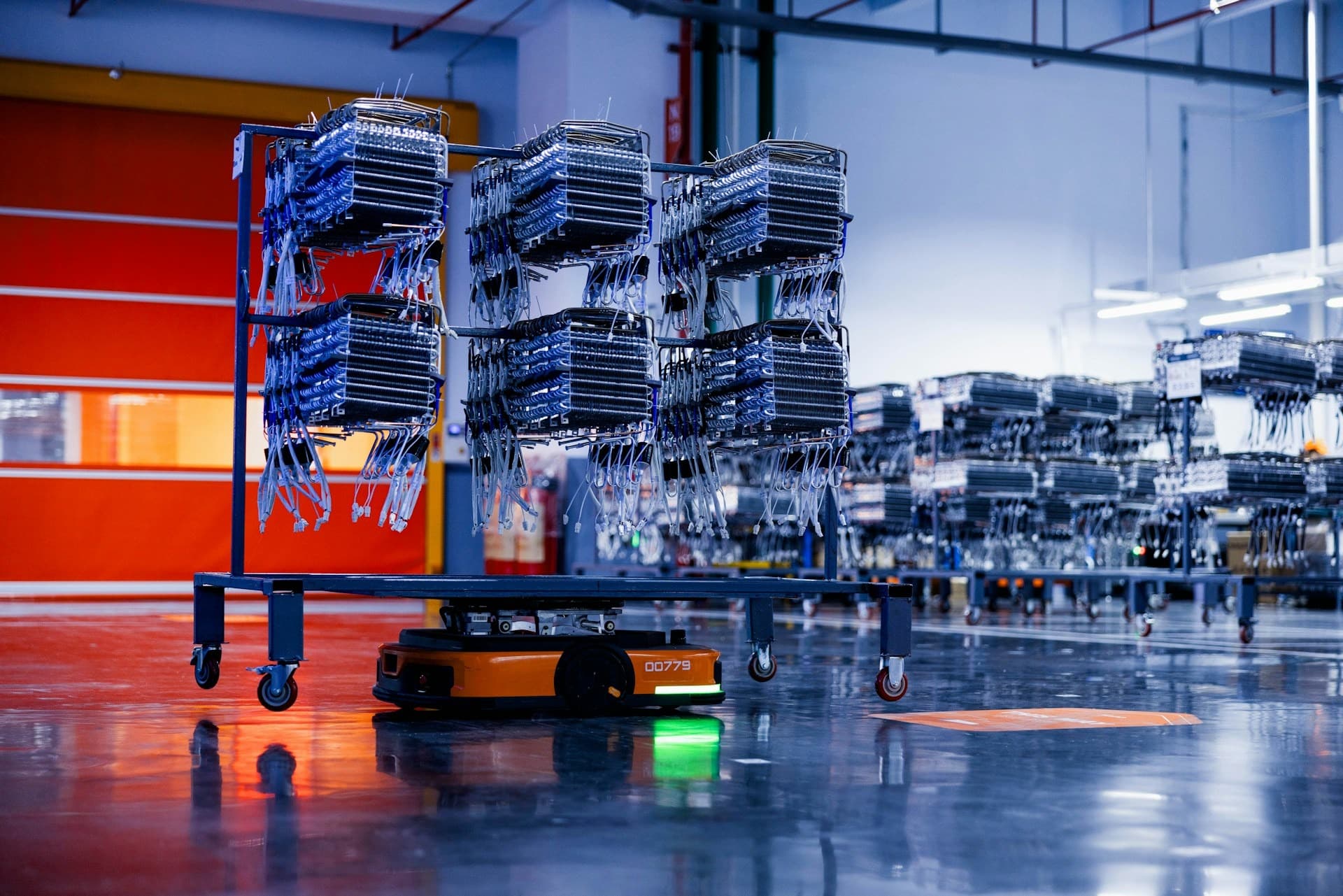
It was about moving over 700,000 employees out of repetitive jobs and into more skilled roles. The robots handled the grunt work so the people could do more valuable things.
NHS UK: Enhancing Patient Access with Digital Tools
During the COVID-19 pandemic, the UK’s National Health Service (NHS) was under incredible strain. They rolled out a modernized NHS App that let people handle their own appointments, order prescriptions, and check their medical records without clogging up phone lines. At the same time, various clinical facilities built remote care programs termed 'virtual wards'.

If a patient had a milder or long-term condition, they could be observed from afar using mobile telemetry devices that transmit vital health indicators. This approach let patients stay in their homes, preserving physical hospital beds for critical emergencies and helping medical staff direct their energy toward high-priority cases. Video calls with doctors became normal.
Daikin Industries: Cost Reduction via Cloud Platform
An air conditioner company, Daikin Industries, had a much simpler goal: they wanted to slash their hosting expenses by 50%. Their logic was dead simple. Why pay for servers that are just sitting there, doing nothing? They decided to re-engineer their whole system on AWS using a serverless approach, which means you only pay for the computing power you actually use.
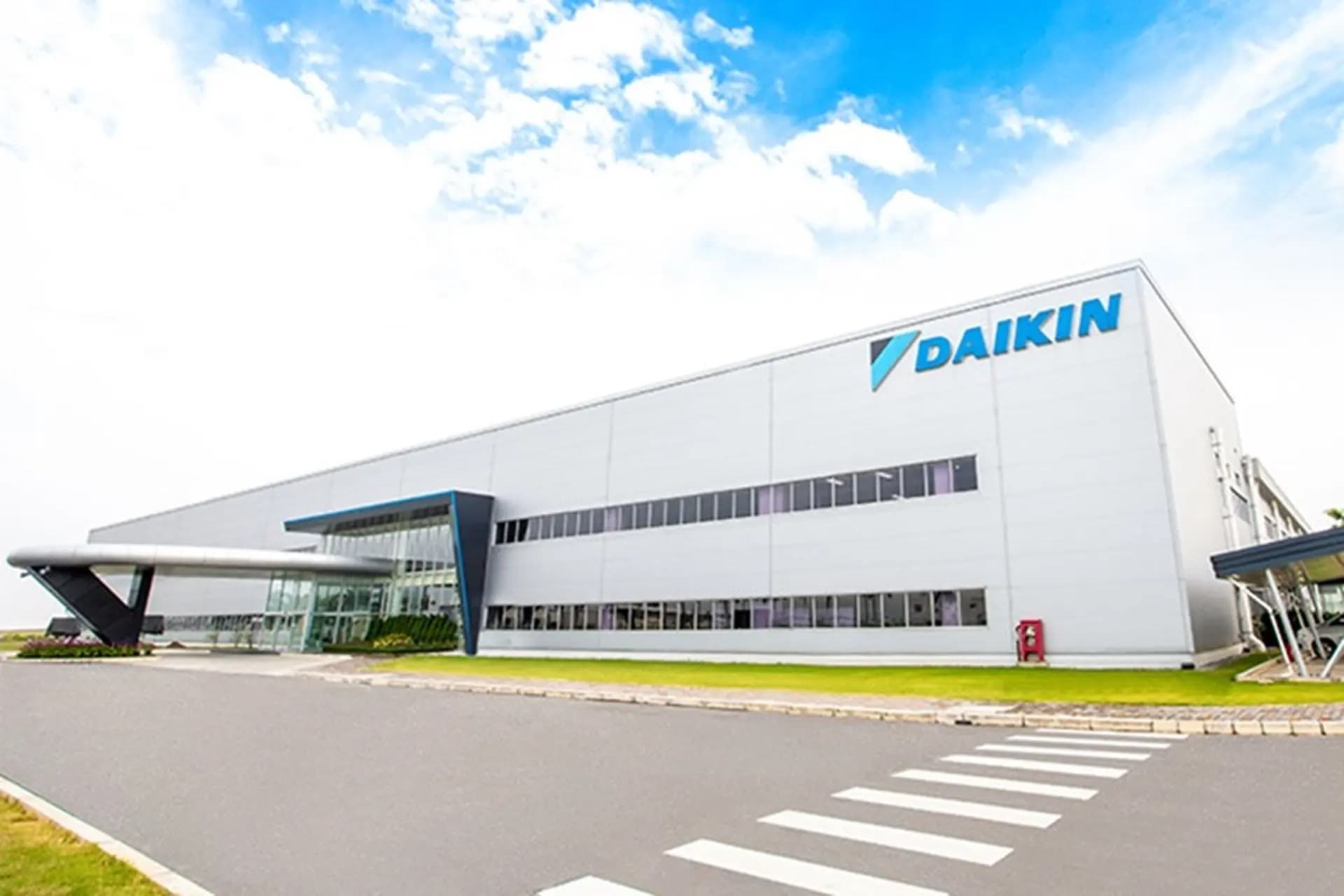
The result was a platform that could easily scale from 1 million to 10 million units without anyone breaking a sweat. And sure, freeing up their developers from server maintenance was a nice bonus. But the real win was that the technology choice was made for one reason and one reason only: to hit that business goal of saving a ton of money. The tech served the balance sheet, not the other way around.
Frequently Asked Questions
Why is digital transformation important for business success?
It’s how you stay in business, plain and simple. It’s the main way you get a leg up on the competition by using tools like artificial intelligence, task automation, new database structures, and modern management frameworks. When you get it right, you improve how you talk to customers, enhance buyer interactions, cut your spending, speed up production, and formulate rapid, precise choices.
The outcome is pretty black and white. Companies that ignore these changes will eventually become irrelevant. Achieving positive results secures market advantages, deeper connections with staff and buyers, and a flexible stance for future disruptions.
How will digital transformation in 2026 differ from the past?
By 2026, it’s going to be less about buying tons of technology and more about weaving it into your daily operations where it actually makes sense. In the past, new tech like artificial intelligence, flexible robotic systems, versatile software systems, database analysis, and new communication spaces would just sit in IT test labs.
Now, the focus is on selective integration. It's about making your business more adaptable and building systems that are meant to last.
Is digital transformation just about technology?
Is it only a matter of new software? No. If you think it is, you're already on the wrong track. It's about changing your company's habits, daily routines, management rules, business models, and what your people are capable of doing.
Simple tech projects like database migrations aren't transformation. The real work is using modern applications to build completely new ways of operating that create new value.
What are the biggest challenges in digital transformation?
People problems, not tech problems, are always the biggest hurdles. Companies just aren't ready. They'll try to roll out artificial intelligence before their data is even clean, or they'll have weak administrative oversight and fail to set rules for AI, leading to fines and leaks. Many also struggle to expand past pilot setups due to friction when deploying updates enterprise-wide.
Rejection of modern procedures stems from workers not understanding the necessity of changes, causing them to revert to old routines. Your team isn't being difficult just for the sake of it. When employees lack clear information on how software updates modify their daily tasks, they tend to go back to comfortable old routines. This lack of clarity can cause people to view technical shifts as hazards rather than avenues for professional growth.
Which technologies should businesses prioritize for digital transformation?
A better question is, what business problem are you trying to solve? Instead, you need to put resources toward the tools that solve the specific business problem you have right now. For example, if you need to get better at forecasting demand and cutting operational costs, you should be looking at Machine Learning models.
If you need secure, provable records or want to automate payments with smart contracts, you'd use Distributed Ledger Technology (DLT/Blockchain). For bots that can handle complex procedures, you'd look at RPA 2.0 architectures. Edge processing paired with 5G networks allows for instant data calculation near hardware without central links. Other tools like biometric verification, simulated AR platforms, and VR platforms are all just tools for specific jobs, like meeting regulations or training your team.
How do you measure the ROI of digital transformation?
What gets measured gets managed. You measure it with clear, real-world operational numbers that are tied directly to your project's goals. This goes way beyond just looking at the money you made or saved.
The right metrics track real change: shortening the time it takes to finish a task, increasing system output, cutting down on mistakes, improving workflow, dropping operating costs, and accelerating assistance delivery times.
Should a business adopt all digital transformation trends?
Absolutely not. Trying to adopt every trend is a huge mistake and a great way to waste a lot of money.
The companies that do this best are incredibly selective. They ignore the hype and only pick the technologies that directly support their business goals and fit with where they are today, technically speaking.
Does adopting AI increase operational risk?
Only if you do it wrong. If you have a solid data foundation and clear rules for how to use it, artificial intelligence actually reduces your operational risk.
It can analyze complex patterns in your data to warn you about new threats, suggest ways to defend against them, and point out hidden costs or inefficiencies that a person would never spot.
Why are collaboration tools a key digital transformation trend?
Because having your teams spread out and disconnected kills productivity. Geographically separated work groups demand a unified base of understanding. By 2026, the big shift is toward unified digital workspaces that give your teams a single, shared home base, no matter where they are.
When you have these kinds of all-in-one communication spaces, you stop losing time and focus from people having to jump between a dozen different, disconnected apps all day.
What are the first steps to start a digital transformation initiative?
A plan is needed, not just a shopping list for new software. Start by having a frank discussion to map out your goals, your budget, and your timeline. Once you have a strategic plan (covering everything from software development and legacy updates to database structures and DevOps), you put together a team from different departments and give them the power to make decisions.
You should run a limited trial of a simple scenario in a 90-day window to get an early win. Then, you focus everyone on a single, measurable KPI like OEE (Overall Equipment Effectiveness).
Conclusion
As we head into 2026, the line between the companies that thrive and the ones that just survive is getting clearer. It’s about who has the sharpest business focus. Progress comes from putting human needs and business outcomes first, and ignoring the noise.
Identifying the single most pressing need is essential, whether that's operational efficiency, a better customer experience, or just sharper decision-making. The right tool is the one that serves that one goal.
It means diagnosing a specific business problem before you ever look at a solution. It’s a slower, more deliberate way of working, but it’s the only way to build something that lasts. This framework helps you separate real digital transformation trends from mere distractions, and that discipline is what makes it work.
Share this page


Table of Content

Subscribe to Golden Owl blog
Stay up to date! Get all the latest posts delivered straight to your inbox