Digital transformation in utilities explained: five pillars, self-service CX, predictive maintenance, and AI use cases, with real utility results.


Digital Transformation in Insurance: Key Strategies for Businesses
Aug 18, 2026
about 19 min read
Discover key strategies for digital transformation in insurance, including AI, automation, legacy modernization, digital onboarding, and claims.
True digital transformation in insurance means overhauling the entire value chain, from how you design a product to how you pay out a claim. It’s a fundamental change in how you handle risk, along with how you manage contracts and settle with customers.
This kind of digital transformation in insurance industry settings is incredibly complex, and frankly, most in-house teams just don't have the specific experience for it. Navigating this process often requires specialized insurance digital transformation services to guide the transition from legacy mainframes to modern, native systems.
But before you even think about hiring a firm, you have a critical first step. The first step on the road to digital transformation in the insurance industry is to identify and write down the three biggest bottlenecks in your current workflow.
What Is Digital Transformation in Insurance?
Digital transformation in insurance means redesigning your entire operation, from underwriting to claims to customer service, around data, AI, and modern platforms. It's about rethinking how the work gets done in the first place.
Carriers often think transformation means digitizing what they already have. It doesn't.
Let's get the terms straight. Digitization is scanning your paper forms. Digitalization is using software to run that same old process automatically. Transformation is stepping back and rebuilding the workflow from scratch.
At its core, digitalization means three things: cutting operational costs by automating routine tasks and modernizing legacy systems, building customer experiences that are personalized and available 24/7, and giving your teams flexible tools and data insights so they can launch new products fast.
A few forces are pushing this shift. Customers now expect fast, personalized, digital-first service at every step. Carriers are under pressure to strip out manual work and handle growing volumes without ballooning costs. And advances in AI and workflow automation are making sharper underwriting and faster claims genuinely possible, not just theoretical.
Building the Foundation for Digital Insurance Transformation
The smartest firms I've seen almost never try a single, high-risk "big bang" replacement of their core systems. They know a staged approach keeps the lights on and manages risk. If you ignore the deep architectural problems in your foundation, you're just taking out a loan from your future self at a ridiculously high interest rate.
Modernizing Legacy Systems with APIs
Wrapping your old, creaky legacy systems with modern APIs is a popular first step. It’s a crucial tactic, but it's a temporary one. It gives you a clean, modern interface to work with and buys you some breathing room.
But don't fool yourself, this approach does nothing to fix the slow databases or messy data problems underneath. Sooner or later, you have to pay the piper and do the deep architectural work.
While you're in that temporary phase, you can also use tools like Robotic Process Automation (RPA) to help bridge some of the most painful gaps. And it’s often a good idea to bring in expert digital transformation services to help manage this whole process. They can keep you honest and make sure your "temporary" fixes don't accidentally become permanent.
Establishing a Centralized Data Strategy
You can't build a modern digital operation on a foundation of scattered, messy data. It's just impossible. Without a single, clean source of truth for your entire organization, any new digital tools you introduce will just amplify the data quality and consistency problems you already have. The only result is that you'll deliver bad information to people faster than ever before.
A Phased Roadmap for Insurance Company Digital Transformation
Your path forward should follow a clear playbook:
- First, figure out where you stand with your current tech.
- Second, pick a high-volume customer process that's causing a lot of pain and run a pilot project to automate it.
- Third, scale what works.
Getting this first pilot right, with full backing from leadership, shows immediate business value and shines a bright light on any adoption hurdles you'll face down the road. The big stuff, like a legacy system replacement or simplifying your product catalog, can wait until you've got these foundational wins under your belt.
Let me take a hypothetical example here and show you what a one-page roadmap might look like. For a 'Self-Service Quote Portal' pilot in Q1, the goal could be to achieve a 50% reduction in quote processing time and lift online leads by 20% by Q2. An 'AI Claims Triage' pilot in Q2 could address how data entry consumes 30% of an adjuster's time, with the goal of slashing claim intake time by 80% and increasing team capacity by 15% as you scale in Q3.
Accelerating Digital Transformation for Insurance with Low-Code Platforms
What if you could accelerate your progress with a different set of tools? When you give your non-technical business experts the power to build their own applications, you free up your core IT team to focus on the really complex, heavy-duty projects. Visual platforms like Kissflow let your business teams build the tools they actually need, cutting the time it takes to create a functional application by 50 percent.
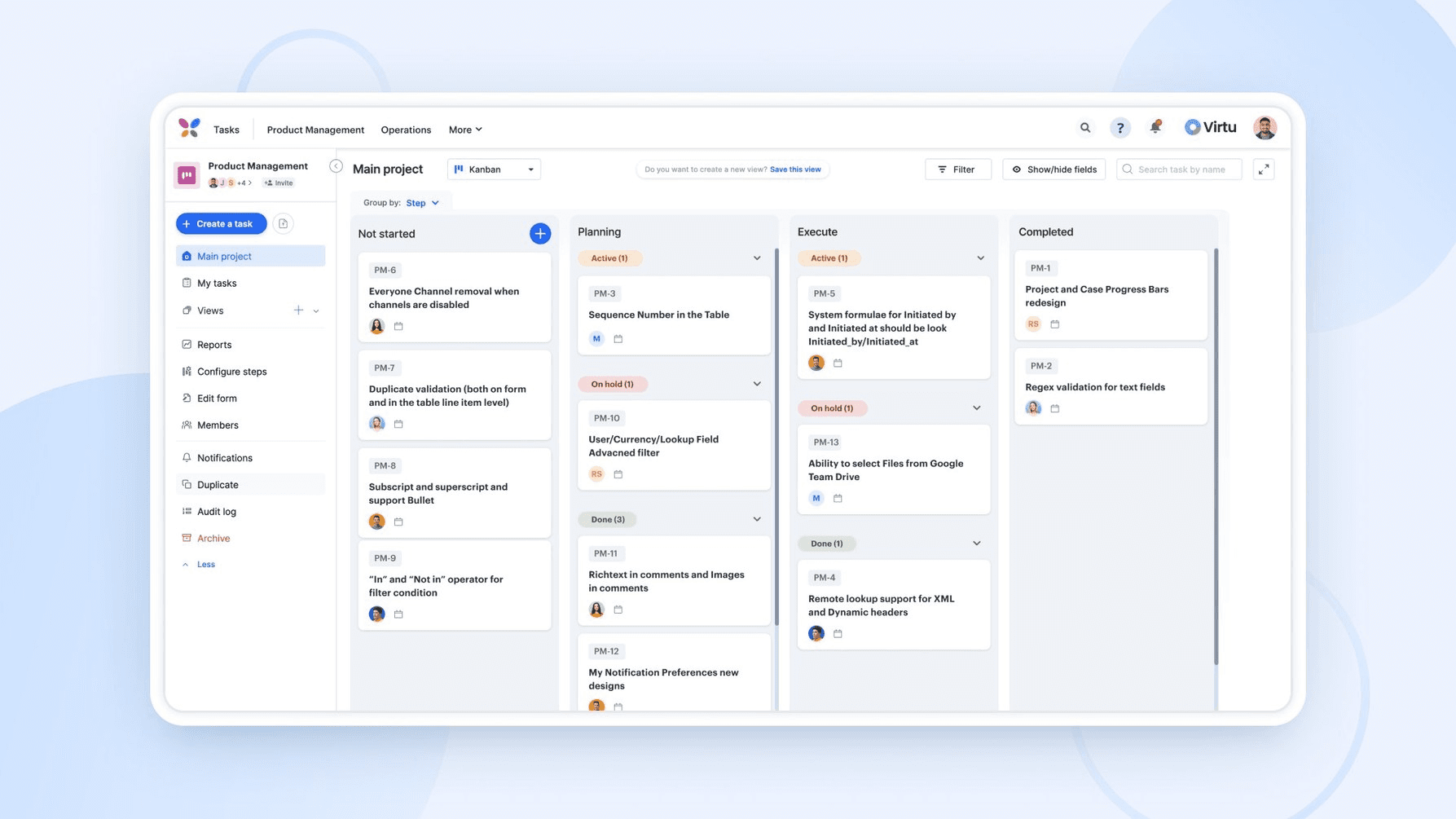
These platforms are the bridge between your business units and the IT department. Your business specialists have the deepest understanding of what customers need, and giving them these tools means you can shrink development timelines from months down to just a few weeks.
Managing Security, Privacy, and Compliance
Security and compliance can’t be an afterthought. Think this is optional? The projected worldwide cost of cybercrime is expected to hit a staggering $15.63 trillion U.S. dollars by 2029.
As you bring in new tech, you have to bake in security from day one by using modern cryptographic protocols, multi-factor authentication (MFA), and even distributed ledger systems. Keeping up with data protection laws like GDPR and CCPA is a tough, non-negotiable part of the job, but the alternative is far, far worse.
Rebuilding Product Development and Pricing
Building products around data forces a tough call between pricing accuracy and customer privacy. This is a strategic problem that reshapes your entire business. The old world of rigid, one-size-fits-all policies is gone. Your whole product development process has to change to handle this new reality.
Using Data for Behavior-Based Pricing
This all starts with what the industry calls usage-based insurance (UBI). For instance, Progressive’s Snapshot program has been doing this for years. It uses telematics to pull live data directly from a vehicle to figure out what an individual's actual risk is.
We're talking about a constant stream of information (think deceleration habits, distance traveled, steering patterns, etc.) that gives a much clearer picture for auto and even real estate coverage. This also includes asset usage frequency, operation style, and local climate details. This allows carriers to evaluate and mitigate risks as they happen.
The deal you're offering customers is simple: let us install a monitoring device, and in return, you'll get a rate that's actually tied to your behavior. Of course, you have to be completely transparent about what data you're collecting and how it impacts their premium. It all comes back to that core tension. The more accurate you want your pricing to be, the more you have to know about your customer's personal life.
Accelerating New Product Launches
You can't compete in today's market if it takes you a year to launch a new product. The old development cycle is just too slow. The fix is to use cloud-hosted, modular software that lets your teams, even non-technical ones, assemble new products from pre-built components like payment gateways or user verification. This approach can shorten the journey from concept to deployment by more than 50%, which is how you keep up with web-first rivals.

McKinsey & Company highlighted a case where a major European financial protection group did exactly this. They put together a multi-disciplinary squad that, in a mere four weeks, produced testable versions of two new digital insurance offerings.
Then, over the subsequent eight weeks, they launched three more. That's the kind of speed we're talking about.
Delivering Hyper-Personalized Policies
Once you've got the speed, hyper-personalization is the next logical move. This is where you combine AI with big data from sources like smartwatches to finally move beyond clumsy demographic buckets. Using an individual's real habits allows you to adjust life and health insurance premiums under a modern life insurance digital transformation or even offer on-demand micro-policies for short-term events.
A micro-policy could be written for a single weekend trip or even a specific cycling session. The coverage can be toggled on and off directly by the customer. The policy stops being a static contract you sign once a year and becomes a service you consume only when you need it.
Modernizing Sales, Distribution, and Onboarding
If your digital front door is clunky, you’re not just creating a minor inconvenience. You're actively losing customers. Your client-facing channels are the front line where you either win a policyholder for life or lose them to a competitor in under five minutes. According to McKinsey, customer expectations are now being set by digital-native companies, and people expect personalized advice and a completely smooth journey from start to finish.
Creating a Seamless Omnichannel Experience
Having a mobile app isn't enough. While McKinsey reports that 74% of providers offer one, the experience is often just another dead end. Customers don't want more silos; they expect a single, connected experience.
If you don't provide it, don't be surprised when you lose business. To get a better web portal experience, 48% of consumers would be willing to purchase a new plan from a competitor.
A true omnichannel setup means a customer can start a conversation with a bot on your website, then pick up their phone to review details in the app without ever having to start over. The entire dialogue just flows, providing one uninterrupted interaction across all your portals, your apps, website, social media, and messaging platforms.
Digital Customer Onboarding and eKYC
A manual, paper-based onboarding process is a competitive liability. Before launching any digital transformation insurance project, you need to map out your current workflow and pinpoint every single manual step. You can then use automated eKYC systems to handle background validation and identity confirmation (think intelligent document extraction and facial scanning, plus automated task routing).
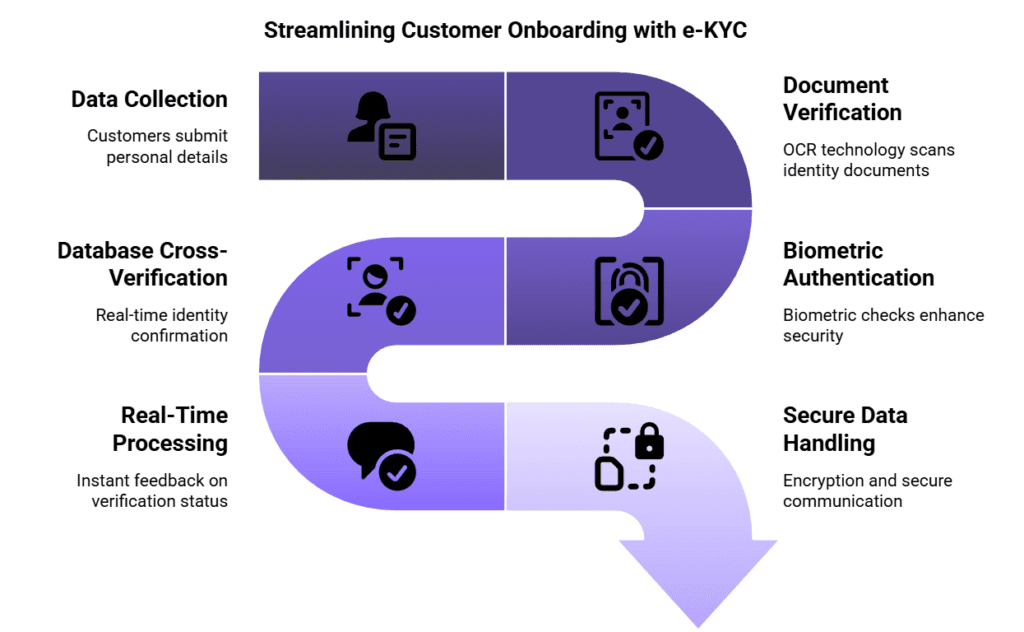
The entire point is to shrink registration delays and improve regulatory alignment, while also eliminating physical paperwork.
I’ve seen this firsthand where a lending request authorization loop, which used to take 24 hours or more, became a workflow that was 100% electronic. If your process isn't fully digital, you are actively losing ground to competitors who have already made the switch.
Enabling Self-Service and Instant Quotes
Automated chatbots and digital assistants need to be your 24/7 front line. They can instantly help buyers with simple questions or guide them through contract choices, and they can also give claim status updates. This continuous operation ensures your policyholders get critical services whenever they need them, regardless of your staff's availability.
Self-service portals grant customers control and reduce their dependency on high-friction channels like paper forms and long phone hold times. When a user can enter their details on your website and get an immediate binding rate, you remove a huge barrier to getting their business. But the demand for speed is relentless.
So how fast do your clients want you to be? Based on data from First Connect Insurance, 81% of representatives are seeing heightened demands from clients for pure operational velocity. People are also more willing than ever to do it all themselves; the proportion of buyers who would complete a purchase without human help increased from 17% in 2016 to 36% in 2020.
Automating Underwriting and Risk Assessment
Automating underwriting is one of the most direct ways to meet customer demands for speed. But don't get hung up on the tech. The real win here isn't just shaving off a few costs by digitizing your old, clunky processes. The strategic prize is freeing up your most experienced people from repetitive work so they can focus on the complex judgment calls a machine can't handle.
AI-Powered Underwriting Platforms
This all starts by changing what an underwriter’s day looks like. You can use robotic process automation and predictive models to handle the first-pass risk calculations and pricing. This gives you a more objective baseline and takes human hands off the initial, repetitive steps.
The final call on a policy still rests with a qualified professional, but now they’re reviewing the system’s recommendation, not drowning in paperwork. We’re talking about freeing them from the administrative grind that eats up close to 40% of their day.
Big players like Munich Re have already proven this model works. They rolled out an AI-powered system for health evaluations that runs instant risk checks right at the point of sale. The result was a huge jump in their straight-through processing (STP) rates, showing that your experts and the machine can be a world-class team.

Leveraging Alternative Data for Better Insights
Once you’ve got the automation engine running, the next step is to feed it better fuel. For property underwriting, this means getting way more creative than just using paper forms and the occasional site visit. As Risk Management Magazine has pointed out, underwriters are now using a whole new toolkit to get a real-world picture of a property’s condition and risks (think high-resolution aerial photography, orbital satellite sweeps, LiDAR detection, and unmanned aircraft). This refines their hazard evaluations.
Using these tools gets your team closer to the metal. Their job shifts from collecting data to interpreting it. Instead of chasing down forms, they’re digging into the nuanced outputs from these new sources. The machine can flag the obvious, but your human expert is still the one who has to make the final call on the weird, complex, and high-stakes risks.
Streamlining Policy Admin and Customer Service
This is where high-level strategy moves to the day-to-day reality of a company's people and its customers. A true digital overhaul means systems start talking to each other, and that changes everything about how work gets done. It touches every part of the insurance journey, from the first sales call and risk assessment all the way to managing policies and handling claims.
Automating Repetitive Administrative Tasks
This starts with using tools like Robotic Process Automation (RPA) to take over the most mind-numbing, manual tasks in your back office. We're talking about the repetitive work that burns out your best people, slows everything down, and introduces a ton of errors. These bots can handle things like logging new claims, sending out policy documents, and plugging information into different systems, all without a human having to click a single button. When you add a bit of AI, you can automate even more of these uniform jobs, freeing up a massive amount of clerical time.

But the point isn't just to cut down on busywork. The real win is what it does for your most skilled, and most expensive, employees. RPA gets them out of the business of copying and pasting data between ancient spreadsheets and clunky web forms (think copy-pasting claim details from an email into three different legacy systems).
It automates the grunt work of checking records or moving files between departments. This lets your underwriters, claims adjusters, and service reps stop managing data and start solving the complex, messy problems that actually require their expertise. Companies that do this well have seen their automated customer touchpoints hit 92% and their Net Promoter Score jump by 30 points.
Providing Real-Time, Transparent Updates
Modern customer portals can give your policyholders a real-time, transparent view into their claims. Instead of a black box of anxiety, they can track their file from the moment it's submitted to the moment a payment is issued, all from an app on their phone. Live developments can also be checked via mobile apps or websites. This kind of clarity removes a huge amount of stress and uncertainty from what is often a difficult process for the customer.
Reducing Costs in the Digital Transformation Insurance Industry
Yes, automation saves a lot of money, but those savings are a side effect, not the main goal. The key is to reinvest that cash into strategic work. When you free up capital by automating things like data entry and sorting forms, you should immediately funnel it into building better products, improving your customer support, or modernizing your core software.
According to Accenture’s Insurance Industry Benchmarking Report, carriers that upgrade their main legacy systems can cut operational costs by up to 60% in just the initial twelve months.
It also completely changes how you think about capital expenses. Cloud-based platforms give you flexible, pay-as-you-go pricing. This lets you get out of the expensive business of owning and maintaining your own server farms and storage. You just pay for the computing power you actually use.
Improving Internal Collaboration with Digital Tools
The right tools for collaboration are your best defense against expensive mistakes because they ensure everyone is working from the same set of facts. With a central platform, your field adjusters, risk analysts, and customer service reps can all see the exact same information and talk to each other instantly. Field investigators, hazard evaluators, and customer care workers can view a single dataset and communicate instantly.

Transforming Claims Processing and Fraud Detection
Of all the moments in an insurer's relationship with a customer, the claim is the only one that truly matters. A customer has just had a fire, a flood, or a fender-bender, and they are turning to their insurer. This is where all marketing promises get put to the test.
A slow, confusing process can burn years of goodwill to the ground in a matter of days. The claim is the final exam, and an insurer's tech stack is what decides if they pass or fail.
End-to-End Automated Claims Workflows
How fast can a simple claim be processed? The new benchmark is seconds. The InsurTech company Lemonade famously used its chatbot to process and pay out a damage claim in exactly three seconds.
From submission to cash. That's the new bar.
This isn't just for small, flashy startups, either. Big players like Allstate use generative AI to help their teams draft a huge chunk of their daily claims messages, which number approximately 50,000. This lets their adjusters stop wasting time on routine updates and focus their energy on the claims that actually require human judgment (which frees up your best people to handle the truly messy situations).
Using AI for Advanced Fraud Detection
Is AI fraud detection just about saving money? That's a mistake. So how does catching more fraud help your good customers?
It creates a fast lane for everyone who isn't trying to cheat the system. A client of the detection firm Friss, for example, used machine learning to flag sketchy claims and saw a 60% jump in confirmed savings from fraud in its initial year.
When you do this at scale, you can green-light legitimate claims almost instantly. Zurich Insurance built its own AI-powered portal to scan settlement requests. This helps their investigators focus on the truly doubtful files without making every honest customer wait in line.
Executing Claims with Smart Contracts
Imagine a world of completely hands-off claims processing. The next frontier here is using smart contracts on a blockchain for completely hands-off claims. This isn't some far-off dream, either. The PwC, Insurance 2030 Report found that more than 50% of global carriers are already funding blockchain pilot projects.
The easiest way to think about these is like a digital vending machine. A trusted input, like a flight cancellation notice from an airline's official data feed, automatically triggers the payout. No adjusters, no paperwork. The contract just sends the money straight to the customer.
Leading the People Side of Digital Transformation for Insurance Companies
Deploying a new platform requires a concrete plan for bringing your people along for the ride, and at least three senior leaders must have signed off on it.

Overcoming Internal Resistance to Change
Your single biggest roadblock will be internal resistance. Professionals who have spent decades mastering manual processes exist, and to them, new software feels like a threat to their job. Research from Prosci backs this up, showing that middle managers and front-line workers are the two groups most prone to resist.
This resistance can slow your modernization schedule to a crawl and tank the whole investment. A much better way forward is to run a head-to-head trial, letting a new automated platform run alongside your specialists. The only goal here is to prove that the software is a helpful sidekick, designed to take their most boring clerical work off their plates.
Building that trust allows them to see how the technology actually frees them up for the complex cases where their deep knowledge is irreplaceable. This is especially pronounced in claims and underwriting. To keep the momentum going, appoint a few internal 'digital champions' to offer hands-on training and constantly reinforce the vision behind the change.
Closing the Digital Talent Gap
It’s often a simple lack of skilled people that stalls most digital projects. In fact, a recent study from Insurance Times found that for more than 52% of carriers, this talent gap is their primary barrier to success. The most forward-thinking insurers are fighting this by aiming to have 70% to 80% of their technology experts working in-house.
Relying on third-party builders for everything is not an affordable option, or you'll lose your long-term technical capabilities. Figure out which core roles you can't outsource (think data science, core systems architecture, and security) and build a specific plan to retain those people.
Fostering a Culture of Continuous Innovation
A true transformation isn't a project with a neat finish line. The real goal is to build a culture where your employees feel empowered to experiment, learn, and improve processes on their own. But that fire will go out fast without adequate support and a clear mandate from leadership. If the people at the top aren't visibly championing this new way of working, any momentum you build will eventually stall.
Future Trends in Insurance Industry Digital Transformation
The future of this industry involves a massive shift from a reactive model of paying for losses to a proactive one that uses data to stop those losses from ever happening. According to Forrester, the smartest firms are already putting their money on applications that build this new future.
The Shift to Proactive and Embedded Insurance
The future is built on being proactive and embedded in your customers' lives. Embedded insurance simply means putting coverage options right into the websites and apps people already use every day. You're placing protection exactly where and when they need it, which connects you to a much wider audience and uncovers novel sales pathways.

It also strips difficulty out of the buying path and gets rid of the friction of buying insurance (think no more reading dense policy booklets), letting customers get protected in a few clicks. This approach is expanding quicker than almost any other sales channel and helps you reach previously isolated client groups.
On top of that, you have anticipatory coverage. This is where you use data to map out a customer's upcoming risks. You can then proactively offer them the right protection plan before they're even aware they have a problem.
These proactive offerings cut down the number and cost of claims for you, the provider. They also give your policyholders incredibly relevant and timely protection.
The market is already rewarding this approach in a huge way. A report from Research and Markets shows the premium volume for this kind of integrated coverage growing from USD 210.9 billion in 2025 to USD 950.59 billion by 2030, which represents a compound annual growth rate of an estimated 35.14%.
The Impact of Generative AI and Agentic Systems
The role of AI in all this is also changing, moving from a simple tool to an autonomous agent. With generative AI, you can create highly customized insurance plans that change on the fly based on a policyholder's actions. Forrester's research shows that insurers are already redirecting attention from tentative AI trials. Their heaviest focus is now on systems that improve daily business operations and customer experiences across the entire company.
What does that mean in practice? It means using autonomous AI and workflow automation to handle complex jobs like risk assessment, claims classification, and customer support. These systems can do the work while keeping legal rules and management principles fully intact.
The shift is from software that just helps your employees to systems that can run entire business processes on their own. In the future, you'll use integrated AI platforms to manage these digital workforces right alongside your human employees.
Preparing the Workforce for AI Collaboration
As AI takes over more routine tasks, human roles in areas like claims and support will naturally shift toward supervision. When you roll out these systems, your team's job becomes running a quality control process on the AI's output. Staff will take on the duty of analyzing and evaluating these automated choices.
You have to give them clear authority to review, question, and override automated decisions. The goal is to make sure human judgment is always the final word.

In the short term, machine learning can help you tackle persistent recruitment deficits and wipe out uniform physical tasks. By taking over repetitive, manual work, it frees up your people to focus on higher-value problems. Making company knowledge easily searchable through these systems also takes some of the pressure off your senior experts, who won't have to answer the same questions over and over again.
Developing Climate-Related Products and Ecosystems
New risks are also creating new kinds of products. As digital threats grow, so does the demand for better cyber insurance. But insurers are also getting creative with new products focused on climate change, often with AI-powered monitoring and mitigation built right in.
A great example is an index-linked policy for a farm. It uses satellite data to track rainfall. Should moisture levels fall beneath a set point for a designated duration, the policy automatically pays out a pre-agreed amount. The farmer gets paid without a long, drawn-out inspection and claims process.
Preparing for Quantum-Safe Cryptography
Looking even further ahead, the arrival of quantum computing creates a serious, time-sensitive need for quantum-resistant encryption. As this technology gets closer, you'll have to install new cryptographic models to shield consumer records from upcoming vulnerabilities and protect your customer data from future attacks.
Ignoring this exposes you to what's called the "harvest now, decrypt later" threat. This is where a hacker steals your entire encrypted database today (when they can't yet read it) and just sits on it. They're waiting for the day a quantum computer is available that can shatter your current security and unlock all that stored information. It's a ticking time bomb for your company's liability.
FAQ
What is the first step in digital transformation for a smaller insurer?
Imagine a core customer process that’s full of friction, like reporting a first notice of loss. Your best bet is to pick one small, annoying problem and solve it with a targeted pilot project. A quick win there shows real value, gets people on board, and builds momentum for bigger changes without you having to ask for a huge pile of cash upfront.
How do you measure the ROI of these projects?
Measuring the ROI of these projects requires looking beyond a single number. You have to track a mix of things: operational wins like shorter processing times, what your customers are saying, and whether your own employees are actually using the new tools. For the customer side, you need a specific score like NPS to prove you're making the relationship better, not just making a bad process run faster.
Is replacing our core legacy system the only option?
A full rip-and-replace of your core system is rarely the best first move, and it’s certainly not your only option. The much safer and more common play is to "surround and expand." You use APIs to plug modern tools into your old system, which lets you add new features one piece at a time.
How does digital transformation affect independent insurance agents?
The point of all this isn't to replace your independent agents with a website. It's to give them better tools so they can do a better job. When new systems automate all the mind-numbing paperwork and give them instant data for quotes, it frees them up to do the high-value advisory work that actually builds loyalty and keeps clients around for the long haul.
Succeeding with digital transformation in insurance is really about rethinking how you design, price, and deliver protection to your customers. The tech is just one piece of that puzzle. When you pair automated platforms with a team that's well-trained and confident, you build a business that can actually get ahead of market shifts instead of just reacting to them.
Share this page


Table of Content

Subscribe to Golden Owl blog
Stay up to date! Get all the latest posts delivered straight to your inbox