Digital transformation in utilities explained: five pillars, self-service CX, predictive maintenance, and AI use cases, with real utility results.


Digital Transformation Business Process Management Guide
Aug 13, 2026
about 12 min read
Learn how digital transformation business process management aligns people, processes to optimize workflows, reduce risks, and drive business growth.
A crucial realization is that this failure isn't about the technology itself. It's about failing to align digital transformation business process management with the actual work your people do every day.
Simply buying expensive software and hoping for the best is not a solution. Business Process Management (BPM) is the operational map that connects your investment to reality.
This is where the heavy lifting comes in.
The software tools, operating procedures, and people must all be aligned into a single, coherent system. If those three aren't connected, the project is doomed. It’s like trying to build a skyscraper without any blueprints.
How Digital Transformation Business Process Management Connects Operations
A big strategy is great, but it often falls apart somewhere between the boardroom and the front desk. You need a way to connect the grand vision to the actual work people do every day. This is where the two pieces fit together. Digital transformation tells you where you're going. Business process management gives you the turn-by-turn directions to get there.
What Is Digital Transformation?
Digital transformation is a deep, planned evolution where a business adopts modern technologies and new commercial structures to meet the demands of a modernized marketplace. It's not about software. It's about changing how the company operates, makes money, and creates value.
The goal is heightened productivity, reached by eliminating, minimizing, or unifying the manual work and scattered software platforms across your business. This reaches far beyond the server room, reshaping habits, daily routines, and customer relations across every department. Rather than focusing solely on software, it ties together systems, procedural changes, and high-level planning into one framework.
What Is Business Process Management (BPM)?
So if transformation is the goal, BPM is the discipline that gets you there. It’s the practical, on-the-ground work of making it all happen. BPM serves as the detailed blueprint showing how the motor, wiring, and production line connect to construct that car. The core idea is to stop thinking in terms of separate departments and start thinking about the complete, end-to-end journey a customer takes with you. It’s a whole suite of jobs: procedural modeling, workflow automation, operational execution, administrative oversight, performance tracking, and continuous improvement (and a large amount of work).
The Difference Between Digitalization and Transformation
People throw these terms around like they’re the same thing, but they’re not. The difference in ambition is huge. Digitalization is the process of taking a paper document and making a static PDF file from it, which only produces a digital copy of the old method. But replacing that paper record with an interactive GPS system that calculates traffic patterns and recommends better driving routes? That’s transformation. You’ve invented a whole new, better way of doing things.
One of those is just a file. The other changes the game.
Common Reasons Digital Transformations Stall
It’s no secret that most of these big tech projects fail. Research from firms like the Boston Consulting Group shows that about 70% of them don't hit their original goals. But they aren't failing for thousands of different reasons. When you look closer, you see the same few problems pop up again and again, and they all point back to one mistake: buying new technology before you truly understand the work it’s supposed to improve.

Unclear Strategy and Goals
I’ve seen a lot of companies rush into buying software the same way you might try to build a complex piece of furniture without looking at the instructions. You can’t just hope for the best. Without a clear blueprint for how a new tool will connect to the way your business actually makes money, you end up with a mess of systems that don't talk to each other and just make everyone's job harder. Rushing into software procurement without first documenting and reconfiguring procedures leads to isolated, standalone systems that increase complexity instead of speed. Divergent targets, shallow planning, and ambiguous execution schedules regularly cause initiatives to fall flat. Forging a tight bond between executive vision and overall company targets remains essential.
There’s a simple reality check for this. Go ask one of your front-line employees to explain the "why" behind a new platform. If they can't give you a straight answer, you have a problem. See if managers are quietly creating their own workarounds to avoid the new system. If different departments are reporting different numbers for the same metric, you’ve got a data mess on your hands. Are separate divisions presenting mismatched figures for identical performance indicators, such as total consumer accounts?
Employee Resistance to Change
It’s easy to blame your team for resisting change, but their pushback is often the most rational response to a bad plan. People are usually happy to adopt new things that make their lives easier, especially if they had a say in choosing them. The friction starts when executives hire an outside agency to force a new tool on a team they never even talked to. They aren't resisting the technology; they're resisting being ignored.
Lack of Technical Skills and Talent
When you hear about a talent shortage, you might think of general IT support. That’s not where the real crisis is. The most severe gaps are for highly specific roles that you can't just hire for overnight. The moment you buy a new platform, you create an immediate, desperate need for the specialists who can actually make it work.
This includes roles such as information architects tasked with integrating legacy databases with new platforms, cloud professionals responsible for managing the online infrastructure, and transition guides who help staff adjust to company-wide changes. Without them, your expensive new software is just an icon on a screen, completely disconnected from the business.
Poor Data Quality and System Integration
I once watched a company’s six-figure CRM rollout go down in flames. The software itself wasn't bad, but it had no connection to how the sales team actually followed up with leads. Because of that, people entered data whenever and however they felt like it. These little individual data entry habits can quickly blossom into terrifyingly big ones that corrupt the entire system.
So that's my first point, just that these aren't separate issues. An unclear strategy, employee pushback, a skills gap, and bad data are all part of the same chain reaction. It starts the moment you choose a tool before you’ve mapped out the work.
Using Digital Transformation Business Process Management to De-Risk Your Strategy
Thinking in terms of process turns strategic ambiguity into a concrete plan. Utilizing professional consulting and digital transformation services provides the expert guidance needed to lower your risk by forcing you to figure out the actual work before you ever spend a dime on new software.

Translate Strategy into Actionable Processes
This all starts by turning your goals into verbs. A fuzzy goal like ‘Improve customer loyalty’ doesn’t give anyone a job to do. How do you even do that? You run it through the verb test until it becomes an active command: ‘Redesign our onboarding process so we can resolve any new customer’s issue in a single phone call.’ Now you’ve got a real project.
Create Process Owners to Champion Change
Giving one person ownership of a huge, cross-departmental process can feel scary. A project with no single owner is a project that's guaranteed to fail. You need to name someone as the custodian for that entire workflow, and they need to have the explicit authority to rebuild the whole thing from end to end. This means they can change everything from daily tasks and databases to the automated tools that connect different teams.
For example, if your sales funnel is slow, you should designate your chief sales executive as the ‘Lead-to-Sale Process Owner’. This person assumes responsibility for the final performance metrics, rather than merely overseeing an isolated project segment. They are ultimately accountable.
Standardize Work to Improve Data Integrity
Bad data will absolutely cripple a new system before it even gets going. A process-first approach stops this from happening by building rules right at the source. You can set it up so a ‘new customer’ record can’t even be saved unless the form has a verified address and phone number. Once you do that, your data stays clean from the start.
Use Process Maps to Close Knowledge Gaps
Think of it like an assembly line. Only a master mechanic can build a car from scratch, but you can teach almost anyone to do one specific job at one station. When you break down a complex process into a series of documented steps, you make it much easier for your team to adopt new software and get their jobs done right.
The BPM Lifecycle for Digital Projects
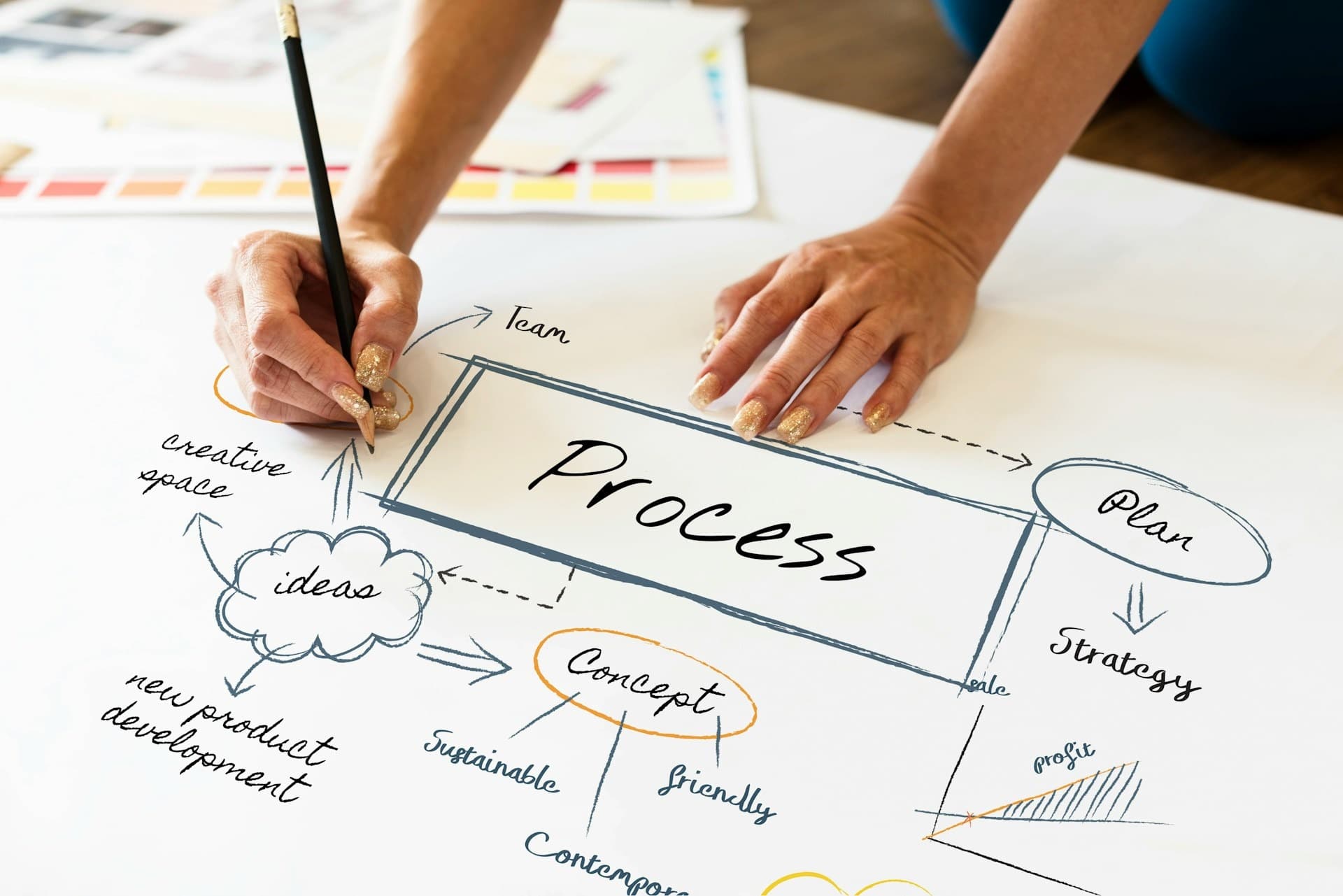
Once you decide to lead with process, you're signing up for a repeatable playbook that works for any project. This five-stage cycle is what separates a clear, evidence-based plan from the kind of opinion-driven chaos that gets you nowhere. It gives you a structure for turning abstract goals into real, measurable results.
Identify and Map Critical Processes
You must first realize that you can't fix what you can't see. Before you change a single thing, you have to get a factual baseline of how things actually work, not how you think they work. You can use tools like flowcharts or process-tracking software to get this done. Apps like Lucidchart or Bizagi are good for creating a visual record of your workflow.
With this map, you can finally see where the real problems are. Begin by isolating the specific sequences that exert the greatest influence on your modernization campaign. Which parts of the operation are causing delays? Which duties are most vital to reaching your commercial targets? The answers will show you exactly where you need to focus your effort first.
Analyze Gaps and Find Inefficiencies
What good is a map if you don't use it to find the flaws? This is where you can apply formal methods like Lean to help you cut out steps that don't add any value; the Lean philosophy is centered on the removal of wasteful activities. You can also use an approach like Six Sigma to reduce errors and make your output more consistent. This is the stage where you can clearly see which tasks are just wasting time and which segments of the sequence are unnecessary or prime candidates for computerized execution.
Redesign and Optimize Workflows
This is where your new, streamlined process takes shape, showing how transformation reshapes a business process when you re-imagine the workflow. It sounds like a huge job, but it really boils down to a few simple questions. For every single step on your map, the first question is always: Is this sequence or this individual step truly necessary?

If a step has to stay, you then ask two more questions: Can we make it simpler? And can we automate it? This is how a clunky paper-based expense report turns into a quick photo-submission on an app, or how staff can input claims through a smartphone application that routes information instantly.
Automate Repetitive and Manual Tasks
The redesigned process is now ready for technology. This is where you automate the repetitive, rules-based tasks to free up your team for more important work. The good news is that modern no-code and low-code tools let you build these automated workflows yourself, even if you have little to no experience writing software. If a task is manual and you do it the same way every time, a bot can probably do it for you.
Monitor Performance and Continuously Improve
A process is never really "done." The final stage is monitoring, and it's a loop that never ends.
But you can't improve what you don't measure. You need specific targets to aim for, so you must establish explicit metrics at the very beginning. These are the Key Performance Indicators (KPIs) you should have decided on way back at the beginning, like how long a process takes, how much money you're saving, or your customer satisfaction scores (Pay a lot of attention to your users' opinions though!). These numbers tell you if you're heading in the right direction and allow you to evaluate your trajectory.
Essential Tech for a Process-Led Transformation
This is where people get it wrong. They get excited about a demo and forget that the technology is supposed to serve the process, not the other way around. Your shopping list is the process map you already built. The only question that matters is which tool can run that exact play for you.
Core Features of Modern BPM Software
It’s easy to get distracted by a long list of features. I’ve been there. They all look great on the website, but most of it is just noise. Ultimately, the real test is whether a platform can handle your specific business logic. Can it automatically send an expense report to a director if it’s over $500? That’s the kind of capability that actually does the work.

Of course, you'll need the basics too. Look for a visual tool to draw your workflows, a way to build simple forms for people to submit information, a decision engine for executing business rules, APIs to connect to your other software, and a dashboard to see how everything is running.
The Shift to Dynamic, Data-Driven Workflows
The old way of thinking about this was very rigid, like an assembly line where every part followed the exact same path. That doesn't work anymore. Today's systems need to be smart enough to adapt, running different versions of a process for different situations. There's a name for this: 'case-driven BPM'. It’s the simple idea that one size fits no one.
Examples of Modern BPM Platforms
I once picked a really powerful tool that was completely wrong for the job, which kicked off a long and difficult period of trying to make it fit. These platforms aren't interchangeable. They all specialize. Your job is to match the tool's specialty to what you need it to do most.
To give you a head start, here are a few of the big names. Look at Camunda if you need to run really complex, behind-the-scenes business rules. Appian is a good mix of process automation and low-code app building. Pega is a preferred option for client-facing operations, incident management, and automated scaling choices backed by machine intelligence. IBM delivers workflow governance, computerized task management, file analysis, and operational policy enforcement for massive enterprises.
Future of Process Management with AI and Low-Code
So what happens when you throw AI and low-code platforms into the mix? It doesn't mean you can suddenly forget about process discipline. It just means you can scale up your habits, good or bad, at a terrifying new speed. The core discipline of BPM is what keeps a shiny new tool from becoming another expensive failure.
Predictive Analytics for Process Management
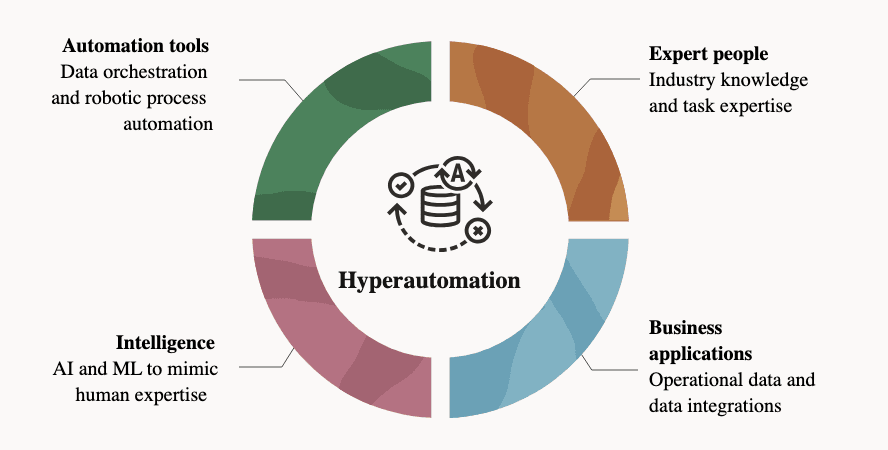
AI is shifting process management from reactive to predictive. The big idea is Hyperautomation, a term for getting all your tech, from software bots and AI systems to your data analytics, to work together. The goal is to coordinate an entire operational workflow without human intervention.
Through the study of historical records, machine learning models spot recurring sequences and anomalies.
For example, software can anticipate a machine breakdown and schedule maintenance before it happens, saving you from a costly outage and enabling teams to fix administrative blockages and waste before they impact output.
The Growth of Low-Code BPM Platforms
The promise of low-code is huge, letting your team build their own solutions fast. However, without strong governance, this approach is a recipe for chaos. With these platforms, staff without coding skills can quickly construct specialized applications, but they can generate a chaotic web of unsanctioned applications, often called 'shadow IT', if strict corporate boundaries and compliance rules are absent. That’s what the IT department calls shadow IT, and it can create more problems than it solves.
Get the governance right, though, and these platforms are a game-changer. They let your frontline staff fix their own process headaches directly, skipping the long IT queue and responding to customer needs faster. Someone in marketing could build an automated messaging sequence, or a support team could configure its own system for routing customer questions, all without writing a line of code.
FAQ
What's the first step in using BPM for digital transformation?
Begin by acknowledging you may not know how work actually gets done. You must map your current process from beginning to end. This reveals what is happening on the ground, not what is supposed to be happening. Do not buy new software until you know the exact problem you are trying to solve.
Can small businesses use BPM for digital transformation?
Yes. A huge budget or dedicated team is not necessary. The key is to avoid fixing everything at once. Pick one or two core processes, like client onboarding, and map them. You can use simple tools you already own, like Visio, Word, or Excel.
How do you measure the success of a BPM initiative?
Measure it against the specific goals set beforehand. The only metrics that count are those affecting the work itself. Did you reduce task completion time? Did you cut errors? Did the cost per transaction go down? Those are the numbers that matter.
Is BPM just about automation?
No; that thinking is a significant mistake. People hear "process improvement" and think "automation software." Often, the biggest wins have nothing to do with new tech. Huge gains can come from changing a workflow's step order or cutting a redundant approval.
The point is, implementing digital transformation business process management doesn't have to feel like a trip to the casino. When you ground every project in how your business actually works, you swap that gamble for a repeatable system. You get a framework for connecting new tools to the real work, making sure every dollar you spend on tech is an investment in a stronger, more efficient company. This isn't about slowing down. It's about making sure that when you move, you're actually moving forward.
Share this page


Table of Content

Subscribe to Golden Owl blog
Stay up to date! Get all the latest posts delivered straight to your inbox