Digital transformation in utilities explained: five pillars, self-service CX, predictive maintenance, and AI use cases, with real utility results.


How to Do Digital Transformation in Manufacturing: 2026 Guide
Jul 22, 2026
about 20 min read
Discover digital transformation in manufacturing. Learn why optimizing workflows, processes, and people must happen before buying any tech.
Before you go anywhere near a tool for your digital transformation in manufacturing, take a hard look at your workflows, operational processes, where the business is actually headed, the technology, and whether the people and culture on your plant floor can carry the shift.
The messy part isn't buying anything. It's dragging tired legacy processes into the present, or scrapping them, and getting the new systems talking to the ones your crew already runs every single day. Pick the tools dead last, once you know the precise job you're hiring them to do.
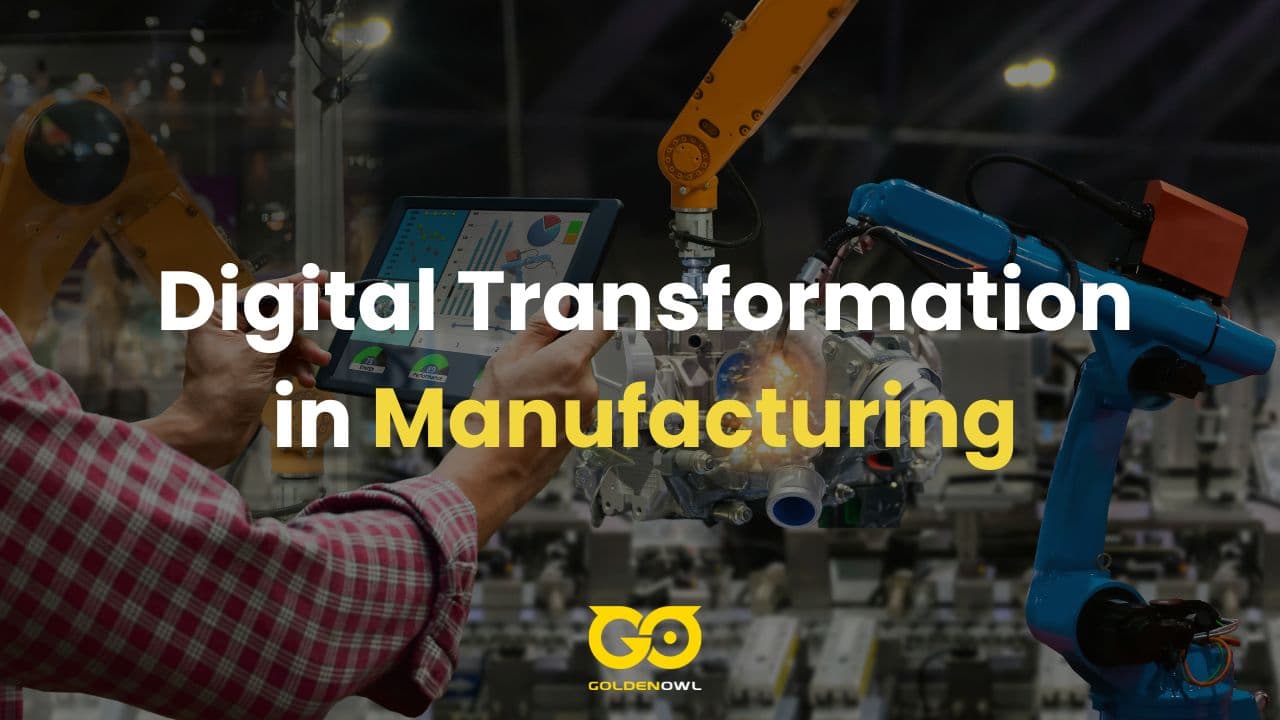
The programs that stick usually have a specialist partner in the trenches next to your own team, doing the grind. If that's the kind of backup you want, outfits like goldenowl.asia offer full-time digital transformation services. Worth knowing before you've even nailed down what transformation ought to mean for your plant in the first place.
What Is Digital Transformation in the Manufacturing Industry?
Out on the factory floor, digital transformation comes down to wiring up your tools so production runs tighter and every shift earns its keep. Say the phrase to most people, though, and they picture a shopping list of shiny gadgets. That's where they lose the thread.
Smart manufacturing, which is the same idea under a different name, bakes technology into the entire life of a product. It's not a fresh coat of paint you brush on and admire.
A bit of history makes this click. Industry 3.0 ran roughly from the 1970s into the 2000s, and its one job was swapping manual labor for basic automation, think programmable controllers and simple robots grinding through the same task on repeat. Data back then lived in scattered spreadsheets or sat locked inside a single machine.
Nobody acted until something actually broke. Industry 4.0 flipped the whole setup, so now your equipment and platforms swap information in real time and the plant starts tuning itself. Predictive maintenance takes over from the old routine of waiting for a machine to die before touching it.
And the next chapter is already showing up. So where does an actual human belong once so many jobs run on autopilot? Industry 5.0, driven by sharper AI, answers that by equipping people to work better right alongside the machines.
With customer demands shifting, supply chains wobbling, and hiring this hard, filing any of this under nice-to-have is a mistake. Adaptability is what keeps plant doors open now. This is survival, not an upgrade you can push to next year.
Core Technologies for Digital Transformation in Manufacturing
Most plants walk right into the same trap. There are more of these tools available every single year, and it's tempting to buy them because a competitor down the road just did. But a serious transformation runs on a short, deliberate list.
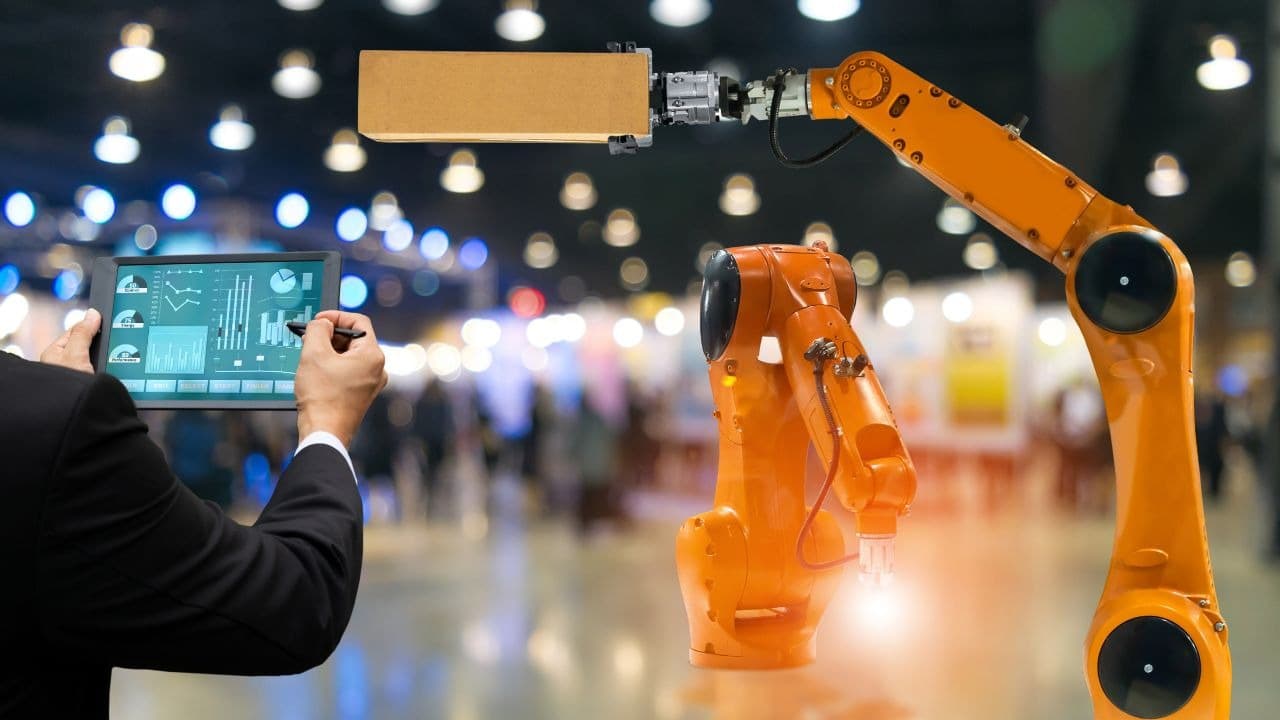
Every technology below earns its spot only when it's pointed at a problem you can name out loud. Think of what follows as a menu of what exists, not the meal you actually sit down to eat.
Using AI and Machine Learning for Predictive Operations
The whole point of these tools is to stop you from reacting to breakdowns after they've already cost you. AI and ML algorithms sift through the huge streams of sensor data coming off your machines and give you a heads-up when a part is drifting toward failure. That's the shift from patching what already broke to catching it early, and it lands on your books as less downtime and a lighter maintenance bill.
Quality control is the other half of that story, and it runs on computer vision. AI uses computer vision to inspect finished goods right as they roll off the line, spotting flaws in real time. On a line moving fast, it'll catch the defects a tired human inspector would nod right past.
IoT and Sensors for Real-Time Factory Visibility
If a smart factory has a nervous system, this is it. Internet of Things devices, IoT for short, pull live readings straight off your production lines as things happen. Inside an Industry 4.0 plant, the Industrial Internet of Things (IIoT) is the piece that stitches machines, tools, and platforms into a single feed you can actually read, which is what makes it so useful for things like business intelligence.
My advice? Instrument your ten most critical machines first and route every reading into one dashboard. That feed becomes the foundation every smarter tool downstream ends up leaning on.
Turning Big Data into Actionable Insights
Raw data piling up in a warehouse accomplishes nothing on its own. Analytics is the job of taking that raw flood and squeezing out specific insights you can act on today. Big data paired with analytics is what shortens the gap between a problem showing up on the floor and the decision that fixes it, and it speeds up how fast you make that call.
Automating Repetitive Tasks with Robotics
Think of the monotonous work and the flat-out dangerous work nobody should be grinding through; that's where robots earn their keep. You can deploy industrial robots to handle welding, painting, assembly, and packaging, holding the same tolerance shift after shift after shift.
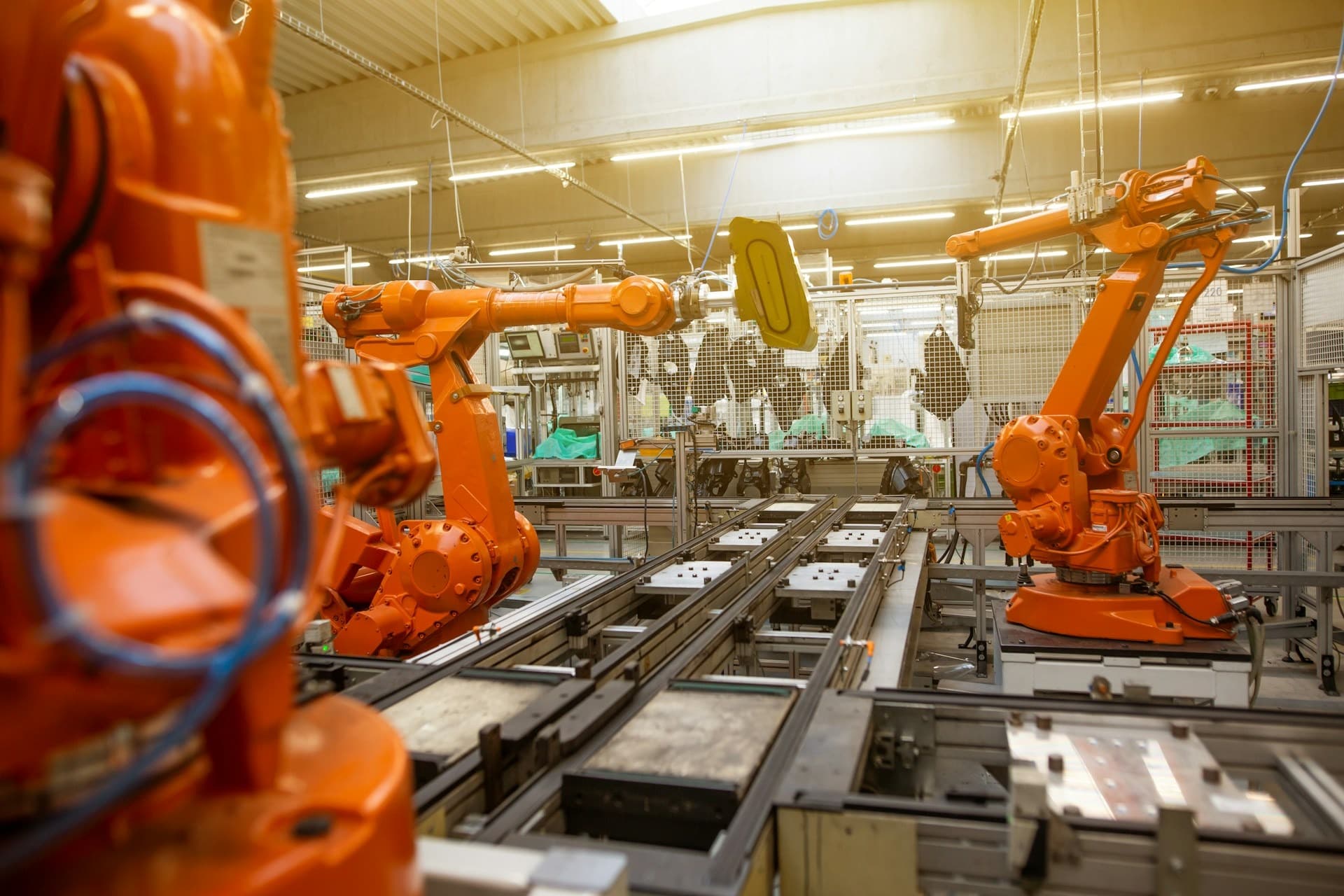
What that frees up is your skilled people, who move into oversight and the messy problems a machine can't reason its way through.
The robot owns the repetition. The human owns the judgment.
Simulating Processes with Digital Twins
A digital twin, which came out of Industry 5.0, is a working virtual model of a real machine or an entire workflow. Before you lay a finger on the live line, you run the change on the twin and watch exactly what breaks.
Picture a flight simulator for your plant. Pilots rehearse emergencies in a simulator precisely because nothing is at stake when they crash, and a digital twin gives you the same room to test workflow changes or catch a failure coming before it lands, all without ever stopping production.
Using Additive Manufacturing for Prototypes and Parts
When you can print a prototype overnight, your design cycle stops sitting on its hands waiting for an outside shop to get back to you. Additive manufacturing, which most people just call 3D printing, builds parts one layer at a time straight from a digital file. That same process spits out fast, cheap prototypes, and it does real damage to your time-to-market.
Aerospace, defense, and automotive shops are already printing intricate parts this way. And when a line goes down, you can print the maintenance part you need right there on-site instead of losing days waiting for a shipment to show up.
AR and VR for Guided Work and Training
These immersive tools aim straight at the skills gap sitting on your floor. They show up in two flavors: augmented reality, or AR, that layers instructions over a real task, and virtual reality, or VR, for practice safely away from the line. The AR overlay walks a technician through a repair step by step, right there in their field of view. Pop a new hire into a VR headset and they can rehearse the whole procedure before they ever touch a live machine.
Managing Cybersecurity Risks in Connected Factories
Wiring every machine to the network buys you visibility, and in the same breath it hands an attacker a fresh set of doors. Every new sensor, robot, and cloud API is one more way in, so your attack surface grows with each device you bolt on. The bigger shift, though, is that IT and OT merging together has quietly turned manufacturing into the number one target for ransomware.
Don't assume the IT security plan you're already running will stretch to cover the factory floor. It won't. Operational technology, the machinery itself, carries its own distinct set of weak spots and needs a plan built to bridge the IT and OT divide.
The way in is usually boring, not cinematic. A compromised vendor credential, or a human-machine interface nobody ever patched. From there an attacker pivots off your IT systems onto the plant-floor controllers and brings the whole production line to a stop.
Core Process Redesign for Digital Manufacturing Transformation
Buying the perfect tool for your worst problem gets you almost nowhere by itself. The value only shows up once you point that technology at one named bottleneck and rebuild the work around it. Yes, it can touch every stage of the manufacturing lifecycle, but that happens after you've used the data to strip out steps and simplify the parts that were dragging you down.
Redesign the process first. The software is just what you buy to make that new way of working stick. Get the order right and one fix keeps paying off for years.
Increase Efficiency and Productivity
Overall Equipment Effectiveness barely budges while you treat a tool as the finish line, and it starts moving the second you aim that tool at a workflow that's actually broken. So the redesign has to come before the purchase. Map out your maintenance process first, then put a Digital Twin around your critical equipment so it mirrors the real machine minute by minute.
One facility did exactly that, feeding real-time monitoring into predictive maintenance, and their machines started flagging their own faults before a line ever went down. Their Overall Equipment Effectiveness went from 55.35% to 76.08%.
That same setup lifted equipment availability from 75% to 88%, because machines that warn you early spend a lot less time sitting dark and idle. Those extra points of availability aren't abstract, they're the shifts you used to hand over to breakdowns.
Achieve Long-Term Cost Savings and Reduce Waste
How often do big savings arrive with a single tech purchase? Almost never. They stack up over time as you hunt down and shut off the quiet leaks running through the operation. Killing waste and the hidden costs riding along with it is a habit you keep up, not a one-time deal you close.
And the spots worth checking are boring, ordinary ones: how the floor is laid out, how much you're really pulling out of each machine, how productive your people are once they're on the line, and how you schedule maintenance to squeeze more life out of the gear. Every one of those is a process fix first and a tooling call second.
Improve Product Quality and Consistency
Watch a good line and you'll see steady quality come from spotting defects while they're still forming, not from parking an inspector at the tail end of the line. Embedded analytics and monitoring sit at every stage of production, watching for drift and flagging it long before it turns into scrap on the floor. Catching it early always beats sorting the mess afterward.
What you get out of that is products that look the same run after run, and customers who quietly stop noticing your defects at all.
Build a More Resilient Supply Chain
You feel the cost of siloed information the day a supplier misses a shipment and the news reaches you a full week too late. Once live data is moving across the whole chain—a key benefit of supply chain digital transformation—you get real end-to-end visibility, from the raw material coming in all the way to the loading dock.
Then when something goes sideways, you open the shared view and reroute alongside your suppliers before the shortage ever hits your line. Suppliers and customers all reading off the same live numbers is what turns a frantic scramble into a clean, coordinated handoff. That shared reaction is exactly what keeps the chain steady when things start to break.
Drive Sustainability and Green Manufacturing
Take a plant that can measure energy and material use right down to the individual machine, and that's the moment sustainability goals stop being a slogan. You're choosing between guessing at your footprint and metering it as it happens, and only one of those actually lets you cut what you can see. When every kilowatt and every kilogram gets tracked, the waste you trim is the very same waste that's blowing your emissions targets.
Integrate New Tech with Legacy Systems
Before you yank out a single machine, get one thing straight: "rip and replace" is hardly ever the right move. Your floor is full of legacy gear that still runs fine, dependable old workhorses whose only crime is that they can't talk to anything new. The genuinely hard part isn't the metal, it's building an integration plan that lets the old and new systems swap data without a fight.
Three questions sort the keepers from the ones headed for the scrap pile. If it's a System of Record, say an old but rock-solid ERP, you integrate it and pull its data. The box that keeps failing or runs on hardware nobody can service anymore, and the black box you can only get numbers out of by hand, those are the ones you replace.
Scaling Pilots Beyond a Single Site
Pilot purgatory is where good projects quietly go to die. A plant runs a strong pilot at one site, everyone's thrilled, and then it just stalls out. The reason is almost always the same: no clear KPIs and nobody senior who actually owns getting it rolled out.
Absent clear KPIs and organizational buy-in, the pilot's results stay isolated in silos. Without those metrics and real buy-in from the org, the wins stay locked inside one building's four walls. So before you ever green-light the pilot, set your company-wide objectives, put a governance structure in place, agree on shared standards, and name the executive who has to answer for scaling the thing.
There's one client I keep thinking back to. They bought a new MES system before anyone had bothered to map the workflows, walked straight into a wall of user resistance, and burned a year redesigning the processes they should've sorted out up front. Map the process first and that same pilot rolls out across every site. Skip it and you've just bought yourself a year of rework.
Leading People Through Digital Transformation for Manufacturing
You can buy the sharpest software on the market and redraw your best process on a whiteboard, and none of it matters if the people on the floor dig in their heels. Transformation is really a culture problem wearing a technology costume.
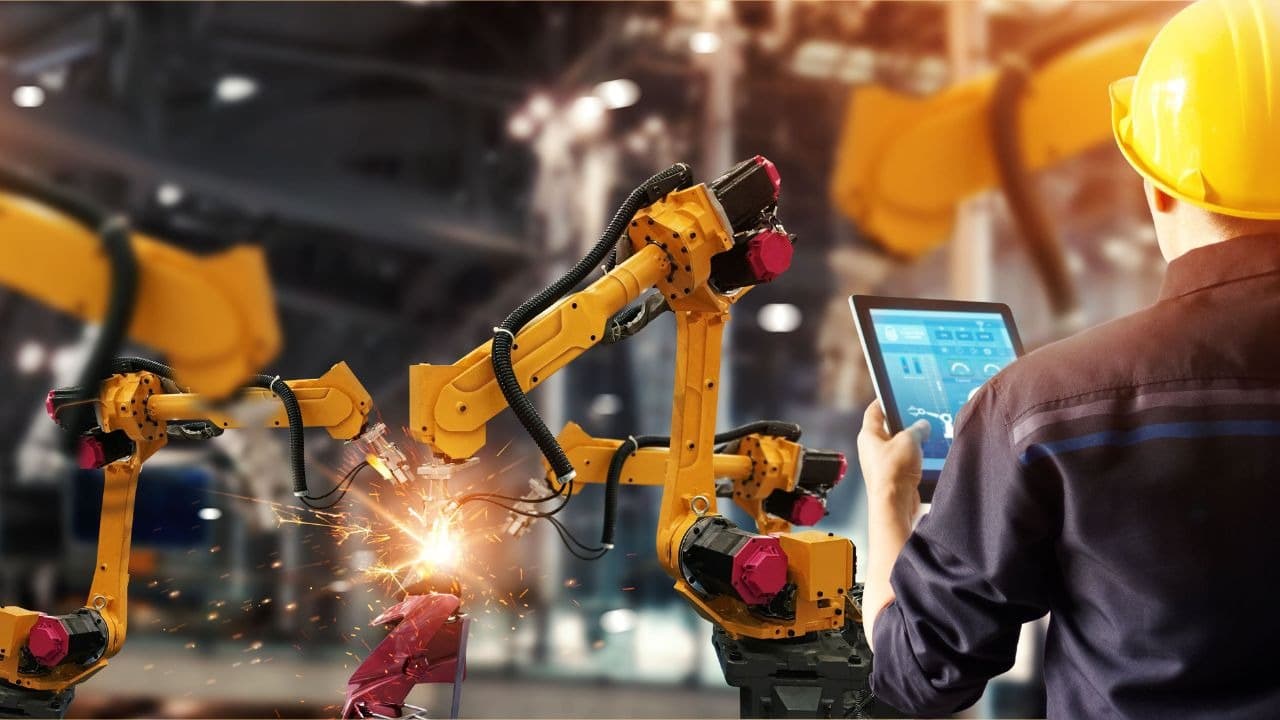
When leaders forget the human side, the project just quietly dies in the middle, and the whole thing starts to poke holes in ways of working that have held up for decades. For a digital transformation manufacturing initiative to succeed, somebody at the top has to grab that change and drive it, because nobody underneath them has the authority to.
Secure Executive Sponsorship and Clear Goals
Before a single dollar goes toward a tool, the executive suite needs to agree on what the business is actually trying to accomplish. Those goals should steer every technological choice that follows. Those goals become the filter, and every tool and every spend has to earn its way through them.
The smart move here is to stand up a cross-functional team that pulls people from IT and operations as well as leadership, so the plan has real buy-in baked in from day one instead of getting rubber-stamped at the finish line.
And write those goals down before you ever glance at a vendor list. Whether you're after better quality, lower cost, or more agility, that list of goals is what tells you which tools deserve a seat at the table and which ones get shown the door.
Overcome Resistance and Build a Digital Culture
Picture your front-line crew hearing "automation" and "predictive analytics" as code for layoffs, and you have the fastest way to torch an entire initiative. Roll those systems out with a bad explanation and people will decide the machines are hunting their jobs, and that fear calcifies into flat-out resistance.
You already know the shape it takes. Every plant manager has heard "we've always done it this way" more times than they can count. It is the common refrain of the employees who push back hardest. That reluctance to swap a comfortable routine for a strange new one is the obstacle you plan around, not the one that catches you flat-footed.
So when a team gets nervous that new sensors are really there to watch them, say it straight. Here's the honest framing: the sensors bolted onto the CNC machines are keeping an eye on the equipment, not the operator, and they'll flag a failing bearing a full three-day stretch ahead of time so you can slot the repair into the schedule instead of scrambling a crew in on a Saturday.
Close the Digital Skills Gap with Training
Ever notice how a skills gap acts like a brake pedal nobody's pressing on purpose? When people can't move quickly on new software and platforms, everything drags, and that drag shows up as weaker output and a crew that's losing heart. One worker quietly fighting an unfamiliar system can slow the whole rollout to a crawl without ever raising their hand.
Fixing it takes more than sitting folks in a classroom. Pair your newer people with mentors, and rotate them through a few different roles instead of nailing each person to one specialty. Do that, and the day your one expert calls in sick, the line keeps running.
Address the High Cost of Initial Investment
Quote the sticker price on that first digital project and most conversations die before they get going. The honest thing to do in that moment is to reframe the number, treating it as money spent to stop bleeding later rather than another line-item expense.
Set the upfront cost next to the slow, invisible leak of inefficiency and downtime, the drain that keeps running whether you do anything or not. It almost never lands on a report, which is exactly why leaders wave it off.
But dig into what a single idled line actually costs per shift and the math stops being fuzzy. Unplanned downtime now runs $260,000 per hour on average across manufacturing, and it climbs past $2.3 million per hour in the really complex setups like automotive plants. Tally it up and it's draining roughly $50 billion a year out of U.S. manufacturing on its own.
Adopt a Phased, Incremental Rollout
Successful rollouts grab one problem and one tool. They don't try to flip the whole factory on day one. You take a single high-impact headache and solve it with one new piece of tech, proving the thing works before anybody's budget balloons. That early, visible win does a lot of the heavy lifting, because it pulls the next phase along behind it.
A tight, thought-out plan is what tips the odds toward the whole shift actually sticking. Pick one contained area where the payoff will be obvious and launch your pilot there, then take what you learned and sharpen the approach before you push it out across the plant.
Create a Safer Work Environment
Here's the part people miss: the same tools that push your output up also cut down on people getting hurt. When equipment gets watched around the clock for signs of wear, a part on its way out gets caught long before it fails in some violent, ugly way.
Catch that wear early and the machine doesn't seize up mid-cycle and hurl a hazard at whoever happens to be standing next to it.
The bigger payoff, though, is a crew that trusts the machines and does the work with real confidence. There's a pattern worth getting close to here, the kind you see clearly in the plants that have already come out the other side.
Real-World Examples of Manufacturing Digital Transformation
The best lessons in manufacturing digital transformation come from companies that nailed down the actual problem long before anyone talked about software. Take MacDon, a maker of agricultural equipment. Their story didn't start with a demo or a vendor pitch.
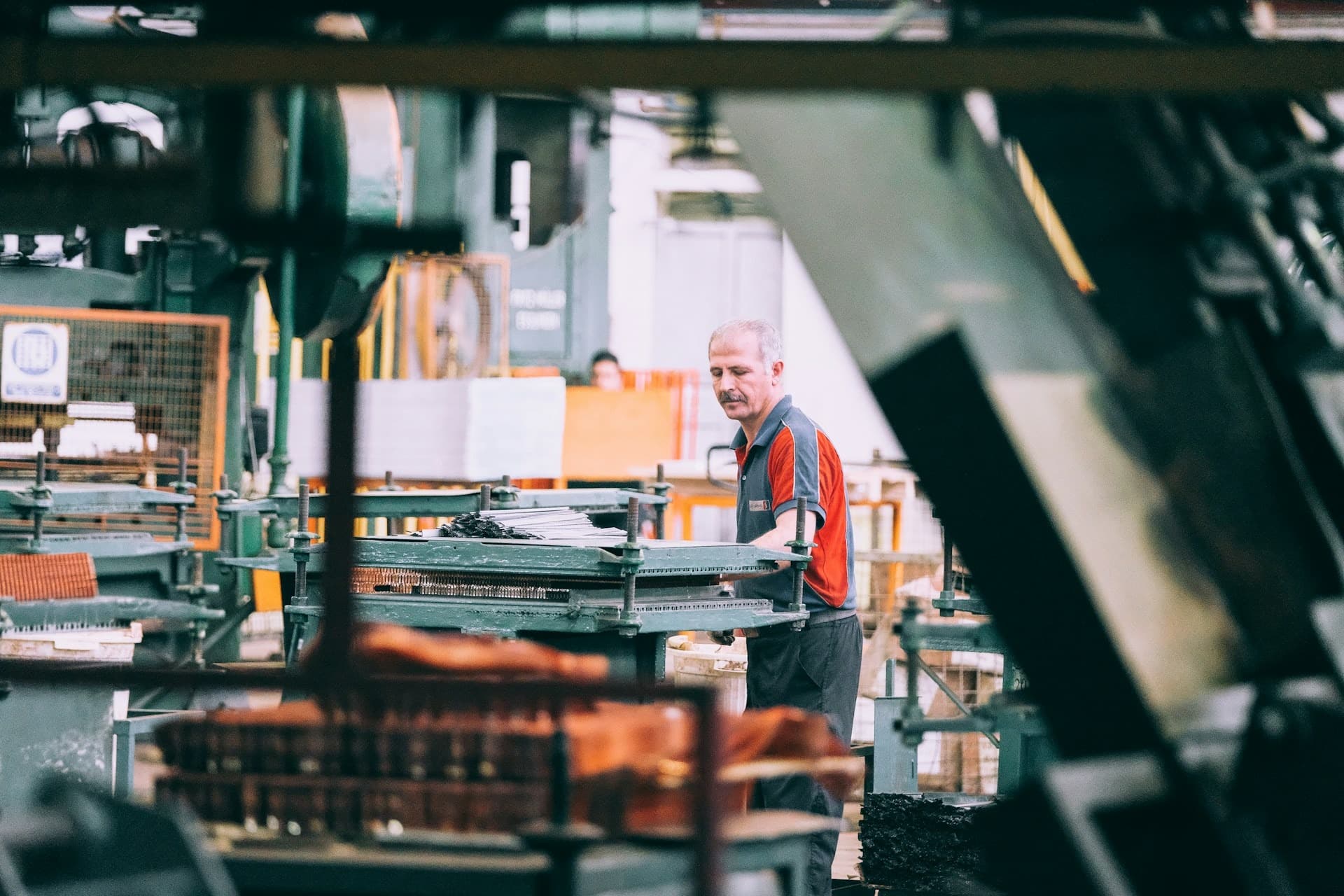
It started with a dealer network that was sick of a portal that kept letting them down, and a team that went looking for the reason why. No shopping list, no working backward from a tool someone liked. Every example below follows the same order, and that order is the entire point: the problem and the workflow the people on the ground actually live in both come first, and technology lands dead last.
Modernizing the Partner Experience with a Self-Service Portal
For MacDon, the dealers were the people who mattered, and the portal they signed into every single day was quietly letting all of them down. It ran on aging Liferay software that felt ancient next to everything else they touched, and it fell apart the second anyone opened it on a phone. So the team fixed the workflow before they went anywhere near a platform.
They sat down and mapped what a dealer really does in a day: pulling up an open invoice, checking what's in stock, filing a warranty claim, looking up an order without having to phone anyone. All of it, living in one place.
The new portal handed dealers those exact jobs and pulled head office out of the middle. Once partners could help themselves whenever it suited them, visitor traffic to the site doubled. Across the business, eCommerce transactions climbed by half, and overall sales rose 20%.
Increasing Sales Quotes with a 3D Product Builder
Where was the choke point for Mueller, Inc., a steel building manufacturer? It sat right inside the quoting process. Their old content management system couldn't accommodate custom web apps, which restricted the buying journey and funneled every buyer down one rigid, one-size path. Rather than dress that up, they flipped the whole thing so the customer drove it instead of the sales desk.
Out went the endless email back-and-forth. In came a 3D model builder that lets a buyer configure their own building and generate a price on the spot. When the tool handles the estimate, nobody's quote sits waiting behind a salesperson's calendar.
Within months of the builder going live, website traffic jumped 250%. A few months spiked as high as 163%, but the number worth holding onto is steadier than that: quotes rose by an average of 73% a month.
Consolidating Internal IT for a Better User Experience
Picture an IT landscape so tangled that the people footing the bill for it were Airbus's own employees. To get help with one problem, staff were hopping between roughly 15 different IT Service Management (ITSM) tools. Sometimes the honest fix isn't a shinier tool.
It's fewer of them. So instead of bolting one more thing onto the pile, Airbus folded all 15 into a single, intuitive platform built on Open Source technology, finally giving everyone one door to knock on for everything.
They shipped it with a self-service knowledge base baked in, so people could dig up their own answers without ever raising a ticket. Over its first ten months live, the platform pulled in 290,000 visits along with 2,200,000 page views. And with all 15 tools collapsed into one, the volume of incidents landing at the Service Desk dropped by 30%.
Using Digital Twins for Factory Planning and Training
A technology like this can solve completely different problems, which is exactly why a smart team reaches for it last, not first. Most plants would file a digital twin under "monitoring gadget you bolt on once the line's already humming." Siemens didn't.
Because they started from the jobs that actually needed doing, they aimed Matterport digital twins at three unrelated ones at once. In Asia, they captured a manufacturing plant of 4,000 m², which let teams sort out shop-floor and warehouse layouts virtually while production kept running. Over in Lisbon, the same twins digitized close to 30,000 m² of the corporate campus, making it easier to get around and giving new hires and visitors virtual tours.
There was also a 1,700 m² E-House in Brazil turned into a virtual walkthrough, so customers could inspect complicated systems from wherever they happened to be. And in Berlin, ahead of a factory move, the twins were used to lay out equipment and confirm everything would physically fit, landing at 99% accuracy before a single machine got shifted.
FAQ
What are the top digital transformation trends in manufacturing?
Fair question, and IBM lands on three headliners: Artificial intelligence (AI), Robotics/automation, and Digital twins. But look closer and you'll see one current running through all of them, and that's Data-driven decision-making. Digital twins make it easy to picture. A twin is a virtual copy of your production floor, a stand-in for the real thing that engineers can poke at.
They use it to tune machines and workflows and to spot problems before those problems ever reach the actual line. You can trial different setups inside the model before committing any of them to the real world. Want to know which of a dozen layouts holds up? Test all twelve in the model and keep the one that survives, all before you shift a single machine.
Cybersecurity shows up on the same list, and the reason is blunt. Every sensor, every controller, every connected line is one more door into your operation. The more you switch on, the wider that opening gets.
Green manufacturing rounds it out, and this is where the tools pay you back twice over. The same connected systems that watch your output are also watching energy use, scrap, and emissions. Cut those down and your cost line drops right alongside them.
How do we measure the ROI of our digital transformation?
Measuring adoption is the trap here. Counting how many machines are online, or how many people signed into the shiny new dashboard, tells you almost nothing. Track business outcomes instead.
One industry publication lays out the metrics worth watching, and the useful ones are Enhanced smart manufacturing capabilities, Improved first-pass yield, Increased revenue generated per employee, Greater customer satisfaction, and Reduced customer churn. Notice that none of them care which vendor you signed with. They only tell you whether the actual work got better.
Out of that group, first-pass yield is the one I'd take a second to define. First-pass yield (FPY) is the share of units you build correctly on the very first run, no rework and nothing tossed as scrap. Push that number up and you're burning less material, less labor, and less machine time to get the same good parts out the door.
How does digital transformation affect the supply chain?
Here's the big change: your supply chain stops reacting and starts anticipating, and it does that because you suddenly have far more data to act on. These initiatives also let you collect extensive data across the whole operation. BDO, the advisory firm, points out that even ordinary tools like Bluetooth and GPS lift connectivity across the whole chain, which sharpens your visibility and helps you catch trouble earlier than you used to.
For years, forecasting meant leaning on last quarter's numbers and whatever buying patterns felt familiar. Once you can pull in way more than that, you shift from chasing demand to reading it ahead of time, and a decent system can even hand you replenishment plans built off that read.
What is a good first step for a small manufacturer?
If you're running a small shop, please don't start with a floor-wide overhaul. Pick one problem that's hurting right now, something with real upside, and go solve it fast. Launch your pilot programs in the areas where they carry the highest potential for impact. Keep your attention on the immediate challenges so those rapid successes actually show up.
That beats any sweeping master plan. But the quick win isn't really about the win. Early results prove the whole effort is worth something, and they build the case for the bigger moves you'll want to make later. That track record helps you build a strong argument for more extensive initiatives.
The reason it works is simple: the risk stays small while the lesson stays big. Start narrow. Run a pilot in one area, then actually read the results instead of assuming. Once you can see what the pilot really did, use it to tighten your approach before you push anything out across the rest of the plant.
How do we measure the ROI of our digital transformation?
What does a successful transformation run on? Five pieces: purpose, people, process, platform, and project. Read that order slowly and it's telling you something. Technology, the platform, comes in fourth.
Not first. And it only pays off when it lines up behind your purpose, your people, and the process you're actually trying to fix. There's a reason it sits fourth on that list and not at the top.
You probably showed up here wanting to know which platform to buy. The better question for any digital transformation in manufacturing, and it's the one threading through every section above, is what problem you're solving and who has to change to solve it. Redesign the process, carry your people along with you, and let those two things tell you which technology you need.
Then measure the payoff in yield and in revenue per worker, not in how many dashboards you managed to install. Start small, win once, and let that win buy you the next one. The tool is the last P, never the first.
Share this page


Table of Content

Subscribe to Golden Owl blog
Stay up to date! Get all the latest posts delivered straight to your inbox