Choosing a React Native mobile app development company? Learn how to pressure-test technical depth, evaluate pricing models, and avoid budget bleed.


Evaluating Hybrid Mobile App Development Services
Jun 4, 2026
about 17 min read
Hybrid mobile app development services for scalable iOS & Android apps. Build faster, reduce costs, and launch smarter with Golden Owl experts.
The promise of hybrid development is clear, you can launch faster without managing separate iOS and Android teams. The global app market now exceeds $780 billion, so it's no surprise firms use cross-platform frameworks (like React Native and Flutter) to cut build time. But this focus on initial speed can be a trap.
The real challenge isn't the first build; it's the lingering costs of performance tuning, tricky integrations, and future scale. A whole different set of problems. You should choose a partner based on how they address these tradeoffs. At our hybrid mobile app development company, Golden Owl Solutions, we help companies build scalable hybrid apps that balance speed, cost efficiency, and user experience for long-term growth.
Is a Hybrid App the Right Business Decision?
This decision has very little to do with technology. It's a business choice, you're trading launch speed and budget for future workload and the ability to scale.
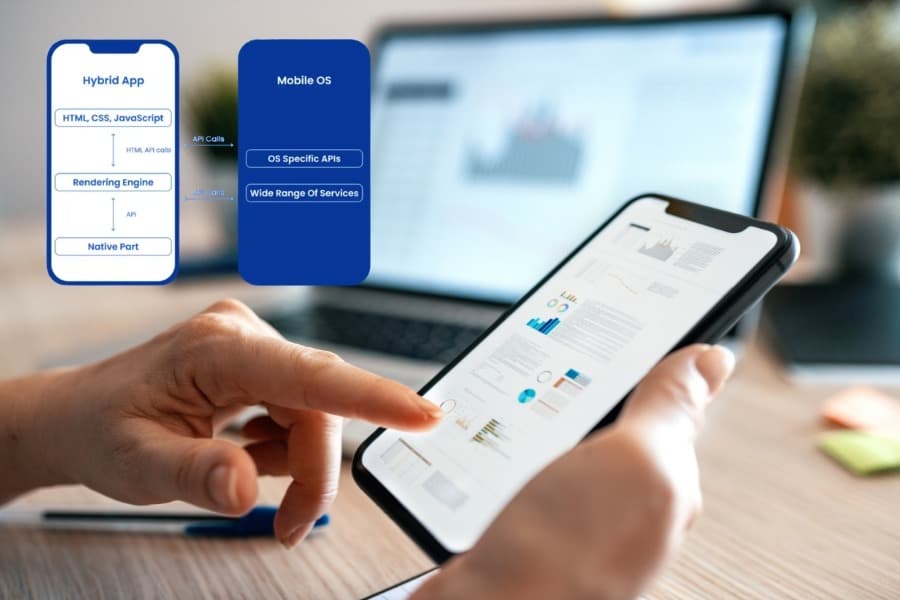
Hybrid mobile app architecture using one shared codebase across platforms
The Core Concept of Hybrid Development
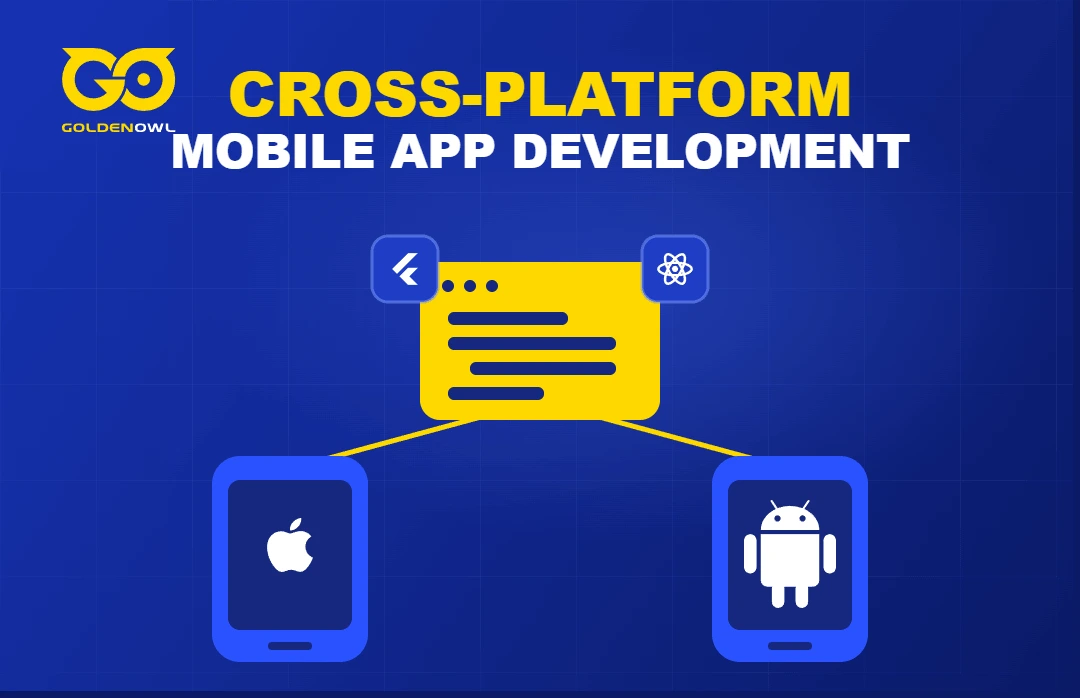
At its core, a hybrid app uses standard web tech (HTML, CSS, and JavaScript). That code is then placed inside a native shell, which lets it be published on the App Store or Google Play. The main appeal is having a single codebase for both iOS and Android. That native shell is the critical part. It gives access to device hardware, making it more than just a website.
Access to things like the camera or GPS. The goal is to create an experience that feels native, but often that's not what happens. That shell is a translation layer, and it's a compromise that can feel brittle. Users notice the lag, the odd scrolling, and the general awkwardness of an interface that isn't truly native. The promise of a smooth experience, in other words, gets broken.
The real work, then, happens before a single line of code is written. You need to decide which compromises are acceptable for your product, though this choice is often harder than it sounds. If you get this strategic choice right the tech can work, but getting it wrong means no framework is going to save a flawed foundation.
Comparing Hybrid and Native Development
Native apps are the benchmark for performance. They are built for one operating system using Swift for iOS or Kotlin for Android, which gives them direct hardware access. This approach delivers the fastest user experience.
But this chase for top performance is often a miscalculation.
Here is the practical business comparison:
Factor | Hybrid Apps | Native Apps |
Development Cost | Lower | Higher |
Time to Market | Faster | Slower |
Code Reusability | High | Low |
Maintenance | Simplified | More Complex |
Hardware Performance | Moderate to High | Highest |
Device API Access | Good | Full |
Scalability | Strong for many business apps | Best for intensive apps |
Native development still dominates in performance-heavy products such as:
- Real-time gaming
- AR/VR applications
- Advanced GPS tracking
- High-frequency financial trading apps
- Heavy multimedia processing
A strong hybrid mobile application development company will help you identify whether your product truly requires native architecture or whether hybrid can meet your business goals more efficiently.
Hybrid Apps vs. Responsive Websites

Hybrid app compared with responsive mobile website experience
It’s easy to see why firms confuse responsive sites with hybrid apps, on the surface they both just work on mobile devices. But this is a muddled comparison.
A responsive site simply adapts its layout for a mobile screen; it’s a destination. A hybrid app, however, is installed on the device. A permanent spot on the user's phone. This gives you access to the phone’s core hardware, things like push notifications and the camera, and that access is what lets you build a real connection with users.
If your goal is just to show information, a website is fine. But a website, while obviously better than nothing, is a huge handicap if you need customers to return, since you're not actually installed on their phone. An app is for when that ongoing relationship actually matters.
Hybrid vs. Cross-Platform Native Apps
The industry often treats "hybrid" and "cross-platform native" as separate categories, but honestly, the line has blurred to the point of being almost academic.
To be fair, a technical difference exists. Modern frameworks like React Native and Flutter render native UI components, a clear step up from older hybrid apps that ran in a WebView. Today, many hybrid mobile app development services use both methods depending on the project.
But this is a line that, for the most part, only engineers should care about. For the business, the core trade-off is the same, you get a single codebase but you are forever tied to the framework's limits. A single codebase. Don't get stuck on labels. The only real question is whether that trade-off is going to be a problem for your product in 3–5 years.
Key Business Advantages of Hybrid Apps
The appeal of hybrid development is efficiency. Instead of two engineering teams, you have one. A single codebase can cut development time by up to 50% compared to parallel native builds, and for startups or mid-market companies, that difference often decides if a product is possible at all. But it’s better to see those savings as a trade-off. You get to market fast, but you might run into technical snags down the road.
That single codebase also makes life simpler after launch, bug fixes and feature updates can go to both platforms from one commit. So you don't have one app version lagging behind the other. This efficiency after launch is a big deal. Launching on both iOS and Android from day one also means you are not cutting your user base in half, though it's still no guarantee of finding an audience on both platforms. It’s a good way to widen your reach.
So where does this trade-off make the most sense? It's best for testing an MVP. Many startups use hybrid mobile app development service providers for this exact reason. It's a way to test a business idea, really, before sinking a fortune into a native setup you might not even need.
Potential Downsides and Limitations
Of course, hybrid development isn’t the right fit for every project. You can't expect to get native performance everywhere while also cutting costs.
Take the logistics startup that built its delivery-tracking app with a hybrid framework. The app worked well enough in testing, once driver activity scaled up it choked on continuous background GPS tracking and killed the battery on different Android devices. A total battery killer. The company had to rebuild its core tracking parts natively, a situation (and a cost) far more common than you’d think.
This isn't a sign that hybrid frameworks are “bad.” The problem is the hidden cost of an unplanned rewrite of a key feature two years down the line. The real issue is failing to budget for that possibility during the planning phase.
A rewrite might seem like it comes out of nowhere, but it's almost always triggered by the same things. This includes heavy background processing, performance limits in graphics-heavy apps, a reliance on third-party plugins, OS update risks, or complex hardware integration.
A good hybrid mobile application development services provider should catch these breaking points before the work even begins.
Core Hybrid Mobile App Development Services for Your Project
A reliable partner should provide far more than coding alone. Successful mobile products require structured planning, user-focused design, testing discipline, and long-term operational support.
Strategy and Technical Discovery
The discovery phase is where both sides align on priorities, it happens before a single line of code gets written. It’s about more than your product goals and user flows. A lot more than that. It’s about facing the technical risks and, you know, the long-term scaling plans from day one. Software engineers will map your feature list to specific plugins and choose backend structures, but the point is to make sure the design can actually scale. The goal isn't just to approve a wish list.
Cross-Platform UI/UX Design
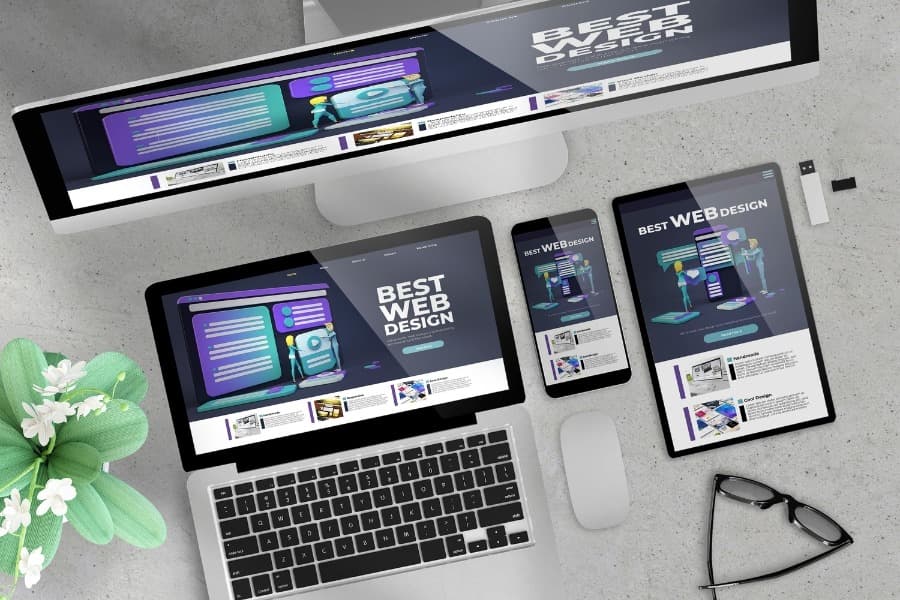
Cross-platform UI UX design process
When it comes to a hybrid app's interface, you have two choices. You can try to fuse Android's Material Design with Apple's Human Interface Guidelines, which sounds like a fair compromise, or you can just pick a side. The blending approach usually creates an app that feels native to no one, it just ends up feeling generic. Picking a side, on the other hand, builds a consistent identity. A clear point of view.
Our End-to-End Hybrid Mobile App Development Service
At Golden Owl, our hybrid mobile app service means we don't just hand off a build and disappear, our team stays engaged through the first release cycles. We watch the crash rates and user feedback, which is always a bit chaotic at first, and then change the app based on real-world use. That’s the baseline. The absolute minimum.
The real test is framework choice. Let's be blunt. Most agencies that claim to be neutral between React Native, Flutter and Ionic have a favorite they aren't telling you about. Our job isn't to just push our preference, it's to pinpoint the right one for your product.
Wearables and IoT App Integration
Your app can connect to wearables and IoT gadgets, the real challenge is doing it without draining their battery in three hours. Managing those low-energy Bluetooth (BLE) signals and constant WiFi data streams seems simple, but it requires (and this is the hard part) an almost fanatical efficiency. A dead battery after just a few hours. That whole efficiency piece is more important than just parsing the data.
API and Third-Party Plugin Integration
Modern apps rely on external APIs for payment processing and mapping, the process involves building a secure middleware connection to clean and wrangle those data feeds. This protects the core app from the eventual failure (and it's always eventual) of an outside service. You just don't want their outage to become your outage.
Quality Assurance and Device Testing
There's a myth that testing hybrid apps means trying to support hundreds of devices equally from day one. That’s a recipe for failure. The real challenge isn’t just checking if features work, it’s getting fanatical consistency on the devices that actually matter.
Before QA even begins, a company should find the top 10 devices its customers use most, and the only goal is hitting a 99.9% crash-free rate on that core list. That one list. You have to get it right for the people who are actually using the app before you even think about expanding further.
App Launch, Support, and Maintenance
Launch isn't the end of the project, it's the start of the most data-rich phase where user behavior in production rarely matches the original design. Real-world use will unearth edge cases that no amount of pre-launch testing can ever catch. All those little scenarios you never thought of.
Thinking support is just about bug fixes is a huge mistake, though it's an easy one to make. A good partner provides post-launch monitoring, things like crash reporting and user session analytics, and a set SLA for critical bugs. The real value is when they use that data to recommend changes, even suggesting a feature should be cut. You have to clarify those terms before signing any contract.
Native to Hybrid App Migration
Companies move legacy native apps to a hybrid design for two main reasons. They want to cut maintenance costs or ship features faster. You face two very different paths: a complete "big-bang" rewrite or a gradual, phased migration. A rewrite promises a clean slate, it also freezes your product for the duration.
The phased approach is almost always the smarter choice. New screens and features are built in the hybrid framework, slowly replacing (over months) the existing native code. This keeps the app working, reduces risk, and keeps development churning forward. A slow replacement of the old app.
Our End-to-End Development Process
A transparent, well-structured development process is a strong signal of a mature partner. Here's how a well-run hybrid project should flow.
Development Phase | Primary Activities & Deliverables | Quality Metric / Milestone |
1. Planning & Discovery | User stories, technical system architecture design, risk matrix mapping. | Signed technical specifications document. |
2. Architecture & UI/UX | Wireframing, high-fidelity UI design, component pattern definitions. | 100% interactive design prototype signoff. |
3. Engineering & Build | Front-end implementation, native integration, custom API bridge creation. | Functional alpha release with core features. |
4. Testing & Debugging | Automated unit testing, cross-device QA, security vulnerability scans. | 99.9% Crash-Free Rate on core device list. |
5. Deployment & Launch | App Store optimization, store compliance review, production environment go-live. | Official release on App Store & Google Play. |
6. Support & Evolution | Real-time production monitoring, OS patching, iterative feature additions. | Uptime > 99.95%, response times < 200ms. |
Adhering strictly to this operational roadmap minimizes project drift, aligns engineering teams, and ensures software components remain maintainable over years of continuous market use.
Hybrid App Frameworks and Technologies

Modern hybrid app frameworks
The framework choice has lasting implications for performance, developer availability, and long-term maintainability. Here's an honest overview of the major options.
React Native
Meta created React Native, and it remains a very popular choice. It lets developers build mobile apps with JavaScript while rendering native UI, and you can share a huge portion of the codebase. Often 80–90% across iOS and Android. This high level of code sharing is a big part of the appeal. But this comes with a major catch. That level of code reuse only works for apps without deep native features.
This is where the maintenance effort becomes a much bigger concern.
Flutter
Google's option has grown fast by fixing some of React Native's performance issues. It uses its own rendering engine, which allows for smooth animations and a completely consistent interface on all devices. Its popularity is clear, though its high rank in the Stack Overflow Developer Survey is just one indicator. The tradeoff, however, is that Flutter apps don't use native OS widgets. They can feel, to some people, a bit alien to users accustomed to their platform's specific look.
This makes Flutter a strong choice for apps where brand identity matters more than platform rules (like eCommerce apps, fintech platforms, and booking applications).
Ionic
Ionic is common for enterprise platforms, internal apps, and MVP products that focus on speed and cost. It uses web tech, so companies with web developers assume (often correctly, at first) they can scale development easily. That assumption about your existing team is the central risk. Ionic promises flexibility across web, mobile, and desktop, but this is where the initial savings evaporate.
Performance tuning and plugin selection demand real experience, this is a skill separate from standard web work for apps using advanced device features.
You should consider an expert ionic mobile app development company a necessity for projects that rely heavily on the Ionic design. A guardrail for technical choices and plugin tuning.
Xamarin
Xamarin is a Microsoft-backed framework designed for businesses already operating within the Microsoft ecosystem. It supports C# and .NET, making it easier for enterprise teams to reuse existing backend infrastructure and internal development expertise.
Although Xamarin is less dominant today compared to Flutter or React Native, it still works well for:
- enterprise management systems
- internal operational tools
- business workflow applications
For companies heavily invested in Microsoft technologies, Xamarin can still be a practical option.
Other Key Frameworks and Tools
Modern hybrid mobile application development services often include additional tools that support scalability, testing, and deployment. Common technologies include:
- Firebase for backend services
- GraphQL for API optimization
- Docker for deployment consistency
- Jenkins for CI/CD automation
- Capacitor for native runtime support
These tools may not be visible to end users, but they play a major role in app stability and long-term scalability.
Core Web Technologies
Behind every hybrid app are core web technologies like HTML5, CSS3, JavaScript, and TypeScript. Even with advanced frameworks, strong frontend fundamentals still matter.
Clean component architecture, responsive layouts, and optimized rendering directly affect:
- App speed
- UI consistency
- Accessibility
- Long-term maintainability
This is why experienced hybrid mobile app development companies still place heavy emphasis on frontend engineering quality, not only framework selection.
How to Assess a Hybrid Mobile App Development Company

Businesses evaluating a hybrid mobile app development company
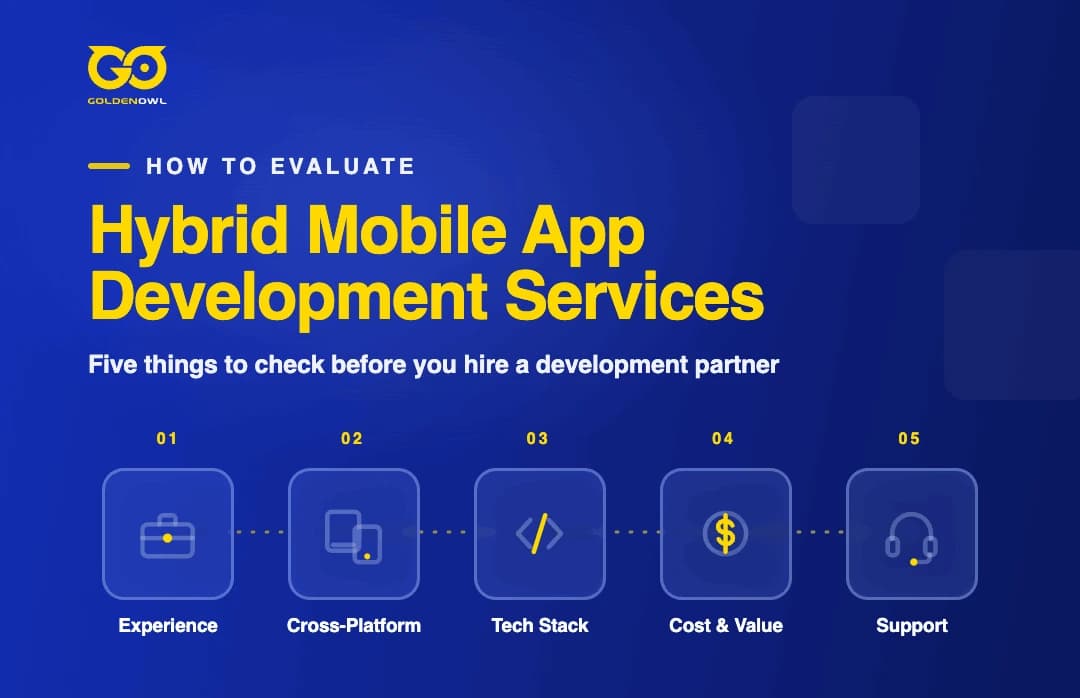
Choosing the wrong partner creates long-term technical debt that becomes expensive to fix. A reliable evaluation process is the main way to reduce that risk. But it must focus on technical depth, communication, and delivery maturity over just the price. You need to evaluate a partner on their track record of long-term success after an app has launched.
Technical Expertise and Framework Fluency
Ask for evidence of depth. A partner claiming expertise in eight frameworks might not have deep knowledge in any of them. Look for a team with a primary framework. They should have used it on 10+ production apps. A real sign of mastery. They also need a clear reason for when they suggest alternatives. Their engineers must be able to dissect performance trade-offs at the code level, not just use slide-deck talking points.
You can request a technical interview with the lead developer who would be assigned to your project.
Relevant Project Experience and Case Studies
Case studies can be misleading, the real proof is in the post-launch data. A beautiful screen recording and a well-written brief don't tell you if the product actually worked for users.
Instead, ask providers about the App Store rating after 6-12 months and the retention rate. Ask how stable crash performance was and how often they released updates. You also need to find out what scalability issues appeared post-launch.
A partner who can answer these questions has a real post-launch relationship with their products. One who stumbles or redirects to newer projects may be hiding a difficult launch history.
Project Management and Collaboration Process
Ask how they handle scope changes, which are inevitable. What is the process when a stakeholder adds a new requirement mid-sprint? How are blockers escalated? What does a typical sprint review look like? Check that your vendor uses structured Agile workflows. They should use CI pipelines and shared tools (Jira, GitHub, Slack). Regular demo loops and weekly progress builds, which are critical for feedback, protect teams from scope creep and misaligned features.
Focus on Scalability, Security, and Trust
The best sign of a design-focused partner is how they talk about users during the sales process. Do they ask about your target users before proposing a solution? Do they mention usability testing, accessibility compliance (WCAG 2.1 AA is the standard), or analytics setup? A team might lead with a portfolio of pretty screens. But if they can't explain the user research, they have likely put looks over outcomes.
User-Centric Design Philosophy
The best indicator of a design-focused partner is how they talk about users during the sales process. Do they ask about your target users before proposing a solution? Do they mention usability testing, accessibility compliance (WCAG 2.1 AA is the standard), or analytics instrumentation? A team that leads with their portfolio of pretty screens but can't explain the user research behind them has likely prioritized aesthetics over outcomes.
Industries We Serve

GOS delivers hybrid app solutions for healthcare, fintech, logistics, and eCommerce
GOS delivers hybrid app solutions for healthcare, fintech, logistics, and eCommerce. Hybrid mobile apps are viable in almost every sector. Their core benefits—speed, cost, and cross-platform reach—apply everywhere. Our team has delivered hybrid mobile products across these areas:
In fintech and banking, this includes investment dashboards, digital wallets, and loan management tools. For healthcare, we have built patient portals, scheduling apps, and remote monitoring companion apps. Our retail and e-commerce work covers shopping apps, loyalty programs, and inventory management tools. In logistics and supply chain, we have made driver apps, delivery trackers, and warehouse scanning tools. For education, we build learning management apps, quiz platforms, and student progress tools.
Our real estate experience includes property search apps, agent CRM tools, and virtual tour integrations. For on-demand services, we have developed booking platforms, marketplace apps, and service provider tools. Every industry has its own technical challenges. This ranges from security rules to scaling demands. Partner with a team that has hands-on experience in these sectors.
It is the best way to spot risks early and keep your project on track.
The Impact of Hybrid Apps
Hybrid development changes both business operations and software engineering workflows.
What Hybrid Apps Mean for Businesses
The appeal to the business is straightforward. A single codebase gets you to market faster, and you can deploy to both iOS and Android from one development effort. This reduces duplicated engineering work, which frees up budget for other things like customer growth.
What Hybrid Apps Mean for Developers
For developers, it means a single workflow where changes are made only once. A single system for UI elements makes upkeep and launch easier. However, this speed requires strong design planning to prevent slowdowns down the line.
Understanding Project Cost and Timelines
The on-paper cost for a hybrid app is often $40,000 to $120,000. This price usually covers a mid-level MVP (minimum viable product). It includes standard backend integration, cross-platform UI/UX design, and a launch on both iOS and Android. That number is a starting point for the conversation. While the initial estimate seems contained, the final budget is shaped by factors that go far beyond the initial feature list.
Complex business platforms with advanced APIs or real-time systems will naturally cost more.
Factors That Influence Development Cost
The major cost drivers are not always the obvious ones. Third-party integrations are the most frequently missed cost. For example, a client once asked for a simple CRM integration, but the old system only had a SOAP-based web service from 2009 with poor docs.
Building a custom API bridge to translate requests bolted on about 40% to the project budget and added six weeks to the timeline. One thing you need to do is to treat any integration with a system older than five years as its own high-risk project.
Backend needs are another factor. Is there an existing API you can use, or does the backend need to be built from scratch? New backend work is often as expensive as the mobile app itself. A whole separate undertaking. The complexity of the features themselves also matters a great deal.
A simple CRUD app with three screens costs a fraction of a real-time collaborative tool. You should define your MVP ruthlessly, as this is the best way to control scope.
The design scope also affects cost. A custom design system, for instance, costs more than using a framework's default component library. The difference can be large. Finally, consider team location and experience. Offshore development is genuinely cheaper, the quality gap between a senior offshore team and a junior one is huge. Check their experience, not just the hourly rate.
So a well-scoped hybrid MVP might start in the $40,000 to $120,000 range. But that figure assumes clean, basic API integration. When you add significant backend work or integrate with old systems, the cost will naturally go up.
Typical Project Timelines
Timelines vary depending on complexity. General estimates include:
Phase | Duration |
Discovery and scoping | 2–4 weeks |
Design (UX/UI) | 3–6 weeks |
Core development | 8–16 weeks |
QA and device testing | 2–4 weeks |
App store submission | 1–2 weeks |
Total (MVP) | 4–8 months |
These ranges assume a focused MVP scope. Feature creep, late-stage requirement changes, and integration surprises are the primary reasons projects exceed these timelines. Investing in a thorough discovery phase is the single most effective way to protect your schedule.
Frequently Asked Questions
What is the difference between hybrid and native apps?
Hybrid apps use a shared codebase for iOS and Android, while native apps are built separately for each. Native apps can access full hardware performance, though this difference matters less than how the app is built. A well-built hybrid app can feel identical to a native one for most business tasks.
What are the main advantages of hybrid development?
The appeal of hybrid development is about lower costs from one codebase, faster time to market, and simpler long-term upkeep. But these benefits are not automatic. They depend on careful engineering. A result of that process.
How do you ensure good performance in a hybrid app?
Performance doesn't happen by accident, it is a direct result of the engineering process. We ensure it by keeping DOM structures simple, using hardware-sped transitions, caching data locally, and moving heavy tasks to the cloud backend. This is the work that makes an app feel quick instead of slow.
How is application security handled in hybrid apps?
Security is a function of process. We use a layered approach to secure hybrid apps. This includes strict SSL pinning and encrypted local databases using tools like SQLCipher. We also hide the production source code, and all data is shepherded through secure, token-based authentication.
How much does hybrid app development cost?
A professional build requires a real investment. Project costs typically start at $25,000 for a basic MVP. They can go well over $150,000 for complex enterprise systems, though the final cost depends on feature scope and integration needs.
How long does it take to build a hybrid app?
A typical build cycle runs between 12 and 24 weeks. This timeline covers the full process from discovery workshops and interface design to engineering sprints. It also covers real-device testing and app store deployment.
Partner with GOS for your hybrid mobile app development solution

Partner with GOS to build hybrid mobile apps faster, smarter, and more efficiently
Choosing the right hybrid mobile app development partner affects your product’s timeline, scale, and long-term costs.
At Golden Owl Solutions, we help firms build scalable hybrid apps that deliver on the promise of cross-platform development, balancing performance, speed, and user experience on both iOS and Android. Our team offers full hybrid mobile app services. This includes product discovery, UI/UX design, development (with React Native, Flutter, and Ionic), backend integration, and QA testing.
We also handle App Store deployment and post-launch maintenance. We have worked with clients in many fields, from fintech and healthcare to eCommerce and logistics. We don’t push a single framework, we pick the right tech stack based on your product goals. Whether you are building a new MVP or updating an old app, you get a partner focused on results.
You can get services designed for faster delivery and easier upkeep, ensuring your app supports long-term business growth.
Share this page


Table of Content

Subscribe to Golden Owl blog
Stay up to date! Get all the latest posts delivered straight to your inbox