How to use AI in real estate: automate lead follow-up, speed up valuations and marketing, and keep every step compliant with Fair Housing rules.


Best AI Call Center Solutions
Sep 16, 2026
about 28 min read

This article ranks platforms by pricing, deployment time, and suitable use cases, evaluating AI call center solutions that can change these economics.
Contact center economics extend past software licenses. A phone interaction handled by a live agent costs $17 or more on average, while agent attrition is near 31%. CX Today reports that 31% of contact center agents may leave within six months, and replacing one tenured agent can cost between $10,000 and $20,000.
This article ranks platforms by pricing, deployment time, and suitable use cases, evaluating AI call center solutions that can change these economics.
Top AI Call Center Solutions
The platform should follow the calls you want it to handle. In 2026, the category falls into autonomous voice platforms, real-time agent-assist layers, and full-stack CCaaS suites. Retell AI and Amazon Connect with Lex run calls end to end; Cresta and Observe.AI guide human representatives; NICE CXone, Genesys, Five9, and Talkdesk add AI to wider contact center systems.
Pick the delivery model that matches how your team runs. Retell AI fits teams prioritizing autonomous voice handling and quick launch, while Cresta and Observe.AI suit teams where representatives still handle most conversations. NICE CXone, Genesys Cloud CX, Five9, and Talkdesk fit teams bringing routing, workforce management, and AI together.
Before buying, compare six points: how many calls run independently, live-agent help, telephony and system connections, the route into production, compliance, and whether pricing follows usage, seats, or outcomes. These checks show the operating work hiding behind the feature list.
Contact center AI combines large language models, speech recognition, and real-time function calling to handle, route, support, or automate interactions across phone, chat, and digital channels.
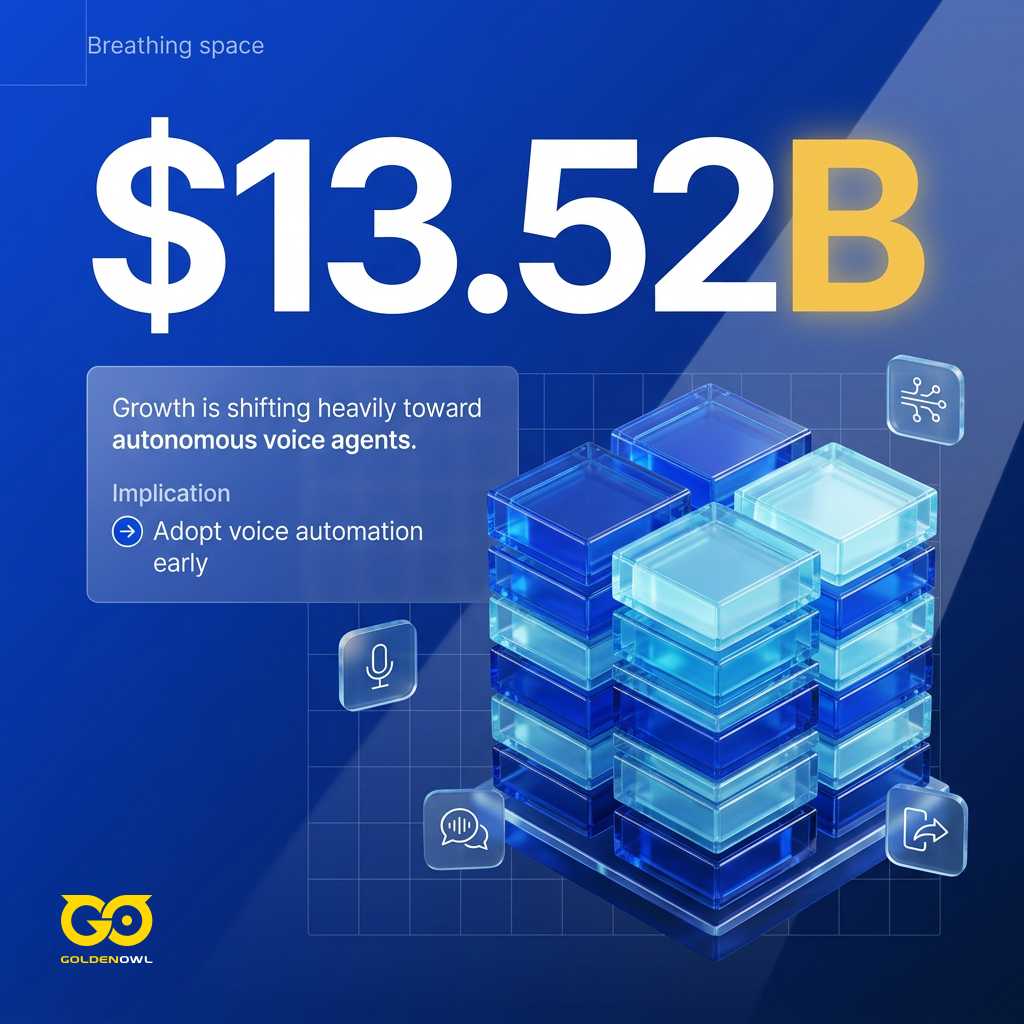
The category is pulling together quickly. Fortune Business Insights expects the market to rise from $2.98 billion in 2026 to $13.52 billion by 2034, a CAGR of 20.80%, with much of that growth shifting from agent-assist tools toward autonomous voice agents.
Retell AI
Retell AI targets teams that want LLM-powered voice agents to answer, qualify, transfer, and complete tasks on inbound and outbound calls at ~600ms end-to-end latency. At that speed, callers generally stop noticing the system. The measured result was ~600ms.
For an after-hours healthcare rollout using a Twilio SIP trunk, I reached the first live call about 2 days after signing up. Most of the time went into loading policy documents into the knowledge base and connecting appointment booking.
A patient interrupted twice during one call to ask about insurance verification. Retell paused, pulled the answer from its streaming knowledge base, then transferred the patient to the on-call nurse line with the full conversation context.
That agent later covered daytime AI customer support overflow, keeping containment above 70% on the triage scripts.
In 380 test calls, end-to-end latency measured ~600ms, and two internal callers couldn't tell they were speaking with AI.

Retell uses pay-as-you-go pricing at $0.07/min with no platform fee, versus $94-$249/seat/month for legacy CCaaS AI tiers.
SIP trunking connects with Twilio, Vonage, Telnyx, Avaya, Five9, and Genesys, letting you retain existing telephony.
HIPAA support, a self-service BAA portal, SOC 2 Type 1, SOC 2 Type 2, and granular PII redaction come included instead of sitting behind a paid compliance tier.
You get a drag-and-drop agentic framework plus support for custom LLMs, including OpenAI GPT-5.x, Anthropic Claude 4.5, Google Gemini 3.0, or your own model.
Retell isn't mainly built for real-time agent-assist with human representatives. If people still handle most calls, you can pair it with Cresta or Observe.AI.
Pricing
Pay-as-you-go pricing begins at $0.07/min and covers LLM, voice, and telephony costs. Every account gets 20 free concurrent calls and $10 of starter credit, while enterprise plans support custom concurrency. There isn't a platform fee, minimum, or contract.
Cresta
Cresta layers onto an existing CCaaS, listens to live calls, sends representatives real-time prompts, auto-scores 100% of conversations, and manages coaching workflows.
I tested Cresta with a 60-seat SaaS support team already running Genesys.
Its streaming agent-assist sidebar returned prompts within 1.2 seconds of a customer utterance on average. Across 220 monitored calls, the auto-QA score matched my manual review using a 14-point rubric with about 91% agreement.
On complex calls, prompts below 1.5 seconds can tighten AHT. Cresta also scores 100% of calls automatically against custom rubrics.
The enterprise rollout took six weeks from contract signing to go-live, with Two AI ops calls per week for tuning playbooks against specific scripts. A normal 4-6 week implementation still depends on customer-side AI ops headcount.
Cresta deployments typically run $60K-$150K per year, call for 50-100 seat minimums, and use annual contracts. Those thresholds put it beyond smaller operations.
Cresta adds to an existing CCaaS instead of replacing it, so its full cost sits on top of the current per-seat license.
Amazon Connect
Amazon Connect is AWS's cloud-native contact center service, combining usage-based pricing, deep AWS integration, and generative AI increasingly built around Bedrock.
Several AI components come with the platform:
- Connect Wisdom: Gives agents real-time AI-powered recommendations during live calls.
- Contact Lens: Provides real-time transcription, sentiment analysis, and automated call summaries.
- Amazon Lex: Adds conversational AI and natural-language IVR for customer self-service.
- Bedrock integration: Adds a generative AI layer for virtual agents and conversation summarization.
I set up an Amazon Connect instance, linked a Lex bot to a Lambda function for CRM lookup, and ran 240 outbound test calls against a sandbox dataset.
Getting the first production-quality call to route correctly took a full week of an AWS Solutions Architect's time.
Lex remains script-driven beside LLM-native platforms. An interrupted appointment reschedule requiring multi-turn handling worked only after I rewrote the intent flow twice.
Amazon Connect charges by usage, roughly $0.018/min for inbound voice and $0.0065 per Lex text request, with storage and Contact Lens add-ons on top. There are no seat minimums, and the test's inbound voice plus Lex cost was around $0.018 per minute, the lowest tested before engineering time.
NICE CXone
NICE CXone is a mature enterprise CCaaS whose Enlighten AI suite covers the interaction lifecycle with virtual agents, Copilot for Agents, Real-Time Interaction Guidance, AutoSummary, and interaction analytics.
I assessed CXone in a regulated financial services case involving inbound account questions within PCI scope.
Across 200 test calls, Enlighten auto-QA caught 18 of 20 deliberately planted compliance violations. That was the highest QA accuracy I recorded for regulated workflows.
Intent classification led to voice routing and the screen-pop on the agent desktop within 700ms.
The platform has a mature ecosystem with 250+ pre-built integrations, including major CRMs and EHRs.
A serious rollout takes 8-16 weeks. Third-party pricing places the digital tier at $94/seat/month and voice-inclusive plans at $100-$150/seat/month, while enterprise deployments can reach $500K+ per year.
Genesys Cloud CX
Genesys Cloud CX brings together workforce engagement management, AI routing, customer journey orchestration, voice, digital channels, analytics, and automation in a cloud-native contact center.
I tested it with an inbound omnichannel retail setup spanning voice, chat, and email.
The journey flow weighed customer LTV from a Snowflake feed, channel history, and agent skill at the same time. I added VIP priority overrides too, making it the most flexible journey orchestration I tested.
Architect, its flow builder, has plenty of power but demands patience. My first production-ready flow took 11 days to build and validate.
Predictive Engagement starts proactive outreach based on web behavior.
CX 1 publicly starts at ~$75/seat/month. CX 4 with full AI costs ~$240/seat/month annually, while enterprise deployments typically run $100K-$500K+/year.
The shortest implementation takes 8-12 weeks and calls for dedicated architecture governance.
Genesys Cloud CX uses intent-based voice AI instead of LLM-native voice AI, so its multi-turn dialogue is less deep than autonomous voice platforms.
Five9
Five9 offers intelligent cloud contact center software with predictive dialing, workflow automation, and AI-powered virtual agents.
I tested its collections workflow using a 1,400-record sandbox dataset.
Its predictive dialer remains a benchmark for outbound campaigns. Pacing held agent utilization at 87% without abandon-rate violations under TCPA thresholds.
Genius AI's post-call summaries captured payment commitments correctly on 94% of test calls. Each interaction removed roughly 90 seconds of after-call work.
For outbound campaigns, Five9 pairs an industry-best predictive dialer with a strong WFO suite. Voice plans reportedly begin at $159/seat/month, making unused dialing seats costly.
Implementation usually takes 6-10 weeks and requires mandatory long-term contracts.
The voice AI supports augmentation but doesn't handle calls autonomously at the level of LLM-native platforms.
Talkdesk
Talkdesk sells AI-powered customer experience software built around quick deployment and ease of use.
You can deploy non-trivial workflows in under 2 weeks, and non-engineers can use the visual designer.
I deployed Talkdesk for a SaaS support workflow and finished the initial production setup in 9 days, the fastest full-stack CCaaS rollout in the test.
Talkdesk Studio's no-code visual designer worked for my non-engineering test administrator, who built a functioning IVR replacement in three sessions.
During live calls, Copilot prompts arrived in around 1.8 seconds. That lagged Cresta slightly but stayed within the usable window.
The healthcare edition includes pre-built EHR connections and HIPAA tools. Its healthcare, retail, and financial services editions also include pre-built compliance features and integrations.
In my test, Copilot delivered solid agent assist with sub-2s prompt latency.
Reported pricing starts at ~$85/seat/month. AI- and compliance-inclusive tiers reach $225/seat/month, with annual contracts as the standard.
Google Cloud CCAI
Google Cloud CCAI combines Dialogflow CX for conversational AI, Agent Assist for live coaching, and Insights for post-call analytics.
Think of CCAI as a collection of building blocks, not a finished product.
WaveNet voice quality is excellent, and the system supports 50+ languages out of the box.
Dialogflow CX can manage complex multi-turn flows once you model them, but that modeling takes real effort. I spent three days tuning entities before it could reliably separate savings inquiries from checking inquiries.
Telephony needs a CCaaS partner. Genesys, Avaya, Cisco, and Five9 all integrate, but connecting the pieces still takes engineering hours.
The trade-off is access to BigQuery, Vertex AI, and the wider Google Cloud data stack.
Each component uses pay-per-use pricing: Dialogflow CX starts at $0.007 per request, Cloud TTS WaveNet costs ~$0.016 per 1,000 chars, and Speech-to-Text starts at $0.024/min.
Observe.AI
Observe.AI records, transcribes, scores, and coaches on 100% of contact center calls as a conversation intelligence platform.
I uploaded 320 historical SaaS support calls and built a 12-question scorecard covering compliance, empathy, and resolution.
Its automatic scores matched my manual review on roughly 88% of items. The coaching workflow assigned remediation drills to flagged agents within 24 hours.
Observe.AI scores 100% of calls automatically, compared with the 2-5% coverage typical of manual QA, and sends remediation to agents automatically.
The platform works after calls only. It doesn't offer real-time agent assist or autonomous voice handling.
Pricing is sales-only, while third-party estimates put 100-seat deployments at $60K-$180K per year.
Twilio
Twilio is built for autonomous AI agents that act for a business, support human agents, and keep customers from repeating themselves.
Technical teams wanting custom voice, messaging, AI-agent, memory, and orchestration workflows may choose Twilio over a turnkey contact center. Its usage-based model avoids seat minimums, though implementation still depends on connecting models, business systems, routing rules, and compliance controls.
The model is composable. You bring your own LLMs, AI agents, and data, then join them through one conversation layer that carries context across channels, handoffs, and interactions.
Its products include:
- Conversation Relay: Low-latency voice AI with bring-your-own-LLM and HIPAA-eligible infrastructure.
- Conversation Intelligence: Real-time transcription, sentiment analysis, and CRM-ready auto summaries.
- Conversation Orchestrator: Multi-agent routing with context-rich AI-to-human handoffs.
- Conversation Memory: Persistent customer profiles with semantic recall across every channel.
- Agent Connect: Connects any AI agent to Twilio Voice and Messaging.
Twilio supports voice, SMS, WhatsApp, and RCS. Agent Connect can link any LLM, and summaries can flow into Salesforce, Zendesk, and ServiceNow.
Conversation Relay, Conversation Intelligence, Conversation Orchestrator, and other products use consumption-based pricing. None requires per-seat minimums.
Sierra
Sierra is a high-profile AI agent platform whose agents take actions in backend systems, including returns, subscription changes, and backend API calls.
Its capabilities include:
- Autonomous resolution: AI agents process returns, update subscriptions, and call backend APIs.
- Agent OS: The core platform for building, deploying, and governing agents across all channels.
- Sierra Speaks: Voice AI with context-aware human handoff and AI-generated summaries.
- Ghostwriter: Builds production-ready agents from SOPs, transcripts, or plain English prompts.
- Observability: Shows tool calls, knowledge lookups, latency, and agent decisions.
Pricing is outcome-based.
Vonage
Vonage brings its CPaaS roots into contact center software through automated agents, real-time transcription, sentiment analysis, and a visual AI Studio.
Its components include:
- Vonage AI Studio: A drag-and-drop builder for AI conversation flows across voice and chat.
- Real-time transcription: Live call-to-text with sentiment scoring during active interactions.
- Virtual agents: Automated self-service across inbound voice and digital channels.
- CRM integrations: Pre-built connectors for Salesforce, Dynamics, Zendesk, and HubSpot.
- CPaaS foundation: Voice, SMS, and messaging APIs alongside contact center tooling.
Sinch
Sinch has carried its global communications and CPaaS roots into AI-powered customer engagement.
Its AI agents, real-time coaching, and conversation analytics sit beside voice, SMS, WhatsApp, and email APIs.
Its capabilities include:
- Virtual agents: AI-powered self-service across voice and digital channels with human escalation.
- Real-time AI insights: Sentiment analysis and conversation signals during live interactions.
- Omnichannel reach: Voice, SMS, WhatsApp, RCS, email, and in-app messaging.
- Global infrastructure: Carrier-grade delivery with local number support.
- Developer APIs: Programmable building blocks for custom contact center applications.
Infobip
Infobip combines an omnichannel customer engagement platform with Conversations, its contact center product, and Answers, its AI chatbot builder. Together, they cover self-service, live-agent handling, and AI-supported interactions across channels.
Its main capabilities are:
- Answers: No-code chatbot building with NLP, intent recognition, and multi-channel deployment.
- Conversations: A unified agent inbox with AI assist, routing, and omnichannel management.
- People CDP: A customer data platform that powers AI personalization and conversation context.
- Channel breadth: WhatsApp, RCS, SMS, email, voice, and live chat.
- Reporting: Real-time and historical analytics across channels with CSAT tracking.
Bandwidth
Bandwidth is an API-first communications platform known for enterprise voice infrastructure and AI-powered voice experiences.
Its direct carrier access fits teams that want control over call quality, latency, and number management while adding AI to their own contact center stack.
Bandwidth provides:
- Enterprise voice APIs: Direct carrier access with global PSTN connectivity at scale.
- AI voice integrations: Native connections with leading STT, TTS, and LLM providers.
- Real-time transcription: Low-latency call-to-text for live agent assist and analytics workflows.
- Call summaries: Automated post-call summaries for CRM or help desk delivery.
- Reliability SLAs: Carrier-grade infrastructure with enterprise uptime guarantees.
Salesforce Agentforce
Salesforce Agentforce for Service combines cloud telephony, AI-powered service automation, omnichannel routing, and CRM data in one platform.
Because it lives inside the Salesforce ecosystem, representatives get one customer view across voice, chat, messaging, and email.
Conversational AI, real-time guidance, automated summaries, and workflow automation help teams raise productivity while giving customers more personal service.
Agentforce for Service connects with other Salesforce tools, so teams using multiple Salesforce products can share data and functions across departments.
Zendesk Suite
Zendesk Suite joins customer support ticketing with voice, messaging, and customer-help tools.
Its intuitive interface and quick implementation suit organizations wanting streamlined support with knowledge management and AI-assisted service.
RingCentral Contact Center
RingCentral Contact Center combines unified communications with cloud contact center functions.
The platform supports voice, video, messaging, IVR, and workforce engagement tools.
Its communications infrastructure and reliability fit hybrid and remote support teams.
Cisco Webex Contact Center
Cisco Webex Contact Center pairs enterprise-grade voice infrastructure with AI-powered customer experience tools.
The platform supports omnichannel engagement, proactive outreach, and advanced security controls.
Organizations already using Cisco collaboration products can connect it across their communications systems.
Nextiva
Nextiva’s AI call center software is a full solution designed to improve communication and efficiency.
Businesses get live insight into each customer conversation, while sentiment analysis reads customer mood.
Speech recognition transcribes and understands spoken words well, helping conversations move smoothly.
CloudTalk
CloudTalk combines smart call handling with strong analytics. Its routing sends calls to the best agent and helps people stay productive.
Supervisors can monitor calls live and step in when needed.
CloudTalk also provides detailed reports covering:
- Call metrics
- Agent performance
- Customer interactions
CallHippo
CallHippo’s AI-powered call center software is built for scale and ease of use.
The platform includes tools such as:
- Call analytics
- Virtual phone numbers
- Integrations with many tools and platforms
As the company grows, the platform can grow with it.
LiveAgent
LiveAgent’s AI call center platform handles smart ticket routing and automation.
It puts multiple channels in one place, directing tickets to the best-fit agent.
For your shortlist, compare prices like for like. TrustRadius’s July 2025 pricing guide puts small-business call center software at $10, $50 per seat per month and mid-market software at $80, $250 per seat per month, before advanced features and integrations add more cost, as noted by TrustRadius.
Ringover
Ringover’s AI call center software focuses on teamwork and smooth communication.
It offers call tracking, analytics, and integrations, giving teams a clear view of call performance and customer conversations.
Dialpad
Dialpad uses a clean, modern design and applies AI to transcription.
Sentiment analysis reads customer mood and helps shape replies, while real-time coaching gives agents feedback during calls.
How to Choose Call Center AI Solutions
Begin with the work, then compare the conversational ai software solutions that can handle it.
Assess every vendor on how well it keeps calls from reaching agents, transfers them correctly, responds promptly, transcribes and summarizes accurately, writes back to CRM, preserves escalation context, supports implementation, provides compliance controls, and manages total cost at your expected volume. Run the same call scenarios with each one instead of relying on feature checklists or polished demos.
Autonomous Voice Execution vs. Agent Assist Depth
Your call mix should decide the balance between autonomous voice execution and agent assist. Transactional inbound traffic with strict API pathways favors autonomous voice agents, while multi-variable negotiations and high-churn risk favor real-time agent assist.
Retell AI, Amazon Connect, and Google CCAI provide autonomous handling; Cresta, Observe.AI, and Copilot-style features from Talkdesk and Five9 serve as assist layers.
Autonomous handling
Autonomous voice platforms remove selected call types from human representatives altogether.
Assist layers
Assist tools let existing representatives move faster through calls they continue to handle.
Per-Minute Economics vs. Per-Seat Licensing
Judge pricing against the full operating model: count minutes or occupied seats, add telephony and model charges, include implementation and integration work, and include calls that still reach humans. A cheap unit price can produce a bigger bill once engineering work or a second CCaaS license enters the picture.
The main pricing differences are:
- Pay-as-you-go platforms: $0.07-$0.10/min, with spending tied to usage.
- Per-seat platforms: $75-$240/seat/month, with spending tied to headcount whether seats are busy or idle.
- Variable-volume workloads: Overflow, after-hours, seasonal spikes, and other changing workloads can favor per-minute pricing on raw economics.
- Seasonal economics: Per-minute pricing keeps fixed overhead low during seasonal lulls, while unexpected spikes or lengthy hold times can push invoices above predictable per-seat licenses.
Time to Production
Ringly projected that conversational AI will save $80 billion in labor costs by 2026, making every delayed week consequential.
Enterprise CCaaS deployments for non-trivial workflows involving Genesys, NICE, or Five9 standardly run 8-16 weeks.
Telephony Flexibility
Platforms that work with Twilio, Vonage, Telnyx, Avaya, Genesys, or Five9 through SIP trunking let you migrate gradually. Platforms requiring their own telephony force an all-or-nothing choice.
Replacing an existing CCaaS outright remains uncommon.
Compliance Without an Add-On
Treat HIPAA with BAA, SOC 2 Type II, and PII redaction as base product controls rather than a $50K compliance tier.
For workflows involving HIPAA, FDCPA, TCPA, or PCI, regulated deployment demands a careful approach to thoughtfully designed prompts and call recording controls; those compliance edge cases remain part of the deployment work.
An add-on for compliance can push the real cost well above the headline price.
Architectural Categories of AI Call Center Solutions
Autonomous Voice Platforms
Virtual agents
Virtual agents autonomously handle inbound volume while producing real-time transcription.
Orchestration engines
Using intent and context, orchestration engines send conversations between bots, human agents, and backend systems.
Real-Time Agent Assist Layers
A shared conversation record lets AI and human agents keep context, preserving call history during handoffs so customers don't repeat themselves.
Agent assist tools surface answers and suggested replies during a call.
Mid-call recommendations come with automated workflows, interactive voice response, real-time analytics, plus links to customer relationship management and workforce management systems.
Full-Stack CCaaS Suites
Leading call center software now brings AI, automation, omnichannel engagement, workforce management, and CRM integration into one package. Full-stack CCaaS suites go past voice support, helping teams deliver faster, more personalized service at scale.
Choose your call center software architecture by the work you want automated. Autonomous voice is a fit for repetitive, transactional calls that are safe to resolve through defined backend actions. Agent assist works when human judgment stays central, but representatives need quicker answers, guidance, transcription, or documentation. Pick a full-stack CCaaS suite when telephony, routing, workforce management, analytics, and digital channels also need to be replaced or consolidated.
High-Impact Use Cases
Pick call types that happen often, follow a clear pattern, are easy to check, and can move to a person when needed. Status checks, appointment booking, callback requests, basic account details, and after-hours overflow belong here. Save disputes, sensitive conversations, and risky backend actions for later workflows.
Let human agents handle harder, higher-value conversations by sending routing, data entry, and scheduling to automation.
After-Hours and Overflow Handling
After-hours and overflow inbound
When people are offline or queues swell, voice agents can pick up every call right away.
Voicemail management
Clear voicemail handling protects the customer experience after hours.
Callback scheduling
Send queued calls to next-day agents, and save the voicemail details with the customer record for the scheduled callback.
Inbound Lead Qualification
After someone submits a form, AI agents can qualify the lead within seconds and warm-transfer it to sales using custom criteria.
Lead qualification matters at scale because a 5-minute delay can cost most teams 80% of their pipeline.
Route callers according to agent skills, current availability, and the customer’s preferred channel.
Outbound Collections
Use AI agents to handle compliance-safe collections and payment arrangements at scale, then trigger reminder follow-up automatically.
Batch call campaigns can reach thousands of accounts per day while keeping the script consistent.
Modern call center software uses IVR for repeatable tasks, including payments, account details, order tracking, and callback setup.
Self-service
Interactive voice response handles routine payments, account information, order tracking, and callback requests without agent involvement.
Conversational IVR Modernization
Natural-language intent recognition
Natural-language intent recognition figures out the caller’s issue through conversation, rather than forcing them through touch-tone menus.
Interactive voice response
For routine matters such as returns and account information, callers can use an Interactive voice response (IVR) function 24/7.
Real-Time In-Call Guidance
Twilio Flex uses Twilio's Conversation Intelligence to show real-time signals and coaching prompts during voice calls.
NICE CXone provides comparable guidance with Real-Time Interaction Guidance (RTIG) and Copilot for Agents.
AWS Connect Wisdom gives agents AI recommendations as the conversation unfolds.
Comprehensive Quality Assurance
Quality assurance features, preview modes, and A/B testing tools track performance, upkeep, and conversational changes over time.
Dedicated tools and dashboards gather, monitor, and analyze conversations for reporting, oversight, and ongoing improvement.
Automated evaluation rubrics score interactions across the full call volume and give supervisors useful coaching information.
Call centers must retain records and collect data, so manual handling can eat up major time and introduce human error when call volume rises.
Platforms can record interactions, produce AI-powered call summaries for agents, and analyze more than those summaries alone.
Call statistics and service rep performance reveal where team members need leader support, along with wider product or company issues that require attention.
Core Capabilities
These platforms let you build, launch, and run AI-driven conversations at scale for customers and employees.
Conversational Flow Building
Design and orchestration
With visual tools, you can blend fixed rules with agentic AI planning and execution, using large language model (LLM)-based components shaped by coding prompts.
Drag-and-drop builders tie together nodes, journey rules, workflow steps, and tools for autonomous actions, while showing the full flow before deployment.
AI Guardrails
Guardrails bring governance, security, and AI-risk controls into conversational AI applications.
- Controls that enforce governance, security, and mitigation of AI-specific risks natively within conversational AI applications.
- Protections for GenAI models and AI-driven components against prompt injection, data leakage, bias, hallucinations, and unauthorized access.
- Features such as prompt injection mitigation, content moderation, identity and access management, PII/PHI protection, ethics and bias controls, hallucination reduction, and validation of RAG-generated content.
Prompt guardrails may block hostile input and flag unsafe replies, but they can't stand in for role-based access controls or verified backend database permissions.
LLM orchestration and governance let you choose models, control data handling, and improve response accuracy, while LLM-native platforms bring latency and hallucination risks that require guardrails.
Data Security and Privacy Controls
Baseline data security and privacy controls
Privacy, enterprise compliance, and security controls should operate inside the platform while you build, deploy, and run an application. Check for encryption in transit and at rest, PII redaction or anonymization, plus support for industry standards and regulations.
Compliance certifications
Compliance features can delete data once retention is no longer required and alert representatives who break pre-defined rules.
Retrieval-Augmented Generation

Basic naive RAG pulls relevant material from one source with keyword- or vector-based search, then moves through three basic steps:
- Retrieve relevant information from a single data source using keyword- or vector-based search.
- Supply the retrieved content directly to the language model for response generation, without advanced reranking, multi-step retrieval, or iterative refinement.
- Connect knowledge grounding and retrieval to FAQs, docs, and policies indexed as "source of truth" data for fast, verified answers.
Interactive Voice Response
For inbound triage, natural-language intent recognition can replace touch-tone menus; my test runs brought average handle time down by 15-25%.
Skill-Based Routing
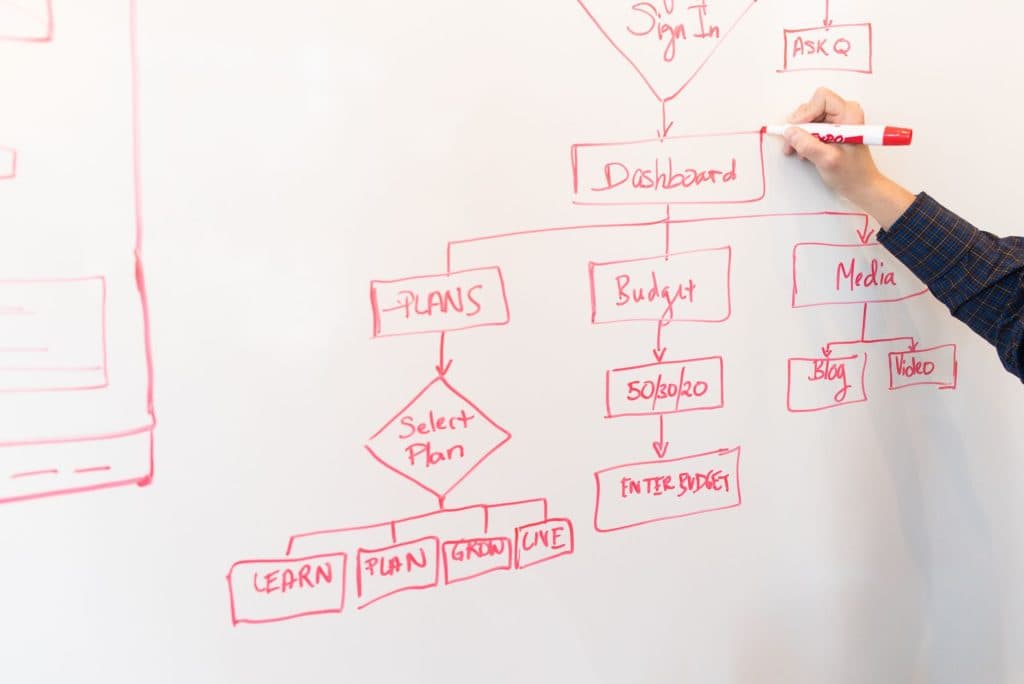
Skill-Based Routing reads a caller's known needs, matches them with a representative's skills and expertise, and sends the customer to the right rep immediately, reducing transfers and frustration.
Multi-variable routing
Five9’s smart routing likewise directs each caller to the best-fit agent.
Omnichannel Orchestration
Omnichannel Orchestration uses pre-defined rules for an incoming call's priority and topic, directs it to the best available representative, and queues it when nobody is free. Customers should get an estimated wait time and a callback option.
Customer context should follow the interaction across channels.
- Persistent customer profile: Twilio Conversation Memory and Conversation Orchestrator build a profile that every agent and AI system can access, regardless of the customer’s last channel.
- Supported channels: Messaging platforms, website chats, webhooks, telephony, and smart speakers may all be included.
- Infobip channels: Infobip brings WhatsApp, SMS, RCS, email, voice, and live chat into one platform with minimal infrastructure overhead.
Automated Call Transcription and Summarization
Advanced conversation intelligence can transcribe live audio and automatically place interaction summaries in customer relationship management records.
Machine learning-powered note taking
The CRM receives automated summaries without manual notes, while machine learning-powered note taking pulls out key points without requiring full playback.
NICE CXone AutoSummary produces post-call summaries and automatically adds them to supported CRM applications. AWS Contact Lens handles real-time transcription and summaries, which can flow into AWS data pipelines and connected systems.
For automated receptionist workflows, you can also review the best ai solution for virtual receptionist call summaries.
Tool and CRM Integration
Tool integrations connect conversational AI applications with back-end systems, from cloud services and AI frameworks to CRMs, customer data platforms, contact center as a service, martech, analytics, and business intelligence. For complex enterprise integrations, partnering with an ai solutions company can resolve system-connection and orchestration challenges.
Before production, check secure tool calling, contextual human handoff, permission-aware CRM access, transcript and summary controls, audit logs, configurable escalation, and dependable analytics. Give sentiment scoring, persistent memory, and advanced predictive routing priority only when they serve a defined workflow or measurable operating goal.
Natural language query (NLQ) features can let users reach underlying business intelligence (BI) systems using ordinary language.
With tool calling, AI agents can update a ticket, look up an order, or change a subscription.
You also get tools to design, launch, and manage AI agents that handle returns, update subscriptions, and call backend APIs. Pre-built connectors for Salesforce, ServiceNow, Zendesk, and HubSpot can cut down custom integration work.
Outbound Predictive Dialing
Predictive dialing
Predictive dialing uses historical data and forecasts to dial numbers while keeping agents busy.
Agent utilization
Click-to-call lets reps skip manual number dialing.
Batch call campaigns
Batch call campaigns dial the next number as soon as a rep ends a conversation, so reps spend their time more efficiently.
Reported sales-only pricing with contract minimums sits around $159/seat/month for voice plans, while WFM and AI add-ons can push costs up significantly.
Supervisor Oversight and Quality Assurance
Supervisors can judge call quality through automated scoring and manual review:
- Auto-scoring covers 100% of calls, compared with the 2-5% standard for manual QA.
- Observe.AI auto-scoring matched my manual evaluation on roughly 88% of items.
- Cresta auto-QA scored calls against a 14-point rubric I uploaded and reached about 91% agreement with my manual review.
- The Enlighten auto-QA correctly flagged 18 of 20 deliberately seeded compliance violations across 200 test calls, the strongest QA accuracy I measured.
Flag and whisper tools let supervisors step into live calls when necessary. QA and optimization suites may also offer “preview” and A/B testing, plus deeper tests from specialized third parties or other products in the vendor’s suite.
Centralized Analytics and Reporting
Analytics modules give customer service teams a shared, accessible way to handle conversations at scale, using dashboards to collect, monitor, and analyze them throughout the application life cycle.
CompareWhat | More Details Add to CompareWhat are the features of Conversational AI Platforms? Updated July 2026 Mandatory Features: Analytics module: Dedicated dashboards and related tools collect, monitor, and analyze conversational interactions, producing insight for reporting, oversight, and improvement across the application life cycle.
The core contact center measures, including CAR, are:
- First call resolution (FCR): The rate of cases solved during a customer's first call.
- Average handle time (AHT): How long a team or rep takes to solve a customer's case.
- Call abandonment rate (CAR): How often callers hang up before speaking to a service rep.
- Transfer rate: How many calls a rep handles without transferring to a colleague.
- Agent idle time: How long reps are not actively in a call during their shifts.
- Average customer queue time: How long callers wait before reaching a service rep.
- Hit rate: How many contacts closed by a service rep result in a sale.
Together, these measures support reporting, oversight, improvement, and customer service performance.
Key Benefits
Build ROI estimates by comparing today’s cost per interaction with the expected automated cost, then subtracting implementation, integration, telephony, model, and ongoing-management expenses. Run the math separately for routine self-service, agent assist, and quality assurance, since each call type creates value differently, with some contacts costing $17 or more per contact.
Agent Productivity
The right technology lets every service rep solve issues faster and handle more calls.
Automated workflows
Automated workflows take work away from service reps and keep their capacity available for live calls.
First-Contact Resolution
Skill-based routing
Customer context
Self-service
The strongest platforms make warm transfers with the full conversation attached, giving the human agent the transcript, extracted fields, and escalation reason before answering.
Operational Cost Reduction
Compare live phone interaction, AI voice agents, and autonomous voice platforms by interaction cost, billing structure, and financial impact.
| Operating Model | Cost per Interaction | Billing Structure | Financial Impact |
|---|---|---|---|
| Live phone interaction with a human agent | $17 or more per contact | Per-user, per-month pricing | Higher labor expense |
| AI voice agents | $0.30 to $0.50 per call | Pay-as-you-go pricing | Roughly a 30-40x cost advantage |
| Autonomous voice platforms | From $0.07/min | No platform fee, no minimums, no contract | Cost scales with usage |
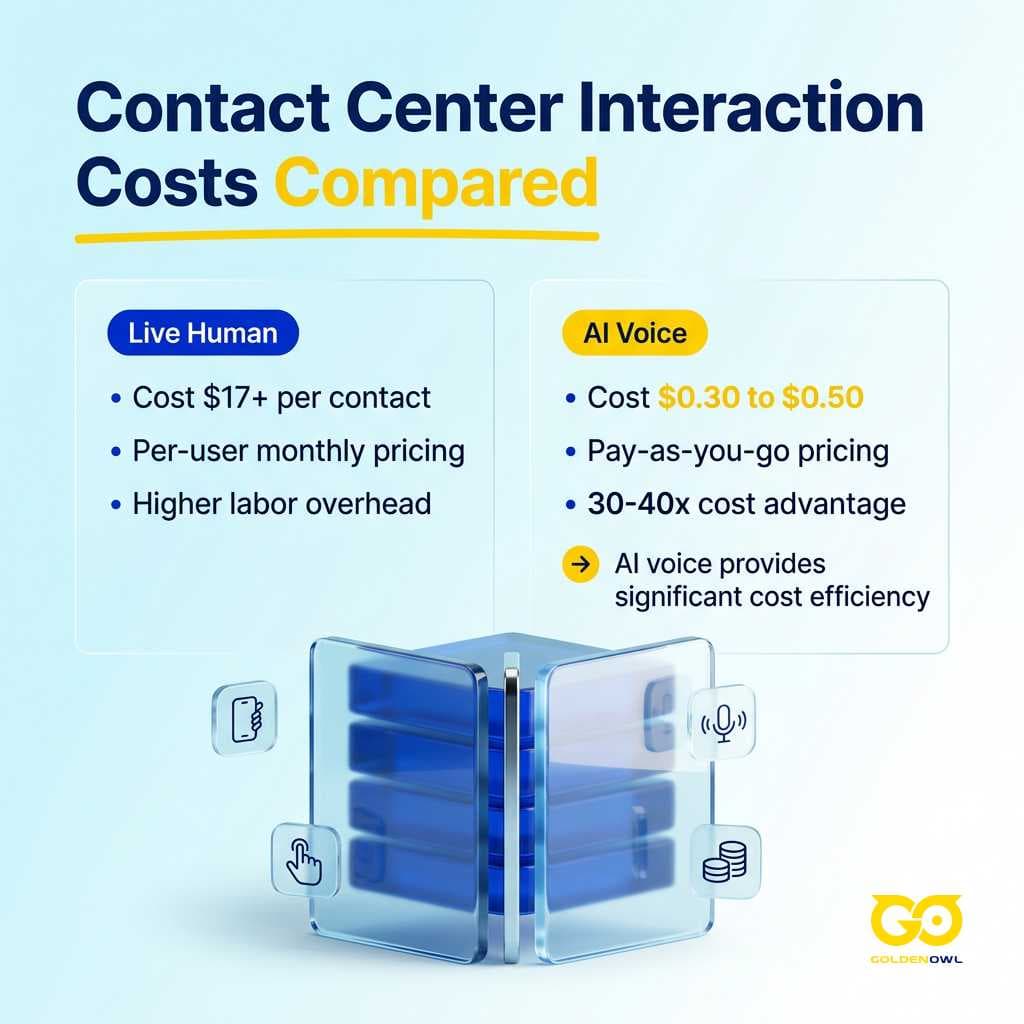
Pay-as-you-go pricing follows usage, while Per-seat platforms charge for headcount whether each seat stays busy or sits idle.
Customer Personalization
Customer profiles
Conversation Memory
Conversation Memory builds persistent customer profiles with semantic recall across every channel.
Sentiment analysis
Dialpad uses Sentiment analysis to read the customer’s mood and shape each reply through its mood-reading tool.
Regulatory Compliance
Call center software helps organizations enforce rules and regulations, including those for medical institutions; controls and results from 200 test calls include:
- Auto-scoring at 100% call coverage versus the 2-5% standard for manual QA.
- Auto-QA scored against a 14-point rubric with about 91% agreement to my manual review.
- Enlighten auto-QA correctly flagged 18 of 20 deliberately seeded compliance violations across 200 test calls.
- Encryption of communications in transit and at rest, PII redaction and/or anonymization, and functions supporting industry standards and regulations.
Frontline Staff Retention
Platforms that augment rather than surveil land better with frontline teams.
Replacing one tenured agent costs $10K-$20K across recruiting, training, and ramp time. Automating triage routes fewer low-complexity calls to human agents, leaving them with work that calls for their judgment.
Implementation Challenges
Gathering reviewer feedback in this market usually comes down to two questions: “If you could begin again, what would your organization change?” and “What single piece of advice would you offer other prospective customers?”
Before launch, make the pilot test more than its success rate. Check its handling of callers who interrupt, make vague requests, use varied accents, or go silent, as well as authentication failures, backend systems that are unavailable, inconsistent customer information, direct requests to speak with a human, and actions outside the caller’s permissions. Then assess whether failures stay safe and how much context reaches the human agent.
Enterprise Implementation Best Practices
Your current software and systems will shape which platform makes sense when a clean slate is unavailable.
Before you assume the platform will run reliably, audit the environment, since network capacity and stability can decide whether it works at all. In June 2025, Cisco found that 71% of 8,065 senior IT and business leaders across 30 markets said their data centers couldn't meet AI demands. Map your telephony, CRM, and AI systems, and account for older infrastructure too. While 88% planned capacity expansion, 74% said infrastructure was slowing growth. Put network capacity and integration paths into the buying decision, not in a later implementation checklist.
Choose call center software that fits your current systems, keeps operations steady, and captures the data you care about.
Have your IT team map the platform's access to application programming interfaces, or APIs, so you can see which CRM connections it can build.
During the review, write down which software the platform already supports.
Conducting Proofs of Concept
One call type can provide a useful starting point: collect representative recordings or transcripts, set clear pass and fail criteria, and give every shortlisted vendor the same scenarios. Test interruptions, transfers, backend actions, compliance-sensitive language, and escalation to a human. Before you negotiate the production contract, ask operations, IT, compliance, and frontline staff to review what the systems produced.
Rate every platform for containment, latency, transfer accuracy, post-call data quality, and total cost at scale.
A look at customer case studies, reviews, and online discussions can show how people actually feel about the call center software and the provider behind it.
Turn those sources into sales-process questions, then confirm whether the product fits your needs.
Upskilling Teams and Standardizing Content
Reps' and supervisors' experience should inform the product decision.
Check that the system runs smoothly, feels intuitive, and offers customization with support that's readily available, so teams can adopt it.
Executing Phased Rollouts
You can send a slice of calls, such as after-hours, overflow, or specific intents, to AI while the existing CCaaS manages everything else. Most platforms in this list support that setup.
Most clinics that deploy healthcare automation start with after-hours overflow.
Most centers keep a hybrid model instead of replacing the current operation entirely.
The Future of AI Contact Centers
Hybrid operations shift the question: AI in contact centers moves past piling features onto an existing stack, with human and AI agents sharing context, memory, and conversation history across channels.
Judge that direction against four requirements:
- Control: Choose platforms that give you control over prompts, knowledge sources, conversation records, integrations, and escalation rules.
- Portability: Confirm you can change the underlying model, keep your telephony provider, export interaction data, and connect another agent or human workflow without rebuilding the entire customer journey.
- Orchestration: Intelligent routing and clean handoffs need orchestration engines that move conversations between systems and people.
- Flexibility: Bring your own models, data, and preferred tools without locking yourself into one vendor's ecosystem.
Platforms worth building on are the ones that give you this level of control and flexibility.
Frequently Asked Questions
How much do contact center AI solutions cost compared to human agents in 2026?
Ringly puts a human phone contact at $17 or more, whereas an AI voice agent handles the same call at a much lower cost. That creates roughly a 30-40x cost gap.
Pay-as-you-go platforms typically start around $0.07/min for the platform layer, with LLM and telephony costs added separately; full-stack CCaaS with AI runs $94-$240/seat/month.
Which contact center AI solutions can be deployed in under a week?
Production can arrive in 2-9 days with the right engineering support for Retell AI, Amazon Connect, and Talkdesk's tier for inbound IVR replacement.
How do contact center AI solutions handle escalation to human agents?
Call-transfer rules can move someone to a human when sentiment drops, an intent signal appears, or the caller asks directly. Those conditions set the handoff point.
What's the best contact center AI solution for healthcare patient scheduling?
For autonomous patient call handling
In a patient scheduling workflow, Retell AI includes HIPAA and BAA support out of the box, connects with EHR systems through function calling, and helped Pine Park Health lift scheduling NPS by 38%. After deployment, that increase came from autonomous patient call handling.
For human-augmentation workflows
Talkdesk Healthcare and NICE CXone's regulated mode are typically selected for human-augmentation workflows in larger health systems.
For custom implementations
ScienceSoft’s experience puts initial implementation for custom healthcare AI call center solutions at a substantial starting cost of $150,000.
Can contact center AI solutions reduce agent attrition?
Yes. They take repetitive tasks away from human agents, and tools that augment rather than surveil usually land better with frontline teams.
How do I choose between agent-assist platforms and autonomous voice platforms?
Autonomous voice platforms
Start with the call mix. When 40%+ of calls involve routine triage, autonomous voice can manage those interactions at $0.30-$0.50 per call and shift that workload away from human representatives.
Agent-assist platforms
Call mix
Use real-time agent assist for multi-variable negotiations and calls with high-churn risk, then reserve autonomous voice agents for routine inbound traffic with strict API pathways.
Which contact center AI solutions integrate with existing CCaaS platforms?
SIP trunking
Retell AI uses SIP trunking to connect to any CCaaS without replacing the existing platform.
Software layers
Cresta and Observe.AI sit above existing CCaaS platforms as software layers.
Partner frameworks
Google CCAI works through partner CCaaS deployments.
Can contact center AI replace human agents?
AI can take over repetitive, high-volume calls, including routing, FAQs, and appointment booking, then warm-transfer the rest to human agents with full context attached. Most centers still use a hybrid model.
Full replacement remains uncommon.
Which contact center software lets an AI agent monitor a live call and whisper suggested replies to a human agent?
Several platforms offer live signals, coaching cues, or recommendations while a human agent manages the call.
- Twilio's Conversation Intelligence surfaces real-time signals and coaching cues during voice interactions when combined with Twilio Flex.
- NICE CXone provides this capability through Real-Time Interaction Guidance (RTIG) and Copilot for Agents.
- AWS Connect Wisdom also surfaces AI recommendations during live calls.
- The streaming agent-assist sidebar delivered prompts within 1.2 seconds of a customer utterance on average.
- Copilot prompts arrived around 1.8 seconds into live calls, slightly slower than Cresta but inside the usable window.
Which contact center platforms have built-in agent assist and workflow automation?
Twilio combines these functions in one agent workflow, using Conversation Intelligence for real-time transcription, sentiment analysis, and in-call coaching signals, then Conversation Orchestrator for rules-based automation and routing inside Twilio Flex.
What services provide real-time call transcription plus auto summaries pushed into major CRMs and help desks?
These services connect transcription and summaries to downstream systems through different paths. Confirm payment commitments as well.
- Twilio Conversation Intelligence analyzes voice and messaging conversations and can send summaries and insights to downstream systems.
- NICE CXone AutoSummary creates post-call summaries that automatically populate supported CRM applications.
- AWS Contact Lens supplies real-time transcription and call summaries that can move into AWS data pipelines and connected systems.
- Genius AI correctly captured payment commitments in post-call summaries on 94% of test calls and saved roughly 90 seconds of after-call work per interaction.
How do pricing models for conversational AI platforms compare?
Per-minute billing tracks changing call volume most closely, while per-seat pricing is easier to forecast when staffing remains steady. Outcome-based pricing can suit action-oriented automation, but confirm which transactions count and whether telephony, model usage, integrations, support, and implementation carry separate charges. The contract structure changes the bill.
Vendors usually bill by the minute, charge monthly per-user seats, or use outcome-based contracts.
Before choosing, ask whether the price covers telephony, model usage, transcription, storage, summaries, integrations, support, and human-transfer minutes. Check minimum seats or spend, overage rules, implementation fees, contract length, data retention, model-training rights, export options, service levels, and the process for tasks the AI can't complete. Request a production pilot with your own call scenarios before accepting performance claims.
Which platforms can route requests between multiple AI agents and fall back to a human in under 10 seconds?
Twilio Conversation Orchestrator sends conversations across channels and AI agents using configurable rules, then passes full conversation context to human agents.
It can move requests among multiple AI agents, escalate to a human in under 10 seconds, and carry full context through the handoff. NICE CXone also coordinates AI agents and human escalation inside its unified platform.
What's the top platform for building an AI support agent that can call APIs and update tickets?
For developer teams
For developer teams, Twilio Agent Connect links any AI agent, including OpenAI, Bedrock, and LangChain, directly with Twilio's voice and messaging channels. The team's own runtime manages tool calls and API interactions.
For turnkey action-taking agents
Through its Agent Data Platform, Sierra offers an out-of-the-box route for action-taking AI agents to connect with backend systems.
Which platforms sync AI agent memory with a CRM in real time?
Twilio Conversation Memory
Twilio Conversation Memory builds a continuing customer profile from every interaction and synchronizes it directly with Salesforce, Segment, and Snowflake.
AWS Amazon Connect
AWS Amazon Connect can send post-interaction data to connected AWS systems, though real-time sync takes additional configuration.
Salesforce Agentforce
What tools support real-time handoff to a human agent with full conversation history?
Good handoff tools retain the interaction history, extracted fields, and escalation reason before a human agent takes over.
- Twilio Conversation Orchestrator passes full context with every escalation, so agents do not start cold.
- That context includes everything Conversation Memory captured across prior interactions, rather than only the current conversation.
- Sierra Speaks provides voice AI with context-aware human handoff and AI-generated summaries.
- The strongest platforms support warm transfer with full conversation context attached, including the transcript, extracted fields, and reason for escalation.
How does call center software differ from telephony?
Telephony
Telephony carries long-distance voice via landlines, cellular connections, and VoIP.
Call center software
Call center software may include telephony, but it also handles customer profiles, list management, and centralized controls for extensions and call routing.
Is AI call center software worth the cost?
Operational value
AI call center software can earn its keep when automated calls and less after-call administration create efficiency gains and positive investment returns across contact centers.
Cost alignment
Align the platform's features with real operational needs to avoid paying for extras.
Usage-based pricing
Usage-based pricing can tie costs to actual usage rather than fixed seat requirements.
Compare the work, volume, and operating model each platform can support. Start with the call mix, then check escalation, healthcare controls, agent impact, architecture, integrations, AI capabilities, and the line between telephony and contact center software. The cost follows that fit, rather than the feature count, when selecting AI call center solutions.
Share this page


Table of Content

Subscribe to Golden Owl blog
Stay up to date! Get all the latest posts delivered straight to your inbox