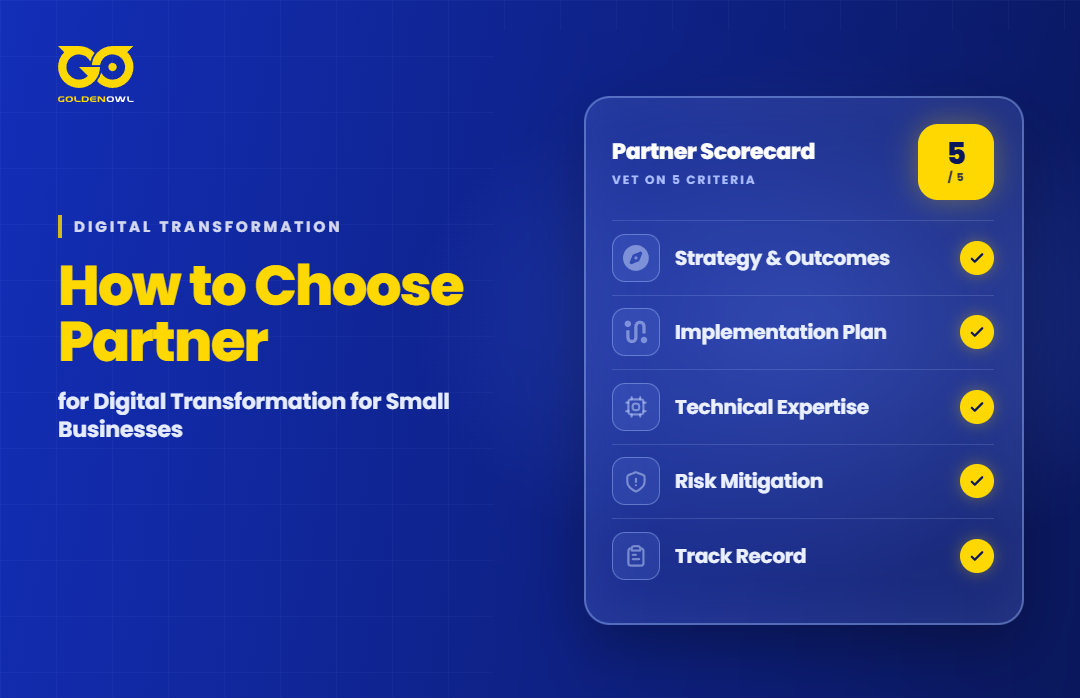
Software is the easy part. Learn how to choose the right partner for digital transformation for small businesses that focuses on real outcomes.


What Is a Minimum Viable Product (MVP)? Most viable product
Nov 20, 2025
about 10 min read
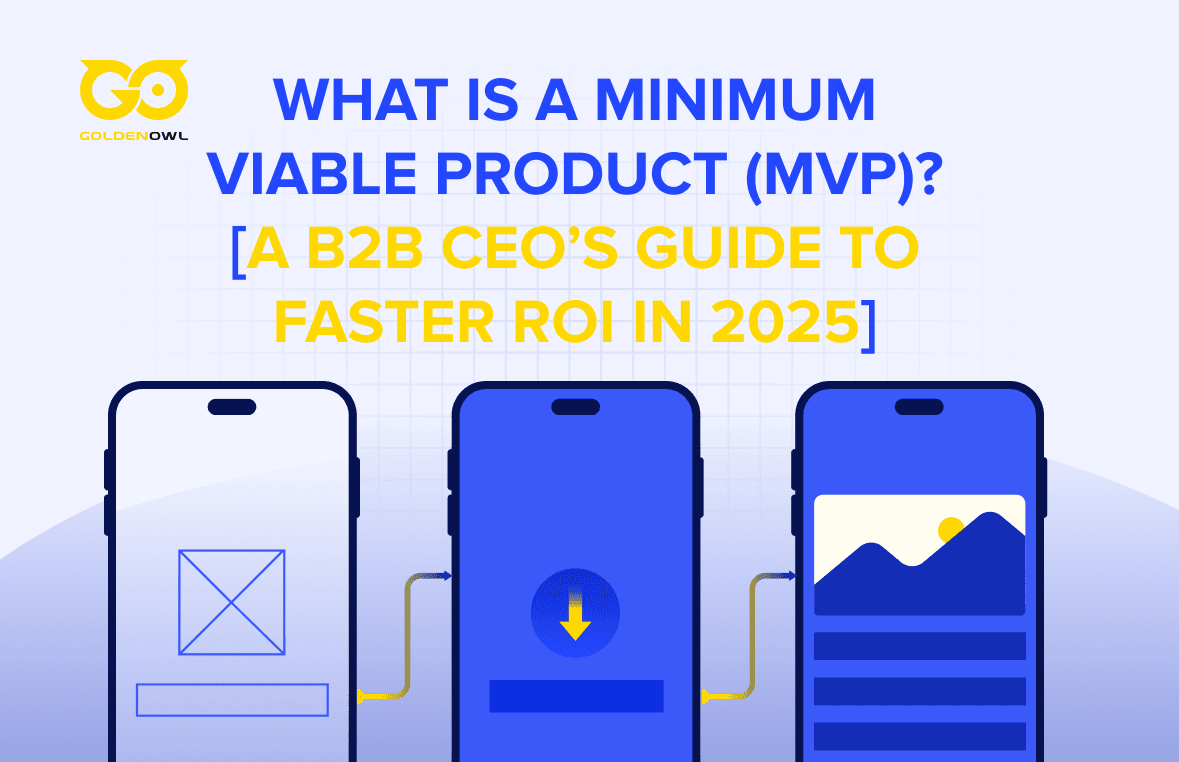
What Is a Minimum Viable Product (MVP)? A minimum viable product (MVP) is a product with a small set of features that delivers customer value. Read this article to learn more.
The global minimum viable product (MVP) market is projected to reach US$ 569 million1 by 2031. Most companies are seeking faster market validation and smarter capital efficiency. Startups and enterprises alike are moving away from the long, costly development cycles. They now focus on building lean, testable versions that prove business value early.
The MVP approach reduces risk, accelerates ROI. It also helps leadership teams make data-backed decisions before committing to full development. Golden Owl Solution blog explains what a minimum viable product is. We show why leading B2B companies rely on MVPs. And it guides you on how to design one that matches your business goals, resources, and market strategy, especially in the context of mvp development for startup
What Is a Minimum Viable Product?
A minimum viable product is the simplest sellable version of a product. It includes only the core features that deliver real value to early customers. The goal is to test demand, observe user behavior, and validate assumptions before making a large investment.

For business leaders, an MVP is a strategic tool. It reduces risk, prevents waste, and confirms whether the market truly needs your solution. MVPs are now essential in capital-efficient product development and are widely used across B2B, SaaS, and enterprise innovation teams.
Definition of MVP Through the Lens of Lean Startup Principles
The MVP concept comes from Eric Ries, author of The Lean Startup. His definition is simple and direct: “The version of a new product which allows a team to collect the maximum amount of validated learning about customers with the least effort.”
The principle is clear: validate the idea first, learn from real user behavior, and iterate quickly. This approach replaces building a full product based on assumptions. This aligns perfectly with MVP in agile development, incremental releases, and data-first product strategy. In 2025, MVPs remain standard for:
- Testing problem, solution fit.
- Proving market demand.
- Reducing uncertainty before scaling.
- Engaging early adopters.
- Avoiding overengineering that slows time-to-market.
An MVP is a controlled business experiment. It confirms whether the problem is real and whether customers will pay for the solution - making mvp development a strategic decision, not just a technical one.
The Key Difference: MVP vs. Prototype vs. Proof-of-Concept
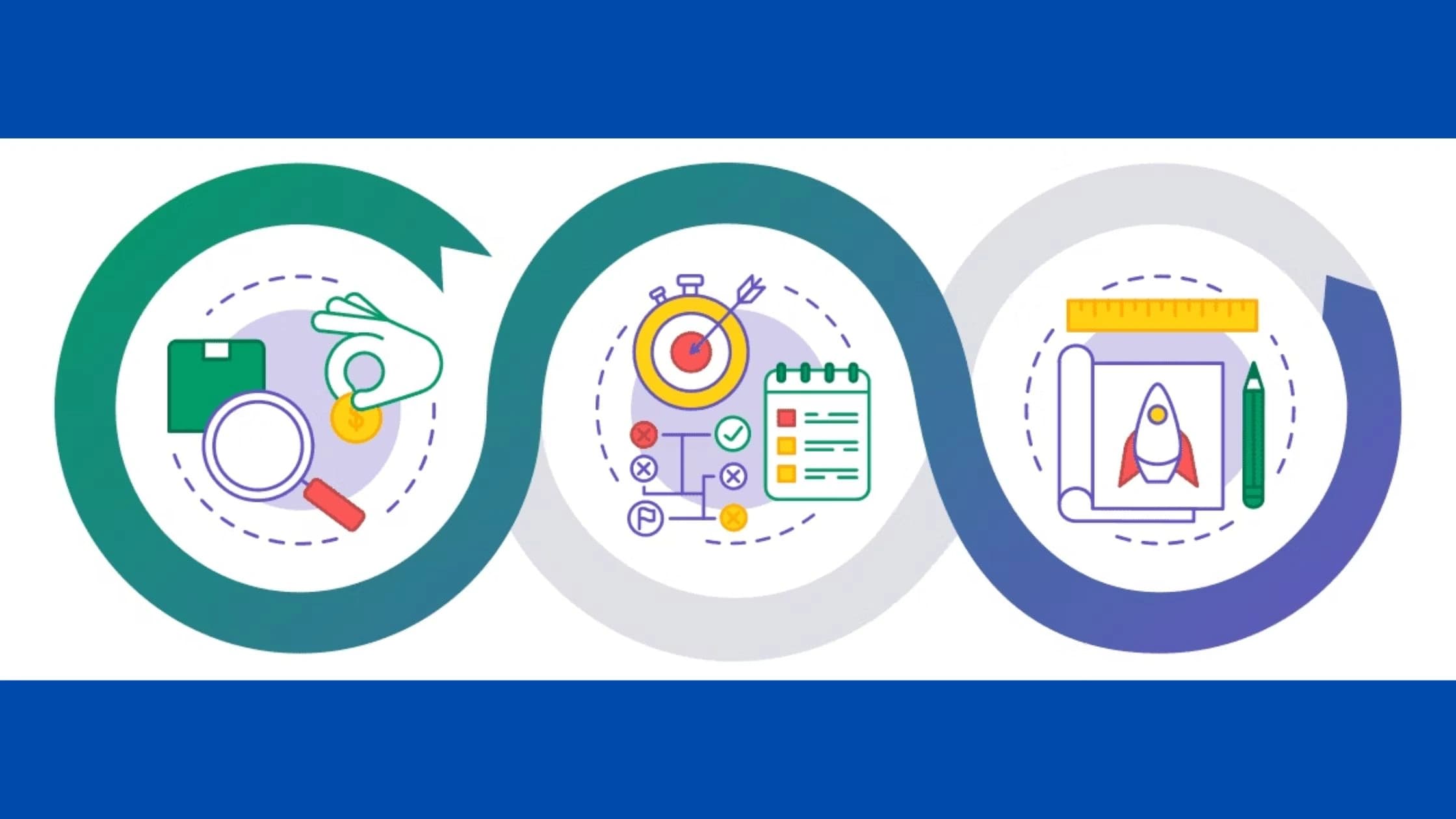
Many CEOs confuse these terms. Each has a different purpose, scope, and audience. To understand the deeper distinctions, explore our guide on proof of concept vs prototype vs mvp
Prototype
- Visualizes the idea.
- Focuses on design, screens, and user flow.
- Tests usability, not market demand.
- Requires no real backend.
Audience: design teams and internal reviewers
Proof-of-Concept (POC)
- Tests technical feasibility.
- Used for high-risk technology or complex integrations.
Audience: internal technical teams and stakeholders. Not for customer use.
Minimum Viable Product (MVP)
- Solves the core problem with the minimum feature set.
- Customers can use it, pay for it, and give real feedback.
- Generates meaningful data for product and business decisions.
Audience: early adopters and first paying users.
A prototype shows what the product could look like. A proof-of-concept proves it can be built. An MVP answers the only question that matters early: Will customers buy it?. Therefore, only the MVP delivers real market data, real usage patterns, and real revenue signals, giving CEOs the confidence to invest in full development.
Why MVP Is a Business Strategy , Not Just a Tech Term
An MVP is a business decision. Companies use MVPs to control risk, improve financial efficiency, and reach the market faster. For leaders, the MVP is a tool that protects capital and sharpens strategic clarity.
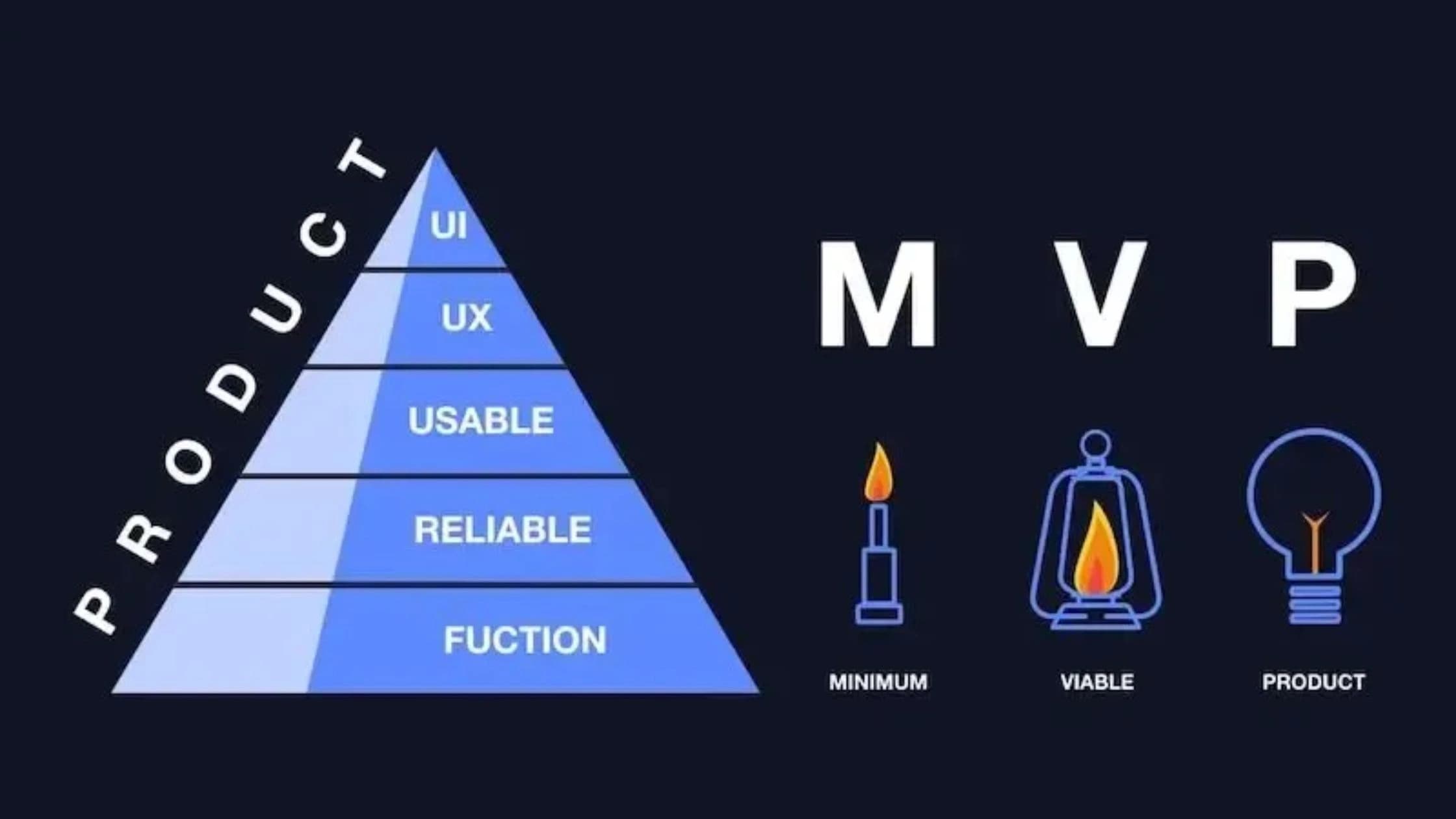
MVP as a Risk-Reduction Tool for Decision Makers
An MVP helps leaders avoid expensive mistakes. It lets the market validate the idea before the company commits to full development. This early validation cuts failed-launch risk by 50–70% and exposes customer behavior with real usage data, not internal assumptions.
Leaders can see what users value, ignore, or struggle with. This data gives CEOs a clear path: continue, pivot, or stop. Startups use MVPs to find product-market fit. Enterprises use them to reduce risk in innovation or digital transformation. Both rely on MVPs to avoid building the wrong product, a common reason why most new products fail.
Financial Efficiency
MVPs focus investment where it matters. By building only the essential features, teams reduce initial development costs by 30–60%. This approach ensures the company spends less when the idea is wrong and invests more effectively when the idea shows promise.
Shorter build cycles cut operational expenses. They also reduce the risk of overengineering, a major source of wasted budget in software development. For MVP development for startup, an MVP can generate early revenue and early traction. For enterprises, an MVP provides evidence that justifies future funding and resource allocation.
Accelerating Go-to-Market and Investor Readiness
MVPs move companies to the market faster. Because they focus on core features, teams can launch in weeks or months, not years. Faster release leads to quicker user feedback, quicker iterations, and quicker improvement.
Early adopters help refine features and surface high-value use cases. Speed creates advantage: the first product to prove value often wins the category. Even small revenue or traction from an MVP strengthens investor confidence and builds internal alignment. A working product is far more persuasive than a slide deck.
The Core Purpose of a Minimum Viable Product
An MVP gives leaders clarity. It proves whether the idea solves a real problem, whether customers care, and whether the company should invest further. Instead of guessing, the MVP lets teams build with evidence.

Validate the Problem–Solution Fit Early
The MVP’s first purpose is simple: prove that the problem is real and the solution matters. Premature scaling is one of the biggest reasons startups and new initiatives fail. In fact, 74% of high-growth startups fail because they scale too early.
The MVP prevents this. It lets teams test the core idea with real users before expanding features or budgets. Early behavior shows whether customers find value, whether they return, and whether they are willing to pay. If the idea is weak, leaders can pivot quickly. If the idea resonates, the MVP becomes the foundation for product-market fit.
Collect Real Data, Not Assumptions
An MVP replaces assumptions with real customer data. It shows how users behave in the real world, not how the internal team thinks they will behave.
You see which features matter, which are ignored, and where users struggle. This insight helps teams prioritize the right improvements and avoid building unnecessary features. Early adopters also create fast feedback loops, making iteration and refinement more effective.
Build Internal Alignment Across Business Units
The MVP becomes the single source of truth for the entire organization. Product, engineering, marketing, sales, and leadership align around the same data instead of debating assumptions.
Teams know what to build next. Marketing knows which messages resonate. Sales knows which use cases convert. Leadership sees early traction and has clear justification for budget and resources.
Building an MVP That Aligns with Business Goals
To align your MVP with company goals, you need a structured approach that defines success, limits scope, and accelerates learning. The steps below guide your team toward a faster, clearer path to market validation.

Step 1 : Define Success Metrics (ROI, CAC, Retention)
An MVP must start with clear business metrics. These metrics tell you whether the idea creates value and whether it is worth further investment. Without defined KPIs, teams build features but cannot measure impact.
Focus on measurable outcomes:
- ROI: Does the MVP generate or protect revenue?
- CAC: How efficiently can you acquire early users?
- Retention: Do users come back after the first experience?
- Activation: How quickly do new users reach their first moment of value?
- Conversion: What percentage of trial users turn into paying customers?
These KPIs turn the MVP into a financial experiment. Leadership can see early signals that reveal if the idea should scale, pivot, or stop. Companies that define MVP metrics upfront make product decisions 30–40% faster and avoid unclear roadmaps.
Step 2: Identify the Must-Have Features Only
An MVP succeeds by focusing on less, not more. Many teams fail because they attempt to build a complete product from day one. The MVP should include only the features required to deliver the core value and collect feedback. Start by defining the single problem your MVP must solve. Then identify the minimum features needed for:
- Onboarding
- Core task completion
- Feedback collection
Use simple prioritization methods like MoSCoW or RICE to cut “nice-to-have” features. Anything that does not support core value, validation goals, or fast learning should be removed. Every extra feature increases cost, slows development, and delays market entry. A strong MVP builds the value, not the wishlist.
Step 3: Map MVP Scope to Time-to-Market Goals
Your MVP must fit the timeline required to test the idea before competitors or internal priorities shift. Define a clear launch window: six, eight, or twelve weeks and shape the scope around that limit.
A smaller scope leads to faster release, faster feedback, and faster improvement. Long MVP cycles defeat the purpose and increase the risk of building too much too early. If the MVP cannot be delivered quickly, the scope is too large.
Step 4: Choose the Right Tech Stack (Native vs. Cross-Platform)
Your tech choice must support business goals, not engineering preferences. The stack you choose determines cost, speed, and long-term scalability.
Criteria | Native Development (Swift, Kotlin) | Cross-Platform (Flutter, React Native) |
Development Speed | Slower – two separate apps | Faster – one codebase for both platforms |
Cost | Higher – nearly 2× work | Lower – 30–40% savings |
Performance | Highest | Very good (slightly lower for heavy graphics) |
UI/UX Quality | Finest control and platform-perfect | Consistent UI across iOS & Android |
Maintenance | More expensive (two teams) | Easier – unified updates |
Best For | Complex apps, heavy hardware features, enterprise depth | Fast MVPs, limited budget, quick iteration |
Team Size Required | Larger, specialized iOS & Android teams | Smaller, full-stack or cross-platform team |
Time-to-Market | Longer | Faster, ideal for MVP validation |
Step 5 : Plan for Feedback Loops and Iteration Cycles
An MVP is only useful if you learn from it. Plan your feedback system before you launch. Set up clear feedback sources:
- In-app analytics (activation, retention, drop-off points)
- Customer interviews
- Session recordings
- Surveys or NPS
Define short iteration cycles usually one to two weeks. Each cycle should focus on a specific learning outcome: improve activation, reduce churn, or test willingness to pay. Early adopters are your most valuable insight source. Engage them, listen to them, and use their feedback to refine your roadmap.
How to Budget for an MVP (and Avoid Hidden Costs)
Budgeting for an MVP starts with clarity. You are not funding a full product, you are funding validation. The more focused the scope, the more predictable the cost. Most overruns come from unclear requirements, unnecessary features, and forgetting the cost of iteration.

Define one core problem, one main user journey, and only the features needed to test value. This prevents the team from building too much too early and keeps development efficient. Budget depends on complexity:
- Simple MVP: $15,000–$35,000
- Standard MVP: $35,000–$70,000
- Complex MVP: $70,000–$150,000+
- Enterprise MVP: $150,000–$300,000+
Cross-platform development usually cuts cost by 30–40%.
Most MVP budgets cover development, basic UX, backend setup, QA, and the first iteration cycle. Leaders often forget to include cloud hosting, API fees, compliance needs, and redesign work after user feedback. These hidden items are the most common sources of budget creep.
To control cost without hurting quality, keep the feature set lean, choose cross-platform development when possible, and delay automation until you confirm real demand. Manual or semi-manual processes in early stages are normal and cost-effective.
Future of MVPs in Enterprise Product Development
Companies use MVPs to reduce risk, validate demand, and speed up digital transformation while avoiding the high cost of building full systems upfront. Major shifts are shaping the future of MVPs in enterprise environments.

1. Cross-Platform Efficiency Becomes the Default
Enterprises are moving away from expensive native-first development. Cross-platform frameworks like Flutter and React Native now offer strong performance, consistent UX, and shorter build cycles. This lets enterprise teams ship MVPs in 8–12 weeks, test market fit quickly, and scale later without wasting resources.
2. AI and Automation Deeply Integrated Into MVP Strategy
AI is shifting how teams design, validate, and measure MVP performance. Enterprises now use AI to:
- Analyze early user behavior
- Predict high-value features
- Personalize onboarding and boost activation
- Automate customer feedback analysis
As enterprises adopt AI to streamline decision-making, many teams also rely on advanced AI services to enhance MVP development with stronger automation and more accurate insights.
3. Low-Code and No-Code Accelerate Internal MVPs
Large organizations increasingly build internal MVPs with low-code or no-code platforms. This lets non-technical teams validate processes, test workflows, and demonstrate ROI before involving full engineering resources. Low-code MVPs support:
- Internal productivity tools
- Data dashboards
- Workflow automation prototypes
- Department-level experiments
This reduces development time by 30–60% and frees engineering teams to focus on high-value products.
4. MVPs Evolve Into Continuous Validation Cycles
The MVP is no longer a one-time launch. Enterprises now run continuous validation cycles, small releases every few weeks supported by analytics, customer interviews, and A/B tests. This approach turns the MVP into a long-term learning engine.
5. MVPs as a Funding Gate for Enterprise Innovation
More enterprise organizations now require MVP validation before approving full budgets. Internal teams must demonstrate:
- Real user adoption
- Erly ROI signals
- Operational feasibility
- Security and compliance fit
FAQs for Business Leaders
How long does it take to build an MVP?
Most B2B MVPs take 8–12 weeks to build. Simple MVPs can be done in 4–6 weeks, while complex or enterprise MVPs may require 12–16 weeks if they involve integrations, multi-role logic, or strict security.
What is the average MVP development cost for B2B apps?
A standard B2B MVP MVP mobile app or SaaS MVP typically costs $35,000–$70,000. Simple MVPs start at $15,000, and complex or enterprise-level MVPs can exceed $150,000, depending on features, integrations, and security requirements. Cross-platform development usually cuts cost by 30–40%.
When should I move from MVP to full product?
Move beyond the MVP when you see consistent signals of product-market fit, such as:
- Strong retention
- Steady growth in active users
- Clear willingness to pay
- Repeatable use cases
- Positive customer feedback
- A roadmap shaped by real usage, not guesses
If the MVP fails to show traction, improve or pivot before scaling.
How do I measure MVP success in business terms (ROI, retention, ARR)?
Use business KPIs, not feature count. Key metrics include:
- ROI: Early revenue, cost savings, or clear financial justification
- Retention: Do users keep coming back after week 1 and week 4?
- Activation: How quickly do users reach their first moment of value?
- CAC: Cost to acquire early users
- Conversion: % of users who upgrade or commit to paid usage
- ARR/MRR potential: Can the MVP support predictable recurring revenue?
If these metrics trend positively, the MVP is working. If not, adjust before investing more.
Share this page


Table of Content

Subscribe to Golden Owl blog
Stay up to date! Get all the latest posts delivered straight to your inbox