Choosing a React Native mobile app development company? Learn how to pressure-test technical depth, evaluate pricing models, and avoid budget bleed.


How to Choose a Flutter Mobile App Development Company
Jun 10, 2026
about 13 min read
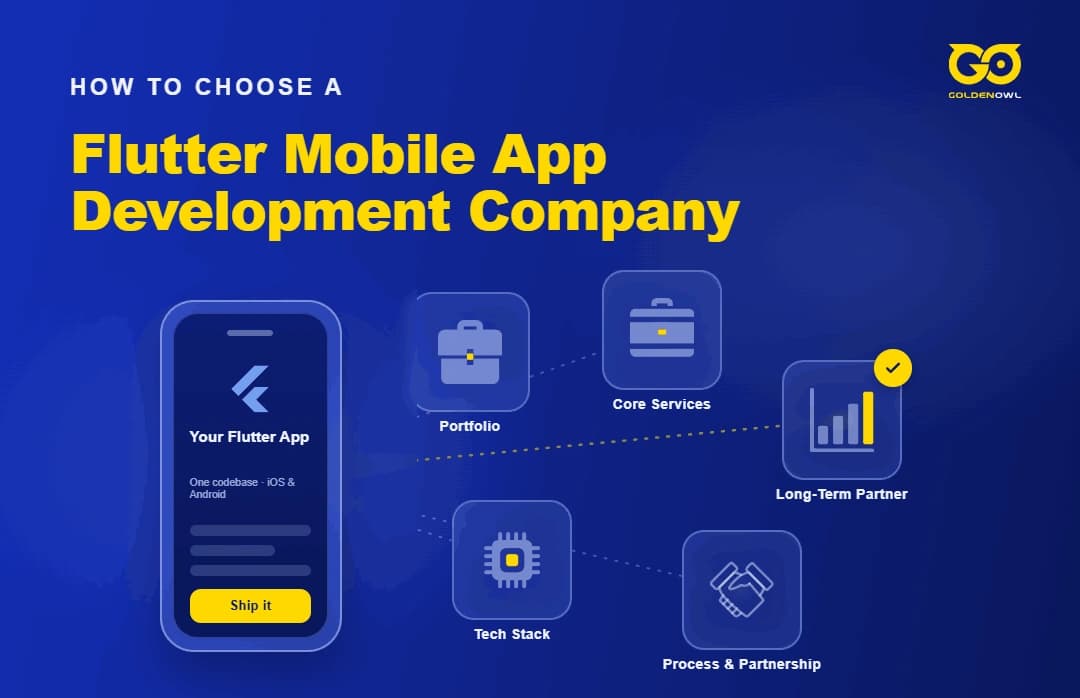
Looking for a Flutter mobile app development company? Learn how to vet technical skills, review portfolios, analyze real costs, and avoid risks.
Finding the right Flutter mobile app development company is mostly about reducing your risk. You need a partner who controls costs and gets you to launch, not just one who can build an app.
Flutter is now the most popular cross-platform framework on the planet. A 2023 Statista survey shows 46% of developers use it. This popularity has flooded the market, and while plenty of companies can write Flutter code, very few can deliver a stable app and support it long term. This guide is about finding those few.
Review the Portfolio of a Flutter Mobile App Development Company
Past performance is the best predictor of future success. Start your evaluation by analyzing the work an agency with Flutter expertise has already delivered. Look closely at what their clients say about the experience. A reputable Flutter mobile app development company should be proud to display its track record.

A strong portfolio reveals real Flutter development experience
Analyze Their Flutter App Portfolio
Do not just look at screenshots on a website. Go to the App Store and Google Play. Download the apps they have built.
When you test these apps, look for specific performance markers:
- Frame rate: Does the app stutter during transitions?
- Load times: Do images and data fetch instantly?
- Native feel: Does the app feel like a real iOS or Android app?
A top-tier Flutter mobile app development company ensures their apps achieve a smooth 60 Frames Per Second (FPS) performance. If the apps in their portfolio feel laggy, your app will likely feel laggy too.
Scrutinize Client Success Stories
Most case studies are just glorified blog posts. You should look for technical depth and business results. A real case study explains the business problem and the technical hurdles, but it also shows a clear impact, like how Google Pay saved 60-70% of engineering time.
If a case study is full of vague claims with no numbers, it’s not a success story. It’s an advertisement.
Analyze Testimonial Content and Context
Client testimonials on an agency’s website aren't very reliable. They have been edited, approved, and polished into marketing copy.
To get the real story, you have to go to third-party review sites (Clutch or GoodFirms are good places to start) and read the verified reviews. Pay attention to how the agency handled budget issues, communication problems, and surprise challenges. But even that isn't enough.
You should ask for an introduction to a client from a project finished at least a year ago. A short phone call will tell you more about long-term support than any written review ever could. If an agency is confident in its work, it will have no problem making that connection. This is the ultimate test.
Check Their Client List and Reputation
Finally, look at who they work with. Is their client list full of small startups, or does it include established businesses and Fortune 500 companies? Building for large firms demands a different level of seriousness around data rules, security, and code quality. Seeing known brands on their client list is a good sign, though it doesn't guarantee they know how to build things that last. It reduces your risk.
Assess Their Core Flutter Mobile App Development Services
Confirm the agency has the specific technical skills your project requires. Look for a full-cycle service offering that covers every phase of your product development, not just initial build.
| Service Category | Key Deliverables & Focus | Expected Outcome |
| Custom Development | Native-like apps built from scratch using Dart | Clean, maintainable code architecture |
| UI/UX Design | Flutter-optimized layouts and custom widgets | 60 FPS animations and intuitive flows |
| MVP Development | Core feature set built for rapid launch | Market validation within 8-12 weeks |
| Migration Services | Converting native or React Native apps to Flutter | Zero data loss and clean codebase transition |
| Maintenance & QA | Continuous automated testing and OS updates | Long-term app stability and uptime |
Custom Flutter Mobile App Development from Scratch
Your business model is unique. Your software should be too. Avoid agencies that rely heavily on generic, pre-built templates. True custom Flutter mobile application development company services require engineering the app from the ground up. This involves setting up a clean code architecture like BLoC or Riverpod. This ensures your mobile application can scale smoothly as your user base grows from 1,000 to 1,000,000 users.
UI/UX Design for Performant Apps
Flutter uses its own graphics engine, Impeller, to render visuals directly on the screen. This gives designers immense creative freedom. However, poor design practices can still slow down an application. Your chosen agency must have UI/UX designers who understand how Flutter handles widgets. They need to know how to design beautiful, intuitive interfaces without overloading the device's CPU and battery.

UI UX designers creating mobile app wireframes for a Flutter application
Rapid MVP Development for Market Validation
If you are a startup, speed to market is everything. You need a Minimum Viable Product (MVP) to show investors and early adopters. A mature Flutter mobile app development company should have a structured process for rapid MVP development. They should help you strip away non-essential features. This allows you to launch a functional, stable product to the market within 8 to 12 weeks.
True Cross-Platform Deployment Capabilities
The main promise of Flutter is a single codebase for multiple platforms. However, deploying successfully to both iOS and Android requires deep platform-specific knowledge.
The engineering team must understand the distinct design languages of both worlds:
- Cupertino for iOS
- Material Design for Android
They must ensure the app complies perfectly with both Apple App Store Review Guidelines and Google Play policies.
Migrating Existing Apps to Flutter
If you currently maintain separate native iOS and Android apps, your maintenance costs are likely doubled. Migrating your existing applications to Flutter can consolidate your stack. It cuts future development costs in half.
When planning this move, look for a Flutter mobile app development company with deep experience in code migration. If you are shifting from react native mobile app development, the team must know how to translate your current app logic safely into Dart without losing user data.
Strategic Flutter Consulting and Roadmapping
Do not hire a Flutter mobile app development company that just takes orders blindly. You need a team that provides strategic consulting. Before writing any code, the agency should help you build a clear product roadmap. They should analyze your business goals, identify potential technical risks, and plan feature releases across logical development phases.
AI and Third-Party API Integration

Developers integrating AI tools and APIs into a Flutter mobile application
Modern apps don't run in a vacuum. They need to connect to other systems like payment gateways, CRMs, and backend databases. Your partner must be skilled in adding third-party APIs securely. They should also know how to embed modern AI and machine learning models into the app. This allows for features like predictive search and personalization.
Performance Optimization and Code Audits
Perhaps you already have a Flutter app, but it’s slow, buggy, or built on messy code. In that case, you need a firm that offers professional code audits. They can use advanced tools to track down memory leaks, optimize queries, and clean up the code structure. This is the kind of expensive rescue mission that shows why getting the design right the first time was so important.
Rigorous QA and Testing Protocols
A single critical bug can drive users away for good. Research shows 80% of users will delete an app if it crashes just twice. Your partner must use strict Quality Assurance (QA) rules. These should combine automated tests with manual user testing on a wide range of real devices.
Long-Term App Support and Maintenance
This is where many development deals quietly fail.
A client we spoke with had their app break after a major iOS update. It was not a bug in their code. Their maintenance contract only covered server uptime, not framework or SDK updates. When iOS 17 changed how certain permission dialogs work, the app crashed. It crashed for every single user who updated their phone.
The emergency audit and rebuild took three weeks. It cost nearly twice as much as a proper annual maintenance plan would have.
The distinction matters. Server uptime is infrastructure support. App maintenance covers dependency updates, SDK compatibility, and OS policy changes (like App Store privacy rules). It is forward-looking work. Make sure you know exactly which of those you're buying.
Understand Their Process and Partnership Models
How a company works is just as important as what they build. A transparent process and a flexible contract are important, they are some of the clearest signs of a mature, client-focused firm.
Most Flutter projects look similar on paper, with familiar stages like discovery, design, development, testing, and support. But how an agency manages those stages is what really matters. This is how you avoid the delays, poor communication, and surprise costs that can ruin a project.
The Development Workflow

Scrum meeting during Flutter mobile app development process
A reliable development workflow prevents project delays and eliminates surprises. A structured framework typically follows four clear phases:
1. Discovery and Strategy
The team works to untangle your business goals, map user journeys, and define the project's technical design.
2. Design, Prototyping, and User Feedback
Designers create interactive wireframes. This allows you to click through the app layout and give feedback before development begins.
3. Development Sprints and Demos
Engineers build the app in short, two-week Agile sprints, and you should expect a live demo at the end of every sprint to see real progress.
4. Deployment, Launch, and Post-Launch Support
Getting into the App Store and Google Play involves human reviews and compliance checks that are easy to get wrong. A good partner handles the submission and plans for rejection scenarios. They should stay on for two to four weeks after launch, which is when real users find the bugs that testing always misses.
Available Partnership Models
Every project has different needs when it comes to budget and timeline. You should choose an agency that offers a model fitting your exact needs, not just theirs.
Dedicated Teams and Squads
In this model, a hand-picked group of developers, designers, and QA engineers works only on your project. Many agencies push this as the best choice, but for any project under 6 months, a large dedicated team often creates idle resources. It’s a poor way to pay for full-time engineers while they wait for design or feedback.
Staff Augmentation
If you have an internal team but are missing specific Flutter or Dart skills, this is the smart move. The agency provides skilled Flutter developers who join your existing team, and they follow your management to help you move faster.
Full Product Development Outsourcing
This model looks perfect if you don't have a technical team, since you hand over the entire project from strategy to deployment. The agency takes full responsibility. But this is the riskiest model. It promises a hands-off experience, but it often delivers a product that misses the mark because your expertise was missing from daily decisions.
Specialized Models (Agile Pods, Captive Units)
For complex enterprise work, models like Agile Pods offer great flexibility. Small, collaborative teams. They are focused on solving specific product problems or building out difficult sub-features.
Verify Their Technical Expertise and Stack
The tools an agency uses tell you a lot about their engineering approach. You need to ensure their technical stack is modern, scalable, and follows best practices.
The Modern Flutter Tech Stack
A professional Flutter team uses a whole ecosystem of tools beyond just Dart. For state management, they use established tools (Riverpod or BLoC) for complex apps and Provider for simpler cases. They integrate backends with RESTful APIs or Firebase services and use local storage like Hive or Isar for structured data.
Their testing uses Flutter's built-in framework with CI integration like GitHub Actions, and their CI/CD pipeline uses Fastlane or Codemagic to automate builds.
Ask about their preferred state management solution and why. A developer who can explain the tradeoffs between BLoC and Riverpod understands Flutter on a deeper level. This is different from a developer who just says they’ll use whatever you want.
Expertise in AI and Machine Learning Models
The best apps use smart features, so your agency should know how to integrate modern AI. This could mean connecting to cloud services (OpenAI, Google Vertex AI, AWS Bedrock). It could also mean running smaller models on the device with TensorFlow Lite. This is how an app can deliver smart features while still protecting user data.
Evaluate Their Qualities as a Long-Term Partner
Long-term partnerships create more sustainable products
If your goal is to find a long-term product partner instead of a temporary vendor, here’s how to tell whether an agency treats your app as a project to close or a product to grow:
Product-Minded Agency | Code-Delivery Shop |
Asks about business goals before scoping | Asks for a feature list and starts quoting immediately |
Challenges weak product ideas constructively | Builds exactly what is requested without discussion |
Plans for scalability and future updates | Focuses only on initial delivery |
Tracks retention, engagement, and business KPIs | Measures success mainly by delivery speed |
Recommends the most suitable tech stack | Pushes familiar tools regardless of product fit |
Includes long-term support and optimization planning | Treats maintenance as a separate afterthought |
Encourages collaboration between product, design, and engineering teams | Works in isolated development silos |
Prioritizes user experience and product growth | Prioritizes completing tickets quickly |
Cross-Functional, Product-Focused Teams
A team structured like an assembly line is not going to solve your business problems. You should avoid agencies that keep their developers, designers, and strategists in separate silos. A true product team works together on a shared goal, focusing on user satisfaction and retention, not just on closing tickets.
A Collaborative Partnership Approach
Real partnership means real communication, this includes the ability to have constructive disagreements. The agency should offer transparency through their tools (like Jira or Trello) and invite you into their work channels. But the tools are secondary.
You should always have a direct line to team leads, not just some account manager who filters all the messages.
Focus on Long-Term Product Success
The difference between a vendor and a partner becomes obvious after your app goes live. A transactional vendor sends the final invoice and moves on. A partner is just getting started. They will watch user reviews and dig into performance data. Suggesting the next set of fixes to keep users returning.
Commitment to Business Outcomes
This is probably the single most important test. The best agencies are obsessed with your business metrics, they don't just build features but connect code to outcomes. They know that a faster checkout flow directly raises conversion rates and that lower crash rates improve app store rankings.
If an agency doesn’t ask about your business goals before talking tech, they’re not a partner.
Contributions to the Flutter Community
Check if an agency's developers contribute to the open-source community. Do they publish technical articles or maintain packages on pub.dev? This kind of public work is a decent signal of technical depth. Maintaining a public package forces a high standard of code quality because, of course, anyone can review it.
Still, treat this as a secondary sign, as a popular library is no substitute for a team that understands your business model.
Assess Their AI Integration Capabilities
AI is now a standard part of the toolkit. Your team should be using AI coding assistants like GitHub Copilot to handle routine programming safely and well. This isn't about replacing developers, it's about freeing up their time to focus on the unique business logic and user experience challenges that create value for you.
How Their Value Proposition Compares
When you get proposals, resist the urge to just look at the final price. An agency that costs more but includes automated testing, clear documentation, and a post-launch warranty is almost always the cheaper option.
A low-cost vendor who delivers buggy code and then bills you for every fix will end up costing you more in the long run.
Confirm Their Industry-Specific Experience

Industry expertise helps teams solve problems faster
An agency with experience in your field already knows the rules and what users expect, which is a massive advantage. It protects you from costly compliance errors and leads to a better product.
- FinTech & Banking: This requires deep knowledge of PCI-DSS security standards, multi-factor authentication, and secure data encryption.
- Healthcare & Medical: This work demands strict compliance with privacy laws like HIPAA or GDPR to handle sensitive patient data correctly.
- E-Commerce & Retail: This calls for experience with complex inventory syncing, secure payment gateways, and checkout flows built to reduce cart abandonment.
- Logistics & Supply Chain: This needs expertise in real-time GPS tracking, offline data storage for field workers, and reliable background data sync.
What is Flutter?

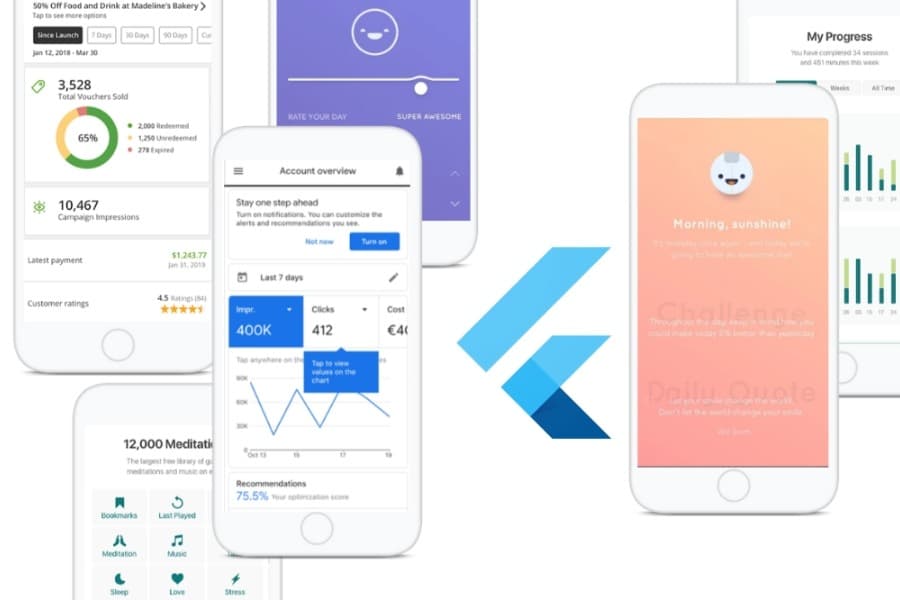
Flutter supports fast cross-platform app development
For anyone new to the tech, here’s a quick rundown of what Flutter is and why it’s so popular.
Flutter is an open-source UI software development kit from Google. It lets developers build beautiful, natively compiled apps for mobile, web, and desktop from a single codebase. Instead of writing separate code for iOS and Android, a team can write the code once using the Dart language.
Because it compiles directly to native machine code, Flutter apps perform just as fast as native apps. It is a leading framework for modern cross-platform app development, helping businesses cut their time-to-market and support costs without losing quality.
Common Questions About Hiring a Flutter Agency
Who are the top Flutter development companies?
The best firms offer more than just client reviews, you should look for a strong open-source presence and a clear development method. Agencies like Golden Owl focus on clean, scalable code. They also tether development milestones to your business goals.
How much does it cost to build a Flutter app?
The total cost depends on the complexity of your application, the number of features, and the location of the development team. A simple MVP might cost between $15,000 and $50,000, while a highly complex enterprise application with custom AI integrations can exceed $100,000. Using Flutter typically saves you 30% to 40% compared to building two separate native apps.
How do I verify the code quality of an agency?
You can ask an agency for a sanitized code sample, but their public work on GitHub is a better signal. You should check if their code is clean and well-documented. It should also follow consistent naming rules and use a modern state management pattern (like BLoC or Riverpod).
Choosing Your Final Flutter Partner
Finding a company with proven Flutter skills is one thing. The real challenge is finding a partner who understands that a great product is more than just code.
Building the app is only half the work. The other half is making sure your target audience finds it, downloads it, and keeps coming back. Without a clear marketing plan, even a technically great product can stall in the App Store. A common and avoidable failure.
This is where Golden Owl Solutions comes in. The team has over 10 years in production, with more than 150 finished projects and, importantly, a 95% client approval rate. They cover the full product lifecycle, including early-stage MVP builds, design, AI integration, and long-term post-launch support.
The team's value isn't just about their Flutter skill. It’s the other services that make a project succeed, treated as core parts of the job, not extras.
- Web Development: For products that need a companion web platform that works with the mobile app.
- UX/UI Design: In-house designers work in the same sprint as engineers, not in a separate handoff.
- AI & Machine Learning: For apps that need on-device inference, recommendation systems, or LLM-powered features.
- Automation Testing: A dedicated QA team that treats test coverage as a core deliverable.
- IT Solutions Consulting: Strategic guidance on architecture, stack choices, and technical roadmapping before any code is written.
- Cyber Security: This is key for fintech, healthcare, and enterprise apps where data protection is a must.
If you're evaluating Flutter development partners, you're likely also thinking about what happens after the app ships. That's the right time to start the marketing talk. Don't wait until after launch, when you're already behind.
Share this page


Table of Content

Subscribe to Golden Owl blog
Stay up to date! Get all the latest posts delivered straight to your inbox