Learn how to hire forward deployed engineers in 6 steps: define the role, benchmark pay, source candidates, screen for delivery and run a four-round loop.


What to Evaluate When Looking for AI Platform for Medical Record Analysis
Nov 10, 2026
about 8 min read
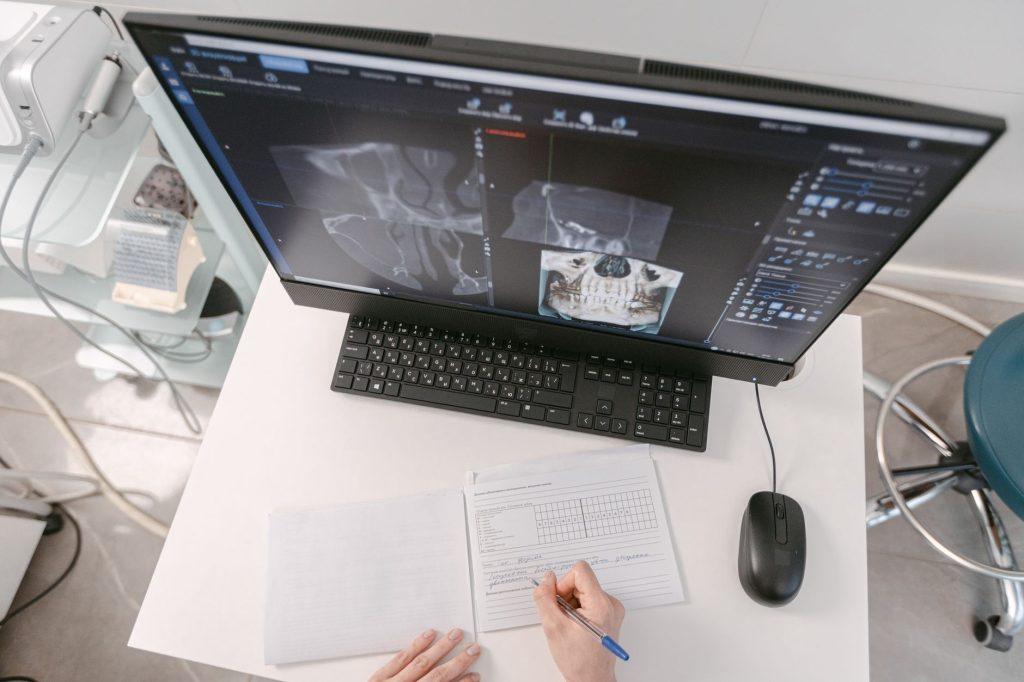
Looking for an AI platform for medical record analysis? Test source traceability, extraction, security, pricing and in-house vs vendor options before you buy.
An AI platform can turn a long medical chart into a neat summary and still leave the next review stuck on the first disputed detail. When looking for ai platform for medical record analysis, the real question is whether your team can check what the tool produces before it reaches real work.
So test each platform on your own files, and click through its facts to the source pages before you sign anything.
Capabilities to Evaluate for Traceable Medical Record Analysis
A medical record analysis platform reads medical records and turns them into a chronology, a summary, or answers about the file. Many tools only work on records you already hold: they sort the pages, remove duplicates, and build the output. Some also pull data from connected systems, and a few fetch the records for you.
For traceable work, look for these features:
- Parsing that understands layout, so tables, charts, and handwriting keep their meaning
- Structured extraction into fields you define, with a confidence score for each value
- Page citations and field-level links back to the source
- Developer kits (SDKs) for Python and TypeScript, and a choice of hosting on the vendor’s cloud or in your own private cloud (VPC), with HIPAA-aligned controls
LlamaParse and LlamaExtract, from LlamaIndex, are one example. The vendor aims them at teams building clinical AI systems and at the places where older OCR breaks down: tables, handwritten notes, and long multi-page files.
The same features support quite different jobs:
- Pulling ICD and CPT codes (diagnosis and billing codes) from patient records
- Clinical assistants that summarize a patient’s history across notes, labs, and imaging
- Research summaries across trial protocols and published papers
- Prior authorization and claims work backed by evidence you can trace
You will also run into two neighbouring kinds of tool. The first, aggregation AI, only works when the data is reachable through a network, an API, or a FHIR endpoint (a standard way for health systems to share records). If it is, the tool merges records from many sources into one history and drops the duplicates along the way. The second, go-get AI, is for records that no network or API can reach. It goes and gets them from wherever they sit.
Evaluation Criteria When Looking for AI Platform for Medical Record Analysis
Start with your own workflow. Do you need records fetched from outside, analysis of files you already hold, connected data combined, or some mix? The answer rules out many tools before any demo. Then ask these five questions:
- AI job: does it merge and clean up data from systems already linked to it, fetch records from places it isn’t linked to, or both?
- Reach: does it cover networked sources only, or also the many smaller portals outside those networks?
- Output: do you get raw records back, or a cleaned, deduplicated patient history?
- Autonomy: does it fetch a record from start to finish on its own, or only help when you search a linked system?
- Fit: was it built for a practice, a payer, or developers building their own product on top?

Auditability
Think of every AI extraction as legal evidence. A reviewer should be able to click a finding and land on the original chart page with the source sentence highlighted; until that works, the data point is unverified.
Some platforms use what vendors call agentic extraction, which can make this possible. The software reads the page text (OCR), works out the layout, matches each value to a field, and keeps a note of where every value came from. Citations and confidence scores then let a reviewer check those values. Each timeline entry should show the date, time, provider, page, and Bates number (the stamp legal teams use to number pages).
In a demo, see whether citations point to the exact sentence or only to the document. The platform should also log what was extracted and reviewed. Then hand several citations to your own reviewers, low-confidence ones included. Do they still need a manual search to find the evidence? Then the citations are not doing their job.
Security compliance
Look for ISO 27001 certification and HIPAA and GDPR compliance, plus plain answers on how your data is sent, where it is stored, and whether it trains the model. If a vendor doesn’t publish these details, ask for its security audit report before a single client file goes up.
One review of 42 vendors’ own websites found that 20 mention SOC 2 (a common security audit report), 26 mention HIPAA, and 16 mention neither. That shows what vendors publish, not the whole market.
Ask these questions about information and privacy:
- How is information sent to the AI platform?
- Does the AI model use the information you submit for training?
- Does the platform keep the information?
- Where is the data hosted, and which government rules apply in that location?
- Do the platform’s privacy measures meet the legal and ethical rules of your profession?
- Is the platform ISO 27001 certified for information security management?
- Is your current practice management system using your practice’s data to train AI models, even if you don’t use AI yourself?
Those claims are good signs, but they don’t prove much on their own. ISO 27001 is a certificate an outside auditor issues. HIPAA compliance is something the vendor declares, since there is no official HIPAA certificate. So ask who checked the vendor’s compliance and when.
Document ingestion
Ordinary text recognition struggles with medical records. It can lift every word off a page and still get the reading order wrong, and a skewed fax with notes in the margin makes that worse. Layout matters too: a lab value can end up separated from its test name or its reference range, and the reading is then wrong. Check whether the platform supports these functions:
- Form and table extraction that keeps key-value pairs together
- Handwriting recognition for medical notes
- Ready-made models for common document types, and questions you can ask in plain English
A good test is a folder of your own worst files: a blurry scan, a long lab table, a page of handwriting. Notice what each system does with text it can’t read. Does it flag it, or guess? When you correct a value, the link back to the source should survive, and the value should still sit next to its label and range.
Human oversight
Some teams write the limit into the product itself. One such policy says AI is “forbidden, at the prompt level and in code, from originating a diagnosis, causation, prognosis or impairment rating.” The doctor still examines, reasons, and gives the opinion.
A review workflow can make this concrete. Reviewers accept, reject, or edit each sentence, and nothing can be exported until every flagged sentence has been checked.
Few vendors describe this on their websites. In the same 42-vendor review, only 8 describe a person checking the output, through expert review, clinician QA, or physician oversight. The rest say nothing about human review on their websites, so plan as if the attorney, nurse, or physician reading the file is the only quality check. The aim is to support the practitioner, not replace them. Approving every entry supports patient safety, and the reviewer keeps their own skills sharp. They can also catch what the model gets wrong, since AI learns from human data, biases included.
Pricing models
Per-page pricing tends to suit teams whose monthly record intake swings sharply. If instead patient files vary in size, and some run to several binders, per-case pricing makes the budget easier to predict. Many vendors don’t show a price at all. Of the 42 in that review, 15 publish one and 27 ask for a quote. Published prices come in 4 forms: per page, per case, per seat per month, and monthly plans with a page allowance. The well-funded platforms built for plaintiff law firms publish none.
The type of tool changes the bill as well. Aggregation platforms and APIs usually charge by volume or API usage, or sign an enterprise contract; go-get agents charge per completed task, which means cost grows with every retrieval.
Then set each price against the staff hours you spend today chasing outside records, especially through unconnected portals that networked AI cannot reach.
Trade-Offs of Building an In-House Platform
Building it yourself means your engineers decide how the pipeline works and how data is governed. That freedom has an ongoing cost after launch. Medical terms change, new document layouts show up, and the regulatory burden stays with your company for as long as the system runs.
Teams that build usually start from a developer toolkit, a set of code libraries for parsing and extraction. Here is what that tends to leave you with:
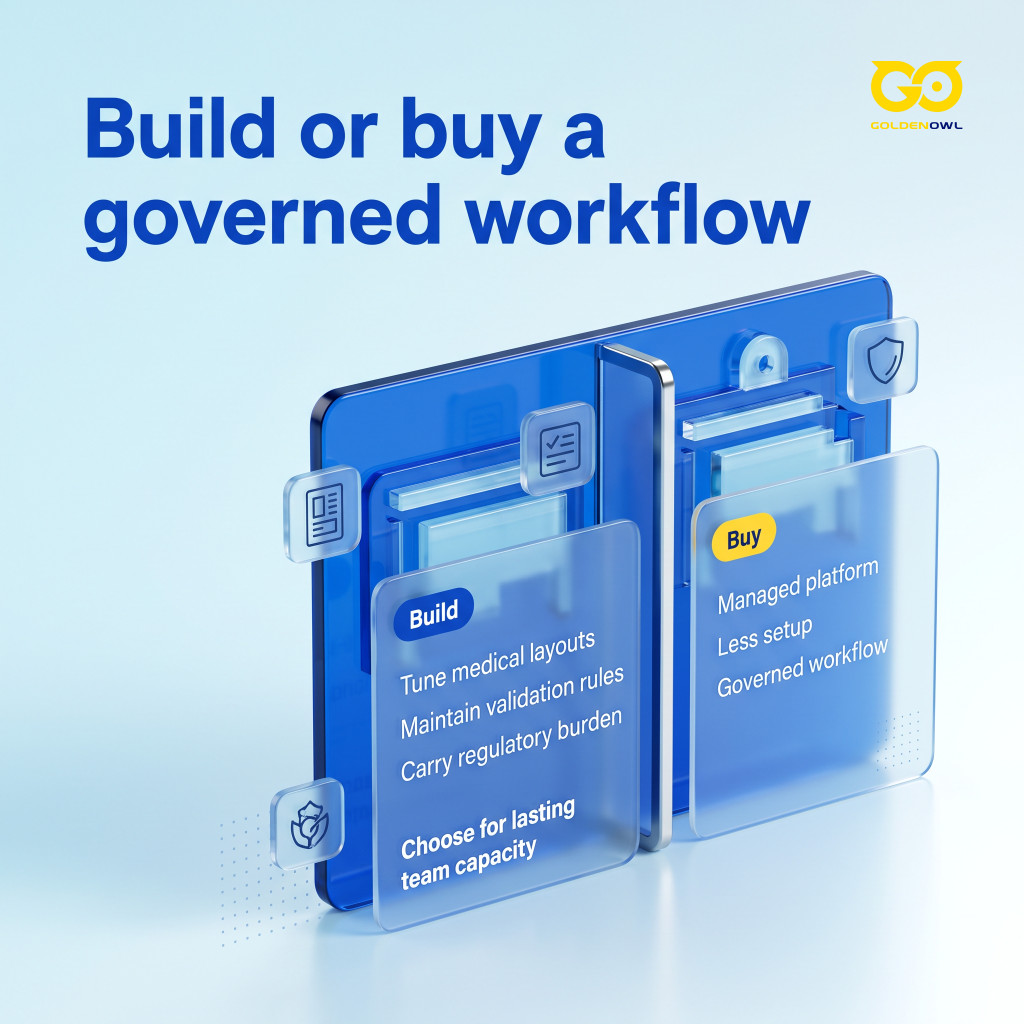
- Operations staff often can’t use them without an engineer nearby
- At large page volumes, advanced automation can push API costs up
- They add most value when they feed a larger AI system you build around them
- Good results take training and tuning, and human review takes staff time
- They focus more on extraction than on agents or question answering
- They need more setup than a managed API, and hard scans may need extra hardware, often a GPU
- They cover pieces of the job, not the whole workflow, and their reasoning over complex clinical documents is limited
- You have to write your own validation logic and business rules
Pilot testing plan
In a healthcare back office, the main question for the pilot is simple. Could machine learning, backed by a human reviewer, cut the manual typing your staff do today on handwritten claims and bad scans?

Pick your hardest files for it, and keep an eye on:
- Handwriting and low-resolution scans
- Exceptions passed to a human reviewer
- Time saved on a full day’s batch, compared with typing it by hand
Count how many fields the reviewer had to fix and how long each file took, then compare that with typing the same files by hand.
Frequently asked questions
What document formats should an AI medical record platform support?
At a minimum, EHR exports, lab reports, physician notes, pathology reports, and trial forms. Healthcare OCR software can already identify these and turn them into standard fields.
It should also turn diagnoses, medications, lab values, and outcomes into data. That is where it can save your team a lot of typing.
How does AI verify citations against original medical records?
By tying every line of the chronology to the page it came from. Check that the links go down to the field level, which is what a compliance reviewer will want to see.
Can general-purpose LLMs analyze medical records safely?
Not if they weren’t built for healthcare. A general chatbot may train on what you paste into it, which is a privacy and compliance problem. It may also lack the specialist knowledge that complex healthcare workflows depend on.
Allied health care (physiotherapy, occupational therapy, and similar services) has a quieter risk. Train a model on old treatment plans and ask it to draft new ones, and it can carry the errors, gaps, or biases in those notes straight into the next plan.
What turnaround speed should teams expect for large medical charts?
It varies a lot. Turnaround depends on three things: the files you get, which connected EHRs the platform can reach, and how long your own review takes. For HEDIS quality reporting and risk adjustment (work health insurers do on patient records), one vendor that automates chart retrieval between payers and providers reports getting 93 percent of records within 24 hours. That figure covers fetching the records, not analyzing them.
Conclusion
Begin with the files on your desk. End with a record your reviewer can check. When looking for ai platform for medical record analysis, a good pick reads your documents in the formats you actually use and shows where each fact came from. It also has to fit your review steps and deadlines. This week, send the same messy sample file to two or three vendors and put the results side by side.
Share this page


Table of Content

Subscribe to Golden Owl blog
Stay up to date! Get all the latest posts delivered straight to your inbox