Compare AI infrastructure solutions: core components, deployment models, workload needs, implementation steps and cost governance for running AI at scale.


What Is a Forward Deployed Engineer?
Oct 9, 2026
about 6 min read
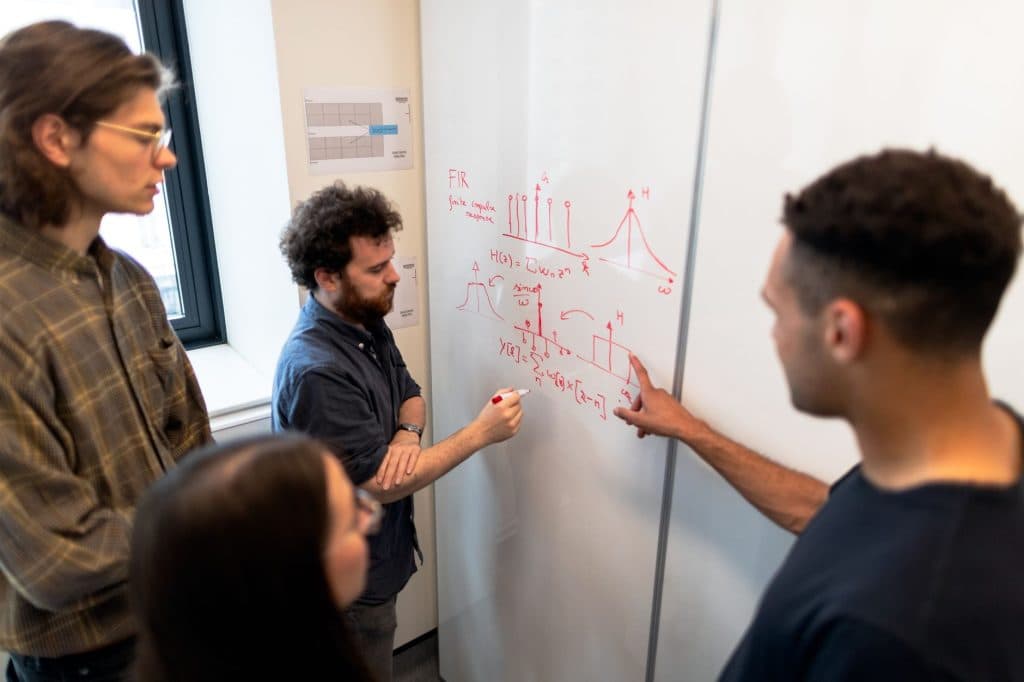
A forward deployed engineer works inside a client's team to turn operational constraints into working software. See the role, skills and how it differs.
A forward deployed engineer works with a client to turn operational constraints into working software and help the client team carry it forward.
A client’s production setup may still be unfamiliar once an AI prototype is ready. That leaves an open question about who should move the work ahead, since the engineer does more than connect the prototype to the client’s systems.
The role’s scope includes what it involves, how it differs from related technical jobs, and which skills it calls for. One detail can shape the work early: whether the engineer can commit code directly to the client’s repository.
What Is a Forward Deployed Engineer?
A forward deployed software engineer (FDE), also known as a forward deployed engineer, joins a client’s team, attends standups, commits code to its repository, and carries technical work through shipment. According to Gergely Orosz, Palantir created the Forward Deployed Software Engineer role in the early 2010s and called its FDEs “Deltas.” Until about 2016, Palantir had more FDEs than conventional software engineers, making the role a core part of its delivery model.
After a sale, FDEs connected the signed contract to working production code, covering ground traditional consulting hadn’t.
The Forward Deployed Engineering Model
The forward deployment model pairs software built once for an entire market with work shaped by each enterprise’s needs and operating conditions.
- Product engineers and Devs: Core product engineers write software once for an entire market. A Dev focuses on one capability for many customers.
- Echo teams: Echo teams bring expertise in their domain and often come from the same industries as their customers, such as military, healthcare, or finance. They identify real problems, spot where technology can create value, and bridge the customer and engineering teams.
- Delta teams: Made up of execution-focused engineers, Delta teams build solutions fast, putting speed and impact ahead of perfect design. A Delta focuses on many capabilities for one customer.
- Collaboration: Echo teams identify the right problems; Delta teams build the solutions.
- “Gravel roads”: Forward-deployed engineers first create rough solutions for specific customers. These solutions are fast and pragmatic, and address immediate problems.
- “Paved highways”: The core engineering team studies those solutions, finds patterns across customers, and turns them into standard features.
- Scaling custom work: This loop lets customer-specific work grow into product capabilities.
Direct Production Repository Access
Repository access on day one can cut the handoff to working code from six weeks to two.
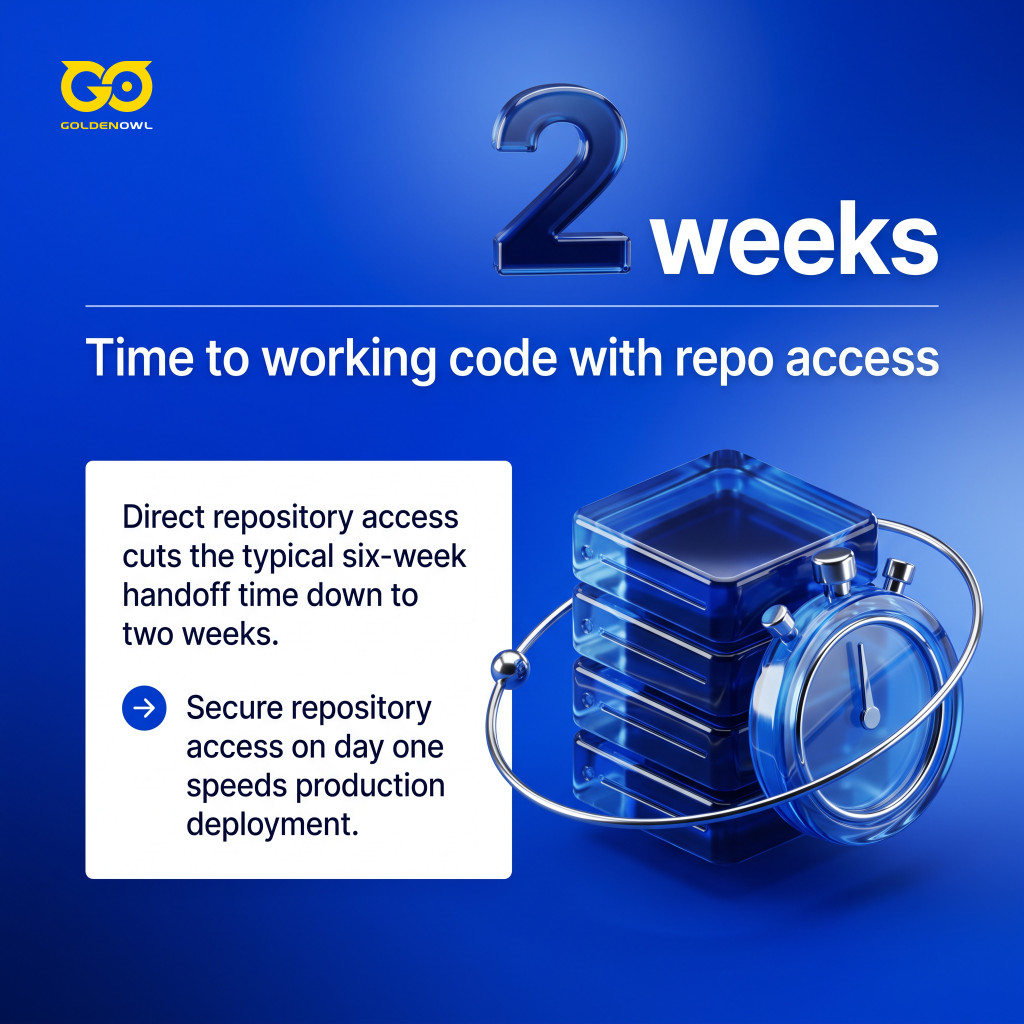
In our experience embedding AI engineers inside client teams, repo access on day one is the single biggest accelerant. Whether someone writes code inside your repository from day one almost always determines the difference between a six-week handoff and a two-week one.
Our engineers have shortened the time to a working prototype by joining client CI/CD pipelines directly, rather than coding in a separate environment. A parallel-environment handoff typically adds two to three sprint cycles on its own.
FDEs join engineering and code reviews, improve deployability, maintain and monitor production systems, and use other practices to deliver on that promise.
Repository access also requires sound security judgment. When an FDE discovers exposed credentials in a client’s Python script, they need to report the issue rather than overlook it in order to meet the sprint goal.
What Does a Forward Deployed Engineer Do?
When a client’s systems break down, an FDE traces the failure to see whether it points to a wider limit in how information travels through the system. A failing data pipeline or weaker retrieval-augmented generation (RAG) results can signal trouble beyond a single ticket. The FDE follows the issue through the client’s environment to identify what is keeping the workflow from running reliably.
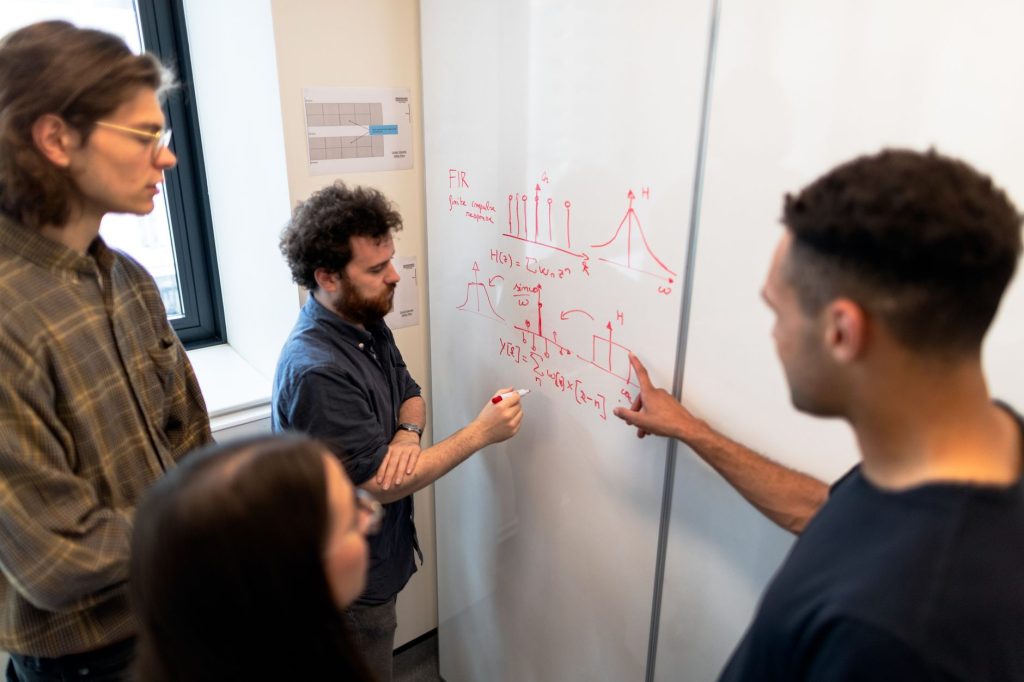
That diagnosis often leads to fixes in production software, where systems are live. FDEs build and maintain terabyte-scale data pipelines, then track down the cause and fix it when something fails. During an outage, monitor the stack to confirm it’s stable; getting a service running once doesn’t prove it’ll stay dependable in the client’s environment.
FDEs carry technical findings between technical and business teams, helping each understand the issue and what it means in practice. They document decisions and work alongside client teams during handoff, writing production code, configuring MLOps pipeline stages in tools like AWS SageMaker or MLflow, and instrumenting logging so the client’s team can continue and extend the work after the engagement ends.
When priorities shift, use the Jira backlog to identify the underlying constraint, then choose the task with the greatest value rather than simply clearing tickets.
Forward Deployed Engineer vs Software Engineer and Other Roles
The Forward Deployed Engineer (FDE) differs from a solution consultant by working inside the customer’s operation and building the solution there. Like a Software Engineer, the FDE develops production-grade code and takes a customer-tailored solution from its initial proof of concept to a production environment. That solution might be a data pipeline or an AI agent.
A Solutions Architect (SA) shows that the technology fits before a sale, using reference architectures, demos, and answers to technical objections. After the contract is signed, an SA’s involvement varies by role and organization, and may not include adding code to the client’s repository. The FDE enters after the sale, joins client standups, and writes code as the solution takes shape. The FDE stays accountable for getting that code into production rather than leaving the client with a diagram.
A Sales Engineer shows the product’s capabilities and handles API questions without passing them to engineering; the solutions engineer vs forward deployed engineer distinction is that FDEs take responsibility for production deployment. A Management Consultant, by contrast, offers analysis and recommendations, then leaves the client team with a blueprint to carry out.
A related warning comes from the City of Portland Office of the City Auditor: its financial and payroll system project grew from a $14.2 million, 14-month plan to $47.4 million and more than 30 months, excluding most City employee costs. The audit cited longer consulting engagements and a sharp fee increase after a contractor change, and warned that consultant-led development left City staff less prepared to maintain the system.
McKinsey’s Oxford study on reference-class forecasting for IT projects, published in 2010, found an average cost overrun of 33% for large IT projects and 17% for software projects.
Staff Augmentation Contractors can add capacity when the tasks are clear and the team can set the technical direction. An FDE fills a different gap, bringing a capability the team lacks. When fewer than two people on the team know how to resolve a blocker, increasing capacity alone may not be enough.
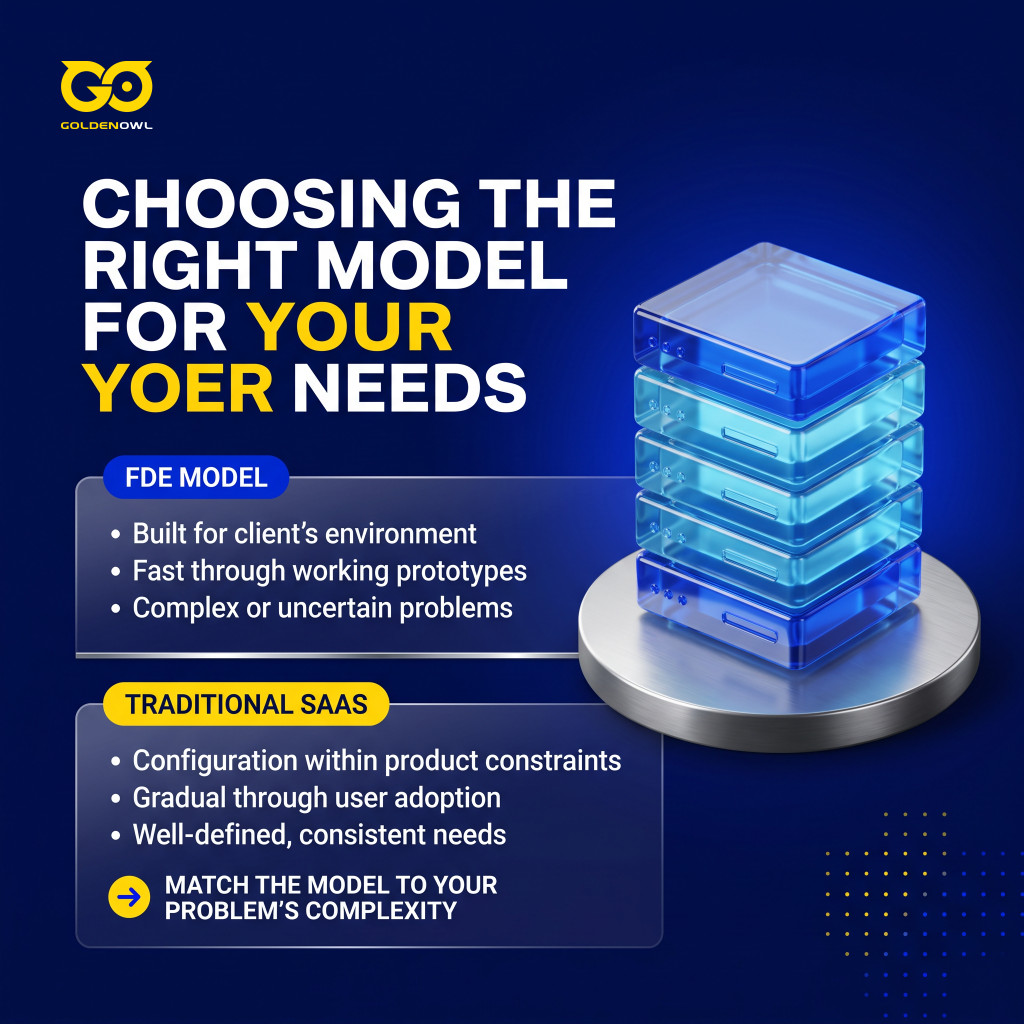
| Difference | FDE model | Traditional SaaS |
|---|---|---|
| Customization | Built for the client’s environment | Configuration within product constraints |
| Time to value | Fast, through working prototypes | Gradual, through user adoption |
| Best fit | Complex or uncertain problems | Well-defined, consistent needs |
Neither the FDE model nor Traditional SaaS fits every problem. SaaS works for standard needs, while an FDE can help when the problem is still taking shape.
What Skills Does a Forward Deployed Engineer Need?
Turning choices about models and retrieval into secure, measurable AI use in a client’s existing production environment is the FDE’s central skill. That technical foundation is central to how to become a forward deployed engineer.
Language Model Integration calls for well-designed prompts and disciplined control of token use. For Retrieval-Augmented Generation, take careful stock of the client’s actual content: older material and records in multiple languages can throw retrieval off, even when clean internal documents work well.
Machine Learning Operations links model versioning and drift detection with CI/CD to support dependable deployment as changes are made. With Autonomous Agents, check that deterministic validation and human review are in place in production. An FDE may be tracing a broken tool-call chain at 11pm while working under the client’s IAM policies, then explaining the cause at the next morning’s standup.
Enterprise Security Controls cover tenant isolation and audit logging. Custom Evaluation Tooling matters because evaluation sets tailored to each client can be 30-40% more valuable than broad, off-the-shelf benchmarks. Engineers embedded with client teams spend time building eval tooling during the first two weeks. You also have to get effective in an unfamiliar codebase within days, bringing founding-engineer independence while respecting the client’s existing engineering culture.

Conclusion
An FDE turns a client’s constraints into software that runs in that client’s environment. Doing that takes independence in an unfamiliar codebase and respect for the engineering culture already in place. It also means building transferable capability, from secure production use to client-specific evaluation. If you’re assessing an FDE role, start by writing down the client constraints the engineer must work within and the capability the team should retain.
Share this page


Table of Content

Subscribe to Golden Owl blog
Stay up to date! Get all the latest posts delivered straight to your inbox