
How to use AI in real estate: automate lead follow-up, speed up valuations and marketing, and keep every step compliant with Fair Housing rules.


Choosing Between a Forward Deployed Engineer vs Consultant
Oct 12, 2026
about 8 min read
Forward deployed engineer vs consultant: compare scope, ownership, cost and delivery to choose the right engagement model for your project.
For a project, choosing a forward deployed engineer vs consultant depends on the help required. A recommendation can win approval and still never reach production; software can be built and still fail in day-to-day use.
Use this comparison to decide which model fits your work and clarify the ownership, cost, and provider questions that could shape the engagement. The gap may emerge only when software meets live data and uncaptured requirements from the original scope.
Forward deployed engineer vs consultant differences
Scope discovery versus scope execution
A consultant defines the recommended scope before delivery, while a Forward Deployed Engineer discovers and refines requirements during implementation.
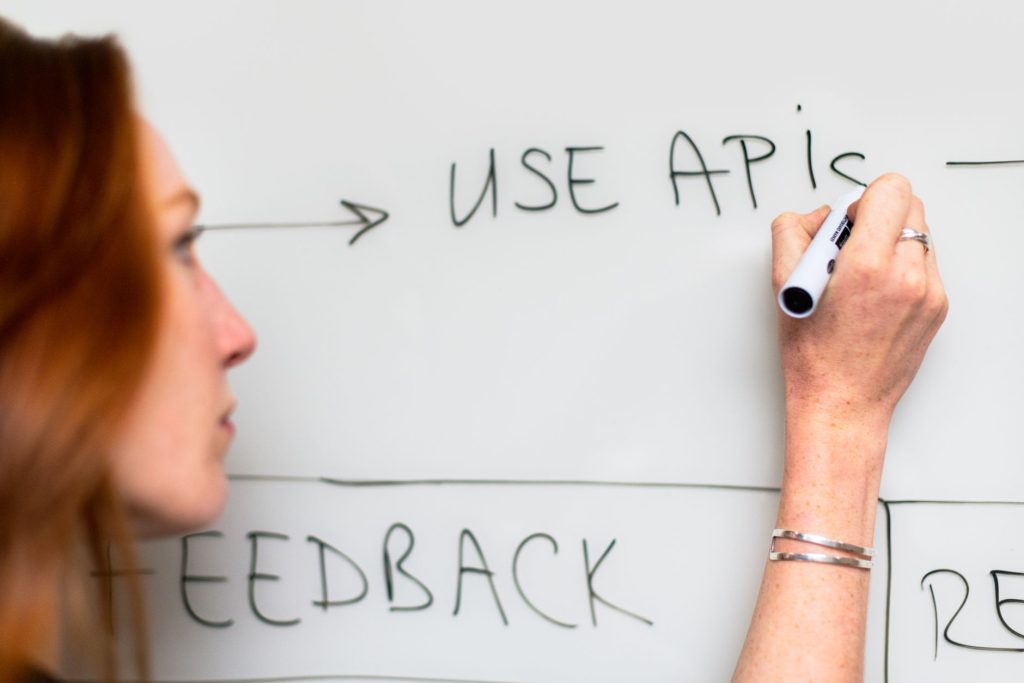
The forward deployed engineer vs consultant distinction starts with scope: traditional consulting usually begins with an agreed engagement, whereas Forward Deployed Engineering starts from an operational outcome. FDEs own that outcome, which means writing production code alone doesn't complete the work; the system must run reliably in production and deliver a measurable business result. A Consultant is judged by the quality of the advice, while an FDE is judged by whether the system works in production.
The specification develops as the engineering does. As an FDE works in a client's environment and connects software to live data, implementation can reveal unanticipated edge cases; the FDE adjusts the implementation to address them and updates the requirements accordingly.
Strategic recommendations versus production engineering
Consultants deliver strategic recommendations, while FDEs engineer production systems.
A Consultant can diagnose problems and point toward a direction by bringing an outside view and patterns from other industries, often catching issues people inside the business may no longer see. Many recommendations stall before implementation, and that gap has a real cost.
The FDE follows the embed-build-solve model, working inside the client’s environment with live data and real systems while writing production code. That combines a consultant’s analytical skill with the engineering depth to build the design, and calls for judgment as the work shifts into execution. That implementation gap can be expensive.
Handoff friction versus continuous operational ownership
Fragmented handoffs can lose context, while FDEs aim to carry broader responsibility across delivery. Technology projects face a major handoff risk: one group studies the business, another designs the fix, and other teams handle implementation through deployment before operations takes over:
- A discovery team studies the business.
- An architecture team designs the solution.
- A development team builds it.
- An implementation team deploys it.
- A support team operates it.
Every transfer can strip away context. The next team may not know why a requirement mattered, what exception operations flagged, or why an integration was designed the way it was.
Forward Deployed Engineering aims to reduce some of those handoffs by giving engineers broader ownership from start through operation. One person can take the problem from leadership input through production delivery and remain involved until people use it every day.
Core Definitions Across Technical Engagement Models
What happens after delivery differs by model. Consultants hand over advice. FDEs build production systems and stay with them. Staff augmentation adds engineering capacity and leaves ownership with you.
Traditional Software Consultants
A software consultant
When technology problems arise, a consultant applies specialist knowledge and experience to address them.
The final output
The consultant may provide a strategy document, with a roadmap or audit also among possible deliverables. In a typical advisory engagement, the consultant's part ends when you accept the recommendation, and any later build falls outside it.
Some consultants mostly advise, while others also write code that goes into production. Choose this approach when you’re dealing with a strategic problem, need teams aligned, want an independent perspective, or must make a decision before building.
Forward Deployed Engineers
A Forward Deployed Engineer, or FDE,
At a customer’s side, a forward deployed software engineer works directly with them to convert an operational challenge into a functioning production system.
The FDE’s delivery model
The FDE takes responsibility for the result beyond the recommendation and stays with the work until a production system is running.
The FDE’s value
An FDE’s contribution shows up in the concrete things the engagement delivers:
- Working AI systems running inside your actual infrastructure
- Production integrations connecting the AI to your data systems, authentication providers, and existing workflows
- Evaluation suites that check AI output quality against your specific data before and after launch
- Architectural decisions made in your actual environment rather than against an idealized spec
- Team capability: your engineers see decisions made alongside the FDE and learn patterns they can apply independently
- Post-launch stability: the FDE remains accountable for whether the system keeps working after launch
Staff Augmentation Providers
Under staff augmentation, the client retains the backlog, direction, and outcome.
From the outside, staff augmentation can look like FDE work, because the engineers sit inside your team either way.
The difference is who owns the result. With staff augmentation, you set priorities and stay accountable. An FDE takes a problem from start to finish, shapes the architecture with your team, and works through internal bottlenecks to get the system deployed.
Commercial Pricing Models and Engagement Economics
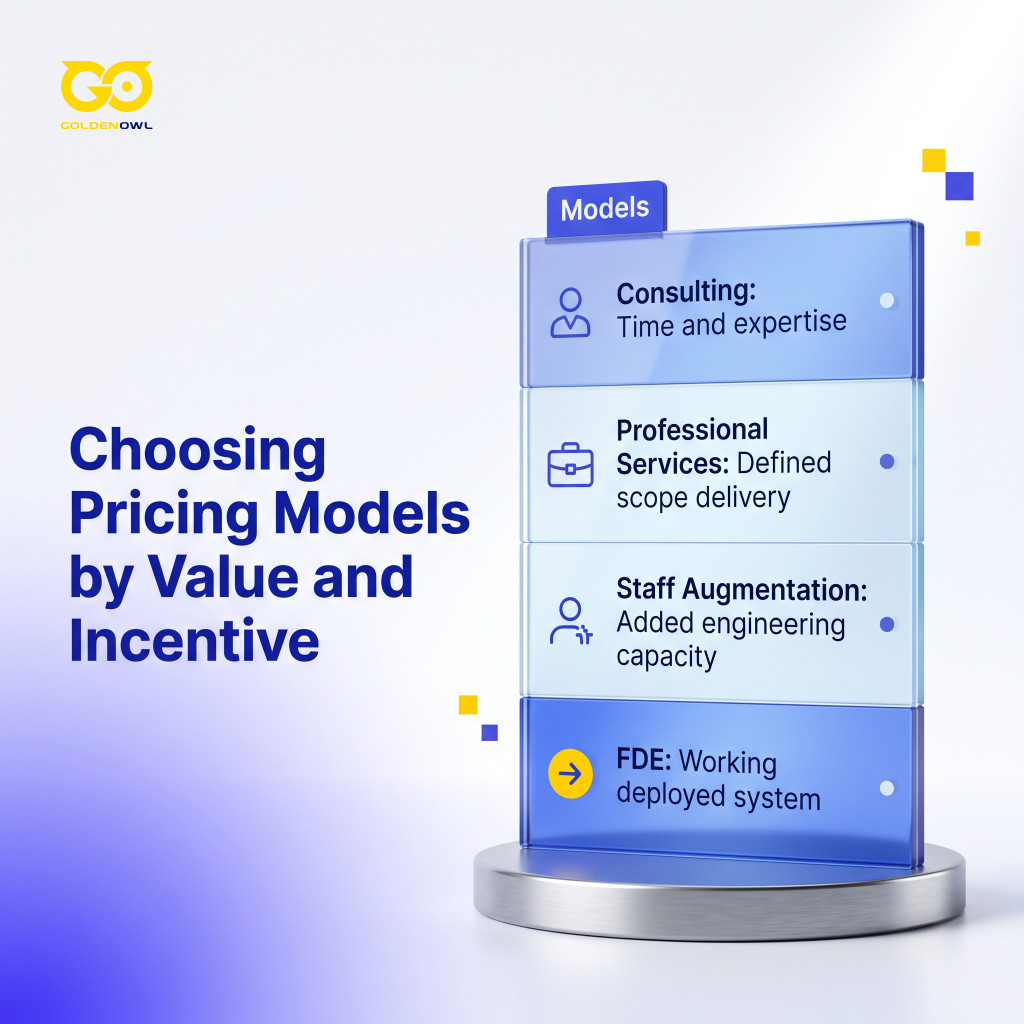
Pricing structures do more than set the fee; they shape vendor incentives during delivery and decide who bears the execution risk for the work.
You don't pay an FDE's salary. You pay an engagement fee that covers the engineer, the specialized tools and the supporting infrastructure.
Comparative analysis of billing structures
The models differ in what the client pays for, what drives cost, and who carries execution risk.
| Model | Common Pricing | Client Pays For | Cost Driver |
|---|---|---|---|
| Consulting | Monthly retainer or fixed project fee | Time and expertise | Hours of advisory engagement; client pays separately for implementation |
| Professional Services | Fixed fee or milestone-based | Delivery of defined scope | Estimates often padded; change orders added when scope shifts |
| Staff Augmentation | Hourly or daily rate | Engineering capacity | Longer projects cost more; vendor incentivized by hours, not outcomes |
| FDE | Outcome-based, story-point, or phase pricing | A working, deployed production system | Vendor revenue tied to delivery; execution risk stays with the vendor |
Evaluating engagement expenditure against the cost of inaction
The current cost of the workflow
To gauge the cost of doing nothing, compare it with your current workflow, not the price of standard software. Tally team hours, data-entry errors and their consequences, bids missed because time ran short, and billing delays.
Piping takeoff time
A Morocco-based industrial engineering group uses a module that reads piping isometrics and produces a material list and bill of materials, with each quantity traceable to its drawing. Takeoff time drops by 80 to 90%.
Median time from email to order ready
An organic dairy distributor receives customer orders by email in every format. A pipeline reads each one and applies the business rules as it creates the order in the ERP. The median time from email to order ready is 48 seconds, and about 7% of orders are flagged for a person to review.
Choosing the Right Engagement Model
Pick a consultant when you need advice. Pick an FDE when someone has to own production. MIT’s 2025 GenAI Divide report found that about 95% of enterprise generative AI pilots show no measurable business impact, and it pointed to brittle workflows and tools that don’t adapt to the business rather than weak models. A pilot nobody owns through production is the easiest one to leave stuck.

Specific conditions favoring traditional software consultants
Traditional software consulting fits when you need outside guidance on these parts of the work.
- You are evaluating AI vendor options and need an independent assessment of technical fit and commercial terms.
- You need to build a business case for AI investment and want external validation for your board or leadership team.
- Change management and organizational readiness are the main challenges, rather than technical implementation.
- You have an internal engineering team that can implement the strategy once it is defined.
Specific conditions demanding forward deployed engineers
A Forward Deployed Engineer fits when production ownership and implementation inside your environment are the work that needs an owner. The forward deployed engineer model works best when the organization can provide system access and collaborate closely during implementation.
Engage a Forward Deployed Engineer When:
- You have signed vendor contracts, but nothing is live because nobody owns the production code.
- Time-to-value is the critical constraint: you need a working AI system in production, not a roadmap to one.
- You need the AI system to work within your specific data, authentication, and compliance constraints.
Set Scope, Engagement Endpoints, and Data Controls
Before the project starts, ask two things: does a change need a formal change request, and can priorities shift during implementation? Settle both early and you avoid an argument later.
Set the engagement’s end point in advance: recommendations or code delivered, the system launched, users adopting it, or when a measurable outcome is achieved.
For data controls, build them into the layer that handles the data, using role-based permissions and limiting each user’s access to the data they need. Log every agent action, and keep the system read-only until you have validated the rules that govern it.
Frequently Asked Questions
What is the difference between an FDE and an IT services firm or systems integrator?
From build to production, an FDE provider stays accountable for the system as it runs. A IT services firms and systems integrators are typically set up for multi-year projects. A small FDE team can put a first tool in operators’ hands much sooner. For how the role differs from pre-sales engineering, see solutions engineer vs forward deployed engineer.
Is a forward deployed engineer the same as staff augmentation?
Staff augmentation leaves direction and ownership with the client. In forward deployed engineering, the provider takes ownership, including fixing the system if it doesn’t process files as agreed.
Is a forward deployed engineer just a renamed implementation consultant?
Professional services teams set up existing software; a forward deployed engineer writes custom, production-grade code inside the client’s technology stack.
How long does an FDE deployment take to deliver a working system?
In a typical deployment, a first workflow reaches production in 4 to 6 weeks, though work spanning several systems or sites can take longer.
Do you need clean data before beginning an FDE engagement?
Clean data is not required before an FDE engagement begins. An FDE handles documents in the form they arrive, including scans and hand-edited spreadsheets, along with emails. You’ll still need to provide data access, ideally before the pilot starts.
Do forward deployed engineers replace internal operations teams?
Routine tasks shift to the system, which handles repetitive reading and data entry, as well as matching, then sends cases that call for judgment to a person. Operations teams keep control of critical decisions.
Do the engineers have to be on site all the time?
During the build, engineers are often on site for around half their time, with more presence during observation and the first weeks of production. Later, they return regularly for each new workflow or major change.
What happens after go-live in an FDE engagement?
Once the system goes live, engineers stay involved, tracking exceptions and adjusting its rules. When the workflow is judged reliable, the same team moves to the next workflow on the same platform.
Conclusion
Traditional consulting fits a defined engagement: specialist advice, planning, architecture, sometimes implementation. Forward deployed engineering fits when the work starts before the solution is fully specified, and complex transformation programs may need both. If you can define the work in advance, a consultant can help. If the solution has to take shape through building, with live data and the operations team in the room, you want an FDE who stays until the system runs.
Share this page


Table of Content

Subscribe to Golden Owl blog
Stay up to date! Get all the latest posts delivered straight to your inbox