
An AI legal assistant does the first pass of legal work. See what it can and can’t do, and which legal AI tools fit research, contracts, or practice management.


AI Solutions for Manufacturing to Modernize Factory Operations
Oct 5, 2026
about 13 min read
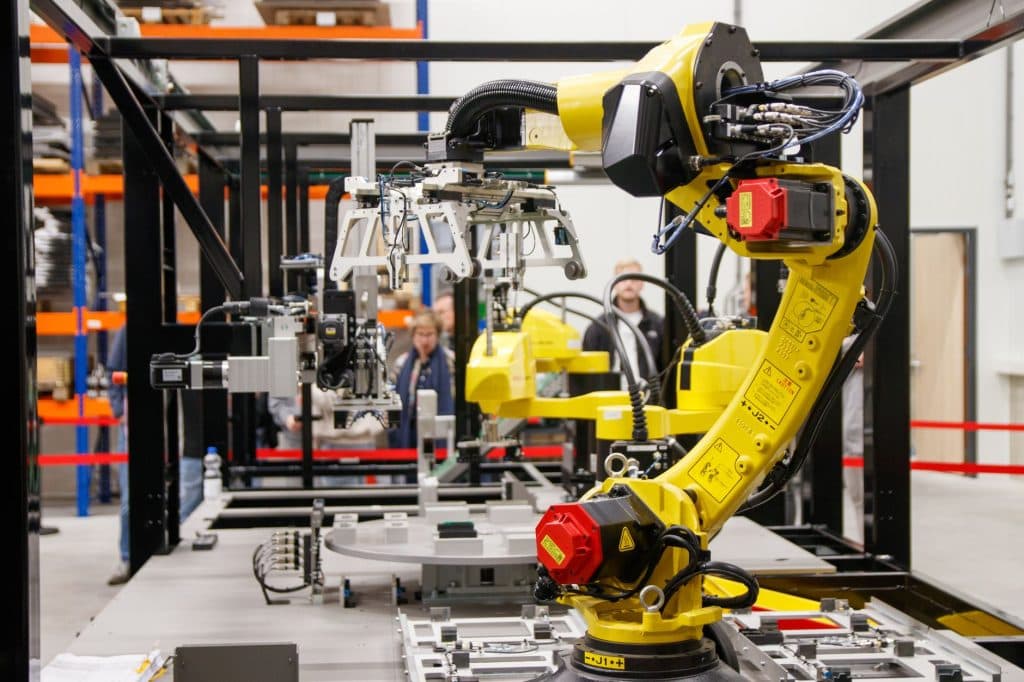
AI solutions for manufacturing: predictive maintenance, visual inspection, supply chain use cases, benefits, roadblocks, and a phased adoption roadmap.
AI solutions for manufacturing promise more than automated machinery alone.
Choosing where AI can change daily factory work takes some thought; a quality system may decide which checks inspectors see before inspecting a product. Those checks are in front of inspectors before the examination starts.
The sections ahead show where AI can support shop-floor operations, engineering, supply chains, and factory administration, along with reported business results, the challenges manufacturers face, and ways to approach adoption.
AI Solutions for Manufacturing on the Shop Floor
Predictive Maintenance
A predictive maintenance system reads sensor data, including vibration, temperature, and energy consumption, to catch early wear or faults and prompt maintenance at the right time.
Sensor data
Track equipment measures such as torque, vibration, and acoustic emissions to gauge performance and condition; small changes in those readings can signal degradation.
Maintenance timing
Patterns of degradation help estimate how much useful life machinery has left, so you can schedule maintenance based on actual equipment condition rather than fixed intervals, ahead of a potential breakdown and the downtime that follows.
A single hour of lost productivity at a major facility may cost $100,000 to more than $1 million, with some cases reaching $2.3 million.
These systems can also support several maintenance and operating outcomes:
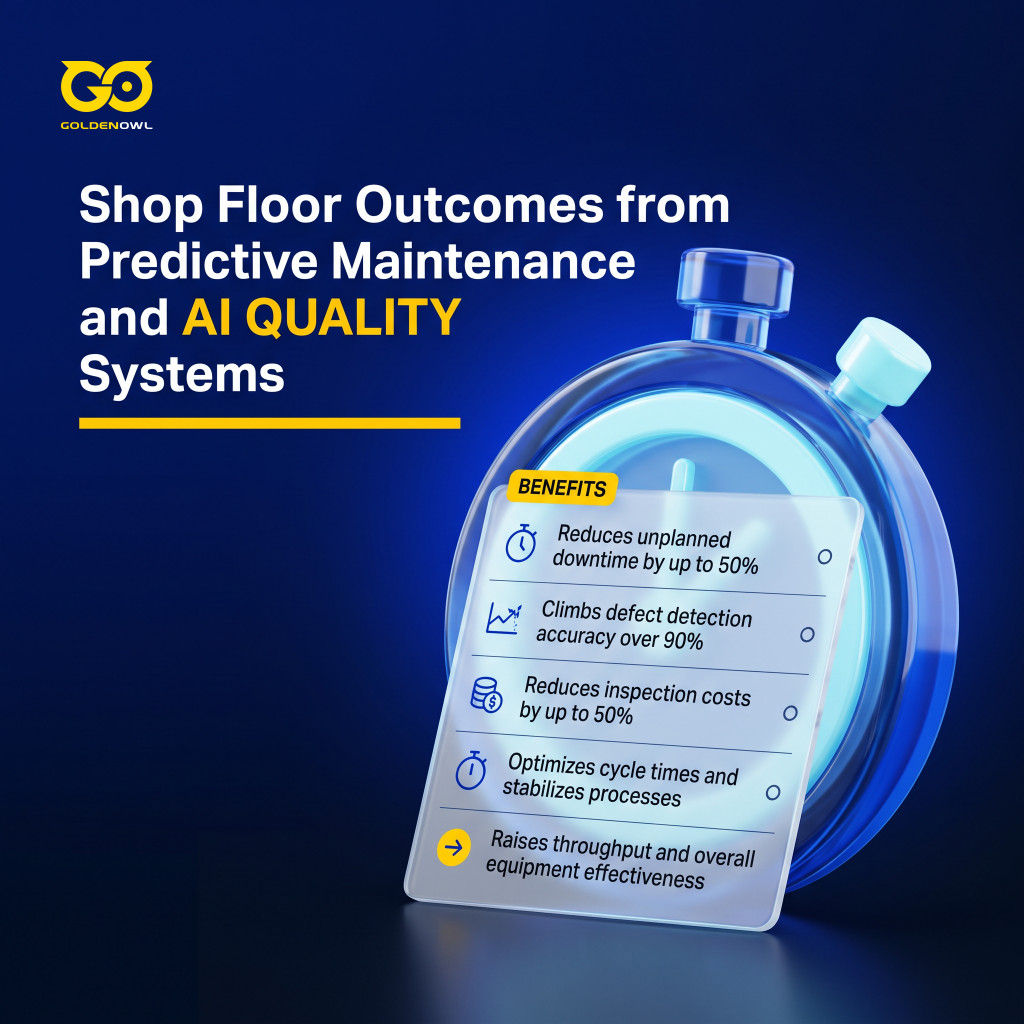
- Reduces unplanned downtime by up to 50%
- Extends equipment lifespan by minimizing stress and unmonitored degradation
- Lowers maintenance costs by avoiding unnecessary servicing and major repairs
- Improves safety and compliance by detecting failure modes before they create hazards
- Increases operational efficiency by keeping production lines running smoothly
Automated Visual Inspection
AI-powered visual inspection scans products as they move along production lines and identifies defects such as scratches, dents, misalignments, or discolorations. Root cause analysis can then help investigate why defects occurred.
- Automated visual inspection Products are scanned as they move along the production line, so the system can detect scratches, dents, misalignments, or discolorations and sort out defective items.
- Root cause analysis Visual inputs from the production line can help identify and address possible causes of product defects, such as injection molding flash caused by a worn mold.
With AI-powered vision, defect detection accuracy can climb to over 90%, giving manufacturers a clear read on what inspections can catch.
- Reduces inspection costs by up to 50%; processing products faster than manual methods also increases inspection speed, helping systems keep up with high-speed production lines
- Decreases rework and scrap rates, improving overall yield
- Ensures product consistency, especially across global multi-factory operations
- Supports regulatory compliance through precise documentation and traceability
- AI systems can be scaled across multiple production lines and facilities while maintaining consistent quality standards
Vehicle configuration analysis, combined with production data collected in real time, identifies the quality checks the system must perform and their sequence. Inspectors receive those checks in a mobile app.
One vehicle manufacturer uses AI-based visual inspection during production to catch incorrect pill dosing or degradation, helping it maintain strict compliance standards, improve batch quality, and reduce waste.
Reported AI adoption results show artificial intelligence can help manufacturers raise visual inspection accuracy by 80%.
Process Parameter Optimization
AI models use real-time production parameters to optimize cycle times, stabilize processes, and reduce scrap and rework. On continuous runs, automated tuning can maximize raw material yields. If thermal equilibrium isn’t maintained, sudden algorithmic changes may speed up mechanical tooling wear.
In a case reported by Engineering News, DataProphet CTO Dr Michael Grant said Atlantis Foundries halved its scrap rate in the first month using AI-prescribed settings.
This approach applies especially to molding, casting, machining, and chemical processes.
Overall Equipment Effectiveness Tracking
These industrial ai solutions use operational and performance data to find bottlenecks, improve production scheduling, balance workloads, and raise throughput. Monitoring trends throughout manufacturing operations, from individual lines and plants to suppliers, helps manufacturers improve Overall Equipment Effectiveness (OEE) and respond faster to disruptions.
AI can retrieve manufacturing expertise, interpret alerts, and review trends without manual searches, giving managers and people on the shop floor timely insights for decisions.
Collaborative Robotics
- Cobots Proximity sensor data lets cobots help human workers with repetitive tasks such as component placement, improving productivity, reducing physical workloads, and supporting worker safety.
An automotive manufacturer is piloting humanoid robots to help assembly-line workers pass parts along and lift heavy components. The robots are intended to augment human labor, improve ergonomics, and address workforce constraints in highly repetitive operations.
Manufacturing Execution Integration
A no-code integration framework connects the platform with MES, ERP, PLM, asset management systems, industrial IoT platforms, and external AI services, giving manufacturers access to information across those systems. Machine logs, live sensor readings, and expanding documentation leave manufacturers with a flood of data, making critical information harder to find when it’s needed.
This no-code framework allows manufacturers to modernize operations without disrupting existing systems.
AI for Manufacturing Engineering and R&D
AI engineering tools automate repetitive CAD, drafting, and documentation tasks, including design checks and change tracking. For 75% of advanced manufacturing companies, artificial intelligence and comparable technologies top the engineering and R&D priority list.
These systems can recognize features and set basic dimensions, check designs, and trace the effects of changes. Automating this work can shorten engineering cycles and speed complex workflows without increasing reliance on specialized resources.
Generative Design
Generative design helps manufacturers create or redesign components for distinct design challenges.
| Enterprise Case | Target Component | Core Quantitative Result |
|---|---|---|
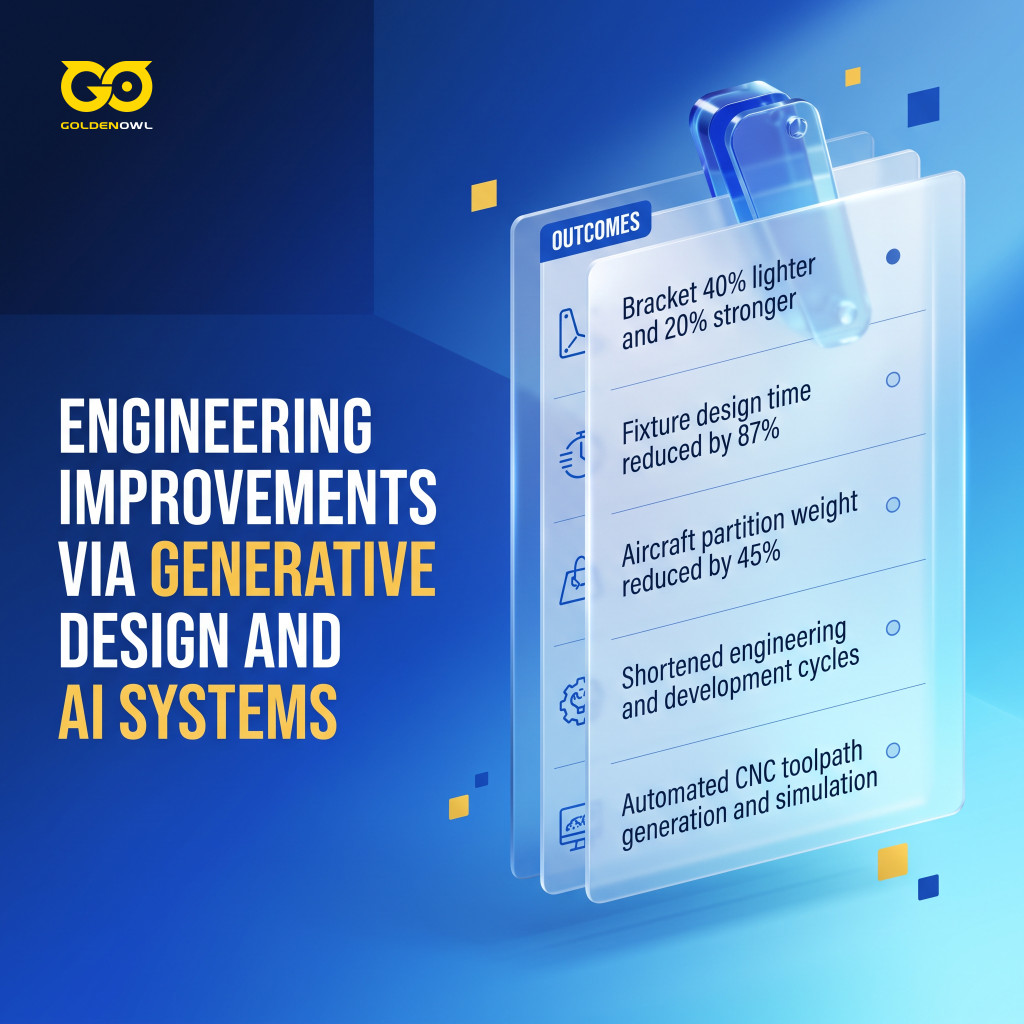
| A manufacturer collaborated with a software provider to redesign a seat belt bracket using generative design and metal 3D printing. | a seat belt bracket | The new design consolidated eight components into a single structure, resulting in a bracket that was 40% lighter and 20% stronger than its predecessor. |
| A manufacturer implemented generative AI to expedite product design processes. | an automated lighting fixture | The company reduced the design time for an automated lighting fixture by 87%, cutting the development cycle from 16 weeks to just two. |
| A manufacturer employed generative design to create a new partition for an aircraft. | a partition for an A320 aircraft | The resulting "bionic partition" was 45% lighter than traditional designs, contributing to overall aircraft weight reduction and improved fuel efficiency. |
Together, the cases changed component weight and strength while shortening the time needed to complete the design cycle.
Virtual Simulation
Before production or distribution begins, manufacturers can use AI-driven simulations and generative models to explore product, demand, and operational scenarios, predict outcomes, spot risks, and improve decisions before execution.
Thermal behavior
AI-driven simulation can assess thermal behavior in complex 2.5D and 3D integrated circuit designs. These circuits sit at the heart of signal and custom chips, and engineers can run the analysis early in design to estimate heat distribution, thermal limits, and reliability risks.
Production and demand planning
One manufacturer plans production and demand for its ice cream brands by pairing AI models with digital simulation and outside data, including weather. This helps teams decide where to sell, how much to produce, which cabinets to use, and when and where to ship products most efficiently. In Sweden, forecast accuracy has already improved by 10%.
Computer-Aided Manufacturing Programming
Automated toolpath generation simplifies strategies for intricate geometries. AI can assess machining requirements for CNC work and adjust toolpaths in real time, improving machining while cutting manual effort through several capabilities:
- Intelligent systems optimize toolpaths to improve surface finishes, extend tool life, and reduce cycle times.
- By preventing collisions, removing unnecessary air cuts, and adjusting for material variations, AI improves machining stability and efficiency.
- For CNC programmers, AI-driven automation reduces repetitive tasks and speeds programming for complex parts. Automated toolpath generation simplifies machining strategies for intricate geometries, reducing the time and expertise needed to create production-ready programs.
NX X Manufacturing’s AI Copilot Chat gives in-software guidance, answers application-specific questions, and streamlines workflows for better efficiency, precision, and productivity.
Natural-language commands can generate robotic welding paths without complex coding, speeding deployment and improving accuracy.
AI Manufacturing Solutions for Supply Chains
AI solutions for manufacturing use machine learning algorithms to analyze large volumes of supply chain data, spot potential problems, assess suppliers, and reduce the ecological footprint of materials and deliveries. Those patterns can flag risks early.
- Flag supply chain risks and disruptions early so manufacturers can make adjustments quickly and reduce their impact
- Assess supplier quality and reliability
- Find opportunities to reduce the ecological footprint of materials used and deliveries
- Supply chain risk prediction Run logistics scenarios to see how demand spikes, supply shortages, and other events could affect your company and its partners, then use that assessment to create contingency plans.
The table reports productivity and energy-consumption results for Industry 4.0 front-runners using AI.
| Industry 4.0 front-runners using AI for demand forecasting heavy-transport equipment routing, and other manufacturing use cases are covered in Strategic Business Benefits. | McKinsey |
|---|
Inventory Optimization
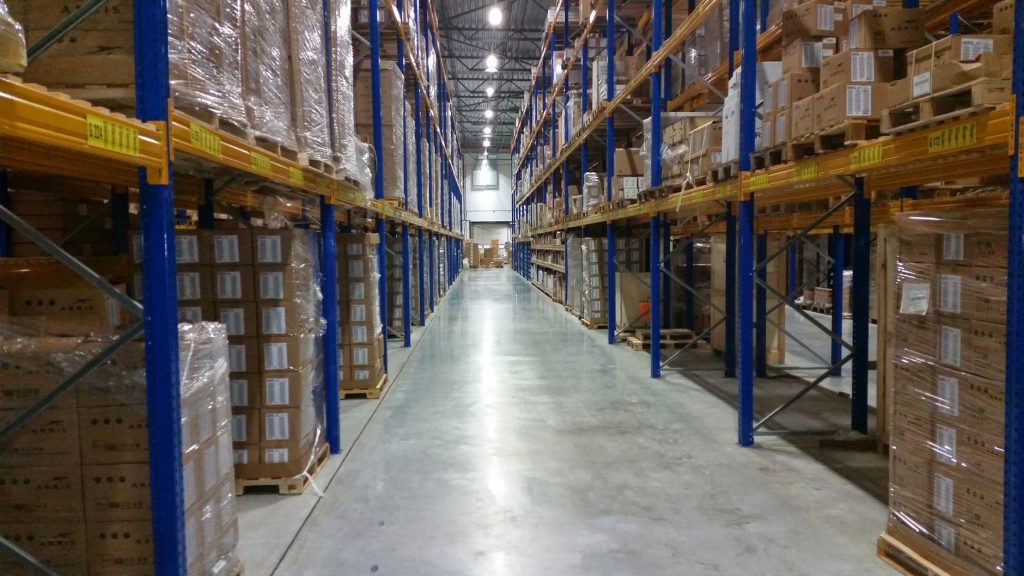
Inventory optimization uses supplier, sales, and warehouse data to guide stock and logistics decisions.
- Inventory optimization Supplier lead times, historical and real-time sales data, and other metrics can help you predict supply and demand, set inventory levels across warehouses, and reduce the risk of overstocking and stockouts.
- Inventory optimization AI models can reduce forecasting errors by up to 50%, leading to better alignment between supply and demand. More accurate demand predictions can reduce excess inventory and the holding costs associated with it.
- Inventory optimization AI-assisted data analysis can make demand planning and inventory management more cost-efficient and risk-resilient.
- Optimize warehouse management and logistics, and reduce idle time.
Service Lifecycle Management
Service lifecycle management uses product configurations, service needs, and maintenance history to identify service requirements and automate service planning.
Service planning
AI can automate service planning tasks, identify service requirements, and generate plans; service planning platforms use product configurations, maintenance history, and operating conditions to automate the work, reducing downtime and improving efficiency.
Connected product data
By connecting data about products, service needs, and maintenance history, a service management platform reduces manual effort and gives you instant visibility into critical details.
AI for Factory Administration, Safety, and Ergonomics
AI tools can support specific administrative decisions: reporting and performance analysis can use relevant MES or ERP data, while documentation and knowledge search can draw on PLM or quality records; commercial software can inform decisions that depend on it.
A Factory Operations Agent powered by large language models can analyze factory data to identify and diagnose issues in real time.
Worker safety

Sensors provide data that AI can monitor and analyze to improve workplace safety, detecting potential hazards and alerting employees to take appropriate action.
Ergonomic evaluations
Cloud-based AI-driven human simulation can make ergonomic evaluations easier by turning user images into 3D digital humans.
Manufacturing AI’s Productivity, Cost, and Decision Benefits
See the table below for McKinsey's reported results.
- 72% report reduced costs and improved operational efficiency after deploying AI technology.
- 51% report greater visibility and responsiveness after deploying AI technology.
- 41% report improved process optimization and control after deploying AI technology.
Throughput Acceleration
AI-driven assembly automation can raise labor productivity, while automation can increase production output and help companies move through manufacturing cycles faster.
Labor productivity
- Based on reported AI adoption results, artificial intelligence can help manufacturers reduce failures in the assembly process by 70%.
AI-driven product assembly automation can raise manufacturers’ labor productivity.
Production output
This automation can raise production output and help companies move through manufacturing cycles faster.
The table lays out AI-linked results for productivity, energy use, and assembly failures in manufacturing.
| Implementing generative AI across manufacturing operations can lead to productivity improvements of up to two times. | McKinsey |
|---|---|
| Industry 4.0 front-runners using AI for demand forecasting heavy-transport equipment routing, and other manufacturing use cases have seen a two to three times increase in productivity and a 30% decrease in energy consumption. | McKinsey |
| Based on reported AI adoption results, artificial intelligence can help manufacturers reduce failures in the assembly process by 70%. | Bain & Company |
Taken together, the findings point to broad manufacturing gains, including improved productivity and lower energy use.
Production Cost Reduction
A steel producer’s AI results show lower costs and reduced CO₂ emissions.
- AI helped a steel producer reduce alloy costs by $3 per ton of steel while also decreasing CO₂ emissions.
How AI Supports Faster, Better-Informed Decisions
Insights drawn from data and advanced analytics let human workers decide faster and with more confidence. Work can also become easier. They can simplify work and improve business outcomes.
In an IBM case study, Craig Sindorf, BI Manager of Supply Chain at Dr Pepper Snapple Group, said, “Charts and graphs give them instant answers to questions.”
Implementation Roadblocks
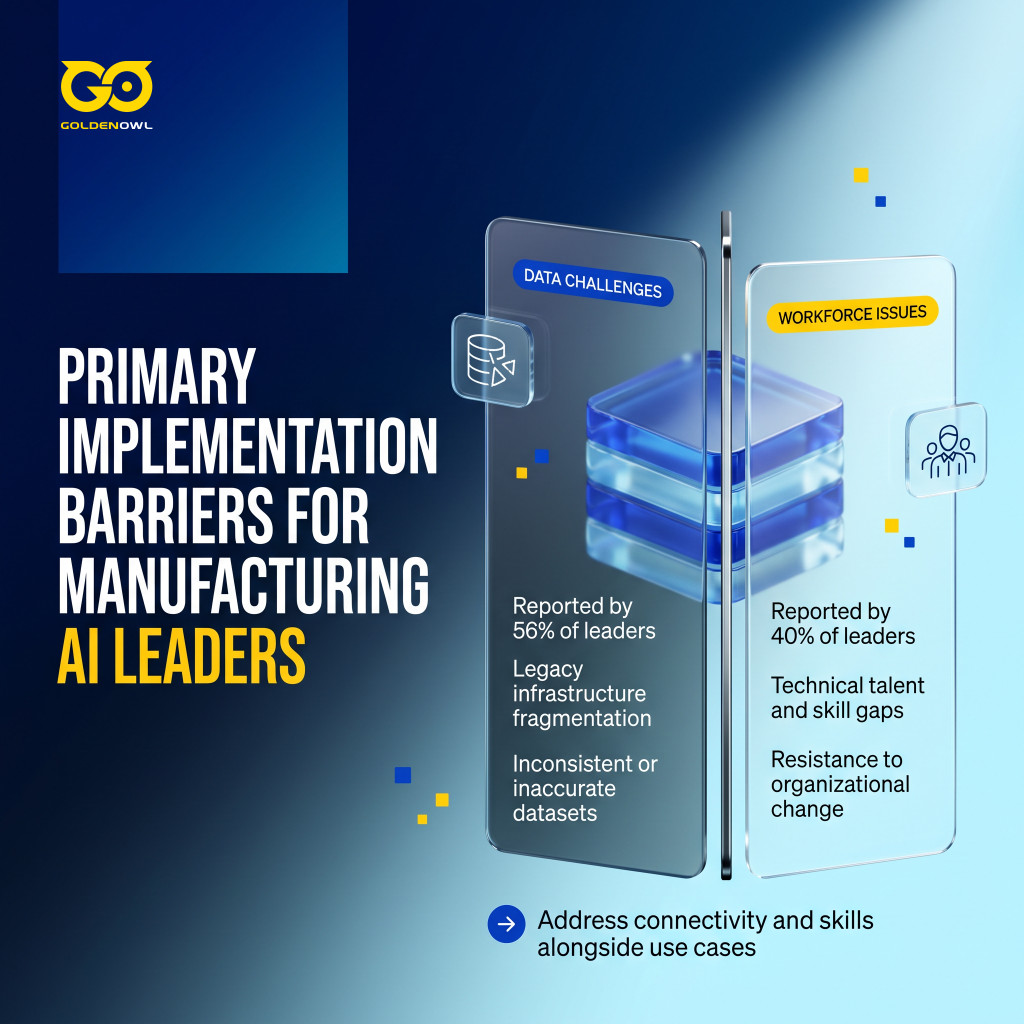
Reported implementation challenges center on data problems and workforce concerns, including skill gaps and resistance to change.
| 56% of manufacturing AI leaders reported data challenges when implementing AI, while 40% of them experienced workforce issues in terms of skill gaps and resistance to change. | KPMG |
|---|
Legacy Infrastructure Fragmentation
Legacy infrastructure fragmentation leaves manufacturers with a patchwork of legacy systems. For older plants, a solid rule of thumb is to treat legacy programmable controllers as passive telemetry sources before trying to make them two-way interactive systems. Smart manufacturing can involve vast IT infrastructures, where mergers and acquisitions may create this patchwork. Manufacturing organizations may also have datasets spread across multiple systems, where data points are inconsistent or inaccurate. Build a data management strategy to keep data reliable and available. Map trusted sources, clean and transform data through ETL pipelines, store it in suitable places such as data warehouses, and support exchange across the digital ecosystem through APIs or other integration solutions.
Technical Talent Shortages
Hiring skilled workers
Hiring challenges have led between 65% and 70% of manufacturers to outsource many technology roles, including work in AI, cybersecurity, analytics, and other domains. Manufacturers can also partner with external integrators, including an ai solutions company, to bridge data science talent gaps.
Formal education
Formal AI education is already in place at many manufacturers: 78% of manufacturing respondents say their organisation has provided it, while 55% would like more AI training.
Natural language prompts
Generative AI assistants and copilots can take natural language prompts. Employees across the organization, not only IT staff, can access AI capabilities, including tools to configure complex customer solutions without years of experience.
Brian Rogers of Aleran Software reports that Syntron Material Handling replaced manual quoting that took two to three days with AI-powered CPQ, with quote-to-order cycles taking minutes. The account describes customer and dealer use, not generative AI or internal employee access.
Cybersecurity Vulnerabilities
AI systems can attract cyber criminals seeking confidential information, including IP or trade secrets. Their reliance on data can also raise privacy and security concerns among customers, partners, and regulatory agencies.
When selecting an AI provider, check for these practices:
- The provider doesn’t share your data with third parties to train their AI models
- AI solutions are developed responsibly and according to rigorous standards
- The provider employs advanced data security measures to protect your data at all times
- The provider is committed to transparency and explainability
Use safeguards such as user activity monitoring, data encryption, and IoT device authentication. Conduct regular risk assessments with ethical penetration testing, and adopt data governance policies that define how data will be handled across the organization.
Strategic Adoption Framework
AI adoption progresses through stages: manufacturers build awareness and select suitable use cases before moving into pilots, systems integration, and workforce preparation. Each stage brings opportunities and fresh challenges.
Assess ERP Readiness for AI
Before you build ingestion pipelines, resolve conflicting part taxonomies across facilities; when data schemas are already unified, you can move directly to those pipelines.
Your ERP setup shapes which manufacturing solutions you can add, so check whether your current IT systems and ERP portfolio support the AI tools you plan to bring in.
A software provider can help you shape a clean core strategy and AI-ready enterprise architecture, so you don’t have to tackle the challenge on your own.
If your ERP portfolio already supports AI, adding it may be simpler than you expect. Embedded AI lets you use these tools without building, maintaining, or updating your own models.
Phased Pilot Deployment
Choose high-impact, low-complexity use cases first to build organizational trust before software reaches multiple sites.

Start by checking your IT infrastructure, in-house technical skills, and business operations. Use what you learn to spot adoption barriers and choose suitable initiatives, which may include server and data center upgrades, as well as upskilling programs; a phased AI software rollout is another option. A pilot group of early adopters can help the workforce get familiar with the technology over time.
At the facility or network level, 24% of manufacturers are using generative AI, and 38% are testing it in pilot programs.
Governance Standards
Common barriers manufacturers report when developing AI use cases include inadequate data quality (57%), weak data integration (54%), and weak governance (47%).
Take two steps to address these obstacles and protect company and customer data:
- Prioritize ethical and responsible AI practices, and select third-party software providers that follow them.
- Work with AI solution providers committed to handling data ethically, transparently, compliantly, and securely.
Assign an internal owner to coordinate data quality, integration, and responsible-use requirements with the provider. Before deployment, have that owner confirm the requirements are reflected in the solution’s data handling and review them as the use case changes.
Frequently Asked Questions
What is the role of AI in smart manufacturing?
In smart manufacturing, AI is part of the wider Industry 4.0 toolkit, alongside the industrial Internet of Things, computer vision, and digital twin technology. Natural language processing and pattern recognition let AI-powered tools make sense of structured and unstructured data, offer predictive and prescriptive insights, and act autonomously, including by rerouting products.
What is the difference between AI-driven & robotic process automation?
AI's role is to interpret data and provide insights while acting autonomously. Robotic process automation (RPA), by contrast, takes on time-consuming routine work, such as transferring information from digital documents to the appropriate systems and notifying staff of machine breakdowns or shift updates.
What are the risks associated with integrating generative AI into manufacturing processes?
Manufacturers face data security and intellectual property risks, and they may rely on AI outputs without human validation. Biased or incomplete training data can also produce harmful or suboptimal results, which makes governance, explainability, and human oversight important.
Can generative AI reduce waste and improve quality control in manufacturing?
Yes. GenAI can identify design options that require less material and produce fewer production defects. Pairing it with AI-powered quality control systems can reduce rework, scrap, and downtime in manufacturing processes.
What challenges do manufacturers face when adopting generative AI?
Manufacturers may struggle to adopt generative AI when they lack high-quality training data or skilled people to implement and manage the models. Legacy systems, cultural resistance, and uncertainty around ROI can make adoption harder, especially in traditional manufacturing environments.
How is generative AI transforming manufacturing and supply chains?
Generative AI can help manufacturers and supply chain leaders move faster by automating design exploration, optimizing logistics, and simulating complex operations. Generative design tools can reduce material use, while AI models can forecast demand more accurately, supporting efficiency, sustainability, and responsiveness across the value chain.
Taken together, these answers show that different tools handle different tasks. AI can interpret data, offer insights, or act autonomously, while RPA automates routine work. Generative AI can support design and logistics, as well as operational work, and may help reduce material use and production defects. Adoption still depends on data, skills, legacy systems, and human oversight. Each tool should be matched to the work it can support, so AI solutions for manufacturing can deliver value while addressing data, skills, and oversight needs.
Share this page


Table of Content

Subscribe to Golden Owl blog
Stay up to date! Get all the latest posts delivered straight to your inbox