
An AI legal assistant does the first pass of legal work. See what it can and can’t do, and which legal AI tools fit research, contracts, or practice management.


What is industrial AI for enterprise vendor selection
Oct 1, 2026
about 15 min read
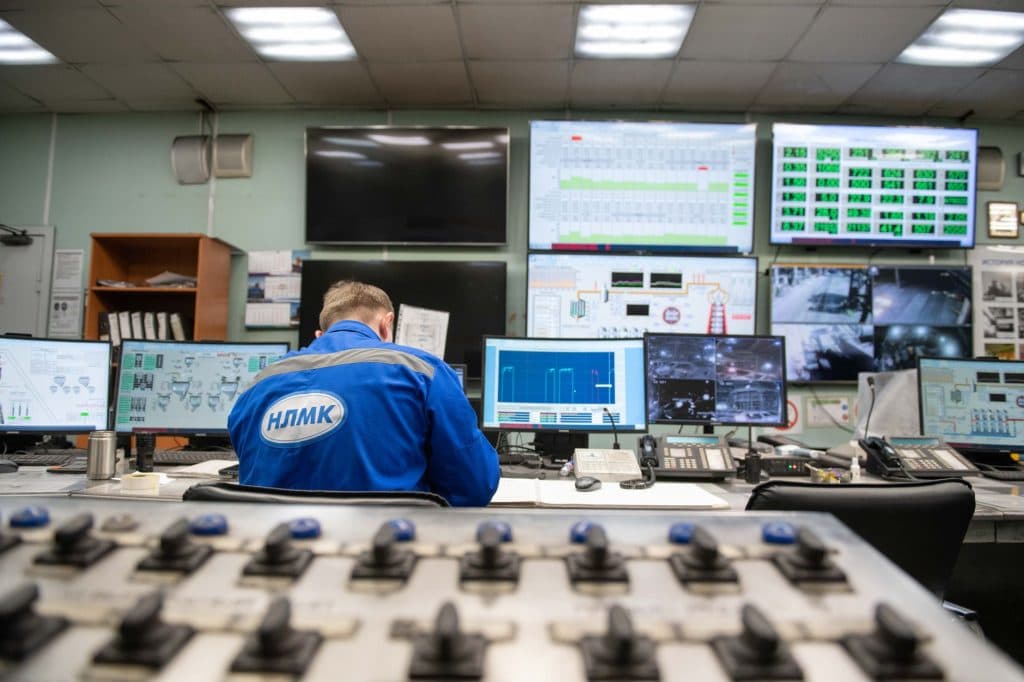
What is industrial AI? Compare vendor types, leading platforms, and a practical evaluation framework to choose the right industrial AI solution for your plants.
Industrial AI for enterprise vendor selection means choosing software your plant needs, not the vendor boasting the longest feature list—the practical answer to what is industrial AI.
This guide sorts vendor types and helps you decide which fits.
What is industrial AI across vendor categories and architecture layers
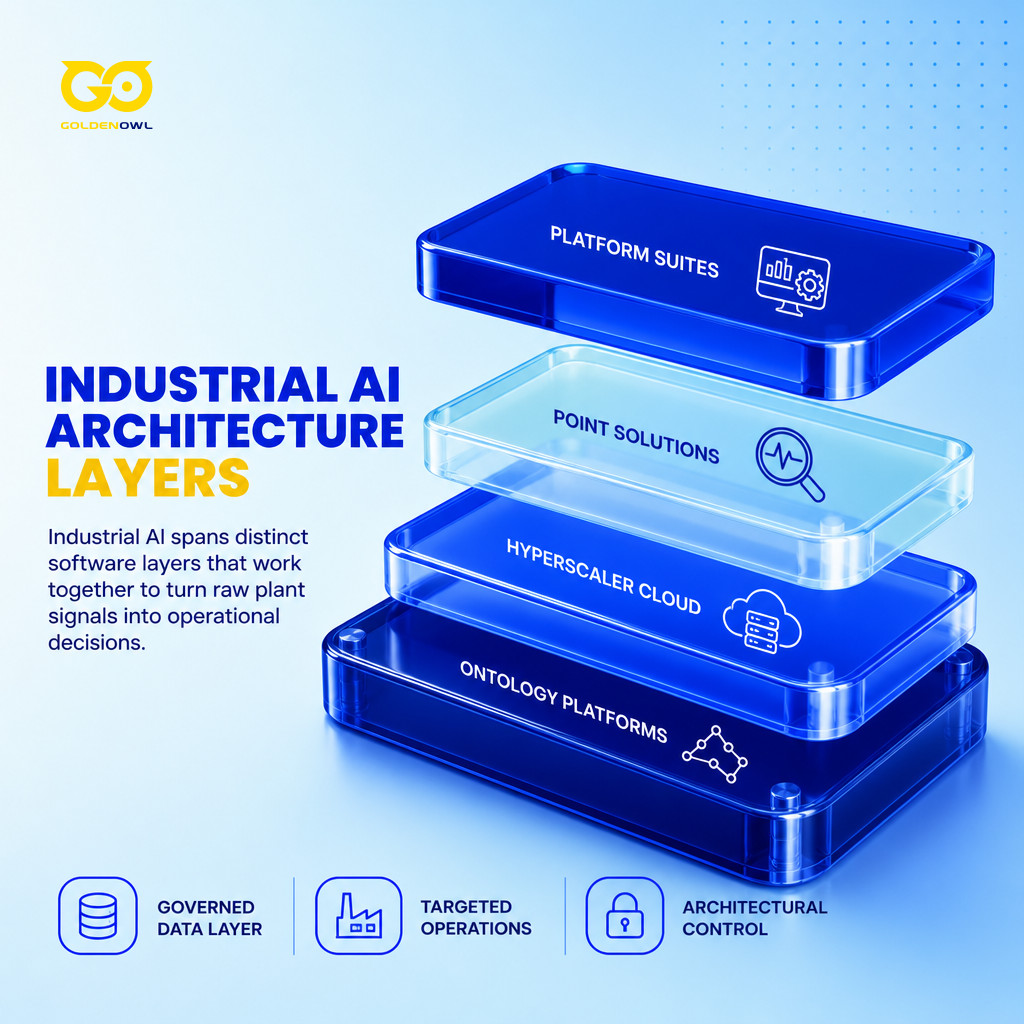
The label industrial AI platform spans at least four kinds of software, and vendor shortlists often group them together despite the different jobs they do. Some manage the operational data AI draws on; others provide models and applications, bring AI into automation systems, or add AI to ERP and asset management workflows. They don't all solve the same problem.
Understanding what is industrial AI in practice starts with matching the software to the operational gap. A platform with few models may still suit you if the missing piece is your data layer, while a model-focused option may fit a different gap. Choose based on what’s missing.
| Architecture Layer | Primary Operational Focus | Representative Vendor Archetypes | Key Trade-Off |
|---|---|---|---|
| Platform suites | AI across existing automation and enterprise platforms | Siemens, Rockwell, GE Vernova, Oracle | Lower vendor-management overhead and streamlined support, but possible lock-in to a proprietary runtime and data model |
| Point solutions | Deep support for a specific operational problem | Machine-health monitoring, AI-augmented CMMS, fleet analytics | Fast time-to-value, but data may leave your environment and integration with MES, historians, and ERP can add work |
| Hyperscaler infrastructure stacks | Cloud primitives for industrial data and AI | Cloud providers | Architectural control, but internal teams must build the applications, integrations, and operator-facing workflows |
| Industrial data and ontology platforms | Connecting and governing operational data for analytics and AI | Litmus, Cognite | Reusable data models and governed data, with integration and contextualization work to establish the data layer |
Platform suites
Your plant’s existing reliance on a vendor, your wish for one accountable vendor, and use cases that match its out-of-the-box offer make a platform suite a sensible choice. Major industrial automation vendors now include AI in platforms they already sell. Siemens offers Industrial AI through its Industrial AI portfolio and digital twin tooling; Rockwell uses the FactoryTalk suite, GE Vernova covers asset performance management, and Oracle spans supply chain and manufacturing cloud.
Watch out for licence costs that rise at scale, slower roadmaps for needs beyond the suite’s main focus, and lock-in that leaves models, data pipelines, and dashboards in the vendor’s stack. Integration can cut vendor-management effort and make support across facilities simpler, but it also ties plant operations to one vendor’s proprietary runtime and data model. Both sides come with the suite.
Point solutions
Can you name one clearly defined problem, such as recurring bearing failures across 200 critical motors, and do you want a quick return while remaining comfortable with the vendor’s hardware and cloud? Specialist vendors tackle narrow jobs, including Machine-health monitoring with proprietary vibration sensors, AI-augmented CMMS, and fleet analytics. Each stays close to its target problem. Per-asset pricing can compound.
Watch out for data moving outside your environment, per-asset fees that add up, and the integration needed to link the tool with your MES, historian, and ERP.
Hyperscaler infrastructure stacks
Cloud providers supply industrial building blocks, including time-series services, IoT ingestion, vision APIs, and model hosting. Those pieces are infrastructure, not finished solutions, so your team still has to create the application, integrations, and workflow operators will use.
Choose a hyperscaler-first approach when you have a capable internal data/ML team and want maximum architectural control.
A lot of internal Industrial AI projects get stuck after the model works but before operators have a production system they can use.
Industrial data and ontology platforms
Industrial data and ontology platforms give plant data structure and context that analytics and AI can draw on. Litmus links machines and supports manufacturing operations with analytics and AI, backed by 250-plus native OT connectors spanning PLCs, SCADA, historians, MES, and robotics. Use its automated device and signal discovery to surface those connections.
Reusable asset models put units, shifts, and asset relationships into context. Governance covers end-to-end lineage, while edge execution lets models run inside the plant when they have to.
Cognite Data Fusion brings operational, engineering, and IT data together in an industrial knowledge graph and gives it structure. The product combines time-series data, events, documents, visual streams, and 3D and engineering models.
Cognite is moving toward agentic systems in 2026, and recent releases add multi-step queries across its knowledge graph. Agents can follow richer context, from edge properties in a data model to annotations on a P&ID, instead of stopping at one lookup.
Across multiple sites, repeatability may matter more than having a wider range of models. Reusable data models and template-based rollout with Litmus Edge Manager allow the next plant to inherit the architecture rather than repeat the integration project. With that pattern, one Food & Beverage manufacturer expanded to 95 global sites in 18 weeks.
An industrial ontology is an interactive map of the factory floor: it ties a sensor tag to the specific pump, line, and operational role the tag belongs to.
Industrial AI solutions and platforms
Choose industrial AI vendors according to the layer you need and the plant systems you already run.
- Which layer are you short of?
The operational gap tells you which part of the stack to buy. When you have models but lack usable data, focus on the data layer; when one plant has clean data but no use cases, the application layer is where you’re short. Most manufacturers use both, along with AI built into ERP and automation systems. For those tools to scale together, they need to draw from the same governed source.
- How many sites?
A pilot at one site tells you little about whether a platform will scale across your plants.
A platform may run well in one plant and still fall short when you roll it out elsewhere. As you plan deployment, weigh reusable tools and templates more heavily than feature breadth once you’re past roughly three plants. A strong result at one site doesn’t answer the rollout question.
- What is already in the plant?
Your existing plant systems should shape the shortlist, since they affect both integration and lock-in.
Siemens, Rockwell, Honeywell, and ABB each integrate especially well with their own estates, and each can tie you more closely to that vendor. Put both sides on the table when you compare platforms. Don’t count integration as a free bonus while treating lock-in as a footnote.
Manufacturers often use multiple platforms. What matters in practice is whether those tools draw on a shared governed data source, not whether you can force every job onto one platform.
Cognite
Cognite Atlas AI offers a low-code workbench for building industrial AI agents, with preconfigured templates and a curated model library for benchmarking. Its Agent API lets you embed agents in other applications.
Best for:
It fits organizations with fragmented industrial data, especially asset-heavy operations where engineering documents and 3D models matter as much as time-series data.
Worth checking:
Ask how the knowledge graph is filled out for your asset classes, then find out what it takes to rebuild it at the second and third site.
AVEVA
AVEVA’s installed base anchors its position. AVEVA reports that the PI System, its real-time operational data infrastructure, is deployed at 65% of Fortune 500 industrial companies. Much of the world’s industrial time-series history already sits there.
CONNECT, AVEVA’s industrial intelligence platform, handles more than 8 petabytes of industrial data across 50-plus SaaS applications, with around 23,000 monthly active users.
During 2026, AVEVA has been adding an AI layer to that installed base. The company announced an Industrial AI Assistant in CONNECT, efforts to equip PI Server for AI-intensive work, and a strategic AWS partnership spanning multiple years as it moves toward multi-cloud.
AVEVA acquired Crosser and is incorporating its DataOps capability into CONNECT under the name “Flows.” Flows provides data cleansing and transformation in real time, supported by more than 800 connectors. A major CONNECT release is slated for Q1 2027 and will introduce an industrial knowledge graph. An agentic “Twin Builder” will populate it by proposing mappings from existing sources to a standard data model while keeping lineage intact.
Best for:
Process industries and asset-intensive operations already standardized on PI can get to AI fastest by activating the data they’re collecting now.
Worth checking:
Check what’s available today against what remains on the 2027 roadmap; several of AVEVA’s strongest 2026 announcements are still forward-dated.
Litmus
At the plant edge, NVIDIA GPU acceleration with Litmus Edge handles computer vision at line speed, while locally hosted small language models support air-gapped plants.
Litmus Edge Developer Edition costs nothing, runs self-serve, and has no feature restrictions, so you can test its connectivity claims on real equipment before speaking with sales. In the 2025 Magic Quadrant for Global Industrial IoT Platforms, Gartner placed Litmus in the Challenger category.
Best for:
It suits enterprises repeating the same AI use cases across many factories, and teams held back by OT data readiness rather than model availability.
Consider something else if:
If you want packaged AI applications ready to use, look elsewhere; Litmus supplies the foundation those applications run on, not the applications.
Siemens
Siemens covers Industrial AI across its automation estate with a full-stack approach.
Siemens’ relevant pieces are Insights Hub, the IIoT and operations intelligence layer formerly called MindSphere; Siemens Industrial Edge, with its generally available Industrial AI Suite; and Intelligence Center X. Announced in June 2026, Intelligence Center X unites data, models, and workflows within one governed environment, and lets users trace agent activity.
Best for:
The fit is strongest for plants already standardized on SIMATIC, TIA Portal, and the wider Siemens portfolio, where integration can pay off right away.
Worth checking:
Check how much of the benefit relies on the Siemens stack, and whether the offering works with other vendors’ equipment.
Honeywell
What did Honeywell observe across its pilots? The company says its platform predicted alarm events five to ten minutes in advance on average. It became commercially available in Q3 2026.
Best for:
Honeywell considers Experion PKS users in process settings such as refining, petrochemicals, energy, and other process operations strong candidates for autonomous or semi-autonomous control room operation.
Worth checking:
Experion Cognition is new, so ask for production deployment references, not just pilot examples, and check how it performs outside the Experion estate.
Rockwell Automation
Rockwell puts AI into automation engineering and maintenance workflows instead of selling a separate analytics platform.
At Hannover Messe 2026, Rockwell and Microsoft showed an AI-native engineering workflow. It builds digital twins in Emulate3D, creates automation logic in FactoryTalk Design Studio, then emulates and checks that logic against the twin. Rockwell said the workflow was planned to reach commercial availability in May 2026.
In July 2026, Rockwell and Augury announced a partnership that pairs Augury’s Reliability Agent with Rockwell’s Fiix CMMS and FactoryTalk Optix. The combined tools connect issue detection to maintenance planning and execution.
Best for:
It fits discrete manufacturers standardized on Rockwell, along with engineering teams slowed by automation development and commissioning.
Worth checking:
Ask whether the offering helps standardize the data layer across plants, or mainly improves work inside one engineering environment.
SAP
SAP, Oracle, Microsoft, and Infor each put AI into an existing enterprise suite in a different way, so your current suite usually guides the choice.
SAP Integrated Business Planning projects upcoming demand, oversees supply chain operations, and optimizes inventory levels.
Best for:
This suits organizations that want a single vendor for ERP, supply chain, and manufacturing planning, and can trade some plant-floor depth in exchange for consolidation.
Worth checking:
As with IFS, find out how control-system data enters the suite and identify who owns that integration.
Oracle
Oracle’s 2026 additions include Fusion Agentic Applications and Oracle AI Agent Studio. Inside Fusion Cloud SCM, coordinated agents manage activities across planning, procurement, manufacturing, maintenance, and logistics.
C3 AI
C3 AI sells enterprise AI application software, with ready-made products for sectors such as manufacturing, energy, utilities, financial services, and government, alongside a low-code customization environment.
C3 AI says its Spring 2026 release added C3 Code, which can autonomously create enterprise AI applications from natural language, carrying them through design, configuration, testing, and deployment.
Best for: Enterprises with in-house data science skills that want an application development platform instead of a packaged operational tool.
Due diligence: With restructuring and reported acquisition interest, check roadmap continuity and support commitments. Treat this as a due-diligence question, not a verdict.
ThingWorx
ThingWorx is among the longest-established platforms purpose-built for IIoT application development, offering rapid app-building tools, built-in analytics, and Kepware connectivity for a broad protocol library.
The ownership has shifted. On 16 March 2026, PTC transferred its Kepware industrial connectivity and ThingWorx IoT businesses together to TPG, receiving $523 million in cash at closing to concentrate on its Intelligent Product Lifecycle strategy.
Best for: Teams creating bespoke IIoT applications that want a development platform, not a packaged application.
Ownership review: Under the new ownership, review roadmap and support commitments, and find out how Kepware licensing and support sit alongside Proficy within the private-equity portfolio.
Augury
Augury serves large manufacturers with asset-intensive operations, monitoring dozens or hundreds of machines.
Palantir Foundry
Palantir Foundry brings factory data from PLCs, SCADA, ERP, CMMS, and sensor systems into one connected data model. It gives internal teams the infrastructure to build AI applications rather than supplying pre-built AI applications.
For very large discrete manufacturers with dedicated data teams, it’s a leading platform for building industrial AI on a unified data foundation.
Landing AI
Manufacturing engineers can train and update visual inspection models without specialist visual-modeling expertise.
Factory AI
For mid-market manufacturers considering predictive maintenance, Factory AI sits between enterprise platforms like Augury and lightweight CMMS tools, which rely on rule-based alerts rather than true AI anomaly detection.
14-day deployment
Factory AI is built to link legacy hardware with modern AI without a long implementation timeline.
Brownfield-ready
It takes in data from existing vibration sensors, PLC tags, and manual inspections without requiring new hardware investment.
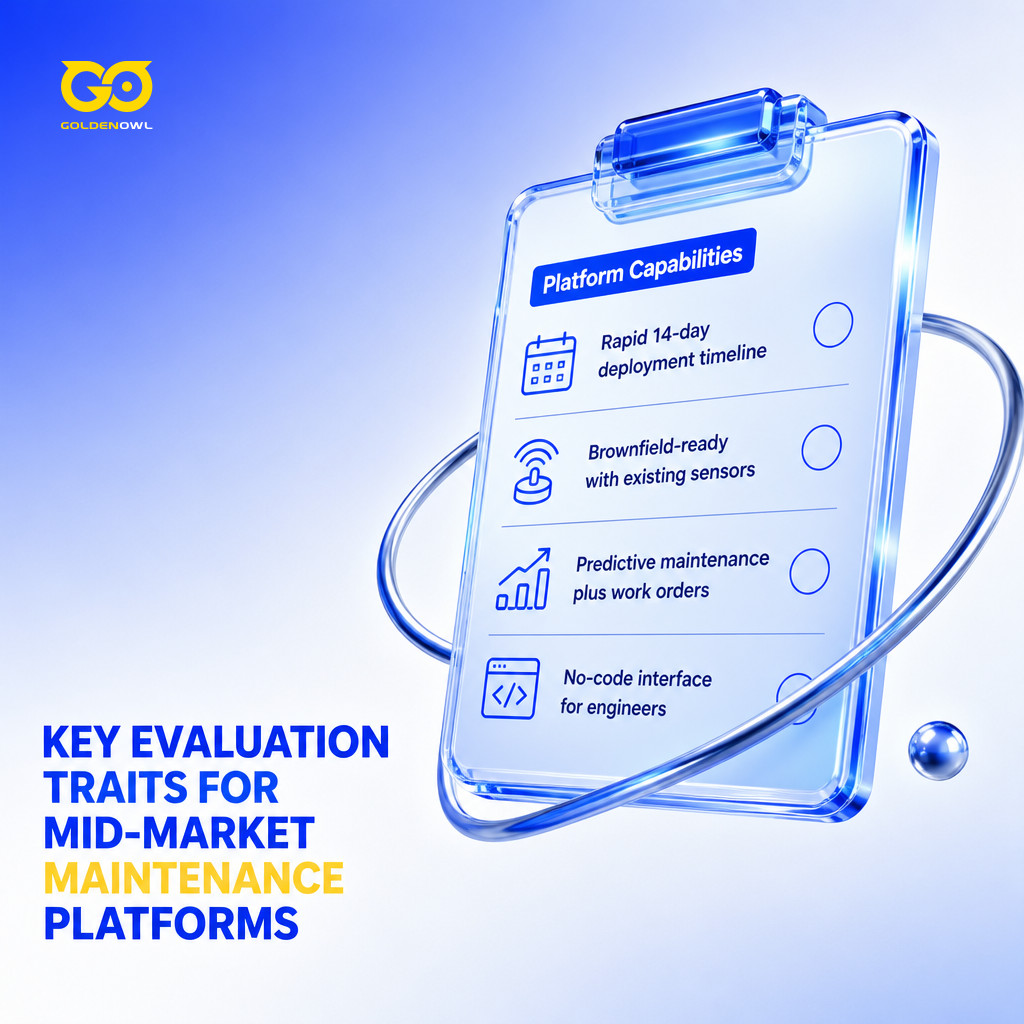
PdM plus CMMS
The platform combines predictive maintenance AI with full work order management.
No-code interface
Maintenance and reliability engineers can run the platform without data science expertise.
Factory AI is designed for plants with at least 20 critical assets. It isn’t built for very small facilities or manufacturers mainly looking for vision AI or data platform infrastructure.
Vendor evaluation framework and deployment readiness
Highest-cost operational problem identification
Name the plant’s costliest operational problem before choosing a platform. Unplanned downtime, quality failures, manual inspection bottlenecks, and knowledge loss each point to a different platform category.
Operational data readiness and contextualization
Before weighing platforms, map the sensor data you collect, how readily you can access it, and whether it links to operational records. Every option depends on data that’s clean and accessible, with links between sources; fragmented data can leave an industrial AI platform producing unreliable results and losing people’s trust fast.
Internal technical staffing and data science capabilities
Skills required depend on the platform.
- Palantir and C3 AI: Require skilled internal data teams.
- Augury: Is fully managed.
- Factory AI: Is designed for maintenance engineers without data science backgrounds.
- Landing AI: Lets engineers train models without coding.
Brownfield hardware compatibility and sensor integration
Match each platform against the equipment already in your plant.
- Factory AI: Works with existing vibration sensors and PLC tags.
- Augury: Requires its own proprietary sensors.
- Palantir Foundry and C3 AI: Are software platforms that connect to existing data infrastructure.
- Named connectors: Ask what brownfield integration looks like for OSIsoft PI / AVEVA historian, SAP PM, Maximo, and your specific MES. “We have APIs” is not an answer.
Replacing legacy equipment isn’t always required to generate intelligence. Non-invasive overlay sensors and secondary gateways can collect usable telemetry without disrupting existing control loops.
Maintenance workflow integration and closed-loop actions
A predictive maintenance model only helps when maintenance staff get its results soon enough to act on them.
Connect predictions to work orders
Ask how a prediction enters the work order process.
Get alerts to the right technician
Check how alerts reach the right technician.
Trace the action to completion
Trace the steps from a prediction through to the completed maintenance action.
Production pilot timelines and proof-of-value milestones
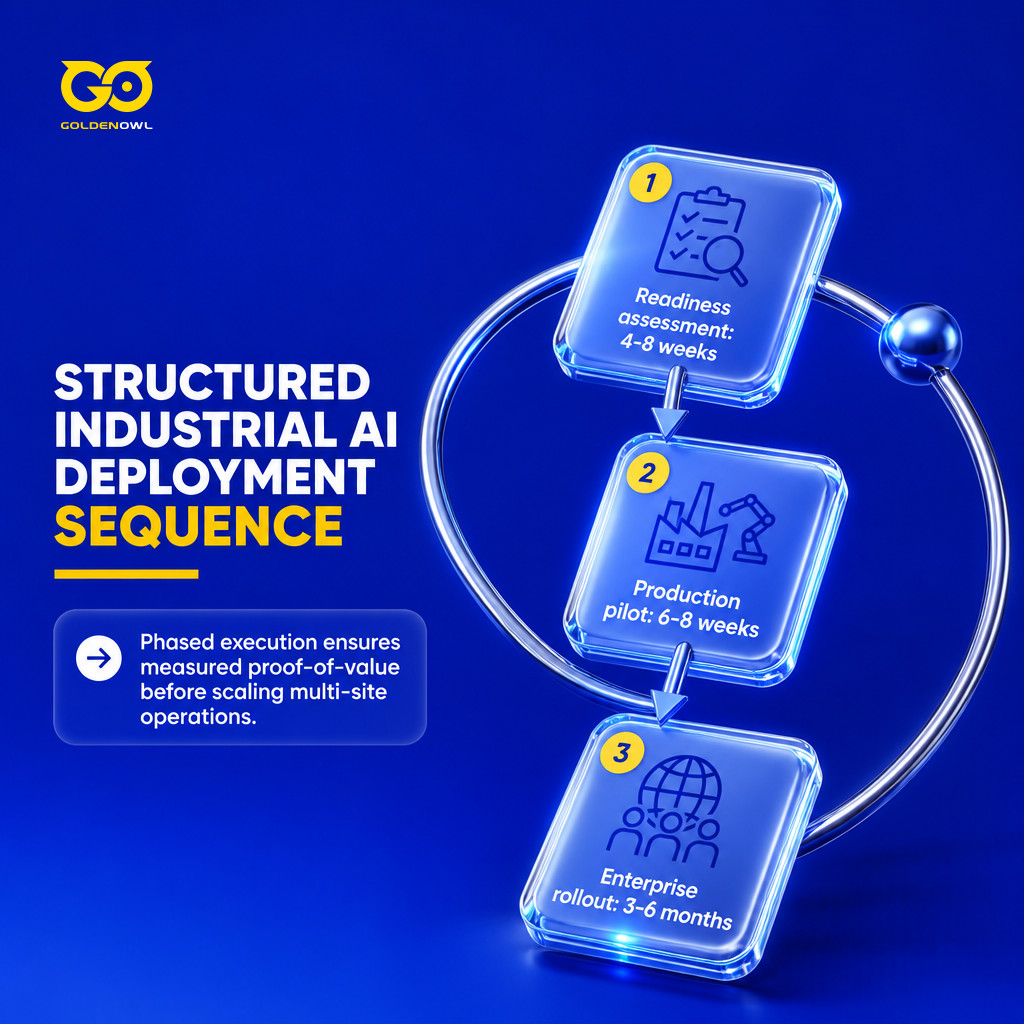
Keep production pilots measured in weeks rather than quarters. Have the vendor scope a 6-8 week pilot around one workflow; inability to do so may point to integration pain. Choose a VPC under client control or an on-premise deployment, ensuring the client owns all model weights (100%); the deployment should then follow this sequence:
- Readiness assessment: 4-8 weeks.
- Production pilot: 6-8 weeks.
- Enterprise rollout: 3-6 months.
Regulatory compliance and audit traceability
Pharma
Pharma needs 21 CFR Part 11 audit trails, plus validation documentation.
Oil & gas
For oil & gas, align with API standards and incorporate safety-case thinking.
EPC
EPC needs contract-aware AI built for FIDIC/NEC structures.
Regulated sites also need enterprise model governance and explainability, alongside audit features.
Data sovereignty and model ownership rights
Where does our data live
In 2026, data should live in your cloud tenancy or on-premise, and you should own the weights; any other setup leaves you negotiating over your own data.
What does the exit look like
When the vendor relationship ends, insist on keeping the models, pipelines, and documentation.
Model drift monitoring and continuous MLOps
Production industrial AI
Ask vendors to explain their MLOps plan, beyond the model itself: production industrial AI needs monitoring, drift detection, retraining loops, and human-in-the-loop approval.
The best leak-detection model
A leak-detection model is worthless if control-room staff ignore its alarms, so look for operator-facing explanations, consolidated alarms, and multilingual interfaces wherever your workforce needs them.
Machine learning algorithms
Machine learning algorithms trained on incomplete or biased historical data may skew demand forecasts or supply chain decisions. Audit AI models regularly, use diverse training data, and bring human expertise into validation decisions to help reduce this risk.
Manufacturing and asset operations use cases
Industrial AI supports operational, manufacturing, and infrastructure uses across industries such as manufacturing, energy, logistics, transportation, and utilities.
Machine health and predictive maintenance
During FMEA (failure mode and effects analysis), teams can use AI analytics to find likely root causes and project potential failure modes across interconnected systems.
Process optimization and supervisory control
In smart manufacturing facilities, AI systems, including ai manufacturing solutions, monitor production continuously, optimizing energy use and resource allocation to improve yield and throughput. Operations managers can use AI analytics to find bottlenecks and other inefficiencies to improve.
Autonomous control rooms
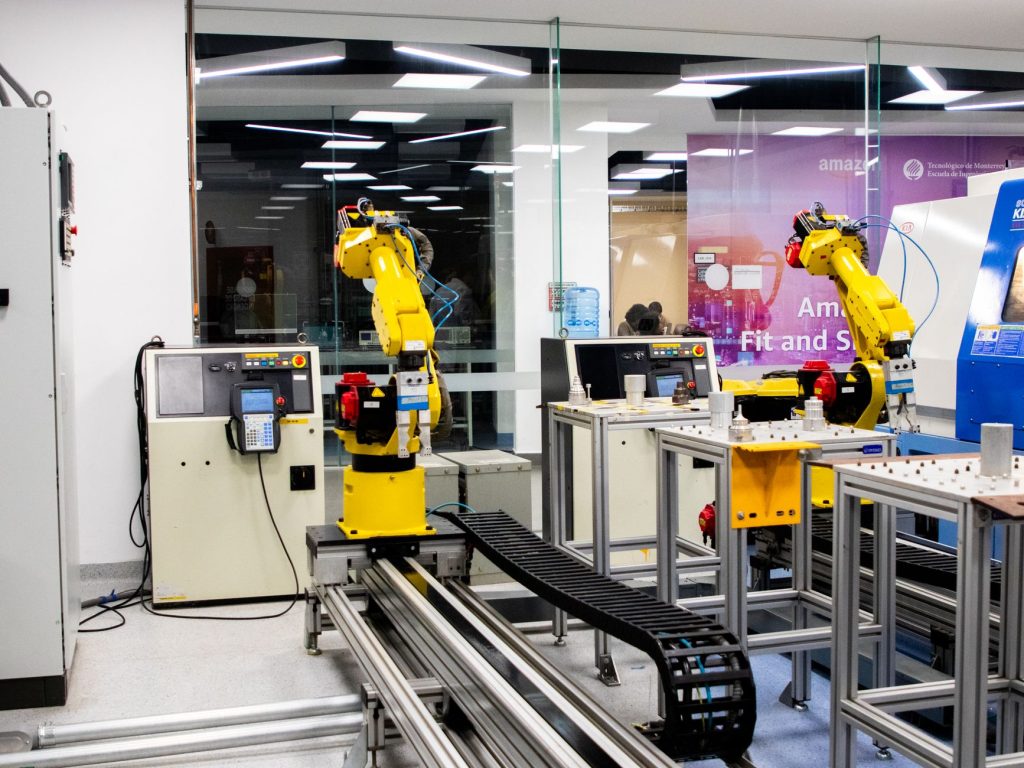
Across multiple pilots, Honeywell reports that its platform predicted alarm incidents an average of five to ten minutes ahead.
Worker safety and environmental monitoring
AI systems use computer vision and sensor data to monitor hazardous conditions in real time. Environmental monitoring helps organizations meet compliance regulations and streamline safety management. Predictive analytics can identify operational risks before incidents occur, giving organizations a chance to act proactively.
Core components of industrial artificial intelligence
Machine learning and predictive modeling
Using scenario analysis and numerical analytics, machine learning helps with planning, since both strengths are central to making sound plans. Both capabilities are crucial for effective planning.
Physics-informed digital twins
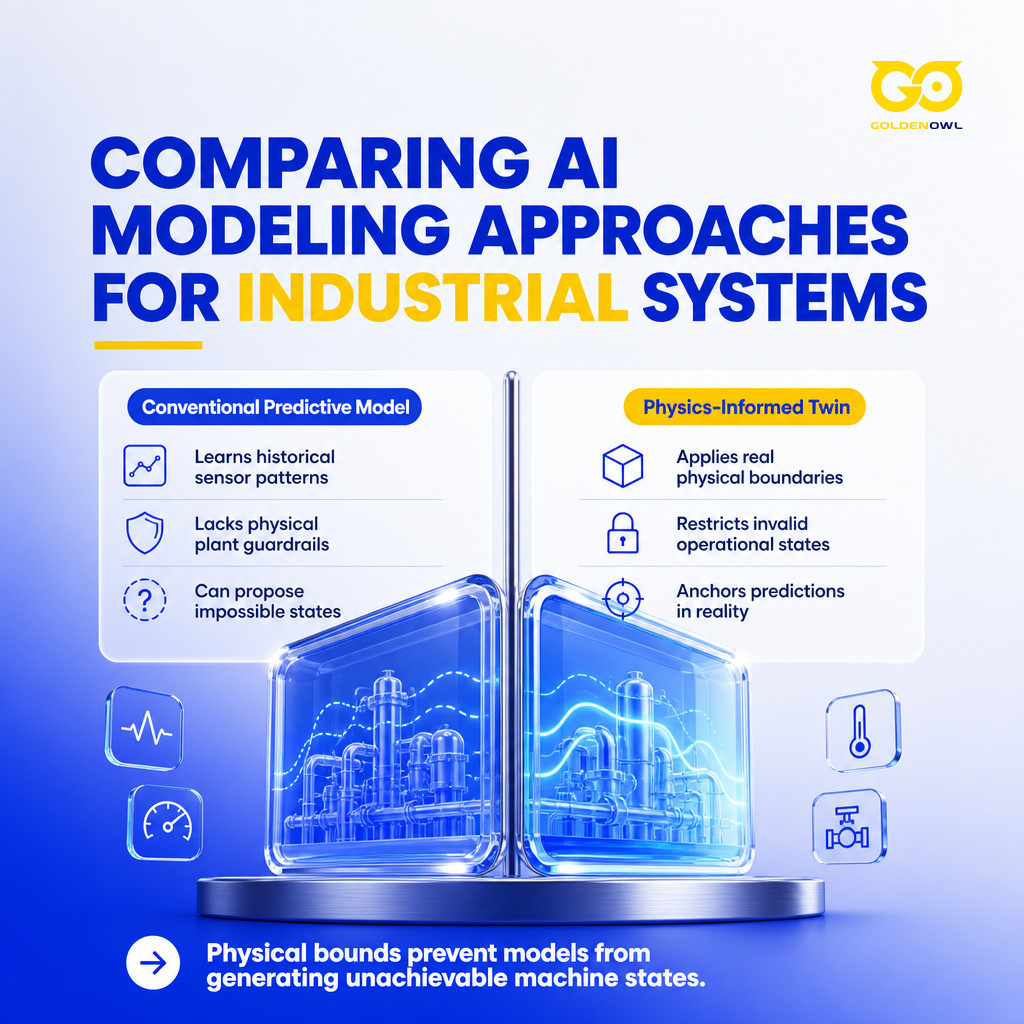
A physics-informed twin applies physical limits, so it won't accept a state the real system couldn't reach. A conventional predictive model has no such guardrail; its view stops at patterns in the sensor records it has already seen. Physical constraints prevent the twin from suggesting impossible states.
Human-machine collaboration and closed-loop control
Autonomous closed-loop control fits steady-state setpoint tuning, but emergency shutdowns and personnel safety interlocks must remain hardcoded in physical safety systems, not left to probabilistic models.
Economic impact, risk governance, and adoption barriers
Small and mid-market adoption pathways
Alongside operational-control choices, smaller logistics companies can adopt supply chain ai solutions at manageable costs, even as large firms lead and budgets, workforce skills, and system integration remain challenges. Practical opportunities remain for smaller players.
Pay-as-you-go subscription models are now offered by many AI-powered logistics platforms.
With community resources, smaller logistics companies can use machine learning frameworks to experiment with AI adoption at minimal cost.
Algorithmic bias and operational safety risks
Job displacement:
AI can reduce repetitive manual tasks by automating warehouse management, data extraction, and document processing. Logistics companies can mitigate job losses by retraining employees for data security, supplier collaboration, and oversight of AI systems.

Data privacy and security:
AI-powered logistics systems often handle sensitive customer and supplier information. Strong cybersecurity measures and compliance frameworks help prevent misuse of personal or operational data.
Frequently asked questions
What are the best Industrial AI platforms for manufacturing?
In 2026, the Industrial AI platforms drawing the most evaluation include Cognite, AVEVA, Litmus, Siemens, Honeywell, Rockwell Automation, ABB, IFS, SAP, Oracle, Microsoft, Infor, C3 AI and ThingWorx. They cover different ground: some govern operational data, others supply models and applications, extend control systems into AI, or put AI into enterprise suites. Each serves a different part of the plant and enterprise.
What is the best Industrial AI platform for multiple factories?
Across multiple factories, pick platforms that can standardize data models from site to site and support template-based rollouts. A result at one plant won’t tell you much about performance across several sites, where repeatability counts more than model capability.
Do I need an Industrial AI platform if I already have an IIoT platform?
Often, yes. IIoT platforms handle connectivity and monitoring through device management, but Industrial AI also needs asset-model context grounded in traceable data lineage, with inference placed wherever the latency budget calls for it.
Which Industrial AI platforms run inference at the edge?
Several platforms can run inference locally, including in air-gapped settings. Litmus Edge, Siemens Industrial Edge and Rockwell’s integration of a small language model based on Nemotron each describe support for air-gapped or offline operation. Check the hardware requirements and which model types can run locally, since support varies by platform.
How many Industrial AI platforms do manufacturers typically run?
Most large manufacturers use a portfolio: a platform backbone, one or two point solutions, and an ai solution provider for use cases that set them apart from competitors.
How long does industrial AI typically take to deploy?
A full-scale enterprise platform deployment can take six months to a year; Factory AI deploys in 14 days. If you need results before the next budget cycle, the time to deploy matters as much as the feature set.
What ROI should manufacturers expect from predictive maintenance AI?
Among tracked AI PdM adopters, manufacturers adopting predictive maintenance in 2023 and 2024 now report overall equipment effectiveness levels 15 to 20% above those of manufacturers continuing calendar-based maintenance programs.
Do I need new hardware to run industrial AI?
New hardware may not be necessary: Factory AI works with vibration sensors and PLC tags you already have, while Augury calls for its own proprietary sensors; Palantir Foundry and C3 AI connect to existing data infrastructure.
These questions bring you back to the systems already running in your plants. Compare platforms based on the operational layer they serve, their ability to standardize data across factories, and how they fit your IIoT, edge and hardware setup. A platform backbone may work alongside point solutions and a build partner, while deployment time and predictive-maintenance results help you weigh the options. Your existing plant systems clarify what is industrial AI for your operation: the platform mix that serves the right operational layer and fits your data, edge and hardware setup.
Share this page


Table of Content

Subscribe to Golden Owl blog
Stay up to date! Get all the latest posts delivered straight to your inbox