
How do AI agent security solutions reduce enterprise risk? Learn the layered controls and a four-step plan for agent identity, access, and approvals.


How AI Is Used in Compliance
Sep 10, 2026
about 15 min read

We examined six enterprise AI compliance solutions to see if they apply machine learning to workflows that benefit from automation
Run a corporate compliance team today, and you immediately run into shifting rules, massive pools of data, and constant operational exposure across routine systems and daily workflows.
To manage these operational pressures, organizations use artificial intelligence to supervise continuous controls, increase daily accuracy, and resolve potential non-compliance before it escalates into an issue. Understanding how is AI used in compliance requires looking closely at two parallel tracks. Teams must evaluate internal workflow automation right alongside ongoing regulatory oversight.

Looking ahead to 2026, leading firms protect their compliance programs by embedding artificial intelligence directly into core procedures, giving staff members faster access to institutional knowledge and regulatory context. Recognizing this clear market demand, governance, risk management, and compliance (GRC) software vendors now wire machine learning directly into their enterprise systems.
Product architectures, however, differ wildly across tools. We examined six enterprise AI compliance solutions to see if they apply machine learning to workflows that benefit from automation, and whether their platforms include responsible, risk-aware operational safeguards for users.
How Is AI Used in Compliance?
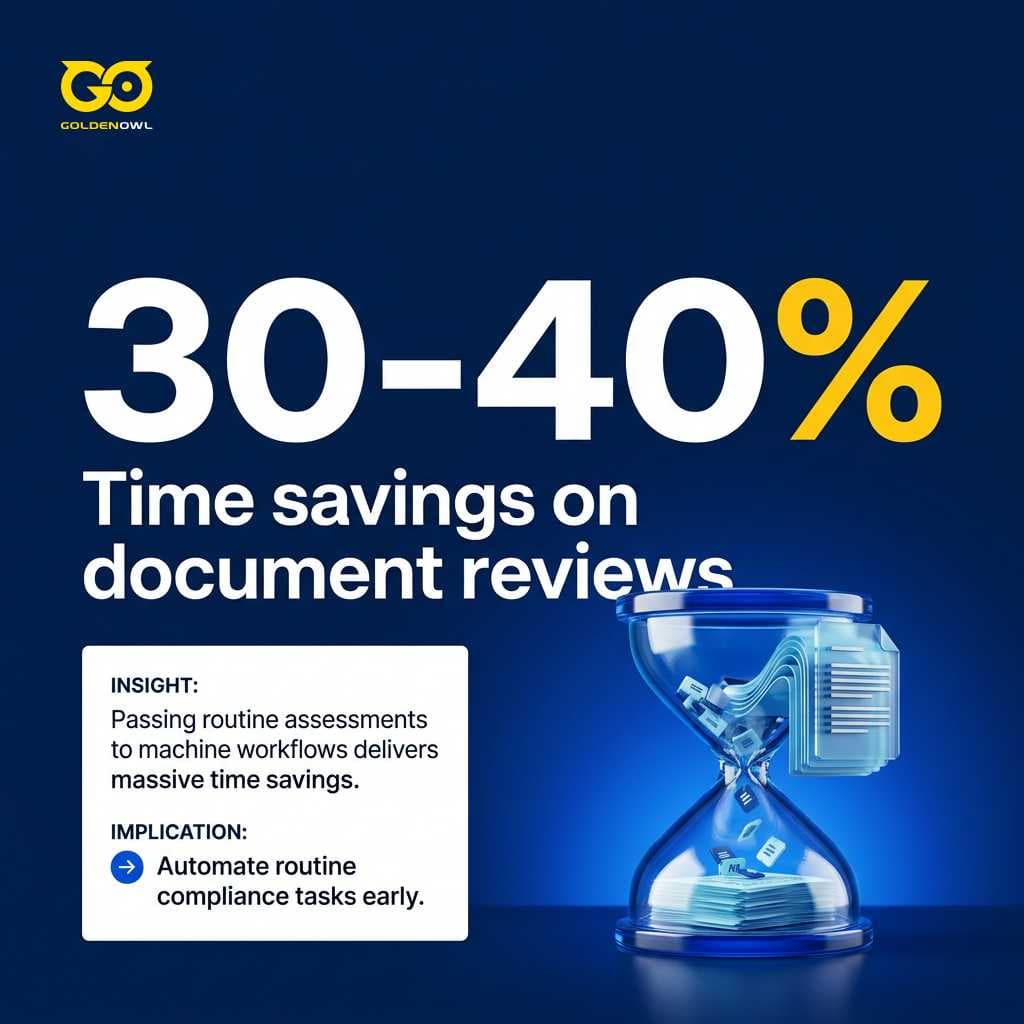
Deploy ai workflow automation compliance solutions to clear out the operational logjams that stall everyday business departments. Handing routine chores to generative models in your risk, legal, and compliance groups produces immediate breathing room for your core personnel. McKinsey’s 2024 State of AI report confirms this shift, showing that passing deep document reviews and routine assessments to machine workflows delivers 30-40% in time savings. Those practical gains shrink overhead while helping your staff respond to business requests much faster.
Capital spending trends show this operational transition clearly, as leadership teams channel core technology budgets directly into continuous monitoring across departmental workflows. In Deloitte’s State of Generative AI in the Enterprise Q3 2024 report, 75% of surveyed organizations boosted their data-life-cycle management spending to handle automated regulatory oversight and risk checks. Alongside that push, 73% of respondents plan to expand cybersecurity investments to back up their corporate compliance structures against incoming threats.
Worldwide spending numbers show how quickly this monitoring approach is spreading across global commerce. Valued at $1.8 billion in 2024, the broader industry for automated compliance tracking is on track to hit $5.2 billion by 2030, which works out to a compound annual growth rate of 19.4%. Present-day back-office pipelines allow organizations to place 80% of standard compliance assignments on autopilot, lowering the hours spent handling routine responsibilities by 40%. Shifting that mechanical burden preserves your compliance talent for complicated problems that require genuine human judgment.
Regulatory Change Monitoring
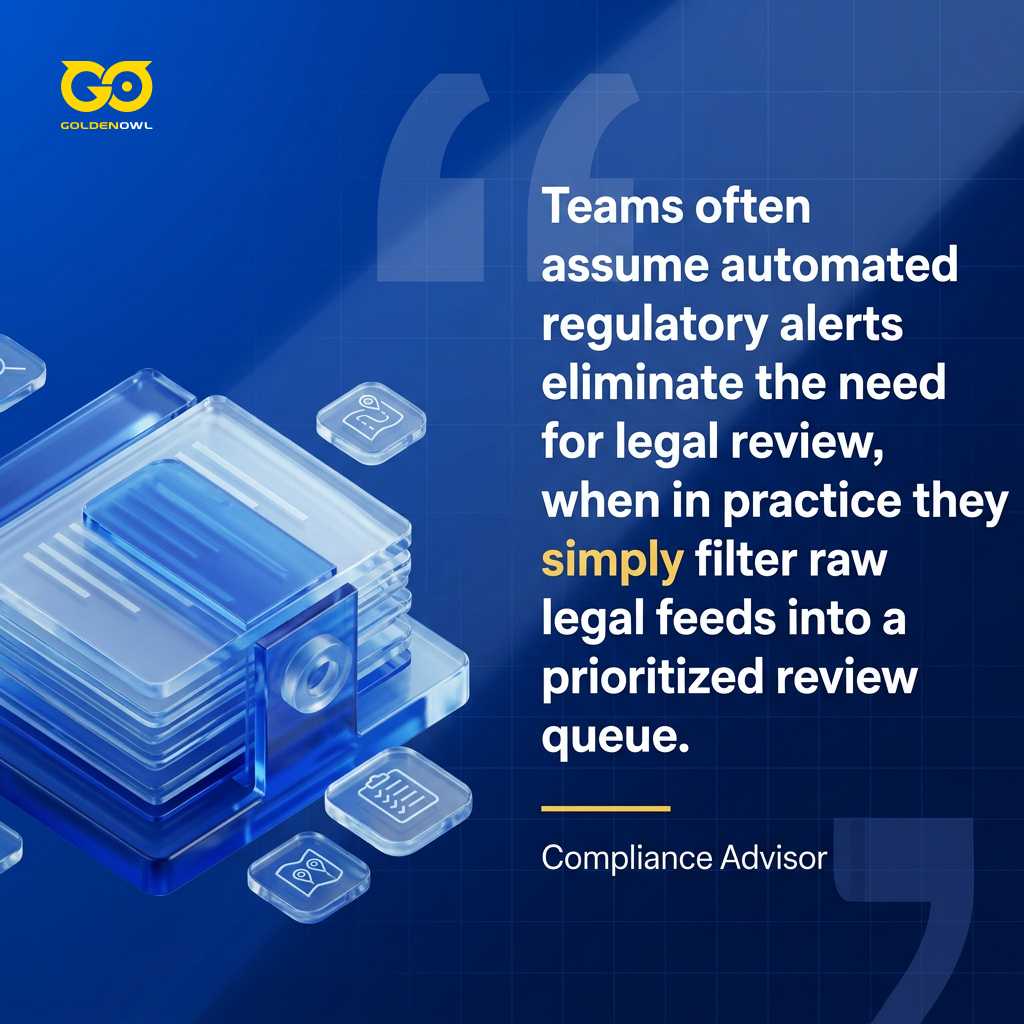
Teams often assume automated regulatory alerts eliminate the need for legal review, when in practice they simply filter raw legal feeds into a prioritized review queue.

Put continuous legal tracking software to work across every jurisdiction you touch so legal updates never catch your company unprepared. These platforms run semantic text parsers alongside automated classifiers grounded in your internal policies, scanning raw legislative feeds around the clock. Once the software flags an operational conflict, it routes an immediate alert directly to your compliance leads.
Compliance officers waste valuable energy when they spend full workdays trudging through hundreds of pages of agency documentation. Algorithmic parsers can ingest sprawling legal publications in minutes, pulling out the exact paragraphs that alter your product roadmaps or internal commercial rules. You can point these systems at recent updates to the EU AI Act, extract the core mandates, and know which internal operating procedures need revisions that afternoon.
Financial organizations utilize a specialized AI compliance solution like Ayasdi to navigate shifting regulatory landscapes, reducing hands-on evaluation periods by up to 40% while following mandates such as the EU AI Act across borders. But statutory language changes constantly and contains frequent ambiguities, creating operational hurdles for systems trained on uniform, labeled data.
Keep your reviewers close to the process, because algorithms risk misinterpreting regulatory subtleties, which leads directly to dangerous compliance blind spots or incorrect risk classifications. No machine catches every legal edge case, so experienced human oversight must validate outputs before filings reach regulators.
Anti-Money Laundering
Financial organizations deploy AI-driven AML tools to spot suspicious transaction patterns that would slip past basic rulesets. Hunting down illicit financial movements forces staff to inspect massive volumes of ledgers, a tedious exercise that routinely swamps internal desks with false alarms. Marrying pattern-detection models with advanced analytics cuts that investigative burden down to size and gives your analysts clean, manageable case files every morning.
Modern anti-money laundering platforms inspect historical transfers, user profiles, and behavioral shifts across account histories by tapping both supervised and unsupervised algorithms. Feed your ledger histories, Know Your Customer files, KYC archives, and global watchlists into these pipelines to surface strange transactional anomalies. Merging those inputs standardizes verification pipelines against international supervisory standards.

Real-time tracking delivers major operational savings. International banking institutions deploying algorithmic systems to monitor account activity across borders cut false positives by 20%, which trims millions in wasted investigative expenses. Run live transaction screening that evaluates transactional and behavioral datasets simultaneously across high-volume pipelines, matching payment networks that achieve a 50% reduction in false positives across millions of daily transactions. Dropping slow batch reviews cuts your institutional exposure and speeds up routine regulatory reporting.
Contract Review
Automated Extraction and Analysis Reviewing intricate counterparty contracts by hand drains valuable legal resources that should be focused on strategic deals. Contract intelligence software tackles this drag by using computational linguistics to automate clause extraction, language reviews, and overall counterparty risk scoring. You can calibrate these models against litigation histories, core governance rules, and standard enterprise templates to catch omitted terms or unauthorized commitments.
Specialized legal platforms have succeeded in shortening the turnaround for contract evaluations by up to 60%, protecting organizations from penalties while accelerating deals. When deployed by a prominent financial institution, pattern-matching algorithms assessed 12,000 commercial lending contracts almost instantaneously, generating 360,000 hours in annual savings for the enterprise.
Intelligent Redlining and Playbook Comparisons Corporate legal teams can automate baseline negotiations by comparing fresh vendor drafts against an established internal playbook. When an incoming contract breaks your standard liability bounds, the software marks up non-compliant clauses automatically.
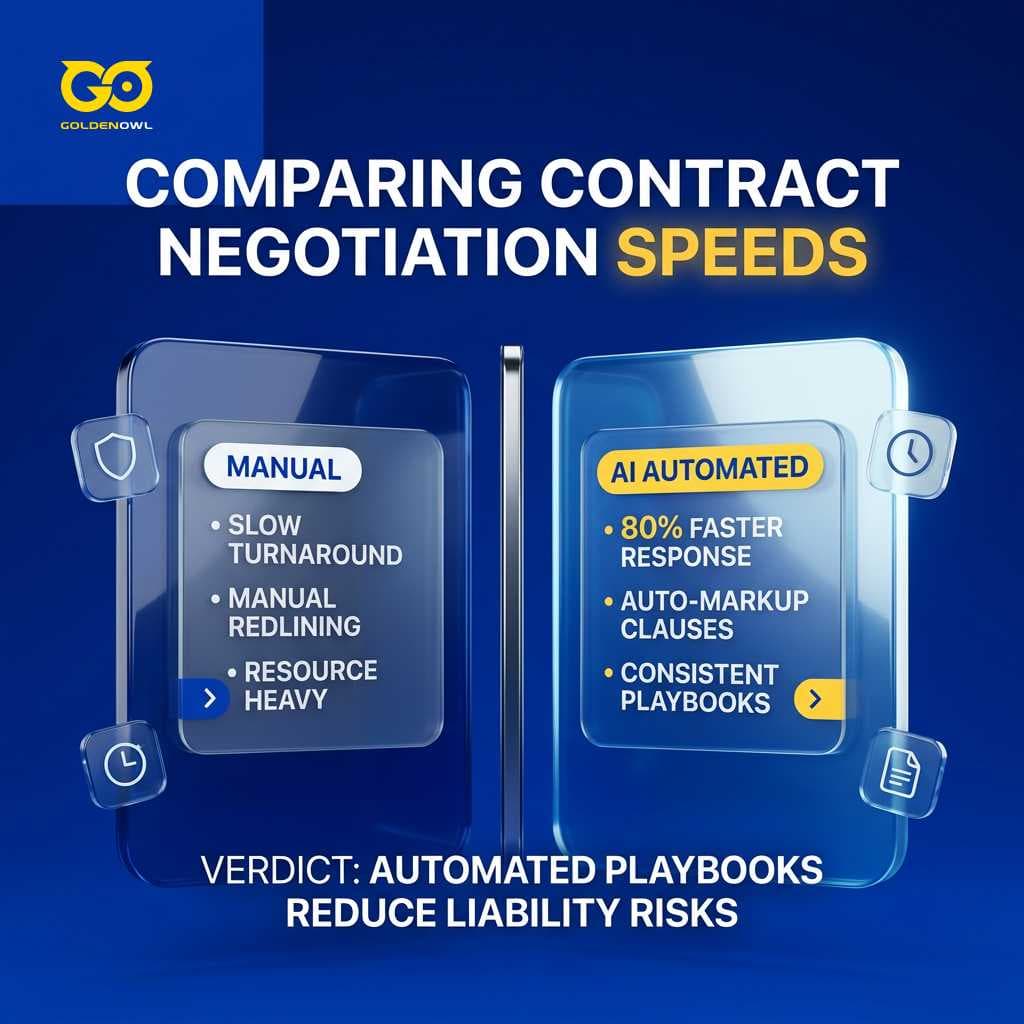
You can reach for these tools to catch exposure hidden deep inside complex data processing agreements. In live corporate environments, teams that run automated contract platforms protect their liability caps, keep notification timelines compliant, and reduce negotiation response times by up to 80%.
Intelligent Document Analysis
Third-Party Questionnaire and SOC Processing Governance programs force compliance managers to monitor hundreds of controls at once, and generative algorithms accelerate audit readiness by retrieving operational evidence rather than acting as basic search engines. When your sales reps face enterprise client questionnaires or vendor evaluations, direct your system to extract verified policies from your central repositories. These engines extract data from SOC 2 reports and questionnaires directly. Pulling operational variables automatically lets you complete third-party assessments without manual scanning.
Document Authentication and Discrepancy Verification Specialized verification engines process incoming documentation to verify authenticity before anyone signs off. These systems inspect incoming archives for unauthorized alterations, confirming adherence to industry mandates such as GDPR, AML, and KYC while flagging compliance risks in documents before they reach clients or regulatory bodies. Automating this document verification protects staff from human error, speeding up due diligence and vendor onboarding.
Automated Audit Evidence Collection
Continuous Audit Readiness Continuous compliance monitoring allows companies to detect operational deficiencies early instead of discovering them during painful annual audit cycles. Tasks that once absorbed weeks of manual effort, including evidence gathering, control testing, and regulatory mapping, now run continuously across background operational workflows. IBM reports that businesses embedding machine intelligence into ongoing regulatory governance lower their audit and control expenditures by up to 30%.
Internal Investigations
Workplace misconduct inquiries require compliance teams to pore over emails, spreadsheets, chat records, contracts, and internal communications to piece together policy breaches. Automated text analysis tools parse expansive enterprise datasets in minutes, pinpointing relevant discussions and revealing hidden behavioral correlations across internal records that human reviewers might otherwise miss during manual record sampling.
When a whistleblower files a formal complaint, compliance teams need fast access to historical correspondence. Intelligent search systems search thousands of archived communications to isolate exchanges directly related to the reported issue, cutting total investigation time and freeing legal personnel to analyze substantiated evidence rather than hunting for source records.
Hospitals and healthcare networks use natural language processing alongside predictive models to track how clinical staff interact with digital patient charts. The software spots anomalous access patterns instantly, ensuring only authorized personnel view protected health information and reducing privacy risks under HIPAA across distributed facilities.
Predictive Risk Scoring
Predictive risk assessment platforms give risk managers early warning signals so they can catch emerging compliance exposures before regulators do. Because backward-looking assessments rely on manual scoring and miss emerging vulnerabilities, AI models analyze diverse data sources to forecast operational compliance risks and recommend active mitigation strategies.
Predictive monitoring models analyze past incident logs and internal audit trails to anticipate where your next failure might occur. Combine internal control metrics with external market signals to measure your operational exposure, ranking system vulnerabilities by how much damage they could cause. In enterprise advisory environments, deploying these predictive tools allowed companies to reduce compliance incidents by up to 25% through early detection and intervention.
Risk teams also use large language models to assemble dynamic risk registers within cloud environments. By constantly assessing connected infrastructure for newly introduced compliance exposures, these platforms recommend targeted remediation steps that ensure security teams spend their budget where it actually protects the business.
Automated Regulatory Reporting
Compliance teams spend a massive portion of their working week compiling audit binders, checking control statuses, updating spreadsheets, and drafting reports for regulators and corporate boards. Because this work follows repeatable, predictable rules, large parts of it can run entirely on automated rails.
Combining natural language software with machine learning models trained on company guidelines allows your systems to assemble regulatory filings on schedule. Standardized templates fed by operational data pipelines remove the need for manual record aggregation during filing season, improving filing accuracy and freeing staff for higher-value activities.
Automating the tracking and implementation of regulatory updates has enabled multinational corporations to reduce overall compliance costs by 25%. Maintaining a continuous data feed across operational workflows guarantees your compliance leads deliver accurate regulatory reports well before statutory deadlines arrive.
Fraud Detection
AI-powered fraud platforms shield corporate bank accounts and user identities from evolving criminal tactics. Static rule engines fail as soon as bad actors adjust their methods, but automated pattern recognition and anomaly detection algorithms identify fresh criminal maneuvers the moment they hit your infrastructure.
Pattern-recognition models evaluate incoming transaction data, user habits, and device telemetry to catch anomalous events before money moves. Because these detection tools run on live streaming data, they flag suspicious transfers instantly and trigger immediate defensive actions through your core security workflows.
Global payment processors use AI fraud detection technologies to analyze millions of transactions daily, reducing fraudulent losses by over 30%. Running automated machine evaluations alongside human review teams allows these networks to block unauthorized transfers before final settlement occurs.
Operational Risks and System Limitations
AI creates concrete compliance risks that your organization must manage.
Overhauling compliance workflows without establishing strict technical governance exposes your organization to massive operational blind spots whenever teams automate legacy reporting processes. Across live production environments, problems like model drift, algorithmic bias, data privacy concerns, explainability gaps, and AI washing routinely trigger measurable governance failures.
Across complex enterprise rollouts, practical implementation hurdles frequently stall deployment pipelines and keep risk teams from capturing the speed advantages promised by automated compliance technologies. If your organization ignores privacy mandates or ethical baselines, you trigger immediate enforcement penalties and long remediation cycles under strict supervisory scrutiny.
Output Inaccuracies
Erroneous regulatory interpretations Statistical AI models frequently return answers that sound completely authoritative to analysts while quietly delivering details that are incomplete, dangerously outdated, or flat-out wrong for regulatory reporting. Inspect every automated policy summary yourself before your analysts alter internal controls. For instance, an automated copilot might summarize an updated statute as requiring a quarterly review when the regulation actually mandates continuous monthly monitoring across active customer accounts. Acting on that flawed draft exposes your compliance team directly to severe audit findings and broken internal controls.
Regulatory ambiguity and training limitations Statutory codes shift constantly and rely on open-ended phrasing, creating persistent interpretative blind spots for algorithms trained entirely on historical records and static precedents. When models miss subtle statutory nuances, your team inherits false risk ratings and dangerous operational compliance gaps. Pair your automated pipelines with disciplined expert review to confirm edge-case interpretations before closing any workflow ticket. Constant retraining cycles and shifting statutory mandates create lasting maintenance overhead, limiting full machine autonomy across enterprise compliance operations.
Algorithmic Opacity
Auditability standards To maintain production integrity, enterprise ai governance solutions rely on proprietary models tuned on specialized domain records and refined by seasoned industry experts. Configure your infrastructure so all system decisions remain logged and traceable, letting you calibrate exactly how much human sign-off each workflow requires. Deploying XAI explains the mathematical reasoning behind individual flags, while Blockchain technology couples with these pipelines to create immutable audit trails and protect data integrity. Clear provenance records give outside examiners verifiable technical evidence during formal audits.
Formal governance frameworks like ISO/IEC 42001, the NIST AI Risk Management Framework (AI RMF), and the EU AI Act now lay down clear operational standards for responsible enterprise adoption.
Automation Complacency
Software easily handles repetitive compliance activities at scale, but algorithms cannot duplicate the business context or ethical reasoning that humans bring to the table. Relying uncritically on automated workflows blinds your risk team and triggers several severe governance oversights across daily operations:
- Employees begin trusting automated systems completely, leading staff to overlook critical operational warning signs.
- Systems that automatically close low-risk compliance alerts allow genuine compliance issues to slip through unnoticed because nobody audits the underlying exceptions.
- Organizations expose themselves to systemic governance drift when staff treat algorithmic recommendations as infallible approvals.
- High-stakes responsibilities are neglected when teams assume automated systems possess the business context required for regulatory intent.
- Accountability gaps emerge, even though accountability for compliance outcomes always remains with the organization and its leadership.
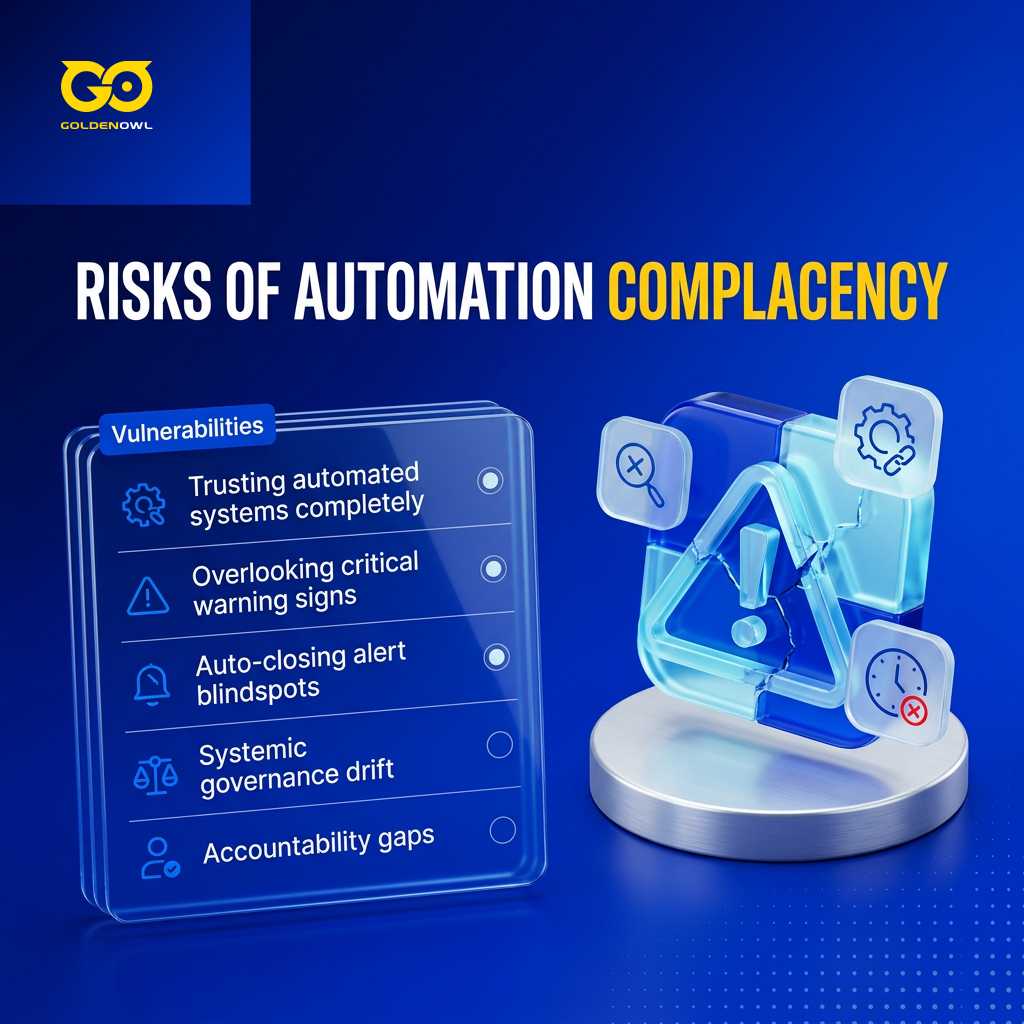
Automation delivers the best results as an advisory layer that sharpens staff analysis instead of replacing direct human ownership. Algorithms do a world-class job spotting patterns and accelerating checks, while experienced risk officers retain final decision authority on every formal finding.
Data Fragmentation
Feeding sensitive customer records into machine learning pipelines triggers strict statutory mandates under privacy frameworks like GDPR and CCPA, which heavily complicates everyday data usage and storage routines.
Organizations must implement robust security measures alongside disciplined ethical frameworks to effectively tackle these complex data fragmentation challenges.
Legacy Infrastructure Friction
Outdated IT infrastructure lacks direct compatibility with modern AI technologies across enterprise environments.
Outdated technical architectures force compliance departments into expensive core system upgrades and disruptive workflow overhauls. When facing major technical transitions, internal resistance further delays adoption schedules and increases administrative friction across operational units.
Phased rollouts and disciplined change management minimize operational friction, giving your organization room to test tool compatibility against legacy architectures early on. Partnering with an ai solutions company to evaluate infrastructure early ensures seamless integration and minimizes ongoing disruptions while peer firms remain trapped behind manual backlogs.
Fundamentals of AI in Regulatory Compliance
Rigorous execution divides modern compliance into two equal operational mandates: putting AI to work on control functions, and governing those automated systems against emerging rules and standards. Continuous Compliance pushes you to ditch periodic, point-in-time audits in favor of live validation across your entire technical stack. Put automated monitors in place to get 24/7 visibility over controls and transaction streams, catching violations immediately while flagging infrastructure drift so you don't rely on retrospective audits. That operational pivot turns a stale compliance checklist into live infrastructure telemetry.
Different AI tools anchor this continuous framework by eliminating specific workflow logjams across your operations. Natural Language Processing tackles ambiguous regulatory text, updates internal policies, and scans commercial contracts to flag non-compliant language, omitted clauses, or shifting statutory requirements. You should deploy Machine Learning using supervised and unsupervised models across account histories, user profiles, and behavioral baselines to catch transaction anomalies, money laundering, and active fraud where heavy volume overwhelms human review. Predictive Analytics gauges future exposures before they hit production by running historical incident logs through pattern models. That foresight gives your staff real lead time to patch vulnerabilities and harden system boundaries. Linking these engines together replaces reactive manual cleanups with live automated validation, converting periodic oversight into continuous risk management across the whole company.
Frequently Asked Questions
Focus on concrete operational clarity to settle the practical questions teams encounter when adopting compliance AI across production systems.
What is AI compliance?
Think of AI compliance as two distinct operational jobs: putting machine learning to work on regulatory tracking, and governing your internal production models against external statutory rules.
Operational Automation
Organizations deploy this software to take over manual routines across regulatory monitoring, comprehensive risk assessments, evidence gathering, external reporting, and continuous controls monitoring.
System Governance
Your engineering teams have to make sure every live technical deployment satisfies external rules and established governance benchmarks. You have to govern these internal systems across 5 distinct fronts, managing model bias, data privacy, explainability, systemic controls, and legal mandates like the EU AI Act.
What are the risks of using AI in compliance?
Running artificial intelligence inside regulated corporate workflows introduces concrete operational and legal vulnerabilities that demand proactive management:
- Inaccurate or misleading AI-generated outputs, such as when an automated assistant summarizes a regulatory requirement and generates an incomplete or outdated rule interpretation that produces formal audit findings.
- Lack of transparency and explainability in AI-driven decisions, which creates friction during audits when external examiners demand documented proof of how your software calculated automated risk scores.
- Model drift and performance degradation that reduces baseline accuracy over time when your engineers fail to test production models against newly enacted statutory standards.
- Over-reliance on automation without human oversight, causing staff to trust automated workflows blindly and clear auto-close alerts while missing serious compliance failures.
- Data privacy and security concerns stemming from processing sensitive enterprise or customer files inside automated models that must strictly observe statutory data protection boundaries.
What frameworks govern AI in compliance?
Enterprise AI model governance leans directly on four established operating frameworks to keep production deployments secure and legally defensible:
- ISO/IEC 42001 provides an international management system standard for governing machine learning lifecycles, establishing formal policies, responsibilities, controls, and continuous improvement routines across all internal systems.
- The NIST AI Risk Management Framework (AI RMF) delivers practical lifecycle guidance for mapping, measuring, and managing operational risks to ensure trustworthy enterprise machine learning deployments.
- The EU AI Act establishes mandatory legal obligations across the European market, categorizing tools by risk level and demanding documented technical architecture, systematic testing, continuous monitoring, and human oversight for high-risk applications.
- Supplementary standards and regulatory directives, including enforcement guidance from the FTC and NIST regarding algorithmic bias alongside privacy mandates like GDPR and CCPA, enforce strict baseline standards for data handling and model fairness.
Will AI replace compliance and GRC jobs?
No, automated tools simply reshape everyday GRC workflows instead of wiping out roles.
Machine learning models process huge data pipelines, run repetitive verification checks, and catch intricate network anomalies far quicker than manual compliance teams. Yet automated software can't provide ethical discretion, statutory interpretation, or authentic corporate accountability, which naturally pushes compliance professionals away from administrative drudgery toward direct governance, risk analysis, and strategic counsel. Human judgment remains the indispensable requirement throughout the entire process.
How can organizations start using AI in compliance?
Rolling out artificial intelligence across your enterprise compliance functions works most reliably when executed across four distinct operational phases:
- Identify a high-impact, bounded compliance task that takes too much time or often leads to mistakes, focusing on predictable workflows such as regulatory monitoring, continuous evidence collection, policy reviews, or standardizing NDA reviews.
- Lock down governance before scaling by assigning explicit system ownership, fixing mandatory human sign-off thresholds, and writing clear incident reporting paths before connecting models to production infrastructure.
- Run small-scale pilot tests to measure real software accuracy, surface operational friction points, determine team training needs, and validate baseline value before touching other departments.
- Train staff and maintain continuous operational oversight, teaching teams to interpret model outputs, auditing live results for drift, and updating internal controls whenever regulatory rules change.
What is agentic compliance?
Agentic compliance involves deploying autonomous AI agents that carry out complex regulatory workflows with minimal day-to-day manual intervention from your team.
Standard compliance software summarizes data, but AI agents take direct operational action. They handle 5 core operational duties: collecting evidence, assigning remediation tasks, escalating issues, tracking control failures, and routing approvals across systems.
Because they track controls continuously, these agents detect deviations immediately and execute predefined response actions according to your explicit operational rules. However, experienced operators must retain direct oversight over critical events, holding final authority on executive policy determinations, material incident disclosures, and subtle legal interpretations during an audit.
How do AI compliance tools ensure accuracy and reliability?
Specialized enterprise compliance software enforces four rigorous technical safeguards designed to maintain algorithmic precision across live production environments:
- Utilizing proprietary models trained on dedicated compliance datasets and tuned directly by seasoned regulatory specialists instead of relying on generic public foundational models.
- Implementing strict expert-in-the-loop safeguards to ensure that software never changes infrastructure configurations, publishes binding documents, or submits official regulatory filings without explicit human approval.
- Logging all algorithmic actions in transparent, traceable audit trails so compliance officers can inspect the exact underlying logic and inspect the reasoning paths behind every automated conclusion.
- Enforcing enterprise-grade security protocols, including continuous output verification, automated model drift monitoring, and strict data encryption to isolate and protect proprietary enterprise records.
Ultimately, establishing real operational control determines how is AI used in compliance successfully. When you wire software directly into your live system telemetry, automate ongoing evidence collection, and log controls around the clock, you eliminate the manual scrambles that paralyze teams before an audit. The algorithms handle repetitive verification routines across your infrastructure, while you keep the authority to interpret statutory baselines, manage thorny edge cases, and defend decisions to regulators. Start with 1 high-friction workflow, establish explicit human approval gates, and monitor your live models against drift every week to maintain continuous, audit-ready oversight.
Share this page


Table of Content

Subscribe to Golden Owl blog
Stay up to date! Get all the latest posts delivered straight to your inbox