
An AI legal assistant does the first pass of legal work. See what it can and can’t do, and which legal AI tools fit research, contracts, or practice management.


What Is AI Governance for Enterprise Organizations
Sep 10, 2026
about 19 min read
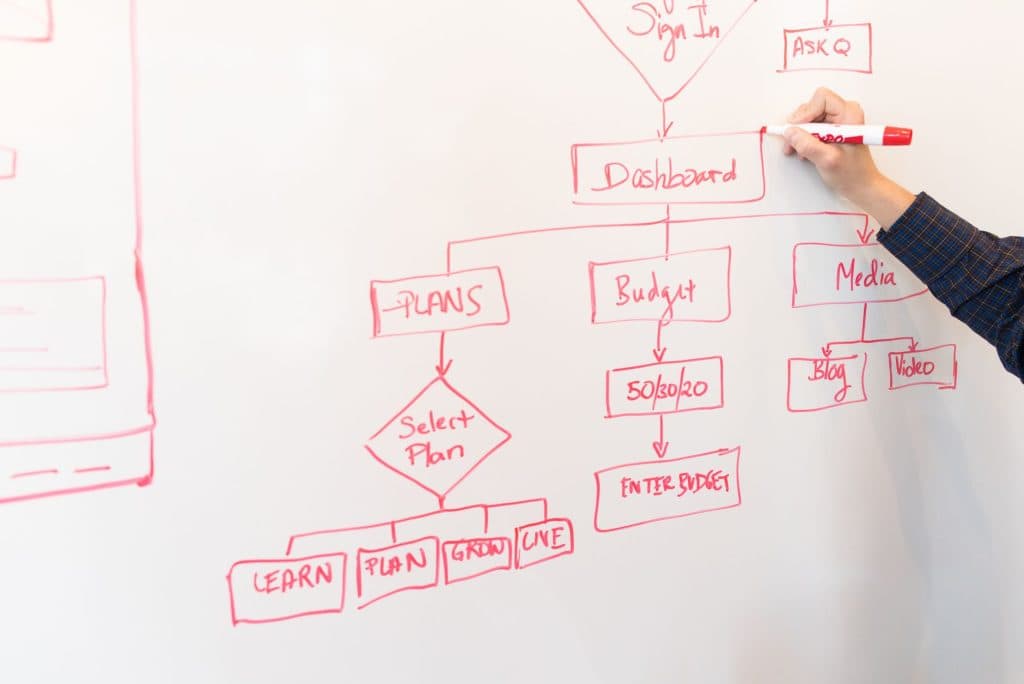
Understanding what is AI governance begins with how an enterprise manages operational risk while enforcing clear accountability across all enterprise GenAI systems.
Understanding what is AI governance begins with how an enterprise manages operational risk while enforcing clear accountability across all enterprise GenAI systems.
Translating AI governance into active daily practice demands defined operational controls and architectural guardrails. Moving beyond drafted policy documents requires real-time runtime oversight so Enterprise Organizations can deploy artificial intelligence safely and profitably while transitioning from static, early experiments to large generative platforms. Make sure teams require this governance directly whenever they build and run autonomous agent workflows. Once organizations put those controls in place, they confirm regulatory compliance, protect enterprise data, and generate verified business value.
What Is AI Governance: Tooling and Architecture
Swap out static spreadsheets and manual policy documents for real technical architectures that give your engineering teams compliance reporting software, policy engines, model monitoring tools, MCP gateways, and AI registries. That setup parks an active operational control plane right between your corporate systems and autonomous agents.
Clear numbers from Trustmarque’s 2025 AI Governance Report make the operational readiness gap obvious across the software industry. Right now, fewer than one in ten organizations embed compliance and risk reviews straight into their software engineering pipelines.
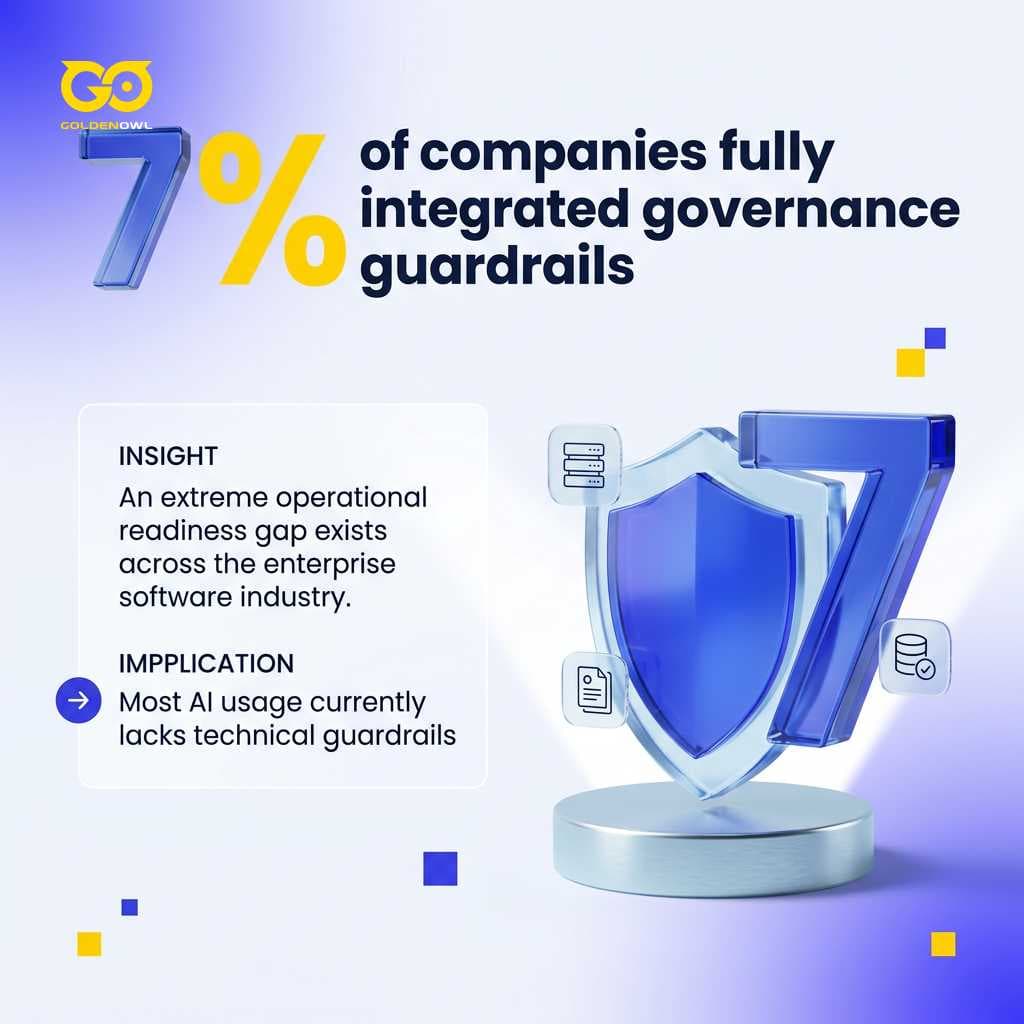
Look at adoption patterns: while 93% of surveyed companies use AI in some way, a mere 7% have fully integrated governance guardrails across their stack. Without complete audit logging, documentation standards, dataset versioning, and rigorous artifact validation across core systems, just 4% of engineering leaders feel confident their technical setup supports AI at scale.
Centralized Enterprise AI Gateways
Dedicated enterprise gateways mediate network traffic between internal systems, foundation models, and autonomous agents through explicit operational controls:
- Connections between AI agents and external tools pass through a gateway that enforces audit logging, identity validation, content filtering, policy-driven routing, environment separation, and access boundaries.
- Gateways trigger automated actions like auto-escalating security incidents, flagging anomalous user sessions for human review, stripping sensitive text, and blocking hazardous tool calls.
- Maintain runtime oversight by utilizing an ai contextual governance solution to monitor live agentic tool calls, review decision paths, and enforce human-in-the-loop checkpoints on critical actions.
- Kubernetes-native open-source Enterprise MCP Gateways supply these features across all AI skills and MCP-compatible servers, running as managed services or on internal infrastructure with a fully auditable, forkable MIT-licensed core to mediate distributed models and external integrations.
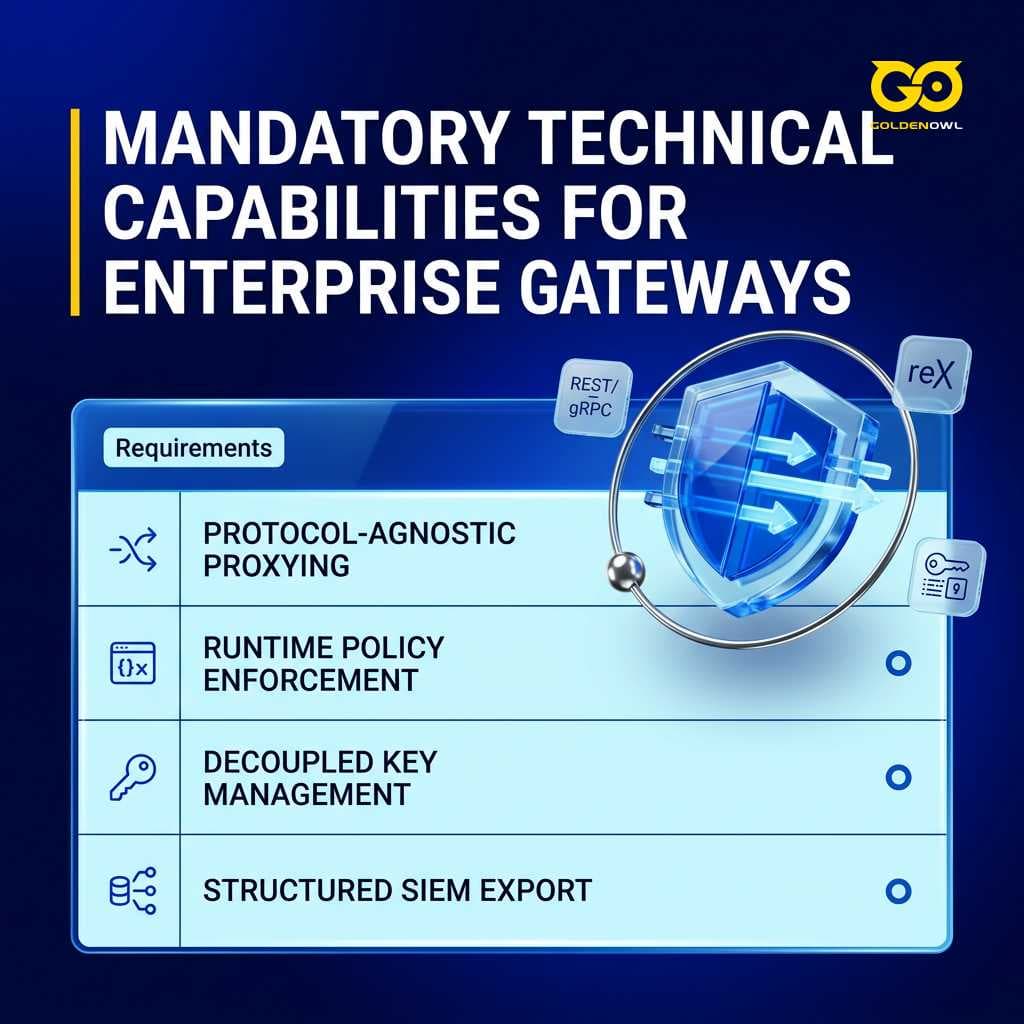
Before picking an enterprise gateway, inspect four mandatory technical capabilities closely:
- Protocol-Agnostic Proxying: Native support for both REST/gRPC and Model Context Protocol (MCP) endpoints.
- Runtime Policy Enforcement: Sub-50ms regex and semantic content filtering to redact PII and secrets before forwarding payloads.
- Decoupled Key Management: Dynamic proxying of vendor API keys integrated with your enterprise vault like HashiCorp Vault or AWS KMS so individual agents never hold raw credentials.
- Structured SIEM Export: Automated, immutable streaming of prompt and response metadata alongside tool-call parameters to Splunk, Datadog, or Elasticsearch.
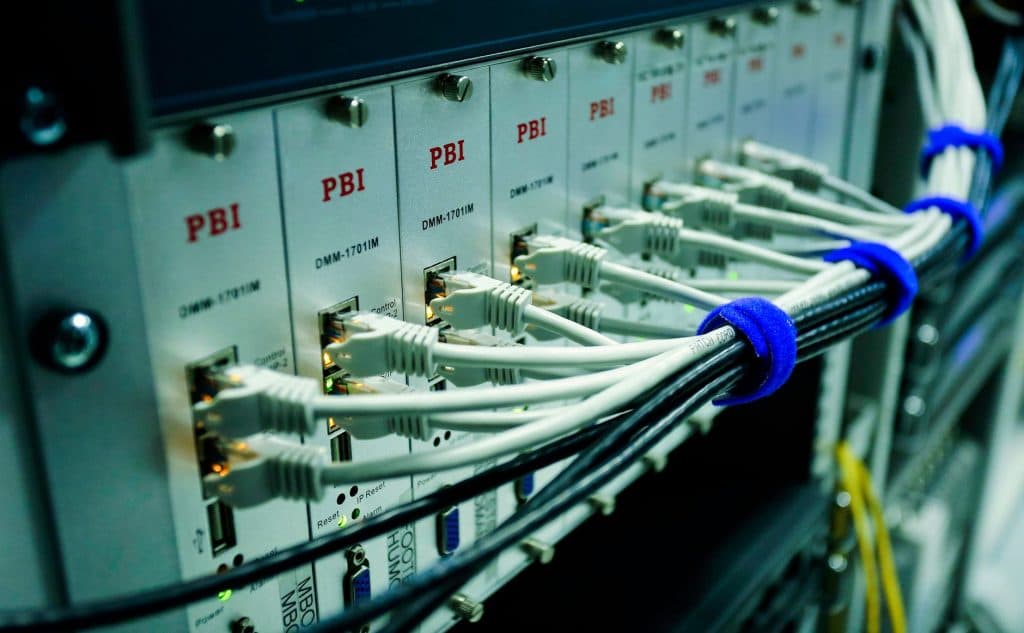
Think of the gateway like an air traffic controller watching crowded flight paths. It inspects every incoming prompt, masks private customer data, validates schema contracts, and routes requests strictly to approved model endpoints before backend code ever executes.
Registries for Model Context Protocol Servers and AI Skills
AI Skills Registries Every production environment needs a centralized AI skills registry to catalog what your agents can actually do. Each registered capability must carry explicit capability descriptions, data access scope, policy metadata, risk profile, an assigned operational owner, and version history. When you build this catalog, give your developers and security reviewers identical visibility into tool provenance, clear operational ownership, permission tiers, and access boundaries across runtime environments. The registry tracks tools running in production, items under active review, paused integrations, and incoming backlog requests.
Model Context Protocol Adoption Sound enterprise governance treats agent workflows, skills, configurations, and integrations as primary architecture assets, using the Model Context Protocol to standardize tool discovery, permissions, interfaces, and runtime context in machine-readable formats. Look at the rapid ecosystem uptake: monthly downloads of the MCP SDK surpassed 110 million, outpacing React over its initial three years. But rapid adoption brought real exposure, because a recent community scan of roughly 2,000 live MCP servers discovered near-zero authentication implementations across those endpoints.
Identity, Access Management, and Role-Based Controls
Hold automated software agents to the exact same identity and access standards you already mandate for human employees across your production enterprise systems. Locking down sessions requires role-based access control, MFA, SSO, SAML, and OAuth so every single programmatic action remains fully auditable and reversible.
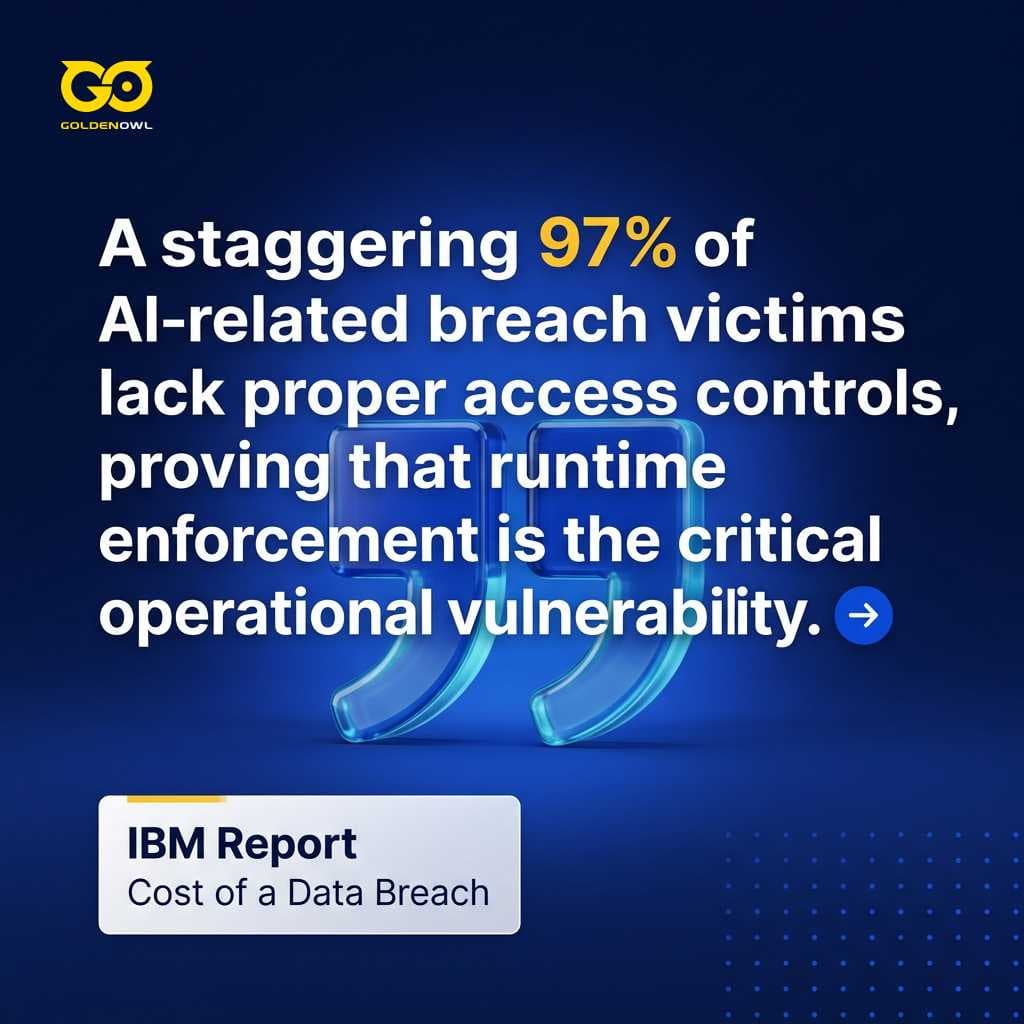
A staggering 97% of AI-related breach victims lack proper access controls, proving that runtime enforcement is the critical operational vulnerability. Examine the baseline figures in IBM’s 2025 Cost of a Data Breach Report: 13% of surveyed organizations suffered breaches touching their AI models. Do not assume unwritten team policies protect your infrastructure, given that 63% of breached firms operated with no formal AI governance policy at all. Centralized gateways resolve these risks by applying least-privilege tool permissions, SSO/OAuth identity validation, and interaction audit trails so agents never abuse APIs.
Continuous Telemetry and Comprehensive Audit Logging
Continuous Runtime Telemetry Runtime telemetry tracks decision paths, data movements, operational latency, and tool invocations alongside input data provenance checks to confirm model training authenticity. You can't assign accountability for high-impact outputs without structured event logs, so enterprise gateways must stream operational telemetry directly into existing SIEM tools and corporate observability stacks without drop-offs.
Audit Trails and Incident Reporting Mandate documented human approvals before an automated system can push production code, modify access credentials, alter schema definitions, or execute financial transactions across enterprise systems. This protocol preserves an exact record of who approved each specific step, when the event occurred, and under what operational parameters the system ran. Align your internal incident metrics directly with the EU AI Act and ISO/IEC 42001 standards to maintain clear regulatory accountability and operational visibility. According to McKinsey findings, adverse GenAI outcomes hit 47% of organizations, spanning critical data breaches, output inaccuracies, regulatory penalties, and governance failures.
Best Practices for Enterprise AI Governance Programs
Relying on standard corporate policies falls apart in live production environments, especially since researchers at MIT have cataloged more than 750 distinct AI risks that demand technical guardrails. Practical governance addresses these exposures by binding technical bias mitigations, human-in-the-loop workflows, system architectures, and comprehensive lifecycle policies directly into engineering pipelines.
Sound governance depends on active cross-functional collaboration across every business unit in the company. To strike a balance between organizational risk tolerance and internal developer speed, establish dedicated AI councils that systematically review each incoming use case through standard ticketing workflows.
Operationalizing Human-in-the-Loop Safeguards
Real human oversight demands documented operational responsibilities, dedicated review consoles, and concrete workflow checkpoints rather than passive compliance sign-offs:
- Workflows must feature dedicated review UIs, explicit staff duties, and measurable checkpoints instead of routine compliance checkboxes.
- Execution of access updates, financial transfers, or production code deployments by an agent requires verified human sign-off, alongside permanent records detailing the reviewer, timestamp, and context.
- Production evaluations show that LLMs make mistakes more often than planned, producing inconsistent outputs or factual errors between 45% and 50% of the time in many state-of-the-art deployments.
- Organizations can use unassisted automation where the consequences of an error are minor and acceptable, while requiring human intervention when data integrity and system quality are essential to catch mistakes.
Calibrate your operational rules around clear reversibility whenever you push autonomous agents into production workflows. You can safely allow deterministic automation for incoming triage, text summaries, and read-only data queries, but mandate synchronous human authorization before anyone modifies database permissions, alters production customer records, pushes code branches, or initiates monetary transfers.
Establishing Preapproved Technology Radars
Curated Technology Radars Leading organizations track emerging model capabilities through an internal catalog modeled on the ThoughtWorks radar methodology. Group your systems into four explicit stages: sanctioned for live production use, undergoing active evaluation, blocked by operational constraints, and requested on user wish lists. This structured visibility steers employees toward safe tools without slowing down their daily execution.
Curated Skills Catalogs Equipping teams with pre-vetted AI tooling configured for approved business tasks allows your company to move fast while maintaining system safety. Self-service catalogs make these approved tools easily discoverable for engineers, establishing clear records of tool ownership, interface provenance, and permission boundaries for technical reviewers.
Resolving Shadow AI with Controlled Alternatives
Controlled Gateway Alternatives Outright bans against shadow AI fail every single time because employees simply build workarounds. The practical path is making approved tooling easier to reach than unvetted software, while uncovering real adoption through agent skill registries, API call monitoring, network traffic inspection, and staff surveys before migrating risky workflows onto compliant rails. Funneling all model calls through an audited control plane gives security teams full administrative visibility while preserving everyday operational speed for end users.
The Shadow AI Landscape Shadow AI takes root whenever employees deploy untracked agents and external cloud services without technical oversight. You see it when product managers run personal copilots with unrestricted API keys, marketers paste proprietary customer records into third-party web tools, or engineers connect unsanctioned agents straight to core production databases. Research from BlackFog indicates that 86% of corporate workers engage with AI tools on a weekly basis, while 58% acknowledge utilizing unauthorized software. With Lenovo finding that unmonitored tools drive over 70% of enterprise AI usage, our organization bypassed blanket network bans, which merely push developers onto personal mobile devices, and instead deployed a governed gateway with automated data redaction. That single operational change protected developer velocity while restoring complete visibility across the company.
Implementation Roadmap for an AI Governance Solution
Companies move through three clear operational tiers when replacing ad hoc experimentation with genuine infrastructure. Organizations start in Stage 1 (Scattered), where individual engineers deploy unmonitored MCP servers without any central catalog.
From there, teams push into Stage 2 (Consolidating) by rolling out a gateway and directory, though access controls remain incomplete. The target destination is Stage 3 (Governed), where a centralized control plane enforces RBAC, IdP integration, audit exports, and policy compliance directly within standard CI/CD and MLOps pipelines.

Pulling off this transition across a 3-12 month window takes disciplined execution, often leading organizations to partner with an external ai solutions company to accelerate enterprise deployment. Start by assembling an inventory: audit your SSO logs, expense reports, and code repositories to uncover rogue endpoints, hardcoded model keys, and unauthenticated MCP connectors. Next, sort every system into low, medium, or high risk.
Issue an interim acceptable-use standard that keeps enterprise data out of public models, then pilot a centralized gateway routing agents and tools through governed infrastructure in high-value domains. Finally, run a cross-functional committee uniting IT, security, legal, privacy, and business leads that convenes quarterly to update policies.
Regulatory Frameworks and Standards Shaping Compliance
Map your deployments across four risk tiers under the EU AI Act, where prohibited practices invite penalties reaching €35M or 7% of global turnover. After entering into force on August 1, 2024, statutory bans and AI literacy rules went live in February 2025. You then have to handle General-purpose AI model obligations that took effect in August 2025, well before Annex III high-risk mandates land on August 2, 2026.
Prove compliance with mandatory training data governance covering relevance, representativeness, accuracy, and completeness by assembling an audit binder centered on an AI System Impact Assessment that documents intended use and failure modes. Add data provenance sheets for training and validation sets to verify licensing and privacy masking, plus operational runbooks defining human-in-the-loop escalation paths. Sign off on production by keeping an ongoing model monitoring log verifying periodic drift and bias evaluations.
Technical validation often entails implementing an ai compliance solution to meet strict international regulatory standards, running your operational telemetry straight against NIST AI RMF criteria for traceability and explainability. Formal certification under ISO/IEC 42001 certainly proves you have established management system standards on paper, but that credential won't shield live deployments from prompt injection exploits or sudden hallucinations.
Most businesses still stop at surface-level documentation. Pacific AI's 2025 AI Governance Survey revealed that 75% of organizations put usage policies in place, yet only 36% run an actual governance framework. Global standards continue drawing heavily from OECD AI principles, but the 2024 IAPP Governance Survey shows just 28% assign explicit accountability to designated oversight leaders.
Fundamentals of Enterprise AI Governance
Across major industries like retail, insurance, healthcare, financial services, and the public sector, teams count on artificial intelligence to power daily operations and customer touchpoints. These live rollouts push well past early experimental pilots, shaping actual customer interactions, critical decisions, and mission outcomes.
Boardrooms, regulators, and major investors now treat enterprise AI governance as a critical operating priority rather than a harmless corporate social responsibility checklist. Shipping software safely connects straight to revenue and brand reputation. Autonomous agentic workflows, complex multi-model stacks, and dynamic tool integrations blow right past annual compliance audits, static ethics statements, and written policies. Inspect every single connection across your execution pipelines before runtime so that dynamic model actions run inside strict boundaries. Systems that adapt and iterate independently can never be reined in by retrospective, document-centric rules stored inside compliance binders.
Adoption data exposes a massive gap opening up between how fast companies deploy tooling and how quickly they build structured governance. In its “State of AI 2025” survey, McKinsey found that only about one-third of organizations have scaled AI programs across the enterprise, while roughly 39% remain in experimentation and around 23% are scaling agentic AI systems. Gauge your own setup against the market, because a 2025 AuditBoard research study showed only one in four organizations have fully operational AI governance. Turning drafted policies into daily practice stalls over unclear ownership, limited expertise, and genuine resource constraints. As the report concludes, effective AI governance is now a test of execution, leaving no room for teams that rely entirely on static paperwork.
That spread between rollout speed and governance readiness creates serious operational, ethical, and reputational risks as AI embeds itself across nearly every business unit. At the same time, global regulations like the EU AI Act are shifting from conceptual frameworks to enforceable rules, even with delays and uncertainty around timelines.
Under a practical AI governance definition, the framework bridges what AI can do with the policies, processes, and structures that guide how systems get designed, deployed, and monitored. In practice, proper governance provides the structures and controls needed to manage enterprise risks and secure accountability across GenAI deployments, answering three reasons governance can't wait:
- Regulatory liability, EU AI Act fines up to €35M or 7% of global turnover for prohibited practices.
- Reputation and trust, Customers, employees, and investors demand transparency and explainability in AI decisions. One breach of trust at the agent-tool layer is difficult to recover from.
- Missed opportunity cost, Pilots blocked by governance gaps represent wasted investment and lost competitive advantage. The organizations that operationalize governance now are the ones that will ship enterprise AI at scale.

Executive suites run straight into these friction points when unstructured deployments fail to generate real operational leverage. According to PwC’s Global CEO Survey from January 2026, 56% of chief executives state that AI has failed to produce quantifiable gains in either costs or top-line growth, with a mere one in eight realizing improvements in both areas. Stack-rank your progress against peers, because the IAPP AI Governance Profession Report 2025 shows 77% of surveyed organizations are actively building or refining their programs. That number climbs to nearly 90% among active AI users, even though most initiatives remain in their infancy while teams solve staffing, metrics, and ownership questions.
Internal funding decisions reflect the urgent demand for reliable infrastructure. In The 2025 AI-Ready Governance Report, OneTrust found that 98% of organizations expect budgets for AI governance solutions and oversight to increase substantially in the near term. This broad consensus confirms that operators treat governance investments as essential drivers of dependable, scalable output rather than compliance cost centers.
Organizational Operating Models and Team Structures
Corporate budgets for oversight tooling keep climbing across the board, but real confusion over who actually owns ethics, compliance, and model accountability isn't going away. The 2024 IAPP Governance Survey showed that only 28% of organizations have formally mapped out AI oversight responsibilities inside their operating units. Most businesses simply leave those duties split between legal, IT, and compliance without clear ownership.
Handing your engineers a written policy won't bridge the gap between abstract corporate rules and their day-to-day sprint tickets. According to Pacific AI’s 2025 AI Governance Survey, 75% of organizations have set up official AI usage guidelines for their teams. Yet only 36% have put a working governance framework in place with ongoing monitoring, assigned roles, controls, and clear enforcement mechanisms.
Running sensible AI and data governance takes deliberate team structures that combine centralized standards with decentralized execution. Companies must treat this work as a joint effort across organizational lines, pulling stakeholders together into direct working relationships. Establishing that day-to-day collaboration across departments yields functional operating rules that protect the business without killing engineering velocity.
Executive Leadership and Cross-Functional AI Councils
Senior leadership teams are finally stepping into active oversight. Moving past informal executive champions toward structured committees lets companies weave ongoing review cycles, risk tracking, and real accountability straight into their core operating model. That shift is happening fast: a Gartner 2025 poll of over 1,800 executive leaders found that 55% of organizations now have a dedicated oversight committee or AI board running.
Boardroom data shows a nearly identical trend toward regular conversation matched with uneven follow-through. Look at the numbers from the National Association of Corporate Directors’ (NACD)’s 2025 survey: while 62% of corporate boards discuss AI on a regular cadence, only 27% have formally written oversight duties into their committee charters. The numbers barely improve among major enterprises, where McKinsey found that roughly 39% of Fortune 100 boards maintain explicit oversight mechanisms like specialized sub-committees or technically qualified directors. Direct executive accountability remains just as thin. In McKinsey & Company’s The state of AI survey, only 28% of organizations reported that their CEO takes direct responsibility for AI governance oversight. Board ownership trails even further behind at just 17%.
Real organizational authority requires a single identifiable leader. Most effective setups place central leadership under a Chief Data Officer or Chief AI Officer, backed by a cross-functional council that resolves disputed edge cases and defines baseline policies. Teams assign dedicated governance operators to run framework documentation, assist team rollouts, and standardize daily practices, ensuring central leadership never turns into an annoying administrative roadblock for product teams.
For handling routine decisions, your cross-functional AI council acts as an operational clearinghouse to vet incoming technology rollouts. Use this body to weigh customer outcomes against technical risks, pointing engineers toward compliant architectures without choking their experimentation. Never turn this meeting into an open-ended brainstorming session or a blunt veto desk. Your council roster needs clear coverage, bringing together a chief risk officer, chief innovation officer, CISO, field CISO, engineering representatives, lead AI engineer, operational counsel, general counsel, and marketing leaders.
Whenever your engineering or business teams propose a fresh use case, the council evaluates the deployment through a structured intake workflow:
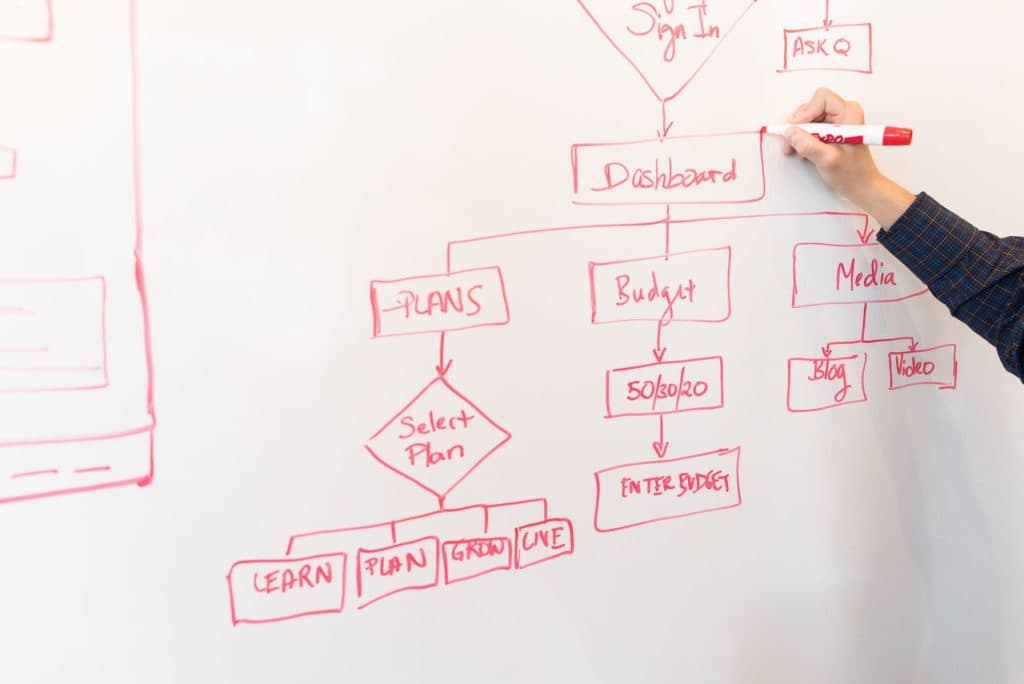
- When my team or anyone else in the business wants to bring a new use case to the company, they submit it to the council through a ticketing system that we’re regularly reviewing.
- If it fits with existing policy, we approve it right away.
- If it doesn’t fit but causes us to update the policy, then we update it; the policy is user facing so everyone in the company has access. And if it doesn’t fit with policy and doesn’t warrant a change we will offer our concerns and potential recommendations or action items that could help it work instead.
Keep review velocity high by backing ticket queues with clear, non-negotiable response windows. Council sessions run on a bi-weekly rhythm while guaranteeing a 5-business-day turnaround for any initial intake ticket. Standard low-risk tooling gets automated same-day clearance through pre-approved checklists, while complex, high-risk systems involving third-party integrations head into the bi-weekly queue with dedicated legal and technical leads.
Centralized Technical Teams for Internal Enablement
Forward-thinking enterprises establish dedicated engineering teams to deliver hands-on consulting, manage verified tool catalogs, build shared governance infrastructure, and temporarily overlay expert lead engineers operating under a central model onto distributed development teams:
- While the use of AI tools is completely distributed, we do have an AI team that is centralized. These are lead engineers with deep expertise and knowledge of the technologies and the risks inherent to them. This includes people on my team and those who operate under our chief innovation officer, and they are some of our best engineers who operate on an internal consulting model. When someone is working on an AI-related project, they overlay on that team for a short period of time to offer lessons learned and advice during implementation. This kind of knowledge-based team helps us avoid mistakes and control the quality of our AI deployments.
- The consultancy ThoughtWorks has something it calls the TechRadar that they publish for technology. We basically implemented a similar system internally for these AI technologies. This provides centralized information on what we’ve got adopted for which use cases, what we have under evaluation, what technologies are on hold due to certain barriers, and what’s on the wish list from our users. This helps us control the risks but also offer up alternatives to our users who are on the hunt for tools and to keep an eye on technology as it is improved. Very early on in our journey, everyone on the AI council recognized that if we enabled our entire user base, whether it was engineers or business users, with AI tools we’d vetted and thought were safe for specific use cases, then we could go faster and safer.
- A gateway brokers connections between AI agents and the tools they call, enforcing access controls, environment separation, policy-driven routing, content filtering, identity validation, and audit logging. Obot helps enterprises host, proxy, and manage MCP servers behind identity integration, audit logging, and policy controls, with a curated catalog that makes approved tools discoverable and self-service for developers. Feature stores manage curated, versioned feature datasets that data scientists can confidently use for AI models, ensuring consistency across training and production while centralizing quality control and governance. Data quality monitoring tools continuously assess data against defined standards, alerting when issues emerge.
Frequently Asked Questions
What is AI governance?
The operational practice of AI governance gives your teams the rules, workflows, and tools to build, deploy, and track models while bridging technical power with legal compliance. Manual review boards introduce change-advisory latency that fails when business units deploy faster than IT can monitor.
Wire strict operational checks throughout your entire generative AI lifecycle, whether you build models internally or buy them from outside vendors, so you can manage engineering liabilities and business risks. Real financial damage follows whenever operational execution slips, because security breaches stem from technical enforcement gaps rather than missing policy memos.
Put runtime guardrails right inside your codebase instead of relying on static corporate responsibility statements, since boards, regulators, and investors evaluate your delivery capacity and balance-sheet revenue on working software. Executive leadership treats these live controls as an essential defense to shield brand reputation during live releases. When you inspect previous security incidents, 97% of breach victims lacked proper access controls.
How does AI governance differ from traditional IT governance?
Old-school IT governance depends on manual document reviews, rigid policies, and yearly audit cycles designed for predictable software updates, while AI governance runs live programmatic checks over non-deterministic models and multi-vendor toolchains. Automated agent workflows and on-the-fly external tool calls rapidly break standard change-management boards built around quarterly releases.
Dig into the 2026 IBM Institute for Business Value study that surveyed 2,000 technology executives about these operational realities. In that report, two-thirds of tech leaders say they're held accountable for machine learning deployments their own teams don't control.
Business departments roll out applications independently, with 70% of leaders confirming that departmental teams push software into production faster than central IT can oversee. That shipping pace sparks real organizational friction, and 77% of executives admit internal rollouts have outpaced their current governance capabilities.
Check your rollout roadmap against standard readiness metrics before expanding further. Around 80% of leadership teams push mandates to scale artificial intelligence, but only 11% have the operational maturity to deploy autonomous agents over the next twelve months.
Without automated runtime defenses, companies recorded an annual baseline of 54 incidents involving agents that forced engineers to step in and fix errors manually. Roughly 17% of those outages were severe breakdowns that took longer than four hours to remediate by hand.
Look at what IBM CIO Matt Lyteson discovered when engineering teams embedded automated guardrails directly inside their runtime pipelines: organizations decreased operational failures by 25% while delivering 16x more AI agents compared to workflows constrained by manual ticketing, even across varied inputs like sensors, video feeds, images, and raw text.
You need to benchmark incoming production inputs against original training data to catch drift before quality collapses. Left unmonitored in production, large language models spit out contradictory answers or plain hallucinations 45% to 50% of the time without continuous runtime verification.
What are the main regulatory frameworks governing enterprise AI?
Maintaining enterprise compliance means tying your operational controls directly to key global standards and statutory frameworks:
- The EU AI Act entered into force August 1, 2024, with prohibited practices active since February 2025, general-purpose model rules effective August 2025, and Annex III high-risk obligations enforceable August 2, 2026, backed by fines up to €35M or 7% of global turnover.
- The NIST AI Risk Management Framework (AI RMF) provides globally recognized criteria defining auditability, explainability, traceability, and continuous risk management metrics for modern enterprise production systems.
- The ISO/IEC 42001:2023 international standard establishes formal management system requirements and certifiable controls for artificial intelligence deployments across heavily regulated sectors.
- The OECD AI Principles serve as international benchmarks promoting trustworthy, accountable, and human-centric artificial intelligence operations across major global markets.
How can organizations prevent shadow AI among employees?
You keep employees away from shadow AI by making approved, audited tools frictionless to adopt, rather than passing blanket bans that drive workers toward untracked workarounds.
Flat bans on third-party software backfire every time because corporate employees bypass strict prohibitions when unapproved tools solve daily workflow bottlenecks. Run technical discovery across your network before drafting strict corporate policies. Have your security engineers map out actual daily usage by tracking internal network traffic, reviewing API logs, surveying staff, and cataloging custom internal agents.
Publish preapproved technology radars directing personnel to sanctioned tools while severing external unapproved endpoints, and pull those unsanctioned workflows into a safe perimeter by sharing an approved software registry that clarifies which platforms are secure, while blocking unvetted external services at the gateway. Findings published by BlackFog reveal that 86% of enterprise employees engage with AI tools on a weekly basis, and 58% acknowledge utilizing unauthorized applications.
What role do enterprise gateways play in AI governance?
An enterprise gateway acts as a live proxy between models, autonomous agents, and outside tools to enforce security rules and track operational behavior in production.
Runtime Policy Enforcement These gateways enforce least-privilege access across downstream tools, link model calls to your central identity providers via SSO and OAuth, and record detailed audit trails for every query. Built-in inspection filters catch malicious input arguments, strip confidential records, notify security admins about suspicious spikes, and redirect borderline requests into human review queues. Gateways also route ambiguous or anomalous model sessions directly into human-in-the-loop review queues.
Enterprise Gateway Mediation By governing traffic between self-directed agents and outside endpoints, gateways handle content moderation, traffic routing, identity validation, environment sandboxing, and compliance telemetry. If you don't run these automated controls, operating multi-model pipelines and agentic systems makes it virtually impossible to maintain compliance boundaries or protect proprietary intellectual property under live traffic.
Ultimately, mastering what is AI governance requires moving beyond static policy memos to build automated enforcement straight into your software stack. Deploying centralized proxies, vetted tool registries, and strict permission models protects your data while keeping engineering velocity high. Rather than encouraging shadow AI by issuing draconian bans, you route requests through identity-backed gateways that track every transaction, catch input drift, and sanitize dangerous inputs on the fly. Programmatic guardrails embedded in production transform compliance from a bureaucratic hurdle into an engineering standard that keeps your releases moving.
Share this page


Table of Content

Subscribe to Golden Owl blog
Stay up to date! Get all the latest posts delivered straight to your inbox