
An AI legal assistant does the first pass of legal work. See what it can and can’t do, and which legal AI tools fit research, contracts, or practice management.


Healthcare Security Solutions AI Weapon Software
Sep 10, 2026
about 13 min read
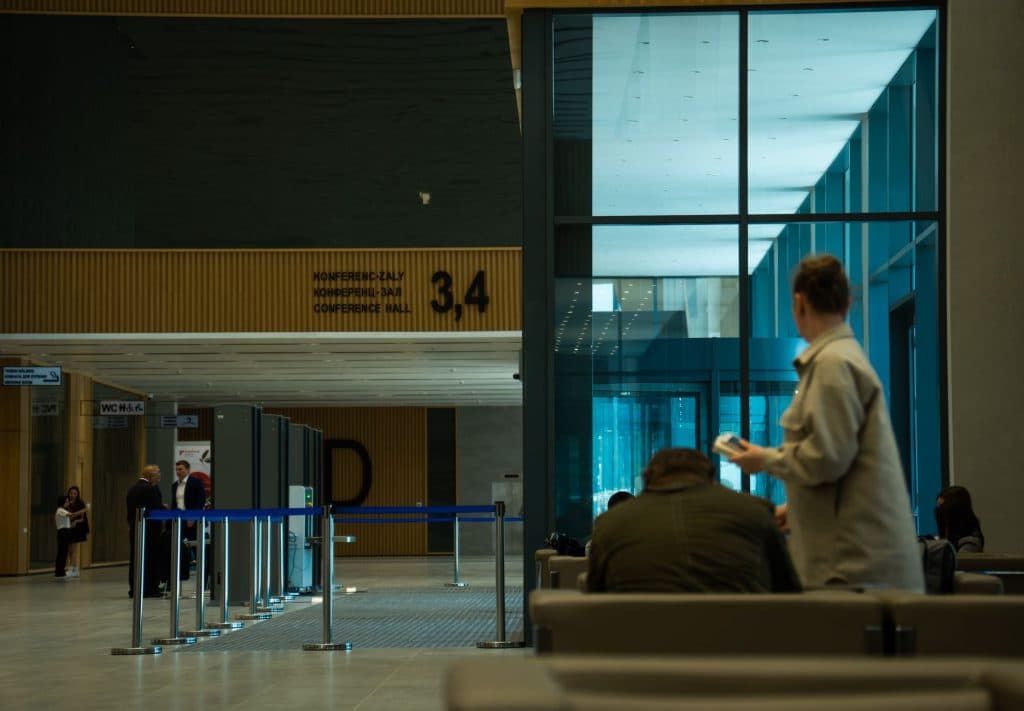
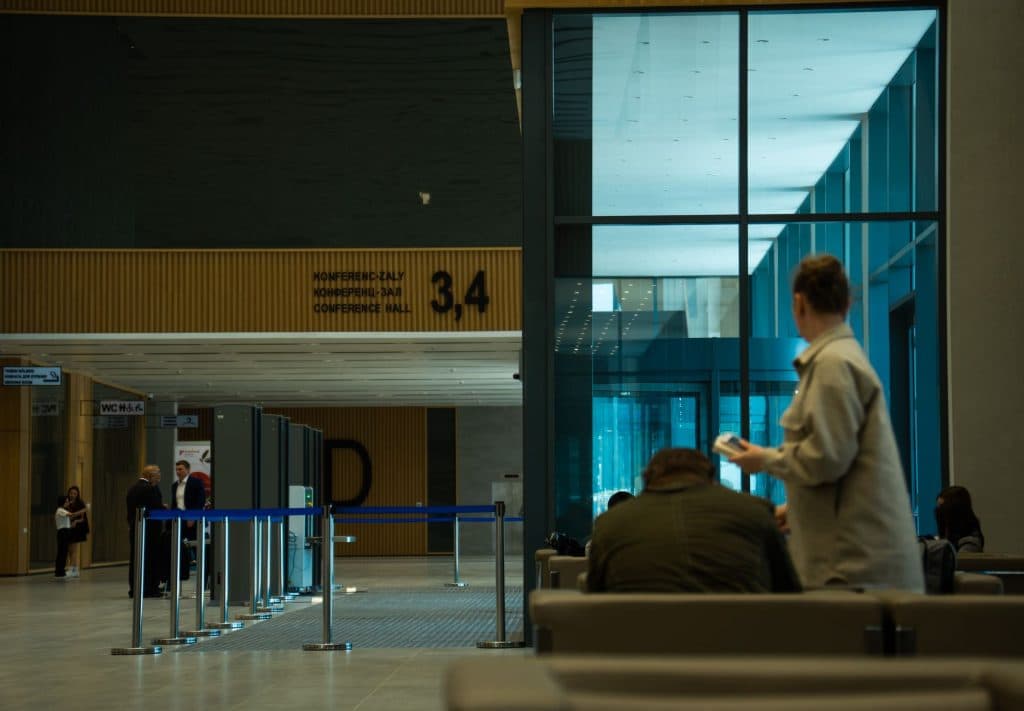
Dedicated healthcare security solutions ai weapon software speeds up throughput and catches threats early, preserving a warm, open environment so arriving patients don't feel like they're walking into a fortress.
Workplace violence threatens teams across clinical campuses.
Campus leaders deploy automated threat detection to keep caregivers safe on the floor. As broader ai solutions for healthcare safeguard staff and clinical spaces, modern platforms spot both exposed and concealed weapons in high-risk corridors, push out immediate alerts, and tie directly into your current facility systems so clinicians stay protected around the clock.
Set up touchless screening checkpoints right at your primary building entrances. Dedicated healthcare security solutions ai weapon software speeds up throughput and catches threats early, preserving a warm, open environment so arriving patients don't feel like they're walking into a fortress.
Assaults against medical staff remain a daily reality across hospital campuses. When one tertiary hospital audited its internal logs, verbal abuse made up 71.9% of documented events, and physical attacks comprised 28.1%, with emergency rooms and outpatient clinics bearing the brunt of those cases.
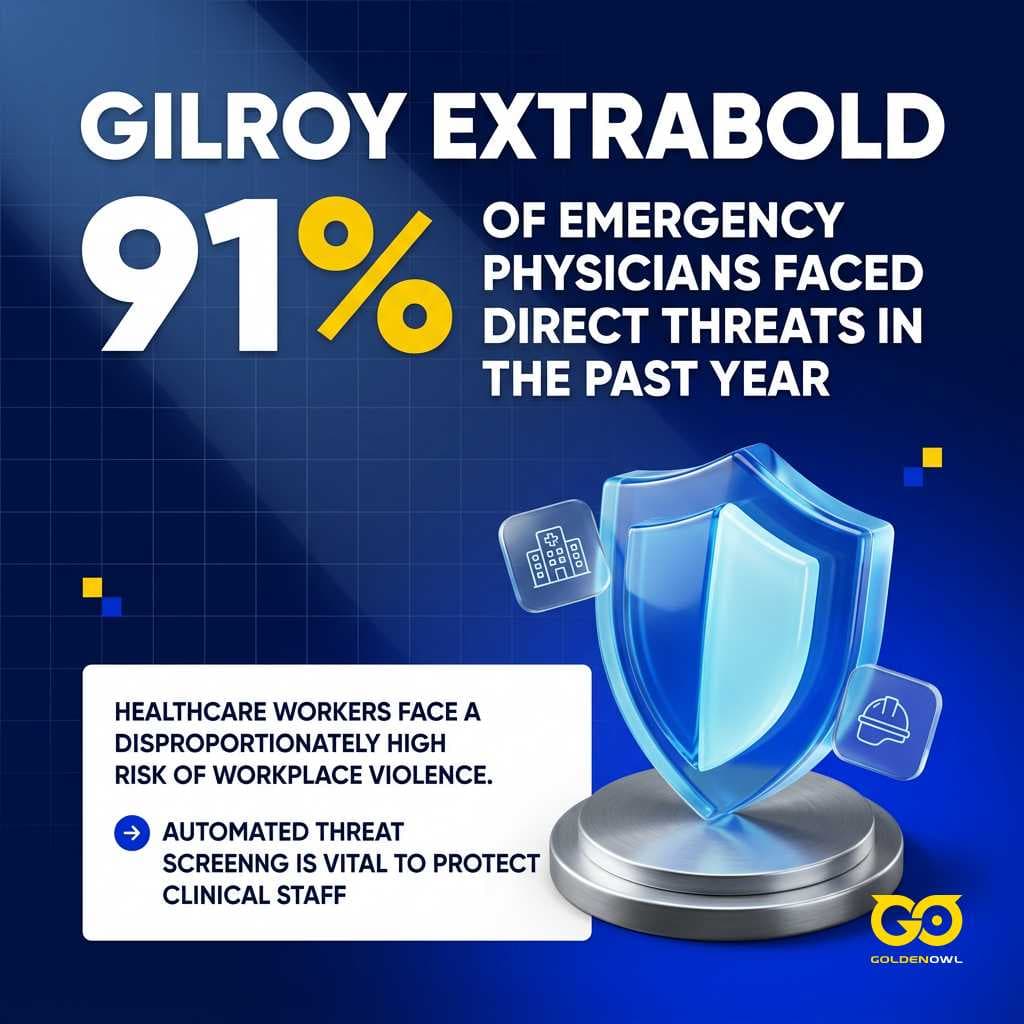
Measure your own numbers against the broader job market, where staff in healthcare and social assistance suffer a fivefold higher likelihood of workplace violence injuries. In emergency departments and regional medical centers, 91% of emergency physicians faced direct threats over the past year, based on research from the California Chapter of the American College of Emergency Physicians (CAL/ACEP).
Leading Healthcare Security Solutions AI Weapon Software
Selecting commercial security architectures requires matching vendor software and hardware designs directly to hospital operational realities.
Athena Security
Hospitals can't afford security choke points at the front door, so Athena Security built an automated threat detection platform tuned for high-volume emergency facilities. Rather than slowing patients down with manual wands and traditional magnetometers, Athena Security’s Weapons Detection System screens incoming foot traffic through low-profile pillars. Large medical systems roll the hardware out quickly, plugging units straight into existing guard routines.
Avigilon
Avigilon, operating as a business unit within Motorola Solutions, provides Avigilon Healthcare Security Solutions for sprawling medical facilities. The platform links smart cameras, card access readers, video feeds, and system management into one coordinated network across multi-building clinical campuses.
You don't have to rip out your existing cameras to run visual AI analytics, which is why the Ambient.ai Healthcare Security AI Platform layers over active surveillance gear. Operating directly above your current cameras and door readers, the software scans live video to catch unauthorized visitors, loiterers, fallen patients, and emerging physical threats.
Under Verkada Healthcare Security Solutions, Verkada bundles commercial video cameras, access readers, intrusion sensors, emergency panic buttons, and visitor management inside a single cloud environment across clinical sites.
Axon
Axon, formerly known as TASER, delivers Axon Healthcare Security Solutions to safeguard frontline medical staff and admitted patients. Moving past fixed ceiling mounts, the company outfits guards with TASER® 7 equipment, body-worn cameras, and secure cloud software for digital evidence management.
Coram AI
For acute-care facilities seeking immediate threat visibility without purchasing new hardware, the Coram AI Hospital Security Cameras & AI Platform links into standard IP cameras already on site. The software watches live camera streams continuously, flagging perimeter intrusions, exterior loiterers, doorway tailgating, and brandished firearms in real time.
The comparison below tracks how these commercial architectures stack up across hardware footprints, network connectivity, operational capacity, and incident alerting.

| Product | Deployment fit | Integration fit | Alerting/response strength |
|---|---|---|---|
| Athena Security’s Weapons Detection System | Strong fit for emergency departments, main entrances, behavioral health units, and other high-traffic hospital checkpoints | Connects weapons detection screening, alerts, visitor workflows, AR glasses, X-ray screening, and other response tools in one connected system | Sends real-time alerts when a concealed weapon is detected and helps teams respond quickly with clear threat visibility |
| Avigilon Healthcare Security Solutions | Strong fit for large campuses and multi-facility health systems with mature security operations | Works with video management and access control environments and supports third-party system connections | Strong at video analytics, suspicious activity detection, and centralized monitoring |
| Ambient.ai Healthcare Security AI Platform | Good fit for hospitals that already have cameras and access control in place and want to layer AI on top | Works with existing surveillance cameras and door-access systems | Detects events in live video and sends prioritized alerts to reduce alarm fatigue |
| Verkada Healthcare Security Solutions | Good fit for organizations that want centralized cloud-based management across sites | Combines cameras, access control, alarms, panic buttons, and visitor management in one cloud platform | Sends mobile and platform alerts and supports fast response through a unified cloud setup |
| Axon Healthcare Security Solutions | Stronger fit for security teams that rely heavily on officer presence and incident response workflows | Connects body-worn cameras, TASER devices, evidence management, and dispatch-related workflows | Strong at live response support, incident documentation, and evidence management |
| Coram AI Hospital Security Cameras & AI Platform | Good fit for multi-site hospitals that want cloud-based AI monitoring without replacing current cameras | Works with existing IP cameras and access control systems | Sends alerts when AI detects firearms, loitering, tailgating, and other live security risks |
Each platform serves distinct operational priorities, spanning from walk-through entrance pillars to pure cloud-based video analytics overlays.
Multi-Sensor Walk-Through Detection Pillars
Walk-Through Sensor Operation
Positioned right at main entrance doors, walk-through pillars scan incoming visitors and outpatient crowds for concealed weapons while software distinguishes actual threats from harmless personal items like smartphones or keys. Security teams get instant alerts whenever concealed blades or firearms enter the screening field. Sensors flag individuals attempting to circumvent checkpoints without stopping transit. The system generates audit-ready compliance logs while avoiding intake bottlenecks.
Ambulance Bay Detection
To catch threats arriving on gurneys, Athena Security deployed its Ambulanace Bay Weapons Detection System alongside its walk-through units to protect emergency intake doors. Combining radar imaging with automated visual detection lets guards screen stretcher patients as they cross the threshold, log entry audits, and close off dangerous perimeter blind spots.
Ambient.ai
The platform ties directly into your existing camera feeds and badge readers without forcing you to replace operational hardware. Algorithms flag perimeter breaches immediately and filter out nuisance noise so guards focus on verified events. Prioritized alerts dispatch across multi-building campuses, while internal storage rules protect patient privacy by stripping out personally identifiable details.
Pure software overlays like Ambient.ai or Coram AI give hospitals practical alternatives when full camera overhauls exceed capital budgets. Before deploying this architecture, verify your entrance feeds and make sure your cameras supply at least 1080p resolution while supporting standard RTSP and ONVIF video protocols.
Pricing and platform demonstrations are provided upon request through direct sales inquiries.
Ambient.ai fits facilities that want automated threat detection layered across active cameras to cut down on alarm fatigue. Standard off-the-shelf security packages would be right if your hospital required strictly on-premise servers, budget-priced consumer hardware, or publicly documented healthcare case studies, but they lack this direct software overlay capability.
Verkada
Surveillance video, badge permissions, and visitor registration operate inside a single cloud dashboard that links building perimeters straight to security dispatch. Automated alerts accelerate incident response times during emergencies, and nursing staff can hit physical panic buttons during volatile patient confrontations. The plug-and-play hardware installs rapidly, while encrypted on-device storage satisfies federal healthcare data compliance standards.
System Hardware Pricing
Base camera hardware begins at $499 or $599 per device depending on lens capabilities, while bridge Command Connectors run $2999 each and dedicated viewing stations require an upfront purchase cost.
Verkada fits healthcare operators seeking rapid cloud rollouts with standardized computer vision tools that require no custom configuration. On the other hand, the platform fits poorly if your site demands custom operational workflows, open third-party software connections, strictly local server hosting, or freedom from recurring annual licensing fees.
ZeroEyes
Layered across UMC's camera network, ZeroEyes complies fully with statutory HIPAA standards. When computer vision detects a firearm in three to five seconds, analysts at the ZeroEyes Operation Center immediately verify the threat and dispatch tactical intelligence directly to local police.
In as little as three to five seconds, AI software scanning real-time video footage flags visual weapon threats. Alerts route to the 24/7 ZeroEyes Operation Center, staffed by trained U.S. military and law enforcement veterans.
Local police and the UMC Health System security team receive immediate notifications showing the weapon type, visual frame, and exact physical location. ZeroEyes monitors existing facility cameras specifically to identify anyone brandishing a gun near or inside occupied clinical buildings. Deploy this software across perimeter video streams to keep entrance lobbies welcoming while giving security personnel actionable intelligence before an armed intruder reaches patient units. The platform carries a formal SAFETY Act Designation from the U.S. Department of Homeland Security.
Routing optical threat alerts through trained human specialists filters out false positives and confirms authentic threats before dispatchers call 911. This mandatory verification step prevents disruptive false alarms across campus, even though manual review introduces a slight operational delay absent in fully automated software triggers.
Evaluation Criteria for Healthcare Security Solutions AI Weapon Systems
Hold every threat detection platform to uncompromising operational benchmarks so you protect clinical teams without sacrificing visitor access or urgent emergency response.
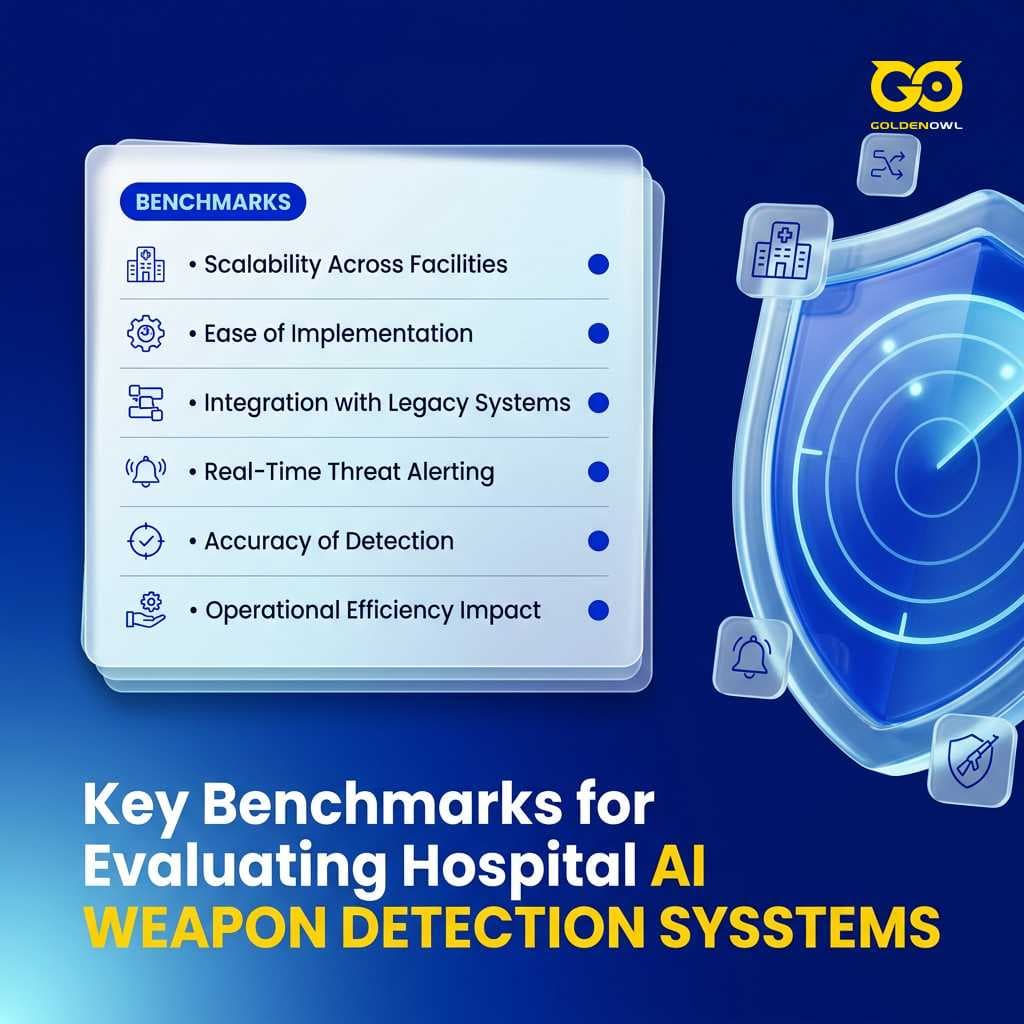
Ten clear operational benchmarks decide whether modern healthcare security solutions ai weapon platforms can actually hold up on a working hospital floor:
- Scalability Across Facilities: Can the system expand across multiple buildings, campuses, and regions without slowdowns at entry points?
- Ease of Implementation: How quickly can you deploy the hardware, and can it go live without disrupting active patient care?
- Integration with Existing Systems: Does it connect with current cameras, access control, and workflows, or require an expensive rip-and-replace?
- Real-Time Threat Alerting: How quickly are threats detected, verified, and delivered to the right clinical response teams?
- Accuracy of Detection: Does it reliably identify real threats while keeping nuisance alerts low in crowded corridors?
- Operational Efficiency Impact: Does it reduce manual guard effort, investigation time, and staffing pressure?
- Support and Training Availability: Are teams trained effectively, and is continuous vendor support available as clinical staff rotates?
- Pricing Transparency and Value: Are costs clear, predictable, and aligned with long-term capital budgets?
- Free Demo Availability: Can hospitals evaluate screening performance in real-world doorway conditions before committing?
- Proven Hospital Deployments: Has the vendor successfully deployed these specific systems in active medical centers?
Detection Accuracy
Artificial Intelligence Differentiation Advanced machine learning lets your screening system single out actual weapons with sharp precision while keeping false alarms wildly low. The software separates everyday metal personal belongings from genuine hazards, keeping screening lines moving consistently even during chaotic morning shift changes.
Threat Coverage Range Your perimeter screening has to catch both visible and hidden weapons instantly, dispatching direct, actionable alerts straight to security personnel the moment someone carries a gun or knife inside.
Specialized Care Screenings In crowded emergency bays, radar imaging paired with machine learning checks inbound stretcher patients for hidden weapons and logs audit records without slowing down life-saving treatment. Out in public corridors, computer vision monitors standard security camera feeds, flagging brandished firearms the second they enter a line of sight. Beyond individual checkpoints, the detection architecture must scale seamlessly across regional multi-facility health networks without performance degradation.
False Alarm Mitigation
Active healthcare environments can't afford endless operational interruptions, meaning your screening tools have to run with an incredibly low error rate. Traditional metal detectors that scream at every paperclip make sense in courthouses, but clinical settings require precise discrimination instead of raw volume. A structured secondary screening step sorts out harmless everyday objects, keeping your guards zeroed in on confirmed physical threats.
Calibrating threat algorithms is just like setting up an email spam filter: if stethoscopes and belt buckles set off constant alarms, your staff get desensitized and tune out real crises.
Consider the operational fallout documented in the Federal Trade Commission's 2024 complaint against security screening vendor Evolv Technologies. After an Express scanner failed to flag a seven-inch knife used to stab a student in October 2022, operators cranked hardware sensitivity thresholds, driving false alarms up to 50%. Everyday laptops, binders, and water bottles triggered alerts. That sudden bottleneck eliminated the vendor's promised 70% labor savings, clogging entry lines and forcing facilities to pull additional guards away from floor patrols to conduct continuous secondary checks.
A 50% nuisance alarm rate at an emergency room doorway crushes traffic flow and burns out security personnel. That is why medical centers rely on trained human verification rather than cranking hardware sensitivity past practical limits.
Legacy System Integration
Hospitals need security software that ties directly into existing infrastructure, which usually means teaming up with an experienced ai solution provider to build custom network endpoints.
Tying weapon detection tools into your campus infrastructure comes down to a few vital integrations:
- Works with existing hospital IP cameras, avoiding expensive hardware replacement.
- Works with existing surveillance cameras and door-access systems.
- Connects weapons detection screening, alerts, visitor workflows, AR glasses, X-ray screening, and other response tools in one connected system.
- Open and documented APIs for third-party cameras and sensors.
- Real-time two-way data exchange across systems.
- Centralized monitoring from the hospital security operations center.
- EPIC-compatible deployment.
- Using automatic door-locking mechanisms to block entry by suspicious individuals.
- Establishing protocols to delay flagged individuals for up to 30 seconds while security coordinates a response.

Pedestrian Throughput Capacity
Entry Flow Preservation Hands-on security checkpoints constantly create miserable lobby lines and upset visitors. Swapping out physical bag checks for modern touchless screening portals maintains entryway speed, letting your facility process heavy foot traffic without creating the operational bottlenecks and hallway gridlock that interrupt urgent clinical care.
Operational Burden and Visitor Flow Modern screening platforms streamline daily hospital operations by eliminating checkpoints, detecting armed individuals faster, and shielding clinical workflows. Automated walkthrough pillars make routine manual searches unnecessary. Getting rid of those sluggish physical bag checks clears up lobby crowding and stops front-door delays, freeing clinical teams to keep their full attention on caring for patients.
Continuous Operational Transit Large medical centers operate around the clock, moving thousands of doctors, nurses, families, contractors, and paramedics through their doors. Free-standing sensor pillars flag concealed weapons immediately as people stride through, meaning visitors don't have to stop and emergency triage lines never get stalled.
Critical Hospital Zones
Across different hospital zones, threat levels shift wildly, so you want modern screening setups where fast response times and perimeter defense matter most. In contrast to industrial manufacturing security solutions ai weapon deployments, healthcare perimeter safety requires open, continuous patient transit alongside rapid threat detection.

When analyzing high-risk healthcare safety issues and solutions ai gun software delivers the rapid threat detection essential for protecting busy emergency department doors. Picture a packed weekend lobby where walk-in visitors arrive right alongside acute trauma gurneys; your screening system has to process that volume without turning triage nurses into checkpoint guards.
Research from The American Journal of Managed Care highlights the hazards frontline clinical teams face:
- Emergency department staff regularly encounter firearms, yet many healthcare facilities do not have metal detectors in place to screen for weapons at entry points.
- The American Journal of Managed Care found that seven out of 10 emergency physicians reported being physically assaulted on the job.
- Data from the California Chapter of the American College of Emergency Physicians (CAL/ACEP) shows 91% of emergency physicians reported being threatened in the past year.
- In one tertiary hospital study, 71.9% of reported workplace violence incidents were verbal, and 28.1% were physical, with outpatient clinics and emergency departments recording the most total cases.
- Healthcare and social service workers are five times as likely to suffer a workplace violence injury as workers overall.
Frequently Asked Questions
When you set up modern healthcare screening, you protect your clinical staff and arriving patients without choking off everyday entrance traffic. Before you sign any vendor contracts, use these practical answers to settle your baseline.
How Do Healthcare Security Systems Impact Day-To-Day Operations?
Automated detection gates boost staff confidence and increase entrance throughput without holding up incoming patient traffic.
Caregiver Visibility and Workplace Confidence Former International Association for Healthcare Security and Safety leader Eric Sean Clay emphasized that verifiable entry data directly alleviates workplace stress for medical workers. In his work with an Athena detection setup, the ability to dive into the data let his team track exactly how many visitors passed through the doors at any given moment. Handing staff real numbers on how many concealed weapons guards intercepted proved that the checkpoint actually stopped threats, which gave clinical teams genuine peace of mind so they could concentrate on patient treatment. When your security team verifies intercepted weapons with hard tallies, front-line clinicians stop worrying about what might slip past the lobby.
How Do These Systems Perform In Smaller Hospitals With Tight Budgets And Limited IT Staff?
Independent community clinics roll out these platforms smoothly by combining modular scanning tools with outside support and sensible payment structures.
Rapid Deployment and Infrastructure Fit These screening setups scale cleanly across both sprawling regional health networks and small rural sites. Security administrators get them running fast without tearing out their current physical infrastructure, sliding the portals straight into daily patient intake workflows.
Managed Support and Flexible Financing Hospitals operating with lean technical crews lean heavily on security packages that combine hands-on operational training with round-the-clock vendor troubleshooting. Buying these units outright requires USD 100,000-120,000 upfront. You can rent the detection pillars for USD 2000 per month instead, which protects vulnerable entrances while keeping your capital intact. Before you finalize the deployment contract, carve out USD 3400 from your operational budget to cover onsite staff coaching, 24/7 technical support, and ongoing equipment maintenance. This lease-to-own structure lets your hospital take full ownership of the hardware after 4-5 years.
What Are The Best Gate Security Solutions For Hospitals?
Specialized sensor stations and passive ferromagnetic pillars give sensitive medical wards their most reliable, low-friction weapon screening.
Metrasens Ultra Metrasens Ultra uses passive ferromagnetic sensors to hook into existing security setups, giving teams reliable weapons detection across sensitive spaces like behavioral health units.
What Are The Best Gun Detection Systems For Hospitals In 2026?
Screening pillars and visual software like Omnilert give facilities several reliable weapons defense options:
- Athena Security’s AI-driven system is built specifically for healthcare, detecting both visible and concealed weapons with real-time alerts and low false positives through solutions like the Apollo 500 Weapon Detection platform.
- Omnilert offers a budget-friendly option that detects visible firearms using existing CCTV infrastructure.
- ZeroEyes scans real-time video footage to detect the illegal brandishing of a gun near or in an occupied building, alerting its 24/7 Operation Center staffed by military and law enforcement veterans within three to five seconds while maintaining HIPAA compliance and holding the U.S. Department of Homeland Security SAFETY Act Designation.
When hospitals pair layered physical entry portals with smart visual threat recognition software, they catch firearms at the outer perimeter and keep clinical halls open, peaceful, and dedicated entirely to patient healing.
Combining touchless walk-through sensor columns at your main lobby with external optical camera feeds establishes an active defense well before weapons reach internal patient units. Pull out your facility blueprints this week, flag your highest-volume arrival choke points, and balance vendor rental options against your available monthly capital.
Once you deploy effective healthcare security solutions ai weapon software, security guards stop threats out at the perimeter while medical teams focus entirely on patient care. With automated screening running at the entrance, weapons won't reach your clinical corridors.
Share this page


Table of Content

Subscribe to Golden Owl blog
Stay up to date! Get all the latest posts delivered straight to your inbox