
How to use AI in real estate: automate lead follow-up, speed up valuations and marketing, and keep every step compliant with Fair Housing rules.


AI Patient Engagement Software Solutions
Sep 21, 2026
about 13 min read
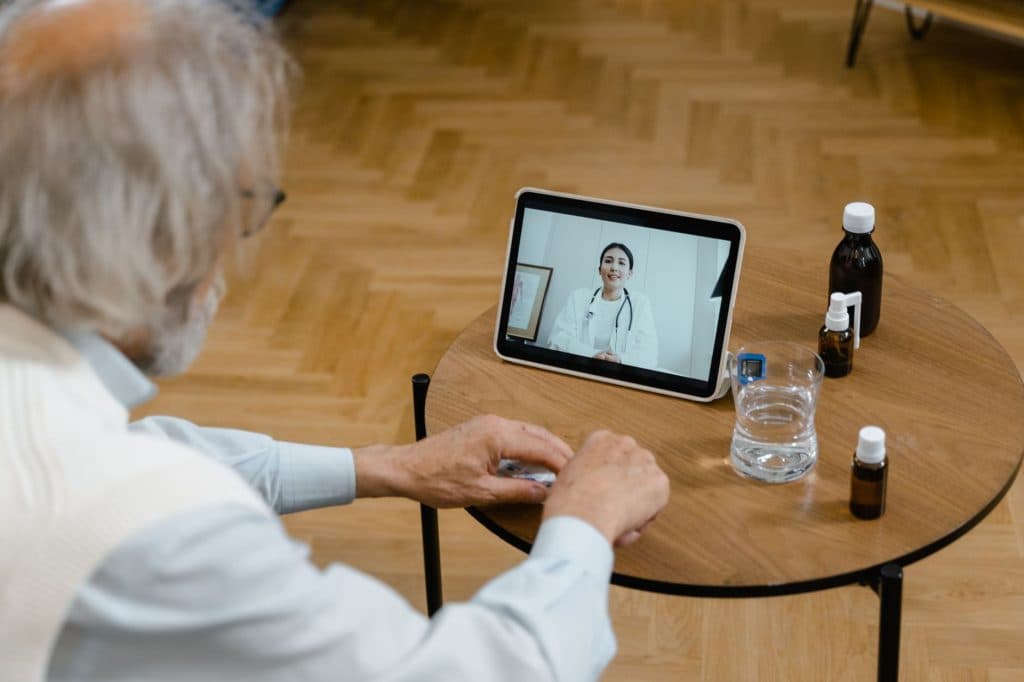
AI patient engagement software solutions keep patients connected beyond single appointments, not just during a single visit.
AI patient engagement software solutions keep patients connected beyond single appointments, not just during a single visit.
Build those ongoing relationships with predictive analytics, natural language processing, and automated workflows. For context, broader ai solutions for healthcare show how these foundational machine learning technologies support care. Before picking a platform, compare front-office efficiency, bi-directional electronic health record integration, and clinical safety so operational and clinical gains can last.
Leading AI Patient Engagement Software Solutions
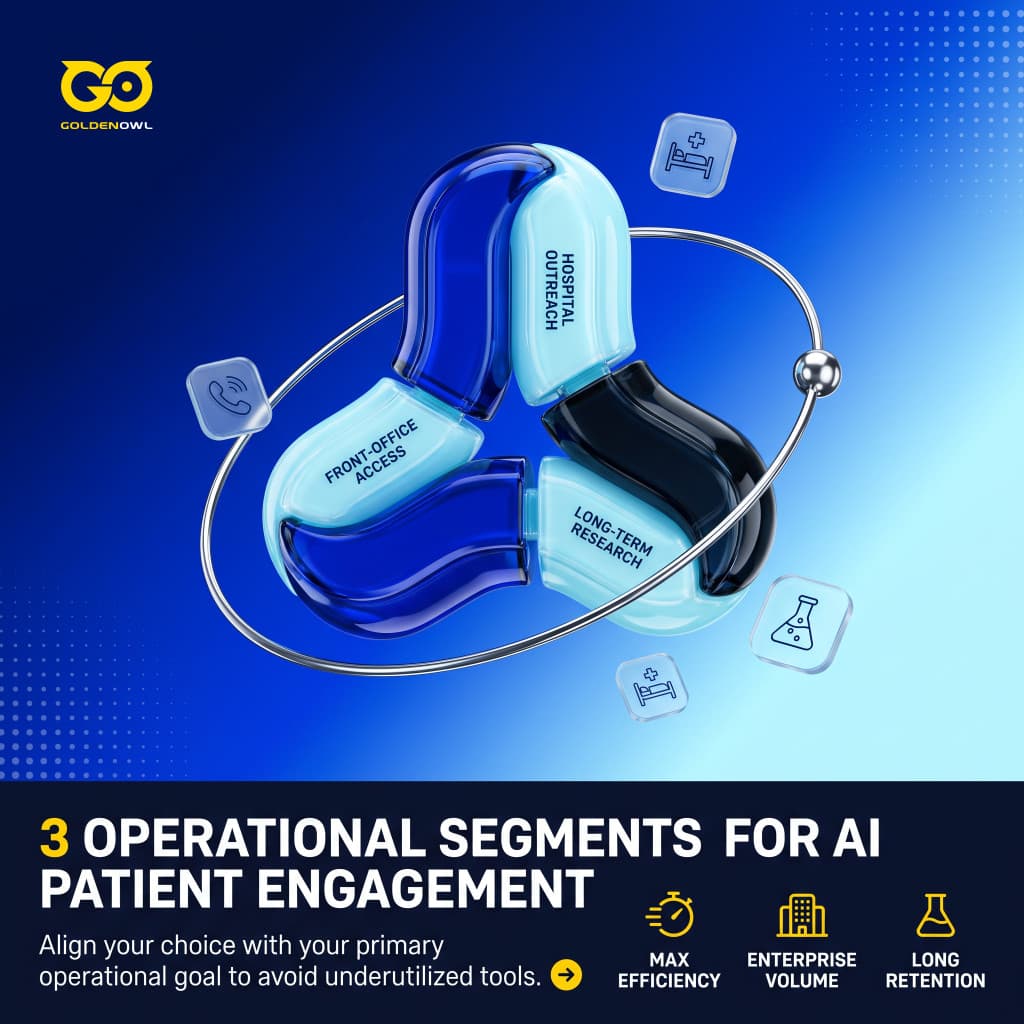
For 2026, start with the operational job, then choose among three segments: access, hospital outreach, or long term engagement.
Practice communication tools
In clinic settings, Phreesia, OhMD, and Luma Health cover intake, scheduling, and two way texting.
Hospital outreach platforms
Across large health systems, Artera and TeleVox handle reminders at high volume.
Research grade platforms
WeGuide keeps study, registry, and digital health participants involved through eConsent, ePRO questionnaires, learning resources, and wearable data.
These platforms often appear together on best of lists, although they solve different operating problems. Pick the wrong segment, and the software can become shelfware.
WeGuide
WeGuide is meant for engagement that lasts months or years, not reminders about Tuesday's appointment.
Research institutions, sponsors, hospitals, and digital health teams can use one white label, patient facing app for clinical trials, patient registries, and routine care programs. It brings together eConsent, ePRO and PROM surveys, education modules, smart reminders, secure messaging, and wearable data collection, with everything configured without code.
The platform includes:
- White label patient apps under your own brand, with native multi language content
- No code program builder for eConsent, ePRO and PROM surveys, and patient education
- Wearable data collection across consumer and medical grade devices
- Integration Engine for EMR and PAS systems, REDCap, and EDC platforms
- TGA Class I certified medical device software, ISO 27001 aligned, supporting HIPAA, GDPR, and 21 CFR Part 11 aligned workflows
In the BRACE trial, 6,000+ people across five countries maintained 94% participant adherence, and the study launched in six weeks.
A WeGuide powered app now engages more than 100,000 families through GenV, while the FSHD Global registry supports long term data contribution from a dispersed rare disease community.
WeGuide is not designed for front desk tasks. If collecting copays, booking online appointments, or generating reviews is the priority, choose a practice platform instead.
Its pricing is project based, rising with program complexity, and there are no six figure minimums.
Phreesia
Phreesia puts patient intake at the center, allowing people to register, complete consents and screenings, and make payments on their phone or an in office tablet before they reach the front desk.
Its intake functions include:
- Self service registration, consent, and clinical screening questionnaires
- Copay collection and payment plans built into intake
- Appointment reminders, recall, and targeted health outreach
- Analytics on intake completion, collections, and patient satisfaction
Phreesia is designed around the visit itself. Education programs, between visit engagement, and longitudinal data collection fall beyond its core job, while pricing is quote based.
Luma Health
Luma Health brings together self scheduling, smart waitlists, referral conversion, reminders, and AI powered call handling to ease pressure on access centres.
The platform provides:
- Patient self scheduling with real time EHR synchronisation
- Smart waitlist that automatically fills cancelled slots
- AI assistants for calls, faxes, and routine patient requests
- Multi channel reminders and recall campaigns
Luma Health connects deeply with the EHR, so schedule updates travel in both directions in real time. It performs best when incoming demand is greater than phone capacity.

Access and operations come first with Luma Health. Surveys, education, and extended program engagement are lighter, and the platform serves provider organisations instead of research teams.
Solutionreach
Solutionreach follows a straightforward remind, recall, and re book cycle, which has made it one of the longest standing patient engagement vendors.
Across text, email, and voice, automated reminders and confirmations support appointment volume. Recall campaigns for overdue patients, newsletters, surveys, and review management have made Solutionreach a staple in dental and vision practices for two decades, while medical practices are also well represented.
The platform offers:
- Multi channel appointment reminders and confirmations
- Automated recall for overdue and lapsed patients
- Patient newsletters, satisfaction surveys, and review tools
- Two way texting with a shared inbox
Appointment volume drives the model. Programs, education journeys, and outcomes data sit outside its lane.
NexHealth
Real time online booking
NexHealth handles front-office booking by placing patients directly into live EHR and practice management calendars, then automatically adding reminders, digital forms, payments, and reviews.
Its core functions include:
- Real time online scheduling synced to the EHR or PMS
- Automated reminders, digital forms, and text to pay
- Review generation and waitlist management
- Developer API for third party integrations
Integration layer
Digital health builders also turn to NexHealth because its Synchronizer can read from and write to systems that lack modern APIs.
NexHealth fits dental and ambulatory settings best, while engagement after the booking-to-visit loop remains thinner.
TeleVox
For decades, TeleVox has helped hospitals and health systems reach patients with reminders, procedure preparation, post discharge follow up, and preventive care through automated voice, SMS, email, and web chat.
Its outreach functions include:
- Omnichannel campaigns across voice, SMS, email, and chat
- EHR integrated reminders and recall at system scale
- Post discharge and preventive care outreach workflows
- Conversational AI for routine inbound calls
Its voice background gives TeleVox an advantage when many patients still answer calls instead of responding to texts.
TeleVox provides outreach infrastructure. Patient facing apps, education programs, and deep surveys sit beyond the product.
QliqSOFT
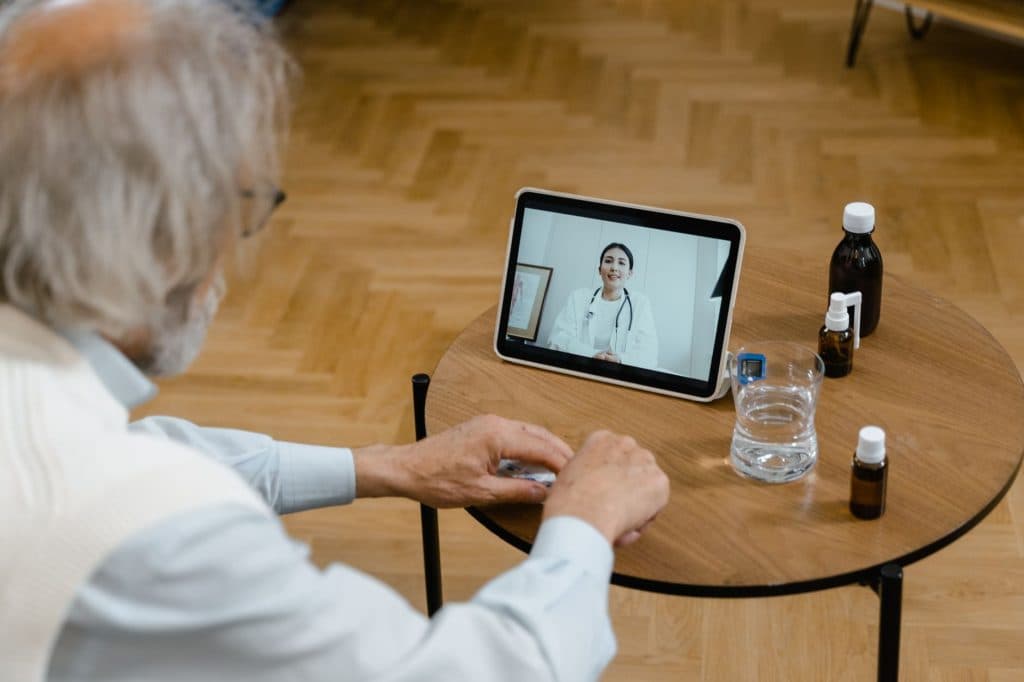
QliqSOFT pairs secure clinical texting with Quincy, its no code chatbot platform, to guide patients through education, intake, post discharge check ins, and virtual visits without requiring an app download.
The platform supports:
- No code chatbot builder for education and follow up journeys
- Secure texting for care teams and patients
- Virtual visits and digital forms without app installs
- Campaign style outreach for defined patient cohorts
QliqSOFT gives care teams HIPAA compliant internal messaging too, tying staff communication to patient engagement.
Its strongest area is chatbot journeys. Longitudinal programs, wearables, and research workflows remain outside its scope.
Emitrr
Emitrr is not healthcare native.
Emitrr is a horizontal SMB communication tool with a strong healthcare footprint. Clinics use it for two way texting, appointment reminders, missed call text back, review requests, and simple automations, with pricing well below healthcare specific platforms.
The available functions are:
- Two way texting and bulk SMS campaigns
- Appointment reminders and missed call text back
- Review generation and simple workflow automation
- Integrations with common practice management tools
Clinical workflows, compliance depth, and engagement beyond messaging are limited, so check HIPAA arrangements carefully before you choose Emitrr.
Platform Evaluation and Procurement Strategy
Mapping the operating setup first, practice communication tools handle front-office intake forms, self-scheduling, two-way texting, payments, reviews, and recall.
Hospital outreach tools reach hundreds of departments and languages with reminders, campaigns, and post-discharge follow-ups, tied deeply to Epic, Oracle Health, or another enterprise EHR.
Research and digital health platforms keep participants involved for months or years through eConsent, ePRO and PROM surveys, education modules, wearable data collection, and research-grade compliance.
Evaluation Criteria
Segment fit
Choose according to the actual job, judging positioning and feature depth rather than the marketing category or the largest feature list.
Engagement depth beyond reminders
Reminders are baseline; assess education delivery, survey and ePRO collection, and follow-up that continues over time.
Integration depth
In care settings, verify EHR and PAS connections; for research, inspect REDCap, EDC, open APIs, and wearable device data.
Evidence of outcomes
Published adherence, retention, or no-show figures tell you more than testimonials on their own.
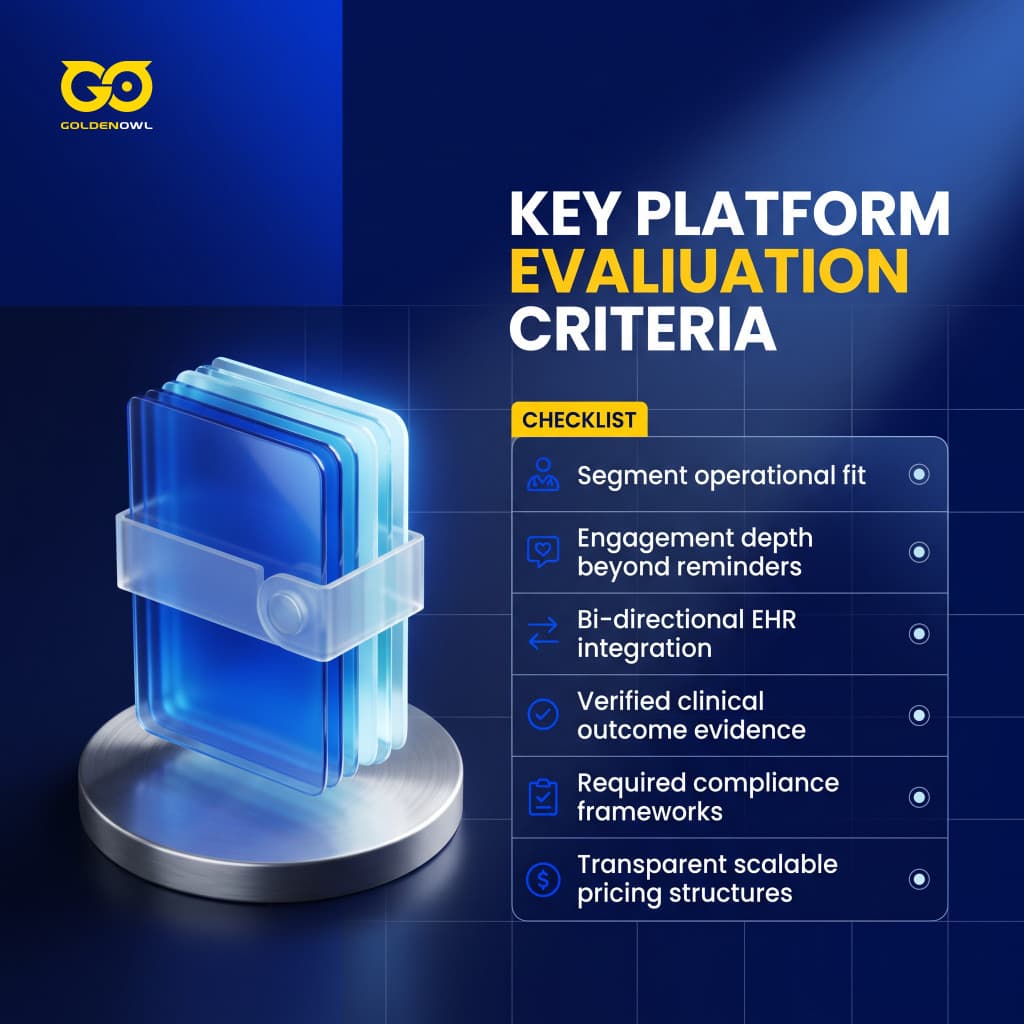
Compliance posture
HIPAA coverage is the minimum; regulated studies may also require ISO 27001, GDPR, TGA certification, and 21 CFR Part 11-aligned workflows.
Pricing model and total cost
Per-provider subscriptions suit practices, while project-based pricing suits programs and studies. A six figure annual pilot minimum demands commitment before evidence exists, so prices should be able to decrease as well as increase.
Once you go live, ask who handles configuration. Changes that become vendor tickets can drain your team's patience and slow adoption, so no-code configuration ranks highly.
Set one specific, measurable problem for your AI strategy, then choose the partner that fits, since not all AI platforms are created equal.
Patients judge the interface too. A branded, multi language experience that patients recognise consistently beats a generic third-party interface for enrolment and retention.
Software Alignment by Clinical Use Case
Pair every clinical use case with software whose operational focus matches it.
| Clinical Use Case | Recommended Software | Operational Focus |
|---|---|---|
| Clinical trials and decentralised studies | WeGuide | Purpose built participant engagement with eConsent, ePRO, and wearables |
| Patient registries and cohort studies | WeGuide | Long term retention across GenV's 100,000+ families and the FSHD Global registry |
| Hospital digital health programs | WeGuide; Artera or TeleVox | Program depth or pure outreach volume |
| Intake, payments, and front desk automation | Phreesia; NexHealth | Intake and payments automation or online booking |
| Reducing no shows in a busy system | Luma Health; Artera | Access and scheduling or enterprise messaging |
| A small practice's first engagement tool | OhMD; Weave; Emitrr | Texting, an all in one stack, or a tight budget |
| Recall driven specialties | Solutionreach; Weave | Recall discipline or an all in one alternative |
| Chatbot guided education and follow up | QliqSOFT's Quincy; WeGuide | No code chatbot journeys or broader longitudinal programs |
The matches distinguish long-term research engagement from front-desk automation, enterprise outreach, recall work, and chatbot-guided follow-up.
Vendor Red Flags
Demos across this category all look impressive, so watch for warning signs that patient engagement platforms can't smooth over.

- No published engagement numbers: Ask for adherence, retention, or completion rates from a named deployment; case study logos are not data when no numbers are available.
- Every change is a professional services ticket: Ask to watch someone build a reminder sequence or edit a survey live; if the answer is a statement of work, your program moves at the vendor's pace.
- The patient experience is generic: Patients respond to their hospital, their study, and their language; a tool that cannot white label the app, or treats additional languages as a paid add on, will underperform on enrolment.
- Compliance answers stop at HIPAA: For US only clinic messaging, that may be fine, but research, international sites, or medical device territory require specific answers on GDPR, ISO 27001 certification, and 21 CFR Part 11 aligned workflows in writing.
- Pricing punishes starting small: Six figure annual minimums for a pilot force commitment before evidence exists; prefer pricing that scales down as well as up, so the evidence can come first.
High-Impact Clinical and Operational Capabilities
These tools carry patient support past the visit, handling clinician administration and treatment adherence while supporting clinical trial participation.
Conversational Assistants and Triage
Scheduling, billing inquiries, and routine prep instructions can run through automated triage tools; send emergent clinical symptoms straight to live clinical staff or emergency services.
At any hour, chatbots and virtual health assistants can field questions about symptoms, medications, insurance plans, and appointment logistics as the initial support layer.
Rule-based bots stay inside preset scripts; conversational AI uses NLP to interpret context and nuance, including intent. The gap shows once a question leaves the script.
Safety comes down to triage. If someone writes, “My chest hurts,” the system should avoid medical advice, immediately escalate to a human nurse or emergency services, and leave routine questions automated.
Perceived risk was moderate to low overall, with m = 3.68/5.00 (SD = 0.42; where 5 = Strongly disagree with risk). Three AI assistance scored m = 2.80.
- Synthesizing patient data to help prioritize urgent request (m = 2.80, SD = 0.84)
- AI-driven message triage system by urgency and topic (m = 2.80, SD = 0.84)
- Real-time glucose data interpretation and adjustment suggestions (m = 2.80, SD = 1.10)
Clinician Message Drafting and Administrative Automation
Five endocrinologists with different experience levels and subspecialty backgrounds assessed information produced by generative AI.
The assistance received an overall usefulness mean of m = 4.30/5.00, with (SD) = 0.38, where 5 = Useful.
- Providing evidence-based answers to frequently asked questions to reduce response time (m = 4.8, SD = 0.45)
- Summarizing policy changes and giving real-time updates on covered medications under popular insurance (m = 4.8, SD = 0.45)
- Automating patient education on hypoglycemia management and prevention strategies (m = 4.6, SD = 0.89)
- Offering templated but customizable responses for common lab-related inquiries (m = 4.8, SD = 0.45)
- Creating templates for authorization letters to expedite processing (m = 5.0, SD = 0.00)
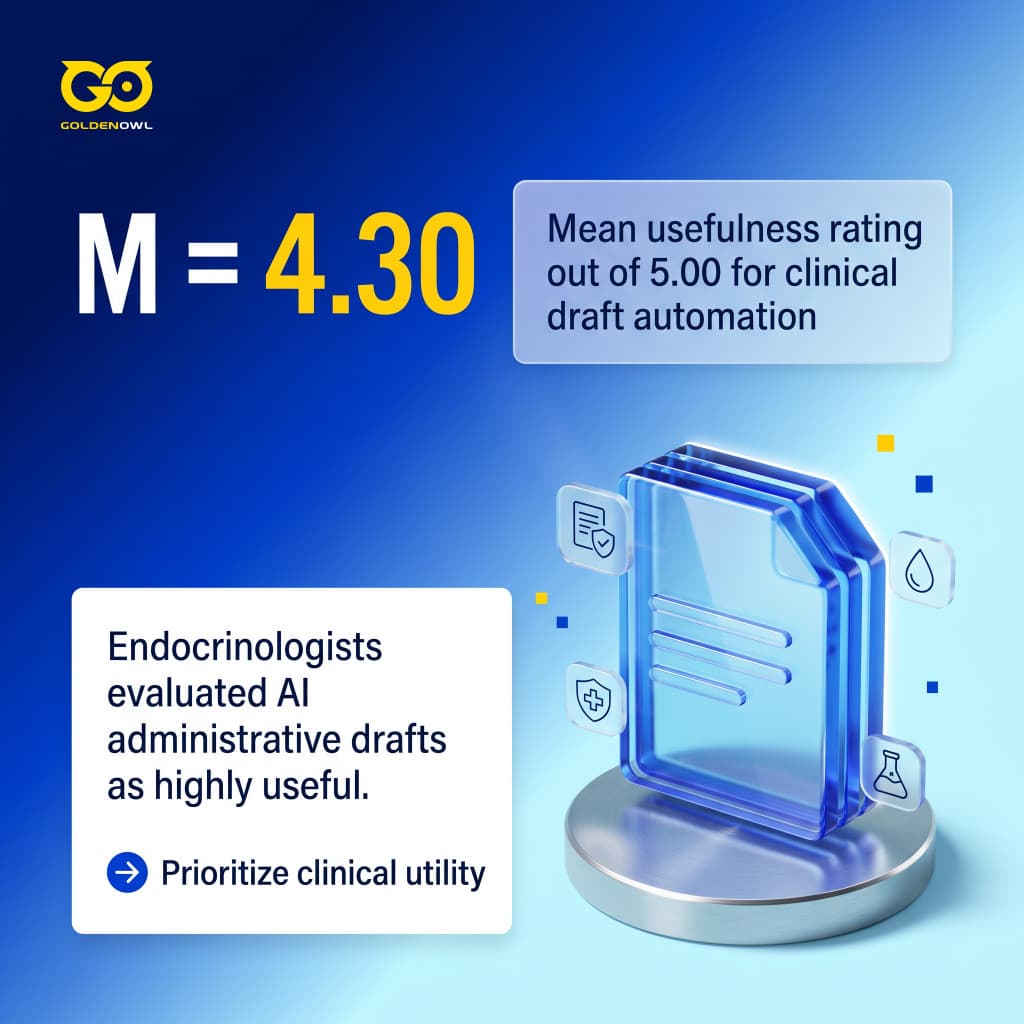
The most highly useful items included evidence-based answers at m = 4.8, insurance updates at m = 4.8, hypoglycemia education at m = 4.6, customizable lab responses at m = 4.8, and authorization-letter templates at m = 5.0. Automated feedback, educational material, and templated replies about nutrition, TSH, other lab tests, and bone issues reduced workload while letting clinicians keep responses personal.
Treatment Regimen and Medication Adherence
A treatment plan does little when the patient doesn't follow it.
AI-powered apps
AI-powered apps can ask about symptoms, check how patients are feeling, log possible side effects, and provide positive reinforcement instead of repeatedly nagging patients. Once missed treatment follows a pattern, the system can notify a care manager, who can make a supportive phone call.
Consider a 70-year-old patient with diabetes and congestive heart failure who has missed several appointments. The AI model estimates a 90% likelihood that the patient will be readmitted to hospital within 30 days and places the case on the care manager's dashboard.
The dashboard prompt tells the assigned coordinator to call proactively and review medications before arranging a telehealth follow-up. Taken together, those actions can head off a costly, dangerous health crisis.
Scheduling accounted for 20.7% (n = 54,401) of requests, followed by meal/diet at 19.2% (n = 50,471), pharmacy/refill at 14.0% (n = 36,758), lab order/result at 11.2% (n = 29,428), medication at 9.4% (n = 24,605), and thyroid/hormone at 8.6% (n = 22,560).
Clinical Trial Recruitment and Cohort Retention
Using EHR data, AI can connect eligible patients to relevant clinical trials while helping maintain their engagement.
Personalized messages and simple apps make data logging easier, which supports participant retention and cleaner data.
- Patient matching: AI matches eligible patients to relevant trials based on their EHR data.
- Participant engagement: Personalized communication and easy-to-use apps keep trial participants engaged and support data logging, improving retention rates and data quality.
Implementation Framework
Once patient matching and participant engagement are in place, map operational requirements into a tested plan with workflows people can run.
Operational Needs Assessment
Identify Key Challenges and Goals
Name the organization's biggest pain points, then pick one measurable problem for the AI strategy to tackle. High no-show rates, weak chronic disease management, and low patient satisfaction scores all give you workable starting points for the initial plan.
Patient portal messages
In one analysis, diabetes patients accounted for 324,109 messages, and predefined topics classified 80.9% of that set, or 262,249 messages.
Clinical questions
For clinical questions, the review identified 11,151,561 unique message threads across 2013-2024 and limited them to Patient medical advice request (PMAR). That category made up 66.9% (n = 7,456,800/11,151,561), while the analysis excluded patient scheduling inquiries, medication renewal requests, and general questionnaire submissions.
A ai solutions consultant can audit clinic workflows and technical requirements with you.
Technical and Integration Validation
Treat EHR compatibility as a question to test: advertised EHR compatibility may still mean read-only calendar viewing, with staff writing data back manually, rather than bi-directional data flow.
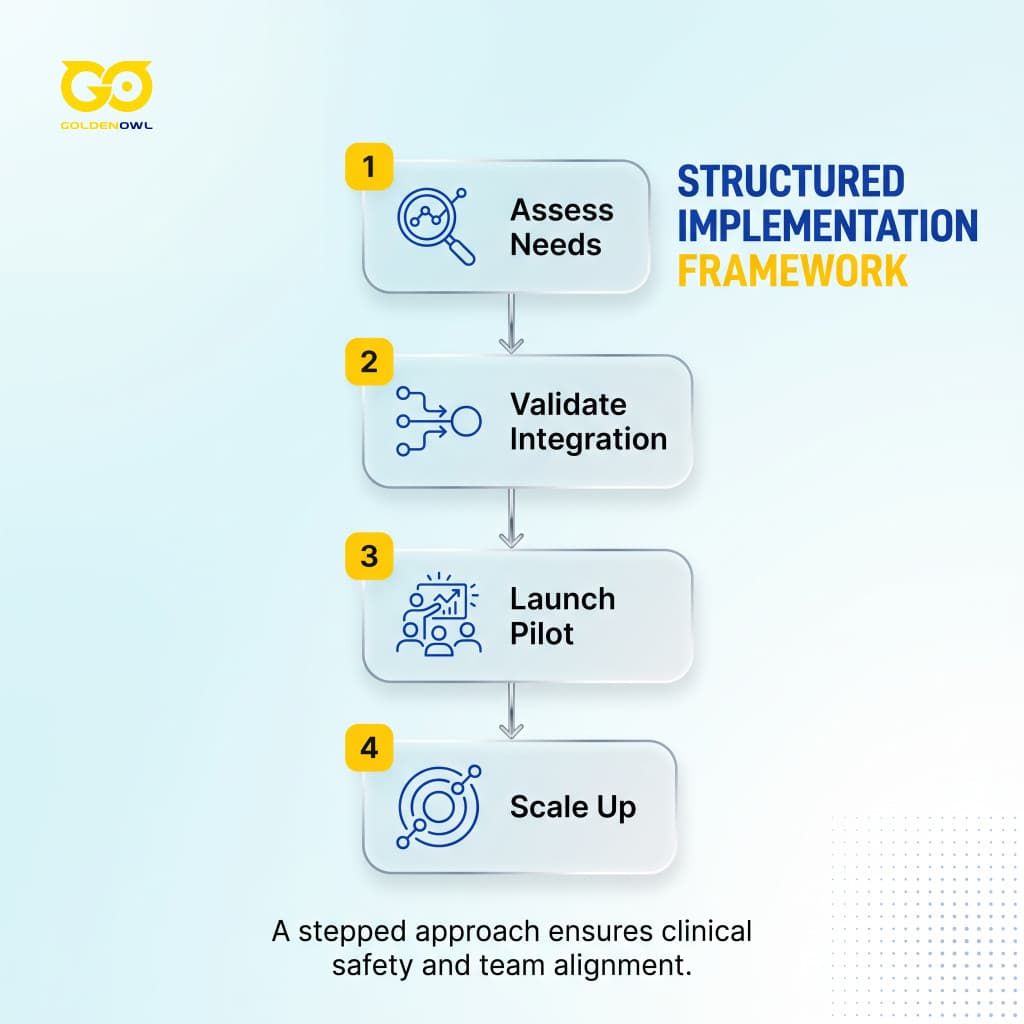
Review healthcare expertise, clinical workflows, data security, and ethical AI. When comparing AI patient engagement EHR software solutions 2025, confirm that the platform integrates with your existing Electronic Health Record (EHR) system.
Phased Rollout and Staff Training
Run the pilot in one department or with a defined patient population, then use a pilot scorecard to decide if the workflow is ready for broader rollout.
- Track staff adoption to see whether teams use the platform consistently or return to manual processes.
- Track administrative workload to determine whether phone calls, repetitive messages, or manual scheduling tasks are decreasing.
- Track patient completion of the target workflow to see whether patients finish intake, reminders, education, or follow-up actions.
- Track escalations and unresolved conversations to confirm that safety-sensitive or complex issues reach the appropriate human team.
A pilot lets your team fix workflow kinks and show value before you move to a full-scale rollout.
Train every clinical and administrative staff member on how the tool works and helps them and their patients. Explain its benefits clearly to support widespread adoption.
Governance, Ethics, and Clinical Safety
Privacy and Data Security Standards
The sensitive health data handled by AI systems, including PHI, makes them attractive targets for cyberattacks. Go beyond HIPAA compliance by explaining how data is used, stored, and protected, and give patients complete transparency about those practices.
These safeguards define the security standard healthcare AI must meet:
- End-to-end data encryption: Protect data throughout its movement and use.
- Strict access controls: Limit access to authorized users.
- Regular security audits: Check whether protections continue working as expected.
- Complete transparency with patients: Explain how their data is used, stored, and protected.
- Signed BAA: Confirm every healthcare specific vendor provides one.
- Encryption in transit and at rest: Keep data encrypted while moving and stored.
- Role based access: Assign system access according to each user's role.
- Audit trails: Keep records of system access and activity.
Every healthcare-specific vendor listed here supports workflows compliant with HIPAA, but you should check precisely what that support includes. Research programs should additionally evaluate preparedness for ISO 27001 and GDPR, while verifying conformity with 21 CFR Part 11.
Algorithmic Equity and Health Disparities
Addressing Algorithmic Bias and Health Equity
The data supplied to an AI model shapes what it learns, while historical healthcare bias may also be learned and amplified, worsening health disparities.
A model trained mostly on one demographic group may perform less accurately for minority populations. Audit algorithms for bias, use diverse and representative training data, and build systems that support health equity. Accuracy may differ across populations.
Among patients with diabetes, personal characteristics were associated with differences in message topics. Patients in non-Hispanic ethnic groups sent more messages than Hispanic patients about meal/diet (p = 0.035), lab order/result (p = 0.004), insurance/coverage (p = 0.007), symptom (p = 0.001), and imaging/surgery (p < 0.0001).
Sex also shaped message patterns. Compared with male patients, female patients sent more messages about scheduling, lab order/result, thyroid/hormone, medication, symptom, imaging/surgery, and mental health/sleep (all, p < 0.0001), whereas males sent more about meal/diet and device/sensor (both, p < 0.0001).
Marital status showed another split: unmarried patients asked for more insurance/coverage advice (p = 0.001) and device/sensor advice (p < 0.0001) than married patients.
Frequently Asked Questions
What is the best patient engagement software in 2026?
Use case decides the best patient engagement software, since this market serves three distinct jobs. Each platform fills a different role: Phreesia supports patient intake and payments, Luma Health supports access and scheduling, Artera serves enterprise health system messaging, and WeGuide provides research grade engagement during trials, in registries, and throughout digital health programs.
How much does patient engagement software cost?
Practice communication tools
Practice communication pricing usually runs monthly by provider or location. Lower-cost SMB options include Emitrr, while enterprise platforms generally give you a quote for the account.
Research grade platforms
WeGuide and other research-focused platforms price each project according to study or program complexity, with every module included.
Pilot commitments
Before you sign, confirm implementation fees, support tiers, and whether pilots carry minimum commitments, regardless of the pricing model.
Are patient engagement tools HIPAA compliant?
The compliance bar follows the platform segment and program requirements. For a clinic texting tool, a HIPAA badge is enough, while research programs need workflows aligned with ISO 27001, GDPR, and 21 CFR Part 11 as well. Program scope changes the requirement.
How do patient engagement tools improve outcomes?
AI patient engagement tools can improve outcomes when they bring together information from remote monitoring devices and EHRs with patient education and support.
- Detecting warning signs: By analyzing data from remote monitoring devices and EHRs, AI systems can identify subtle warning signs of a potential health crisis, including a spike in blood pressure or a decline in activity levels.
- Supporting early care team intervention: Once those changes are detected, care teams can intervene early, often preventing a costly emergency room visit or hospital readmission.
- Supporting chronic condition management: AI helps patients manage chronic conditions more effectively and encourages preventative behaviors, contributing to better long-term health outcomes.
- Improving patient understanding: An informed patient is an engaged patient.
- Providing diagnosis information: After a patient receives a new diagnosis, AI can deliver a curated drip campaign explaining the diagnosis, treatment options, and what to expect without overwhelming the patient.
- Strengthening self-care: Patient-centered care (PCC) was found to improve patient engagement in care, enhance self-care skills and confidence, and reduce disease-related distress.
Key Takeaways
Those uses are only a starting point. Putting AI patient engagement platforms into practice requires establishing secure, integrated clinical partnerships as part of implementation.
Start by classifying the operational job, then narrow the platform list by fit, check evidence and integration, confirm compliance, and measure adoption through a rollout. That sequence helps organizations choose AI patient engagement software solutions that match front-office access, hospital outreach, and longitudinal research to the right operating job. Basic communication novelties remain a starting point, while secure, integrated clinical partnerships shape deployment in every setting.
Share this page


Table of Content

Subscribe to Golden Owl blog
Stay up to date! Get all the latest posts delivered straight to your inbox