
An AI legal assistant does the first pass of legal work. See what it can and can’t do, and which legal AI tools fit research, contracts, or practice management.


Biggest Business Pain Points AI Marketplace Solutions Solve
Sep 9, 2026
about 9 min read

Pinpoint your team's single most pressing workflow bottleneck before assessing the biggest business pain points AI marketplace solutions are built to resolve
Pinpoint your team's single most pressing workflow bottleneck before assessing the biggest business pain points AI marketplace solutions are built to resolve. Legacy software setups and hiring extra manual staff simply can't economically solve the multiplying operational snags modern companies hit every day.
Manual Workflow Inefficiencies
- Manual processes and inefficient workflows: High capital expenditures continue to flow directly into repetitive manual steps, complex tasks such as underwriting, and administrative overhead like scrum management, despite the arrival of artificial intelligence. Beyond human errors, operational bottlenecks from these manual routines drive up delays and expenses. That friction keeps employees stuck on low-level chores instead of moving to high-value strategic responsibilities. Because your bottom line depends directly on the health of internal operations, isolating your main pain points inside everyday routines gives you the exact signal to evaluate AI help.
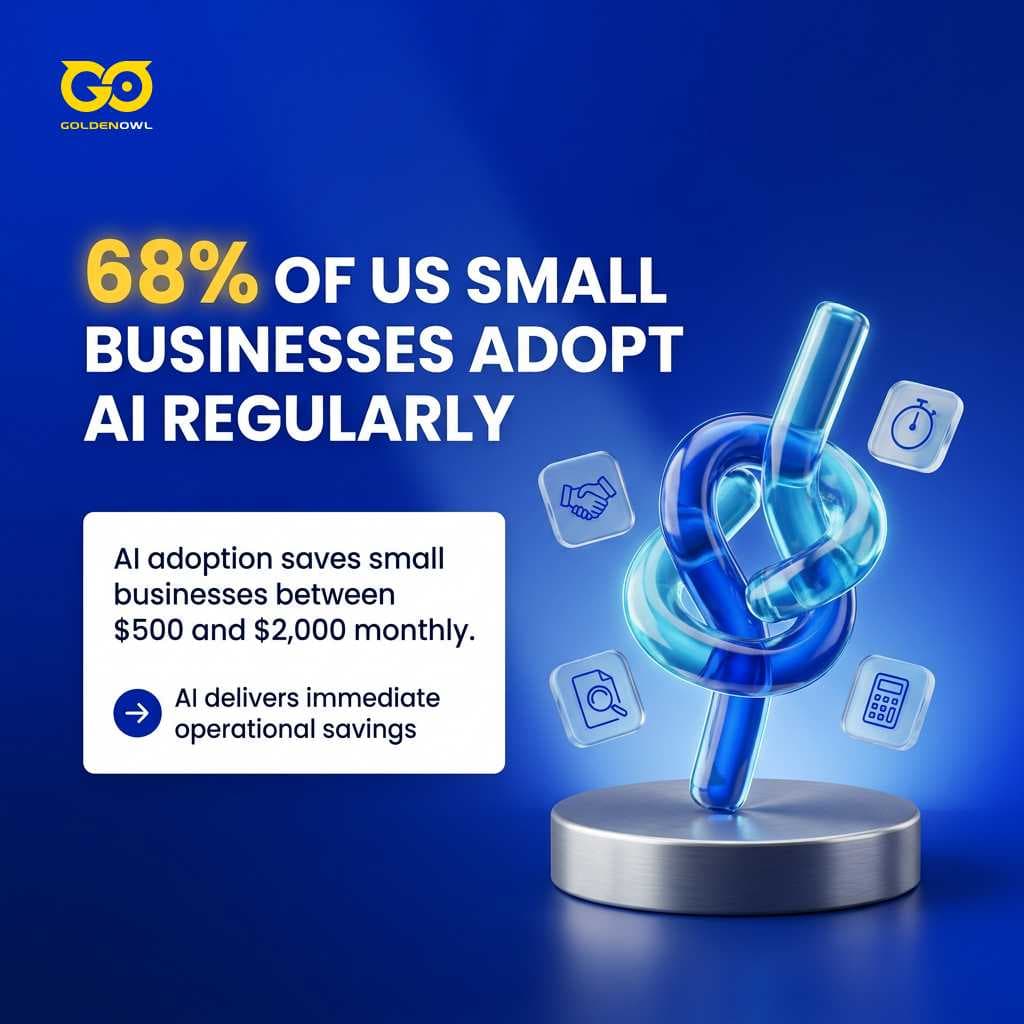
- Small business operational friction: Regular AI adoption among 68% of US small businesses saves between $500 and $2,000 every month. That benchmark recovers 20 or more hours of labor each week.
- The 10-hour hurdle rule: Take the weekly hours your staff devotes to a manual assignment and multiply that figure by their average loaded hourly wage. Whenever that monthly expense tops $600, you have an immediate candidate for off-the-shelf marketplace automation, provided the underlying workflow applies consistent rules to standardized inputs.
Biggest Business Pain Points AI Marketplace Solutions Address
Running day-to-day operations across different markets exposes the exact same operational headaches whenever teams lean on manual steps and legacy software to push work forward. You won't see real breakthroughs until you install autonomous workflows, bringing in practical ai solutions for business to lower costs or drive higher revenue.
Gathering clean data gives you the baseline you need to diagnose organizational pain, letting automated systems inspect historical customer logs and repeat support tickets for emerging trouble. Good software catches the repetitive friction patterns that actively irritate buyers long before human reviewers ever flag the issue during a quarterly review.
Deterministic administrative agents
- Deterministic execution delivery: Building agents that deliver predictable and repeatable execution turns software from an open novelty into a serious operational asset capable of handling high-value tasks. Within a few operational cycles, you can deploy a dedicated network of specialized agents to handle customer service, asset tracking, and underwriting with mechanical precision. Delegating these duties cuts back-office labor, human payroll, and administrative overheads, letting software take over document workflows like insurance underwriting without hiring extra staff, while quietly handling cloud migrations and daily scrum routines.
- Variance tolerance checks: When an output deviation of even 1% triggers regulatory non-compliance, contract disputes, or financial reconciliation mistakes in invoicing or underwriting, implement a deterministic rules-based agent with rigid schema checks instead of an open conversational interface. Think of deterministic agents as train tracks rather than off-road vehicles. Deterministic agents do not improvise, which guarantees that your production systems will never take an unexpected detour on audited data.
- Document workflow automation: Packing staff save hours and sidestep routine operational errors when internal software automatically generates complete shipping paperwork.
Automated maintenance dispatch platforms
Heavy industrial sectors like manufacturing, distribution, freight logistics, and rail transit depend completely on continuous access to operational field equipment. Yet their workflows stay disconnected from real-time IoT alerts and error codes, causing avoidable machine downtime, heavy fuel burn, inflated parts costs, and elevated repair bills.
Telemetry-driven automation bridges this operational gap through continuous system dispatch:
- Improving the user’s interaction with physical assets and products across B2B industries.
- Constantly monitoring real-time asset data (for example, vehicle error codes) and automatically converting real-time alerts into actionable work orders to minimize equipment downtime.
- Detecting waste in the form of extended vehicle (or machine) idling and executing immediate operational steps to reduce wastage costs.

Dynamic logistics routing algorithms
- Logistics and inventory pain points: Managing inventory and transport logistics remains one of the heaviest operational burdens in commerce, dragging down both neighborhood micro-businesses that ship directly to customers and mid-sized companies moving cross-border freight.
- Machine learning route and demand planning: Applying systems built on machine learning to these environments works exceptionally well, whether you need immediate route optimization for local dispatch fleets or want to parse transactional data for accurate delivery planning and demand forecasting.
- Incremental delivery integration: Making machine learning succeed requires redesigning transit steps through small, measurable modifications. Rolling out a disciplined sequence of modest operational fixes consistently unlocks compounding efficiency gains across the entire shipping network.
Centralized context architecture
Deploying individual AI agents without a shared context layer is like hiring brilliant contractors who are strictly forbidden from speaking to one another or reading the same project files.
Even when your internal teams possess deep domain knowledge, companies regularly lack the centralized intelligence architecture needed for software agents to act deterministically. Instead of buying standalone tools, remember that an AI agent is only as dependable as the live operational data feeding its model. You've got to close the structural rift between raw company data and working operational context.
Setting up a single platform layer fixes the accuracy problems inherent in isolated automation setups. Tying data governance, data lineage, role permissions, and operational security into one shared foundation guarantees that every automated decision traces directly back to audited enterprise records.
High-Impact Industry Sectors
Operations-heavy businesses in crowded markets get their quickest returns when they map workflow friction using targeted AI diagnostics.
E-commerce
- Intelligent product recommendations: You build measurable efficiency across online retail by tying review analysis and inventory management directly to shopper behavior. When you deploy recommendation systems powered by machine learning, they map hidden links between catalog preferences and actual purchasing choices, which raises the probability that a buyer completes the transaction.
- Assortment adjustment and demand tracking: Fast inventory adjustments determine whether an online merchant protects gross margins when customer purchasing habits shift. You feed analytics from store visits, search volumes, and chatbot conversations into buying workflows so catalog teams rebalance physical stock against early demand signals within days.
- Uninterrupted support operations: Because online retail storefronts need continuous coverage across holidays, after-hours windows, and weekends, automated chatbots maintain ongoing customer conversations without added staff, tailoring answers directly to visitor questions while predicting what catalog details keep shoppers engaged.
Software as a service
SaaS companies constantly hit repetitive operational snags and customer churn that dedicated software workflows resolve right away.
- Churn prediction: To eliminate repeat inquiries before accounts cancel, teams deploy dedicated AI agents on the initial contact, pulling live account data from legacy applications.
- Onboarding friction detection: Confusing setup hurdles push prospective users away permanently, making early friction your single biggest driver of customer churn.
- Feature prioritization: By analyzing customer tickets, support logs, and recurring feedback, engineering teams isolate exactly which product adjustments remove immediate operational friction.
Professional service firms
Proposal automation
Pushing client bids through structured proposal pipelines standardizes every document you send, moves deals forward faster, and trims turnaround times on incoming contracts.
Client communication
Incoming support queues, account check-ins, and meeting debriefs feed straight into tools that track common patterns and catch relationship strain through sentiment scoring.
Capacity planning
Your margins come down to delivery throughput, so automating routine admin chores and document processing keeps billable staff from burning out while heading off operational stalls.
Online marketplaces
Marketplace operators keep transaction volume steady across two-sided networks by locking down three specific operational mechanics:
- Fraud detection: Automated systems continuously evaluate listing anomalies and transactional risk factors to protect platform integrity.
- Seller and buyer matching: Pairing prospective buyers with qualified suppliers through algorithmic matchmaking lifts platform transaction conversion rates.
- Feedback loops: Structured collection of buyer reviews and search behaviors identifies shifting supply trends while exposing operational blind spots early.
Implementation Pitfalls
Vague project goals, missing output checks, sloppy data handling, and runaway scope creep derail between 70 to 85% of automation efforts. Operators trigger these operational breakdowns the moment they launch new workflows without isolating an actual business problem, leaving perfectly functional software executing flawed directions on loop.

Critical skills shortages stall 76% of companies, sitting right beside persistent doubts over data hygiene and leadership teams wrestling with ROI uncertainty. Fixing that friction doesn't require building an internal data science department. Instead, reach for targeted staff training, accessible cloud tools, and tightly scoped pilot projects that combine an authentic operational problem with a genuine appetite for testing.
Tool-first operational bias
Founders who struggle with AI usually stumble because they select software before mapping the exact operational friction across their daily workflows. That habit represents pure tool-first thinking, and it remains the primary mechanism that quietly kills promising AI pilots within three months of deployment.
Buying shiny software before pinning down your exact operational problem remains an expensive blunder that quietly suffocates promising rollouts within three months.
Before rolling out technical adjustments, make the philosophical shift to treat machine intelligence as a direct partner in problem-solving rather than an unvetted operational shortcut. Anchoring new software straight to a verified workflow bottleneck yields results that stay consistently cheaper, faster, and far simpler to defend than any generic, off-the-shelf enterprise software package you could buy.
Securing an authentic operational edge by 2026 will never depend on basic access to machine models, simply because every competitor will hold the exact same tools. You build an advantage by asking sharper operational questions about your bottlenecks. Starting with concrete daily friction before evaluating vendors routinely outperforms tool-driven deployments, keeping early operators away from pricey distractions while focusing team hours directly on work that drives measurable commercial results.
Contextual hallucination risks
Open-ended text allows generative models to handle flexible inputs far better than rigid code, but you still need continuous schema validation to catch plausible, fabricated outputs.
- AI hallucinations: Inaccurate answers delivered with high confidence represent genuine operational hazards, requiring your organization to treat all model outputs as working hypotheses instead of confirmed company facts.
- Deterministic safeguards: Combining data governance, data lineage, security, and context into an integrated operating layer solves the reliability errors seen across fragmented automation products, ensuring your system responses reflect actual company records. Deploying agents designed for predictable, repeatable, and correct actions turns software from an open-ended experiment into a dependable, mission-critical operational asset suited for high-value work.
- Privacy blind spots: Careless handling of customer records inside automated systems runs your company afoul of strict privacy regulations.
Pilot deployment frameworks
Unstructured outbound messages sent to customers demand manual review on every single draft, whereas automation wired into structured internal databases can be benchmarked directly against your historical logs prior to production.
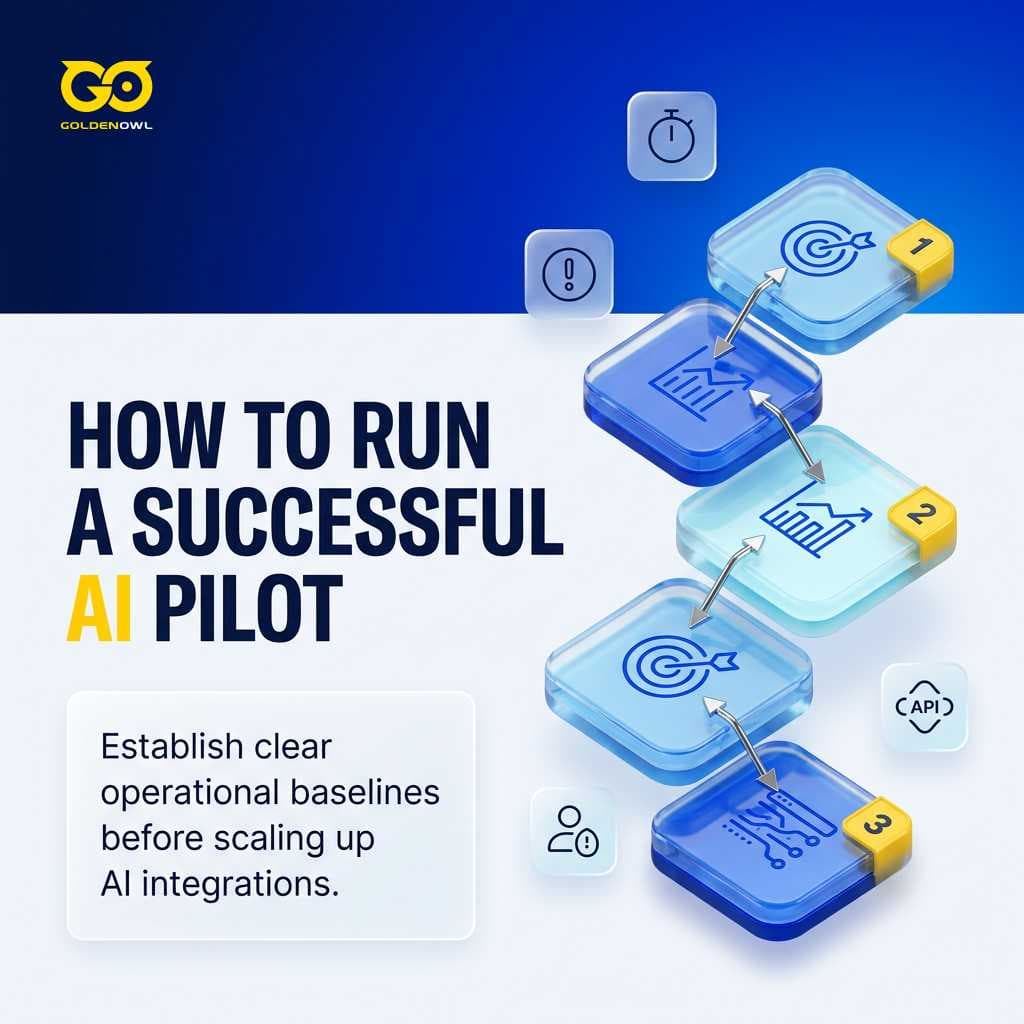
Running a disciplined 30-day pilot against a single operational bottleneck caps downside risk, builds internal team confidence, and produces the hard, verifiable performance data your organization requires before approving any wider automation adoption across daily workflows.
Throughout that 30-day sandbox, evaluate daily system performance against four non-negotiable operating targets. You want to see task turnaround times improve by at least 50%, keep overall error rates below 3%, drive active staff adoption above 80% across targeted workflows, and ensure zero unapproved information escapes through outbound API connections.
- Clarify your objective by naming the specific operational bottleneck you are investigating and writing it down in one sentence.
- Validate with real data by collecting direct customer feedback instead of relying on internal assumptions or external benchmarks.
- Start small by running your pilot on one contained workflow or one customer segment before expanding across teams.
- Train your team because AI adoption collapses without dedicated human champions who thoroughly understand both the tool and your goal.
- Monitor outcomes by establishing a measurable operational baseline before you begin, which allows you to verify actual business impact.
Strategic Transformation Principles
Foundational infrastructure investment Building out heavy rail across rough terrain is a lot like setting up agentic AI across an enterprise today. Direct your best engineering talent and major capital into early infrastructure, specifically knowledge graphs and data governance. Running autonomous agents to pull real business value and insights won't happen until those tracks exist, giving you a lasting edge through integrated ai infrastructure over isolated tactical tools.
Problem-first strategic partnership Stop piling up as many tools as you can find. Real progress comes from asking sharper questions, making your software work as a problem-solving partner instead of a basic automation shortcut. When you anchor your work to a genuine, clearly identified bottleneck, you'll produce answers that are cheaper, faster, and far easier to defend than setups built on generic tech stacks.
Value creation beyond immediate cost savings Every growing company takes a solid step toward operating efficiency when it rolls out artificial intelligence tools. Track your compounding returns through clearer customer insights, stronger advertising campaign performance, and noticeably lower running costs. Across modern commerce, artificial intelligence matters well beyond basic cost cuts, unlocking brand new commercial opportunities whenever you solve the biggest business pain points ai marketplace solutions address.
Now that you understand the biggest business pain points AI marketplace solutions can eliminate, you can make sure your engineering team builds core data infrastructure before committing capital to commercial software contracts. Run tight, bounded trials against confirmed business bottlenecks and verify measurable economic returns early, turning marketplace deployments from speculative conversational distractions into permanent operational leverage across your entire organization.
Share this page


Table of Content

Subscribe to Golden Owl blog
Stay up to date! Get all the latest posts delivered straight to your inbox